
TL;DR
Open a free Amazon Business account
Business pricing, bulk buying and tax-exempt orders.
Create a free accountAs an affiliate, we earn on qualifying purchases.
Lift chair terms like two-, three-, and infinite-position mainly describe how the chair reclines and adjusts. They don’t strictly limit the chair to only those positions. Understanding the motor setup and features helps you pick the right chair for your lifestyle and needs.
When shopping for a lift chair, you might notice labels like two-position, three-position, or infinite-position. These terms seem straightforward but can actually be misleading. They describe the chair’s general range of motion, not its strict limits. A chair labeled “two-position” might still stop at several intermediate angles, while “infinite” suggests endless customization.
Understanding what these terms really mean can help you find a chair that fits your lifestyle, whether you need quick help standing, enjoy long naps, or want maximum comfort. This guide breaks down each type, explains what to look for, and clears up common misconceptions — so you can make a confident choice.
Lift chair position labels mainly describe the recline range, not strict limits.
Motor configuration (single, dual, multiple) affects independent adjustment more than the label itself.
Three-position chairs offer more recline than two-position models but usually don’t recline fully flat.
Infinite-position chairs provide maximum flexibility, often with independent motors for tailored comfort.
Always review specs and test controls to ensure the chair matches your specific needs and space.
Two-Position, Three-Position or Infinite-Position?
The names describe a chair’s general reclining range—not a literal count of fixed stops. Motor configuration, independent movement, fit and controls reveal far more about how a lift chair will work in everyday life.
Three labels, three levels of flexibility
A “position” is a broad category of movement. It does not mean the chair has only two or three clickable angles. Many single-motor models can stop anywhere along their available travel.
Two-position
Moves from upright into a partial “TV” recline. The backrest and footrest usually travel together through one motor.
- Upright sitting and partial reclining
- Simple controls and smaller footprint
- Usually unsuitable for comfortable sleep
Three-position
Adds a deeper, nearly flat recline while remaining relatively simple. Intermediate stops are normally possible.
- Upright, TV recline and deeper recline
- Better suited to longer rest or naps
- Back and footrest usually remain linked
Infinite-position
Uses at least two motors so the backrest and footrest can move independently across many combinations.
- Flexible leg elevation and back support
- May include lay-flat or zero gravity
- Higher cost, weight and control complexity
Compare what actually changes
The deeper the recline and the more independently each section moves, the easier it is to tailor posture. Exact functions still vary by manufacturer and model.
| Feature | Two-position | Three-position | Infinite-position |
|---|---|---|---|
| Typical motor setup | 1Single motor | 1Usually single motor | 2+Dual or multiple motors |
| Back and footrest | ~Move together | ~Usually move together | ✓Independent movement |
| Deep recline | ✗Limited | ✓Nearly flat | ✓Broad model-dependent range |
| Legs raised, back upright | ✗Usually unavailable | ✗Usually unavailable | ✓Generally available |
| Controls | Most straightforward | Simple | More buttons and functions |
| Relative cost | Lower | Moderate | Higher |
| Strongest use case | Standing and casual sitting | Relaxation and napping | Long sessions and precise positioning |
✓ Generally available ✗ Generally unavailable ~ Mechanically linked or model-dependent
The motor setup predicts real-world control
A chair’s mechanisms determine which sections can move separately. Check the specification sheet and handset diagram rather than assuming the position label guarantees a particular function.
Single motor
Backrest and footrest generally follow one linked movement path.
Dual motor
Backrest and footrest can generally be adjusted independently.
Multiple motors
May add separate headrest, lumbar, footrest or other support controls.
From daily routine to the right mechanism
Start with the user, not the product category. Map activities and posture needs to independent functions, then confirm fit and room clearance.
Define the routine
Standing help, television, naps, extended sitting or frequent repositioning?
Choose the posture
Decide whether the legs, back, head and lumbar area must move separately.
Count the motors
Match linked or independent movement to the controls the user can operate.
Test and measure
Verify seat fit, weight capacity, wall clearance and the actual range of motion.
Zero gravity
Raises the legs relative to the torso to distribute support and reduce lower-back pressure. It is a comfort posture, not true weightlessness.
Lay-flat
Indicates substantial reclining, but the final angle varies. “Lay-flat” does not automatically make a chair suitable for overnight sleeping.
Trendelenburg-style
Places the feet above the head. People with relevant heart, respiratory, vascular, eye or reflux conditions should seek clinical guidance first.
Adjustment spectrum
Position labels signal broad capability, while motor count determines how independently that capability can be used.
Fit, function and space come first
Sit in the chair if possible and operate every control. The right category can still be the wrong chair when seat dimensions, capacity or room clearance do not suit the user.
What Two-Position Lift Chairs Actually Do — And Don’t Do
A two-position lift chair typically moves between two main settings: an upright sitting position and a partial recline often called the “TV position.” It’s a simple, reliable design, often with just one motor that moves the backrest and footrest together. This simplicity means fewer components, which can translate to lower cost and easier maintenance, but it also limits versatility. The tradeoff is that you get a chair optimized for basic functions—standing assistance and short-term lounging—without the ability to fine-tune your comfort or fully recline for sleep.
For example, imagine you’re watching your favorite show. You press a button, and the chair gently leans back to a comfortable angle, then returns to upright when you stand. These chairs are perfect for quick, occasional lounging or helping you stand without fuss. However, because they typically only have one motor and limited stops, they don’t accommodate long naps or sleeping positions. If your goal is to rest deeply or find a customized sleep posture, a two-position chair might fall short, requiring you to look at more advanced models.
The key implication is that while two-position chairs are reliable and straightforward, their limited range means you should consider your true comfort needs. They excel at providing quick assistance and casual lounging but are not designed for extended rest or tailored postures, which could be a significant limitation for users with specific health or comfort requirements.
As an affiliate, we earn on qualifying purchases.
What a Three-Position Lift Chair Really Offers — More Recline, Still Simple
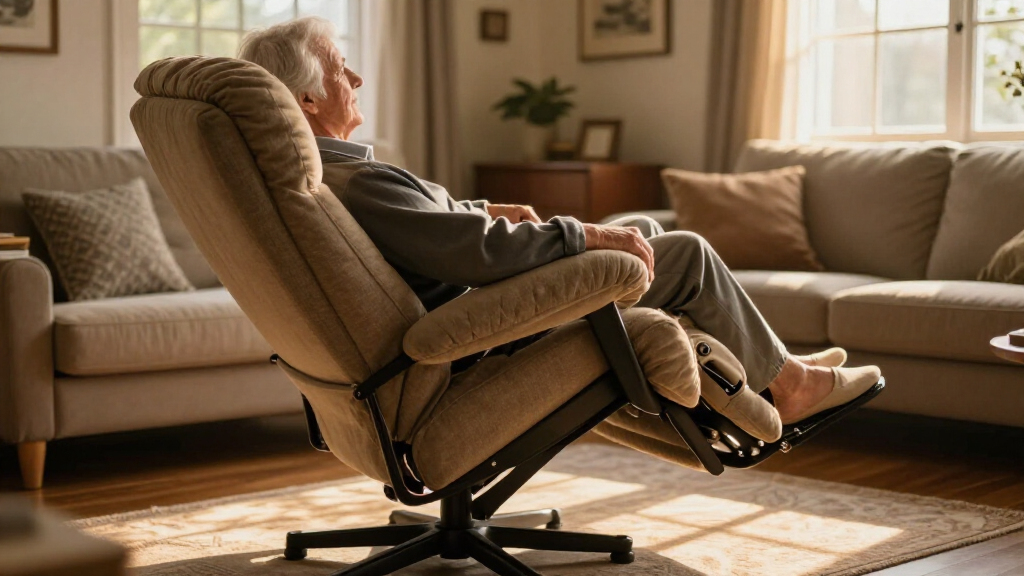
A three-position lift chair generally provides three main settings: upright, a moderate recline often called the “TV position,” and a deeper, more reclined position that’s close to flat. This added range of motion makes the chair more versatile, enabling users to transition between sitting, relaxing, and napping with greater ease. The inclusion of a single motor that can stop at various intermediate angles allows for a more personalized experience, but still tends to move the backrest and footrest together. This means you gain more comfort options without the complexity or cost of multiple motors.
Imagine you’re reading or taking a short nap. You press a button, and the chair smoothly leans back to a near-flat position, accommodating different activities. The ability to stop at various angles helps prevent discomfort from forcing you into predefined positions, thus offering a more natural and adaptable relaxation experience. However, because the backrest and footrest usually move in unison, you can’t elevate your feet while keeping your back more upright, which might be a limitation for users with specific health needs like circulation issues or arthritis.
Understanding this, the main tradeoff is that while three-position chairs provide more options than two-position models, they still lack independent adjustments for different parts of your body. For users who want more precise control—such as adjusting head, lumbar, or leg positions separately—these chairs might not meet their needs. But for those seeking an affordable upgrade from basic models with better comfort, they strike a good balance.
In essence, three-position chairs are ideal for users who want more recline and comfort without the complexity and expense of multiple motors. However, their limitations in independent adjustment should be considered if your health or comfort needs are more specific.
three position recliner lift chair
As an affiliate, we earn on qualifying purchases.
As an affiliate, we earn on qualifying purchases.
Why Infinite-Position Chairs Are All About Flexibility
An infinite-position lift chair uses two or more motors, allowing the backrest and footrest to move independently. This independence enables a vast spectrum of positions—far beyond basic reclines—such as zero-gravity, zero-pressure, or Trendelenburg positions, where the feet are elevated above the head. This level of adjustability provides a highly personalized experience, enabling users to find the most comfortable posture for extended sitting, pressure relief, or medical needs.
Imagine lying in a chair that adjusts your legs higher than your heart, effectively reducing pressure on your lower back and improving circulation. Or setting it to a zero-gravity position, where your legs are elevated, and your back is supported evenly—almost like weightlessness. These positions can alleviate pain, improve breathing, and reduce strain, especially for users with chronic conditions or recovery needs.
Furthermore, the independent adjustments mean you can fine-tune headrests, lumbar supports, and leg angles separately, catering to very specific comfort or therapeutic requirements. For example, someone with back pain can elevate their legs while keeping their back supported, or a person with circulation issues can set a position that maximizes blood flow.
However, with this flexibility comes complexity: these chairs are heavier, more expensive, and require more maintenance. Additionally, the advanced features might be overwhelming for some users or those with limited mobility or technical comfort. The tradeoff is that the level of customization can significantly improve quality of life for certain users but may be unnecessary for others who only need help with standing or moderate recline.
In summary, infinite-position chairs are about maximum adaptability—ideal for long-term comfort, pressure relief, and medical needs. But their complexity and cost mean they’re best suited for users who truly need that level of adjustment and support.
As an affiliate, we earn on qualifying purchases.
Motors Matter More Than Labels — Know What’s Inside
When comparing lift chairs, the number and type of motors tell you more than the position label. A single motor often means the backrest and footrest move together, limiting independent adjustments. Two motors usually mean the backrest and footrest can be adjusted separately, allowing for more personalized comfort. Multiple motors can also control headrests, lumbar supports, and other features, offering tailored support for various needs.
Understanding the motor configuration is crucial because it directly impacts how well the chair can accommodate your specific preferences or medical requirements. For instance, if you want to elevate your legs while keeping your back more upright, a dual-motor setup is essential. Conversely, a single-motor chair might only allow you to switch between predefined positions, which could be insufficient for customized comfort or medical needs.
Manufacturers sometimes use marketing labels loosely, so don’t rely solely on the name—always review the technical specifications. For example, a “two-position” chair might have intermediate stops that allow for more nuanced positioning, while an “infinite” chair might still have some limitations depending on motor capabilities.
Knowing the number and function of motors helps you select a chair that aligns with your health, comfort, and lifestyle goals. If you have specific needs—like pressure relief, precise posture control, or independent head and leg adjustments—checking the motor setup ensures you get the functionality you require rather than just a marketing label.
adjustable lift chair with independent motors
As an affiliate, we earn on qualifying purchases.
As an affiliate, we earn on qualifying purchases.
Beyond the Labels: Zero Gravity, Lay-Flat, and Trendelenburg — What They Really Mean
Terms like zero gravity, lay-flat, and Trendelenburg often appear in chair descriptions but can be confusing without context. Zero gravity positions are designed to mimic the posture astronauts use to reduce pressure on the spine and joints—by elevating the legs above the heart—creating a feeling of weightlessness that alleviates stress and pain. Lay-flat indicates the chair can recline nearly horizontal, suitable for sleeping or extended rest, but it’s not necessarily a true bed. Trendelenburg positions tilt the body so that the feet are higher than the head, often used in medical settings to improve circulation or reduce intracranial pressure, but they are not universally safe or comfortable for everyday use.
Understanding these terms helps you assess whether a chair’s features align with your health needs. For example, a zero gravity chair can significantly relieve back pain and improve breathing but isn’t a cure-all; it’s a supportive position that can be beneficial when used appropriately. Similarly, lay-flat positions are great for naps but might not be suitable for long-term sleep without additional support or bedding.
Manufacturers may use these terms loosely, so always review the actual angles and capabilities. Look for detailed specifications, diagrams, and, if possible, test the chair to ensure it offers the positions you need safely. Consulting health professionals is also advisable if you have specific medical conditions related to these postures.
In essence, knowing what these terms mean in practical terms helps you select a chair that truly benefits your health and comfort, rather than relying solely on marketing language.
Key Buying Tips for Your Perfect Lift Chair
- Match size and fit: Ensure seat width, depth, and height suit your body. Feet should rest flat, knees bent naturally, and head supported.
- Check mobility needs: Can you operate the controls confidently? Does the chair help you stand without risking balance?
- Space considerations: Measure fully reclined dimensions. Wall-hugging models save space but still need room to extend.
- Consider usage: Will you sit or sleep long hours? Look for adjustable features, pressure-relief cushions, and easy-to-clean fabrics.
- Power backup: Battery systems matter during outages. Confirm capacity and recharging needs.
- Warranty and service: Longer coverage on motors and frame, plus local service options, make maintenance easier.
Choosing a lift chair isn’t just about features — it’s about matching your daily needs and space at home. Take measurements, test controls if possible, and think about future comfort. Remember, the right chair can significantly enhance your quality of life by providing reliable support, ease of use, and comfort tailored to your specific needs.
Recent Innovations — What’s New in Lift Chairs?
Modern lift chairs are packed with features that boost convenience and comfort. Many now include multiple motors, adjustable headrests, and lumbar supports. Some even offer built-in massage, heat, USB ports, and programmable memory positions.
For example, a chair with a built-in massager and heat can ease sore muscles after a long day, while USB ports keep your devices charged. New materials like stain-resistant fabrics help keep the chair looking fresh longer.
However, these extras come at a cost. They also add complexity, meaning more components that could need servicing. Think about what features matter most for your lifestyle and health, and balance those against the price.
Manufacturers continue to push innovation, making chairs smarter, more adaptable, and more comfortable for long-term use.
What You Should Know Before You Buy — FAQs That Matter
Does a two-position chair only do two positions? Not exactly. It mainly moves between upright and a partial recline, but many can be stopped at intermediate angles. It’s more about the range than strict limits.
Can a three-position chair lie flat? Usually not completely flat, but many reach a near-flat recline suitable for naps. Check the specs for the exact angle.
Why call it an infinite-position chair? Because the independent motors allow countless combinations, not an endless number. It’s a marketing term emphasizing flexibility, not literal infinity.
Which is better — three- or infinite-position? It depends. Infinite offers more customization, but if you only need help standing or moderate recline, a simpler three-position might be enough.
Will Medicare cover a lift chair? Usually only the lift mechanism qualifies as durable medical equipment. The full chair typically isn’t covered, but rules vary. Check with your insurer.
Conclusion
Understanding what two-, three-, and infinite-position lift chairs really do can save you from surprises. The right chair depends on your daily routine, health needs, and space. Focus on motor setup, adjustable features, and comfort — not just the label on the box.
Imagine settling into a chair that perfectly supports your body, helping you stand, relax, or sleep with ease. That’s what informed choices can deliver. Your ideal lift chair isn’t just a piece of furniture — it’s a step toward greater independence and comfort at home.
Flea & tick season Picks
flea and tick prevention
As an affiliate, we earn on qualifying purchases.