
TL;DR

Turn quiet afternoons into listening time
- Thousands of audiobooks, podcasts and originals
- Listen on your phone, tablet or Echo — also offline
- Cancel anytime
A bed-shaker alarm clock uses a vibrating puck placed under a pillow or mattress to wake you, often with optional sound or flashing lights. Its reliability depends on whether you can feel it in your own bed, how the alarm is powered, and whether backup alerts suit your needs. Test the complete setup while awake, then retest it if your bed or routine changes.
A clock can flash across the room and still leave you asleep if you cannot hear it. A bed-shaker alarm clock takes another route: it sends a strong vibration through a small puck placed near you in bed. For many people with hearing loss, that physical alert can be easier to notice than a sound alone.
The idea is simple, but the details matter. Your mattress may soften the vibration, your partner may feel it too, and a backup battery may keep the time without powering every alert. This guide explains how these clocks work, what to look for, and how to test one in your real sleeping setup.
You’ll also find ways to build a dependable routine without relying on a product claim such as “extra strong.” The useful question is whether you can perceive the alert consistently where you sleep, at the time you need it.
A bed-shaker alarm uses a vibrating puck under a pillow or mattress, often alongside optional sound or light.
Test the puck in your own bed; mattress thickness, frame, position, and sleeper sensitivity all affect what you feel.
Check whether backup power runs the shaker or only preserves the clock and alarm settings.
Use connected phone features only after testing their app, notification, connection, and battery dependencies.
For important wake-ups, test the complete setup and consider another alert or support plan that fits your needs.
Bed-Shaker Alarm Clocks: Waking Up Reliably With Hearing Loss
A vibrating puck can offer a physical wake-up cue when sound alone is easy to miss. Whether it works depends on your body, bed, placement, power, and routine. Test the complete setup where you sleep.
From alarm time to a physical alert
A connected puck vibrates near the sleeper. Sound and flashing light may add other cues, depending on the model and its settings.
Set the alarm
Choose the wake time and the alerts you plan to use together.
Place the puck
Position it under your pillow or mattress as the instructions direct.
Feel the vibration
The bed carries the movement to your body; placement and materials affect it.
Wake and verify
Notice which cues reach you and repeat the test after a change.
Same clock, different experience
Mattress thickness, bed frame, puck position, sleep position, and individual sensation all affect what you feel. A successful test on another bed may not predict your results at home.
Compare the details that shape daily use
Vibration strength is only one factor. Look at comfort, controls, backup alerts, and how you share or travel with the device.
Intensity & rhythm
Check whether strength or pulse patterns adjust. More intensity may feel uncomfortable or disturb a partner without waking you more reliably.
Sound & light
See whether sound and flashing light can work alongside the shaker and be adjusted separately.
Controls & display
Clear labels, large buttons, and an easy-to-read display can help prevent setting the wrong alarm time.
Backup behavior
A battery may preserve the time and settings without powering the shaker. Check the manual and test as instructed.
Placement & sharing
Test your sleeping position. Consider whether vibration could wake a partner and whether the puck reaches your side.
Phone & travel
Apps may depend on permissions, Bluetooth or Wi-Fi, and phone battery. Wired pucks, cable length, and outlet needs matter away from home.
Match each cue to the job it can do
Choose an alert combination that suits your hearing, vision, sleep habits, comfort, and household. Features vary by model.
| Cue | How it reaches you | What to check |
|---|---|---|
| Bed shaker | ✓ Vibration through a nearby bed surface | Placement, intensity, pattern, comfort, and partner disturbance |
| Audible alarm | ~ Sound from the alarm unit | Whether the volume and sound are useful for your hearing |
| Flashing light | ~ A visual cue from the clock | Visibility from your sleeping position and whether it can run with vibration |
| Phone feature | ~ App or connected-device notification | Connection, app permissions, notification settings, and phone battery |
Try the complete setup before relying on it
Test while awake in your normal sleeping position. Change one thing at a time so you can tell what improves the signal.
-
01
Place it as directedUse the recommended location; avoid spots where the unit could be damaged or uncomfortable.
-
02
Set your planned alertsInclude sound or light if you intend to use them as additional cues.
-
03
Lie in your usual positionCheck whether the vibration is clear enough for you to notice where you actually sleep.
-
04
Adjust one thing, then retestTry a permitted change in position or intensity. Repeat if your bed or routine changes.
Check what still works when conditions change
A ready-looking display does not prove that every alert will run. Confirm the device’s actual behavior and test connected features as part of the setup.
Clock memory may not power the shaker
Some battery backups preserve time or alarm settings but do not operate the vibrating puck. Check the model’s instructions and test backup operation if allowed.
Each connection adds a dependency
App permissions, Bluetooth or Wi-Fi, notification settings, and phone charge can affect connected functions. Test the complete path you plan to rely on.
For important wake-ups, consider a layered plan
A separate visual or audible alert, or another agreed support arrangement, may add a useful second layer. If waking is medical, caregiving, or safety-related, test the whole setup and seek qualified advice about individual needs.
How a bed-shaker alarm turns an alarm into a physical alert
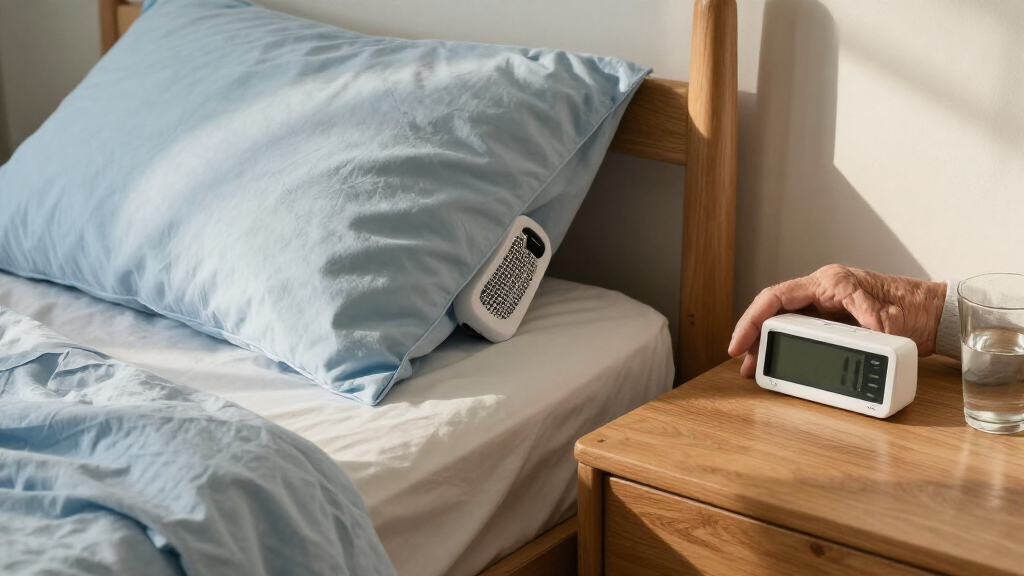
A bed-shaker alarm clock wakes you with a vibrating puck connected to an alarm unit, often with optional sound or flashing lights as backup. The puck sits under a pillow or mattress, and it vibrates when the alarm time arrives. That physical signal can help when you do not hear a conventional alarm.
Think of the puck as a small drum pressed against the bed: the vibration travels through the nearby surface, then reaches your body. A thin pillow may let you feel it clearly, while a thick mattress or a frame that absorbs movement may soften the signal. One person might wake to a gentle pulse near their shoulder; another may need a different position or alert combination.
These alarms can suit Deaf and hard-of-hearing sleepers, people who sleep through ordinary alarms, and people who prefer a quieter wake-up in shared housing. They do not work equally well for everyone. A person who has reduced sensation, for example, may not perceive the same vibration another sleeper finds unmistakable.
Many models combine vibration with an audible alarm or bright light. Each option has a different job: a shaker reaches you through the bed, sound may help if you have some usable hearing, and light provides a visual cue. Check which alerts can run together and which can be adjusted independently. Features vary by model, so the manual matters more than assumptions based on the clock’s appearance.
Popular right now

Apple AirPods Pro 3 Wireless Earbuds with Active Noise Cancellation

Ninja CREAMi 7-in-1 Ice Cream Maker, NC301

Vitamix 5200 Professional-Grade Blender, 64 oz. Container, Black
As an affiliate, we earn on qualifying purchases.
Choose an alert combination that fits how you sleep
A bed-shaker alarm is a good fit when you can reliably perceive its vibration in your bed, and the best alert combination depends on your hearing, vision, sleep habits, and comfort. Adjustable strength or patterns can help you find a noticeable setting without making the bed feel unpleasant. More intensity is not automatically better: it may disturb a partner or feel uncomfortable without waking you more consistently.
For example, imagine you share a bed and your partner wakes easily. A lower setting with a pulsing pattern, placed on your side according to the instructions, may disturb them less than a high continuous vibration. In another household, an audible alarm and flashing light alongside the shaker may add useful cues. Test the choices with the people who actually sleep in the room.
Before choosing, compare the things that shape everyday use, not just the vibration claim:
- Vibration: Is intensity adjustable? Can you choose a pulse or pattern?
- Other alerts: Can you adjust the sound and light separately from the shaker?
- Controls: Are buttons large and clear, and is the display easy to read when setting tomorrow’s alarm?
- Power: Does backup power run the shaker, or only preserve the clock and settings?
- Bed and room: Does the puck reach your usual sleeping position, and might the vibration wake a partner?
Ease of setting the alarm deserves attention. If a display is hard to read or the controls are confusing, it is easier to set the wrong time by mistake. A clear routine, such as checking the displayed alarm time before turning off the light, can make the device simpler to trust.
Test the shaker in your actual bed before relying on it
To find out whether a bed-shaker alarm works for you, place it as the manufacturer directs and test the vibration while you are awake in your normal sleeping position. Your mattress, frame, pillow, and distance from the puck all affect what you feel. A successful test in a shop or on a different bed does not tell you exactly what will happen at home.
- Read the placement and safety instructions. Use the position the manufacturer recommends, rather than wedging the puck somewhere it could be damaged or become uncomfortable.
- Set the alarm and alert combination you plan to use. Include sound or light if you want them as backup.
- Lie down in your usual position and run the test. Check whether the vibration is clear enough for you to notice.
- Adjust one thing at a time. Try a permitted change in position or intensity, then test again.
- Repeat after a bed change. A new mattress, frame, sleeping position, or adjustable-bed setting can change how vibration travels.
For instance, if the shaker feels strong when placed under your pillow but weakens when moved beneath a thick mattress, that is useful information about your setup. Follow the product guidance as you adjust it. Keep the device somewhere it can operate safely, and check for damage or unusual heat in line with the instructions.
A bed shaker is a waking aid, not a guarantee that you will wake in every circumstance. If you have reduced sensation, mobility limitations, or difficulty waking, you may need another alert method or a support plan as well. For a medical, caregiving, or safety-related wake-up, test the complete arrangement and seek qualified advice about individual needs.
Check power, travel, and connected features before alarm time
A bed-shaker alarm can only alert you if its power and connections work as expected. Some clocks include battery backup, but the backup may preserve the time or alarm settings without operating the shaker. Check the specific manual to learn what stays on during an outage, and test backup operation if the instructions allow it.
Picture a storm knocking out power overnight. If the display keeps the alarm time but the vibrating puck stops, the clock may look ready while the alert you depend on is unavailable. A separate battery-powered alert or another agreed wake-up arrangement may provide a useful second layer, depending on your needs. Confirm what the device actually does rather than inferring it from a battery symbol.
Connected features can add convenience, but they also add dependencies. A phone-controlled alarm may rely on Bluetooth, Wi-Fi, app permissions, notifications, and the phone’s charge. If the phone is muted, out of battery, or disconnected, a notification may not reach you. Treat a phone feature as part of the setup you need to test, not as an automatic backup.
Travel calls for its own check. A wired puck needs to reach the bed, and a clock may need a particular outlet or adapter. Before a trip, check cable length and power requirements; on arrival, run a test in the hotel bed. If you use an adjustable bed, test the position you keep overnight because changing the frame angle can alter how the vibration feels.
Build a wake-up plan you can trust day after day
A dependable wake-up routine combines a tested alert with a simple habit for checking it. Set the alarm, confirm its displayed time, and make sure the shaker is connected and positioned correctly before bed. Repeat the test regularly and after changes to your mattress, room, power arrangement, or sleep routine.
For example, suppose you need to wake at 6:00 a.m. for a caregiving shift. You might use a tested bed shaker plus a separate visual or audible alert that fits your needs, then check both before going to sleep. The right layers depend on the person and the reason for waking; adding more alerts helps only if you can perceive them and they function when needed.
Use a short checklist that matches your setup:
- At bedtime: Confirm the alarm time, alert setting, power, and puck placement.
- After a change: Retest if you move the puck, change beds, or alter an adjustable frame.
- For shared beds: Ask your partner whether the setting wakes them, and adjust within the manufacturer’s guidance.
- For important wake-ups: Keep a separate alert or support plan if one is appropriate for your circumstances.
This is less like setting a kitchen timer and more like checking a smoke alarm: the device earns trust through routine testing. Still, an alarm cannot cover every circumstance. If you have concerns about waking for a safety or health need, talk with a qualified professional about a suitable plan rather than treating any single gadget as a guarantee.
Know what a bed shaker can and cannot promise
A bed shaker can provide a strong physical alert, but no advertised strength rating proves that it will wake every sleeper in every bed. The actual sensation depends on where the puck sits, how the bed is built, the sleeper’s position and sensitivity, and whether the device is powered and connected. Testing gives you evidence about your setup; a product description does not.
That distinction matters when comparing devices. A model with several alert modes may give you more ways to customize the signal, while a simpler clock with clear controls may be easier to set consistently. Neither feature count nor a claim such as “powerful vibration” tells you whether the alarm suits your body and bedroom.
For a household with a light-sleeping partner, the question may be whether one side of the bed can feel the shaker without waking the other person. For someone who travels, cable length and outlet needs may matter more than phone connectivity. For someone with limited vision, large controls and a readable display may make daily use easier than extra patterns.
Current product releases, sales figures, and model specifications change, so check the manufacturer’s current instructions and support information when shopping. Pay attention to return terms if you can test the clock at home. The practical standard stays the same: the alarm should be comfortable to use, straightforward to set, and noticeable to you in the place where you sleep.
Frequently Asked Questions
Will a bed-shaker alarm wake someone who is Deaf or hard of hearing?
It may help because it uses vibration rather than relying only on sound, but no alarm can guarantee that every person will wake. Test the device in the person’s own bed and choose a signal they can perceive consistently.
Where should I put the vibrating puck?
Follow the manufacturer’s placement instructions; common positions include under a pillow or mattress. The best position depends on the device and bed, so test it while you are awake in your usual sleeping position.
Can a bed-shaker alarm wake my partner too?
Yes. Vibration can travel through a shared bed, and a partner may feel the same alert. Test the placement and setting with both people present, then adjust within the product instructions.
Will a bed shaker work through a thick mattress or on an adjustable bed?
It might, but a thick mattress or bed frame can soften or redirect the vibration. Test it in the exact bed and overnight position you use, including any adjustable-bed angle.
Does battery backup keep the shaker working during a power cut?
It depends on the clock. Some backup batteries preserve the time or alarm settings without powering every alert, so check the specific manual and test backup behavior where the instructions permit.
Can I use my phone instead of a dedicated bed shaker?
A phone can provide vibration or sound, but it may not create the same physical alert as a dedicated puck. Its reliability also depends on its settings, placement, charge, and connection, so test it just as carefully.
Conclusion
Choose a bed-shaker alarm by how it works for you in your own bed, not by its strongest-sounding claim. Set it up according to the instructions, test the alert you plan to use, and check its power and backup behavior.
A reliable morning starts the night before: one clear setting, one tested shaker, and a backup that you know will work. Let the alarm earn your trust one wake-up at a time.