TL;DR
Listen free for 30 days with Audible
Thousands of audiobooks and originals — cancel anytime.
Start your free trialAs an affiliate, we earn on qualifying purchases.
Rearranging furniture for walker and wheelchair clearance involves measuring your device and home, establishing uninterrupted routes, and removing hazards. Small changes can make a big difference in safety and independence.
Imagine trying to navigate your living room with a walker or wheelchair. Now picture how a simple furniture shift could turn a cramped, confusing space into a safe, smooth pathway. That’s the power of strategic rearrangement.
In this guide, you’ll learn how to measure your home and devices, plan continuous routes, and identify hazards—so you can create a home that supports your independence and safety every day.
Always measure your actual device and home spaces precisely; narrowest points matter most.
Plan routes that are continuous, wide, and free of sharp turns or hazards.
Remove or secure floor hazards like loose rugs, cords, and clutter before rearranging furniture.
Prioritize stable, supportive furniture and keep essentials within easy reach.
Use lighting and contrast to improve visibility and spatial orientation.
How to Measure Your Home and Devices for Perfect Fit
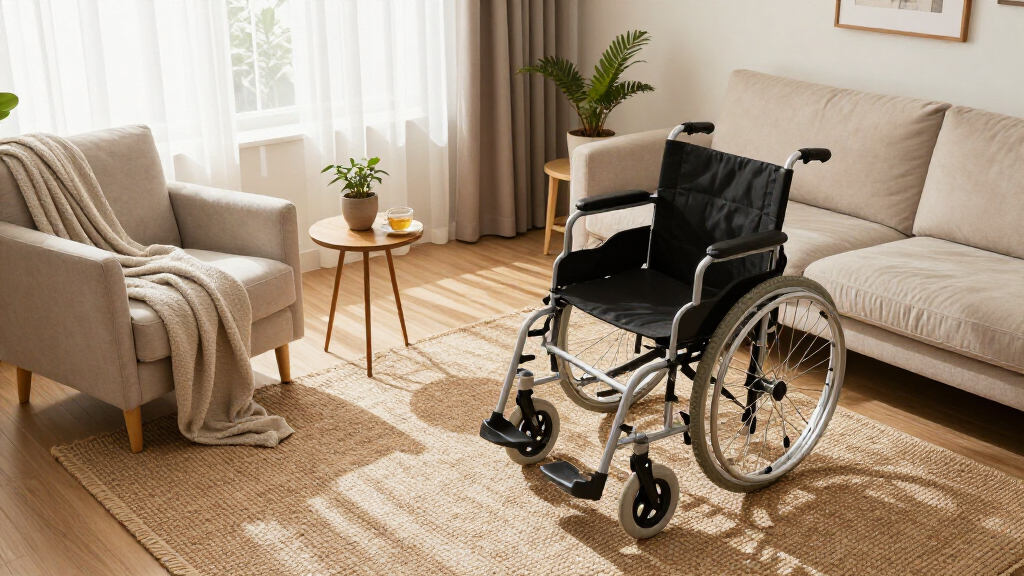
Before moving furniture, you need the right measurements. Think of it as gathering clues for a puzzle. Measure the width, length, and turning radius of your wheelchair or walker. Don’t forget to include footrests, armrests, and any accessories that stick out.
Next, measure doorways, hallways, and thresholds at their narrowest points. For example, a standard door might appear wide enough, but the hardware or door swing can eat up space. Keep these benchmarks in mind:
- About 36 inches for main routes
- At least 32 inches for door openings
- 60-inch diameter for turning areas
Use a tape measure and a notepad. For larger power chairs or bariatric devices, add extra clearance. Remember, these are guidelines—not strict rules—so measure your actual equipment for best results.
As an affiliate, we earn on qualifying purchases.
Create Smooth, Uninterrupted Circulation Paths
The goal? Make every route through your home feel like a well-planned highway—straight, smooth, and free of obstacles. Visualizing and planning these routes is crucial because cluttered or cramped pathways can cause accidents or feelings of insecurity. When routes are narrow or filled with furniture, it increases the risk of bumps, trips, or getting stuck, which can lead to falls or injuries.
Test your ideas physically: push your wheelchair or walk with your walker along the proposed route. Notice any tight corners, narrow gaps, or awkward turns. When planning, aim to:
- Keep turns radius at or above 60 inches
- Avoid backing up long distances, which can be tiring and unsafe
- Steer clear of sharp corners or protruding furniture that can snag or block movement
Rearranging furniture to maintain these open, predictable routes not only facilitates easier movement but also reduces mental stress—knowing you can navigate your space confidently. These adjustments directly impact your independence, safety, and overall quality of life. By understanding how the layout influences your ability to move freely, you can make smarter choices about furniture placement, balancing comfort and safety.
As an affiliate, we earn on qualifying purchases.
Keep Transfer and Turning Spaces Clear and Safe
Leaving generous open space beside beds, toilets, and chairs makes transfers safer and easier. When these spaces are crowded or cluttered, the risk of falls, slips, or drops increases significantly. For example, a bedside table blocking access to the bed can force awkward maneuvers, increasing strain or the chance of losing balance.
Ensure enough room for your device’s footrests, armrests, or any transfer supports—these are critical for stability during transfers. For caregivers, space to stand comfortably, access brakes, and provide assistance without feeling cramped is vital. A good rule? Leave at least 30 inches on the transfer side and maintain clear pathways around furniture. This buffer zone not only prevents accidents but also allows for smoother, more confident transfers.
Remember, transfer needs vary based on individual abilities and routines. Consulting an occupational therapist can help you tailor these spaces to your specific requirements, ensuring safety and ease of movement tailored to your unique circumstances. Investing in proper space now can prevent costly injuries and support your independence in the long term. Creating ample space also reduces the mental stress associated with tight or awkward transfer areas, which can cause anxiety or hesitation during movement.
As an affiliate, we earn on qualifying purchases.
Eliminate Floor Hazards That Trip or Roll You Up
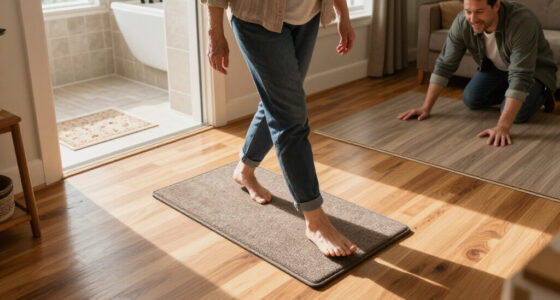
Loose rugs, clutter, cords—these are the sneaky enemies of safe mobility. A thick, curled rug can cause a walker or wheelchair to tip or get stuck, leading to falls or injuries. Removing or securely fastening rugs with non-slip backing minimizes this risk. Similarly, clear electrical cords from paths, or use cord covers that sit flush with the floor to prevent tripping or rolling hazards.
Address other hazards: pet beds, scattered shoes, unstable furniture, or clutter near doorways. Even small obstacles like uneven tiles or loose floorboards can cause a fall or trap a wheel, especially when combined with poor lighting or hurried movements. Recognizing and removing these hazards is essential because such hazards can unexpectedly cause accidents, leading to injuries that might limit mobility further or require medical intervention. Creating a safe environment involves understanding that even minor obstacles can have significant consequences, especially for those with limited mobility. Regularly inspecting and maintaining your flooring and surroundings ensures consistent safety and helps prevent setbacks in your independence.
As an affiliate, we earn on qualifying purchases.
Choose Stable, Supportive Furniture That Won’t Tip Over
Furniture should support you, not cause trouble. Pick chairs and sofas with firm cushions, sturdy frames, and armrests that help you sit and stand safely. Avoid soft, deep, or rocking chairs—they make transfers harder and increase the risk of tipping or losing balance.
Ensure furniture isn’t wobbly or easy to slide—stability is key. For example, a dining chair with supportive arms and a height that matches your knees makes rising easier and safer. Keep furniture away from walkways so you don’t trip or bump into it. Stable furniture provides a reliable support base, boosting confidence during transfers and movement, and reducing accidental falls or injuries.
Place Your Essential Items Within Easy Reach
Imagine reaching for your water or phone—now do that easily, without stretching or twisting. Keep frequently used objects close to your favorite sitting or transferring spot. For example, a nightstand beside your bed should hold your glasses, medication, and a lamp at a reachable height.
Avoid high shelves or deep cabinets that require unsafe stretching or balancing. Use wall-mounted storage or low, accessible drawers. Secure tall furniture against tipping, especially in homes with children or pets. The goal? Minimize reaching, reduce strain, and maximize safety by placing essentials where they are easy to access without risking imbalance or falls. Proper placement of everyday items reduces the need for awkward movements, which can cause loss of balance or falls, especially during transfers or when fatigued.
Use Lighting and Color to Improve Visibility and Orientation
Good lighting isn’t just bright—it’s purposeful. Bright, even lighting along routes and at turns helps you see obstacles clearly, reducing the chance of trips or collisions. Night-lights or motion-activated lights are especially helpful during nighttime navigation, providing immediate illumination without fumbling for switches.
Create contrast between floors, walls, and furniture—think dark floors with light trim, or bright rugs against neutral walls. This contrast enhances low vision and cognitive clarity, making it easier to distinguish different surfaces and objects. Avoid reflective floors or complex patterns that can distort perception or cause confusion.
For example, a brightly lit hallway with contrasting floor edges helps you stay oriented and confident in your movement, especially in unfamiliar or changing environments. Proper lighting and color contrast are simple yet effective tools to prevent accidents and support independent navigation. Recognizing that poor lighting or low contrast can lead to misjudging distances or missing hazards is vital. Implementing effective lighting and color schemes can significantly reduce the risk of falls and enhance your overall confidence in moving around your home.
Room-by-Room Strategies to Maximize Accessibility
Each space has unique needs. In the living room, keep a clear path through the seating area, avoiding clutter around the coffee table. Consider nesting or wall-mounted tables to save space and create open pathways. Leave enough room beside your favorite chair for easy maneuvering and transfers.
In the bedroom, ensure a clear approach to the bed with sufficient space on the transfer side, and keep the route to the bathroom open and free of obstacles. The kitchen benefits from removing chairs that block pathways and ensuring knee clearance at counters for easier access to appliances and workspace.
Bathrooms should be free of obstacles near the toilet, sink, and shower. Use grab bars and non-slip mats for added safety. Consulting professionals for high-risk areas can help optimize these spaces for your specific needs, reducing fall risks and enhancing independence. Tailoring each room to your mobility needs ensures that every part of your home actively supports your safety and independence, rather than hindering it. Small adjustments in one room can ripple through your daily routine, making every movement safer and less stressful.
Step-by-Step: Rearranging Your Home for Better Mobility
Follow this simple process to transform your home:
- Identify your main destinations—bed, bathroom, kitchen, living area.
- Measure your mobility device and all potential bottlenecks.
- Mark proposed routes with painter’s tape—test with your device.
- Remove non-essential furniture first, then reposition key pieces.
- Test the new layout with your device and assistive needs.
- Check transfer spots, door operation, and reachability.
- Revisit at night to ensure lighting and visibility are sufficient.
- Reassess whenever your needs change—new device, health, or routines.
This stepwise approach helps you systematically create a safer, more navigable home.
Frequently Asked Questions
How wide should a pathway be for a walker or wheelchair?
Aiming for about 36 inches wide pathways is best for most users. This allows comfortable navigation, but always measure your device and home to confirm. For doorways, at least 32 inches of clear opening is recommended.How much space does a wheelchair need to turn?
A typical turning space is a 60-inch diameter circle. Some larger power wheelchairs require more room. Always test your device in actual spaces before finalizing your layout.Can a wheelchair pass through a standard doorway?
Sometimes, but not always. Measure the full open width of the door when fully open. Consider hardware, hinges, and approach angle, as these can reduce usable space.Should all area rugs be removed?
Yes, unless they are securely fixed with non-slip backing. Thick, curled, or loose rugs are common tripping and rolling hazards, especially for wheelchairs and walkers.Where should a bed be positioned for easy access?
Place the bed so you can approach comfortably from your transfer side, with at least 30 inches of space. Keep the route to the bathroom and closet accessible without obstacles.Conclusion
Small furniture shifts can dramatically boost safety and independence. Think of your home as a personal highway—smooth, wide, and obstacle-free. When you prioritize clear routes and eliminate hazards, every step becomes safer and more confident.
Start with measuring. Rearrange intentionally. And remember—your home can support your mobility, not hinder it.
College move-in / dorm season Picks
dorm essentials
As an affiliate, we earn on qualifying purchases.