
TL;DR

Turn quiet afternoons into listening time
- Thousands of audiobooks, podcasts and originals
- Listen on your phone, tablet or Echo — also offline
- Cancel anytime
Loose rugs and mats can catch a foot, cane, or walker, so start by checking where someone walks and how steadily they move. Remove rugs from busy routes or anywhere they shift, curl, or catch a mobility aid; use tape or a compatible nonslip pad only when the rug can lie flat and stay firmly in place. Check the setup routinely, especially after cleaning or moving furniture.
A rug can look perfectly harmless until a walker wheel catches its edge or a slipper nudges a curled corner. That small snag can turn a familiar hallway into a tricky place to cross. For an older adult, the right choice might be rug tape, a nonslip gripper, or simply taking the rug away.
This guide helps you decide based on the rug’s location, condition, and the person’s movement around it. You’ll learn what to check, where tape and grippers can fall short, and when a clear floor is the more dependable option. The goal is a home that feels comfortable to walk through, with fewer surprises underfoot.
Remove rugs from busy routes when they shift, curl, or catch a cane or walker.
Use rug tape or a nonslip pad only when it suits both the rug and floor and keeps the rug flat.
Check rugs after cleaning, moving furniture, or changing the floor setup.
Look at lighting, clutter, footwear, handrails, and mobility aids alongside rugs.
Ask a qualified healthcare or therapy professional for help with individual fall concerns or a home assessment.
Rug safety for older adults Tape, grippers or removal?
A rug can catch a foot, cane, or walker and make a familiar route harder to cross. Choose what to do based on the rug, the floor, and how the person moves.
Start with the walking route
Watch how the person crosses the rugs they encounter every day.
Look for movement
Notice rugs that shift, bunch, curl, or have slick backing.
Check the edges
See whether a foot, cane tip, or walker wheel catches on a raised or frayed edge.
Prioritize busy paths
Pay close attention to doorways, bedside areas, stairs, and narrow routes.
Compare the options
Tape and grippers work only when they suit both the rug and the floor.
| Option | May help when | Check for |
|---|---|---|
| Rug tape | Rug and floor are compatible | Lifting, residue, or finish damage |
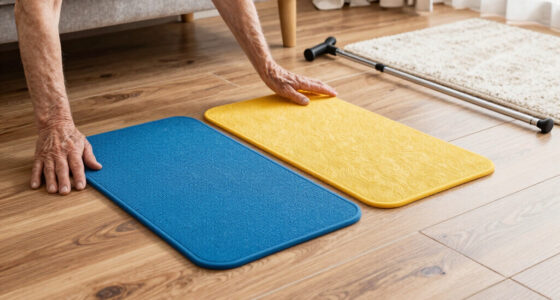
| Nonslip pad | Pad matches rug and floor | Bunching, wear, or raised edges |
| Removal | Rug is unnecessary or in a risky route | Comfort and traction on the bare floor |
Make the simplest safe change
Watch a normal crossing and note snags or hesitation.
Remove rugs that catch an aid or cannot stay flat and secure.
Inspect after cleaning, moving furniture, or changing tape or pads.
Consider the whole environment
Rug choices work best alongside other practical checks.
- Keep routes clear and well lit.
- Check footwear, handrails, and mobility aids.
- Ask a qualified healthcare or therapy professional about individual fall concerns or a home assessment.
Spot the rug hazards hiding along familiar routes
Rug safety for older adults starts with watching the person’s actual walking route, not with shopping for a fix. Check whether rug corners curl, edges fray, backing has become slick, or the rug bunches when someone steps on it. Pay special attention to doorways, bedside areas, stairs, and narrow paths where a person using a cane or walker has little room to maneuver.
Try a slow walk-through at the times the person usually moves around. For example, someone getting up at night may cross a bedroom rug in dim light, while a walker user may need to turn across the same rug several times a day. A small mat at the kitchen sink can also shift when a foot pivots on it. Look for what happens when a mobility aid crosses the edge: does a cane tip catch, or does a walker wheel bump and stop?
Notice the floor as well as the rug. A smooth tile floor may let a lightweight mat skate, while carpet can make a rug wrinkle or bunch. A bright pattern may also make an edge harder to distinguish for someone with vision changes. These details help you judge whether the rug can be secured or whether it is creating more work and risk than comfort.
Make a short list of every rug that sits on a walking route, then mark which ones move, lift, or require a difficult step. If a rug is purely decorative and sits where someone walks often, removing it may be the simplest change to try first.
Popular right now

Hisense 40-Inch Class QD4SR Series Hi-QLED FHD Smart Roku TV (2026 Model)

Dyson Cyclone V10 Origin Cordless Vacuum

Hisense 43-Inch E6SR Series Hi-QLED 4K UHD Smart Roku TV (2026 Model)
As an affiliate, we earn on qualifying purchases.
Know when removing a rug is the simplest safer choice
Rug safety for older adults often improves most when you remove a loose or unnecessary rug from a busy path. A rug that cannot stay flat and firmly in place, or that someone finds difficult to cross, is a good candidate for removal. This is especially true near doorways, on stair approaches, beside a bed, or along a route a cane or walker must cross.
Imagine your father uses a walker to reach the bathroom at night. The hallway runner has a curled corner, and one wheel catches it whenever he turns. Tape might reduce sliding, but it will not make a curled edge disappear or guarantee that the walker clears it. Taking the runner away gives him one less obstacle in a route he uses when he may be tired or moving in low light.
You don’t have to remove every rug in the home. A large, flat rug in a sitting area might be reasonable if it stays in place and does not interrupt the person’s steps or aid. Some people also value rugs for warmth, comfort, or sound reduction. The practical test is whether the rug can remain secure and whether the person can cross it without hesitation, catching, or a change in balance.
Removing a rug can reveal a floor that feels cold or loud. You might address that comfort need with warm socks or slippers that fit securely, better lighting, or furniture placement that leaves a clear route. If the rug serves a meaningful purpose, ask an occupational therapist or other qualified professional to assess the room and the person’s mobility.
Compare tape and grippers before you secure a rug
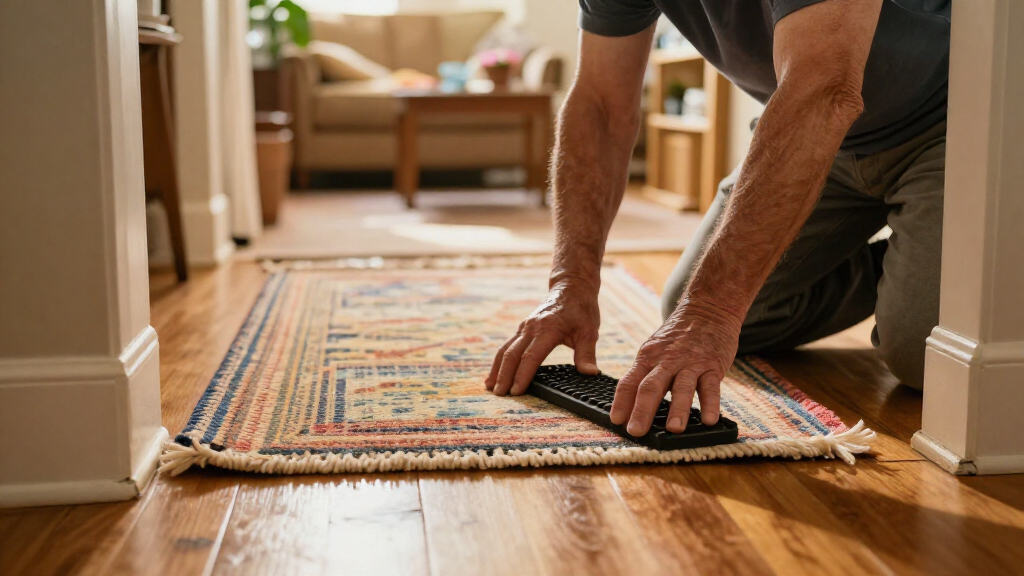
Rug safety for older adults can sometimes be supported by tape or a nonslip pad, but neither option works equally well on every rug and floor. Tape attaches the rug to the floor at selected points; a gripper or pad sits underneath and adds friction or cushioning. The best fit depends on the rug backing, floor finish, and whether the rug lies flat without a raised lip.
| Option | May help when | Check for |
|---|---|---|
| Rug tape | The rug and floor are compatible with the tape | Lifting, residue, or damage to a delicate finish |
| Nonslip pad or gripper | The pad matches both the floor and rug | Bunching, shifting, worn areas, or an undersized pad |
| Removal | The rug is unnecessary or sits in a risky route | Whether the bare floor changes comfort or traction |
Picture a small mat on a smooth kitchen floor. A properly matched pad may help keep it from skating, much like a shoe sole grips a dry sidewalk. But a pad that is too small can wrinkle at the edge, creating a new place for a toe to catch. On carpet, some rug pads can also bunch, so choose a product explicitly designed for that combination.
Follow the product instructions and inspect the actual setup after installation. Tape may perform poorly on dusty, damp, uneven, or textured surfaces, and some adhesives can affect flooring or finishes. If the rug still slides, lifts, or makes walking awkward, stop relying on that setup and remove the rug or seek advice from a trained professional.
Use this quick process to decide what to do
Rug safety for older adults is easier to assess when you make one decision at a time: observe the route, test whether the rug can stay flat, and watch how the person crosses it. Start with the places they use most, such as a bedroom-to-bathroom path or the route from a favorite chair to the kitchen. A quiet, careful check can reveal problems that are easy to miss during a quick tidy-up.
- Watch a normal crossing. Notice whether a foot shuffles, a cane catches, or a walker wheel bumps the rug. Don’t ask the person to repeat a movement that feels unsafe.
- Check the rug and floor. Look for curled corners, frayed edges, worn backing, dust, moisture, or a surface that prevents tape or a pad from holding.
- Choose the simplest workable change. Remove a rug that blocks a route or catches an aid. If you keep it, use a compatible tape or pad and confirm that the rug lies flat.
- Walk the route again. Check that doors open freely and the person can turn without stepping onto a loose edge.
- Recheck after changes. Inspect after cleaning, moving furniture, or replacing a pad or tape.
For example, a family might first remove the small mat beside a bed, then watch the person walk to the bathroom under the usual night light. If the clear floor helps but the person still hesitates at a doorway, the doorway and lighting deserve attention too. This process does not diagnose a balance problem; it helps you notice practical barriers and decide when to ask for professional support.
Make the whole walking route easier to use
Safer rug choices work best as part of a clear, well-lit route. A secured rug cannot make a dim hallway bright, move a cluttered basket, or stabilize a loose handrail. Check the full path from the bedroom to the bathroom, or from the front door to the chair where someone rests. Look for cords, furniture corners, shoes, and doors that narrow the walking space.
A practical example: a woman uses a cane and has a small mat inside her front door. The mat stays flat, but the entry light is weak and shoes gather beside it. Clearing the shoes, improving the light, and checking the mat together may make the entrance easier to use than focusing on the mat alone. Good-fitting footwear and a cane or walker adjusted for the person can also affect how confidently they move.
Bathrooms need particular care because water can make floors slippery. A bath mat should suit the floor, lie flat, and be removed when it is not needed. A securely installed grab bar and suitable nonslip flooring may offer more reliable support than a loose mat; a suction-cup mat is not a substitute for a grab bar. If someone needs help getting in or out of the bath, a qualified professional can suggest changes that fit the bathroom and the person.
Vision, balance, strength, medication effects, and mobility aids can all shape a person’s fall risk. A clinician, physical therapist, or occupational therapist familiar with fall prevention can help assess individual needs and recommend home changes. If an older adult has fallen, seek medical care when needed and discuss repeat falls or balance concerns with a healthcare professional.
Keep a rug only while it stays flat and secure
A rug setup needs routine checks because tape and grippers can wear, shift, or loosen. Look at the corners and edges, press lightly to see whether the rug moves, and check that a pad has not bunched underneath. Recheck after vacuuming, mopping, moving furniture, or changing the rug’s position. A quick inspection can catch a lifted corner before it becomes a surprise underfoot.
Suppose a kitchen mat stayed put all winter but begins to slide after a deep clean. The floor may still be damp, or cleaning residue may have changed how the backing grips. Let the floor dry, follow the tape or pad instructions, and test the mat gently before someone relies on it. If it keeps moving, remove it rather than asking the person to step around the problem each day.
Replace worn, frayed, or curled rugs instead of trying to flatten damage that keeps returning. Avoid layering one rug over another, since the top layer can shift and create an uneven edge. Keep rugs clear of doors so they do not bunch when the door swings over them, and leave enough room for a walker to turn without clipping an edge.
Checking does not need to become a complicated chore. Add a quick rug check to a regular home tidying routine and after any change to the floor. If a gripper repeatedly bunches or tape leaves residue, choose another arrangement. The deciding question is simple: can the person cross this spot comfortably, with the rug staying flat and firmly in place?
Frequently Asked Questions
Is it safer to remove every rug?
Not always. Remove loose or unnecessary rugs on busy routes, especially if someone has trouble crossing them or uses a cane or walker. A rug may be reasonable in a low-risk spot if it stays flat and secure and does not interfere with walking.
Is rug tape or a nonslip pad better?
Neither works best for every rug and floor. Check product compatibility, follow the instructions, and see whether the rug stays flat without sliding or bunching. If the floor finish is delicate or the setup keeps shifting, removing the rug may be simpler.
Can I put a rug over carpet?
A rug can bunch or slide on carpet, too. Use a pad made for that rug-and-carpet combination, then check that the rug lies flat and does not form a raised edge. Remove it if you cannot keep it secure.
What should I do about a bath mat?
Use a mat designed for the bathroom floor, keep it flat, and remove it when it is not needed. Water can make a mat or floor slippery, so check the setup regularly. A suction-cup mat does not replace a securely installed grab bar.
How often should I check rugs and grippers?
Check them routinely and after cleaning, moving furniture, or changing the floor setup. Look for lifting corners, worn pads, bunching, or residue that may affect grip. Re-secure or remove anything that shifts.
Do grippers make rugs safe for walkers and canes?
A gripper may help stop a rug from sliding, but it cannot prevent a cane tip or walker wheel from catching on a raised edge. If an aid bumps or catches the rug, remove it or ask a qualified professional to assess the walking route.
Who can assess an older adult’s home for fall risks?
An occupational therapist, physical therapist, or healthcare professional familiar with fall prevention may be able to assess walking routes and suggest practical changes. This can help when the person’s balance, vision, strength, or mobility needs affect how they use the home.
Conclusion
Start with the route the older adult walks every day. If a rug shifts, curls, blocks a turn, or catches a cane or walker, remove it; keep it only when it stays flat and secure and feels easy to cross. Tape and grippers can help in the right setup, but they need regular checks.
A safer path is often made one small change at a time: clear the floor, brighten the hallway, and make the next step easy to see.