
TL;DR

Turn quiet afternoons into listening time
- Thousands of audiobooks, podcasts and originals
- Listen on your phone, tablet or Echo — also offline
- Cancel anytime
Shower chairs sit entirely inside the shower or tub, ideal for walk-in showers or low thresholds. Transfer benches span the tub wall, easing entry for traditional tubs. Your space and mobility determine the best fit.
Imagine standing at your bathroom door, pondering how to make showering safer and easier. The choice between a shower chair and a transfer bench isn’t just about preference — it’s about fitting your space, your ability, and your safety needs. The right equipment can turn a risky task into a moment of independence and comfort.
In this guide, you’ll learn exactly how to match each device to your bathroom layout. From measuring your space to understanding your mobility, we’ll walk through the key considerations to help you pick the best solution for your shower or bathtub. Let’s make every bath a safe, relaxing experience.
Measure every dimension carefully—seat width, leg length, doorway clearance—before choosing equipment.
A transfer bench is ideal for high-sided bathtubs with enough exterior space; a shower chair suits walk-in showers or small bathrooms.
Features like adjustable height, reversible backrests, and nonslip surfaces greatly enhance safety and comfort.
Don’t forget to check if your bathroom layout can accommodate the equipment without blocking access or creating hazards.
Professional assessment can optimize safety, especially for complex or tight spaces.
What’s the difference? Shower chairs sit inside, transfer benches span the wall
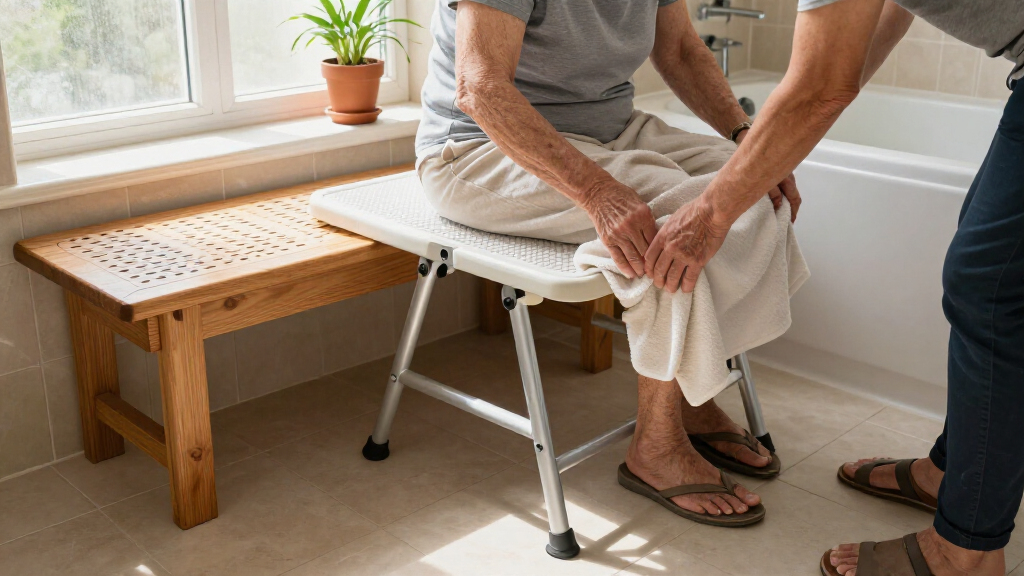
Shower chairs sit entirely inside the shower or tub. You step in, lower yourself onto the chair, and then bathe. Transfer benches, however, extend across the tub wall or shower threshold. You sit outside, then slide or scoot over the edge into the bathing area.
This simple difference impacts your bathroom layout and safety. For example, in a standard bathtub with high sides, a transfer bench acts like a bridge, helping you avoid risky stepping over a tall edge. A shower chair works best in walk-in or curbless showers where entry is straightforward.
Understanding this distinction is crucial because each option presents different safety implications. Transfer benches reduce the need for risky stepping over high sides, which can cause falls, especially if balance is compromised. However, they require enough external space and proper positioning to be effective. Shower chairs, while easier to use in confined spaces, demand good balance and stability once inside. Your choice should consider these factors to prevent accidents and promote independence.
adjustable shower chair for seniors
As an affiliate, we earn on qualifying purchases.
As an affiliate, we earn on qualifying purchases.
Match your bathroom layout: Which really fits?
To pick the right equipment, start with your space. Measure your bathtub or shower opening, clear floor area, and nearby fixtures. But beyond measurements, consider the implications of your bathroom’s design. For instance, a small bathroom with limited space might seem to favor a compact shower chair, but if the layout makes transferring awkward or unsafe, a different solution might be better. Larger bathrooms can often accommodate transfer benches, which provide more stability and ease of transfer but require more space for setup and movement.
Think about your entry method. Can you safely step over the tub wall? If yes, a shower chair inside might suffice. If stepping over is tough or risky, a transfer bench can significantly reduce fall hazards by allowing you to sit down outside the tub and slide in, minimizing the need for balancing on high edges. This choice can make the difference between a safe shower and a dangerous one, especially for those with limited mobility or balance issues.
Here are typical scenarios with deeper implications:
- Standard bathtub, high sides: Transfer bench is usually better because it minimizes the risk of falls while stepping over high edges. However, it requires enough exterior space and proper positioning to work effectively. Improper setup can lead to instability, so careful measurement and adjustment are essential.
- Walk-in shower with low threshold: Shower chair or stool inside the shower is often sufficient, but consider whether your balance allows safe sitting and standing. Sometimes, a sturdy stool with non-slip features offers a better tradeoff between stability and convenience.
- Small bathroom with tight space: Compact shower chair or fold-up wall seat is preferable, but ensure it doesn’t obstruct movement or access. In cramped spaces, the tradeoff involves choosing equipment that provides safety without creating obstacles, sometimes requiring creative arrangement or additional modifications.
transfer bench for bathtub with high sides
As an affiliate, we earn on qualifying purchases.
As an affiliate, we earn on qualifying purchases.
How to measure your bathroom for the perfect fit
Before buying, gather key measurements:
- The width of the shower or tub opening — ensures the seat or transfer bench can fit without forcing or instability.
- The interior width and length of the bathing area — determines whether a seat can be positioned comfortably and safely.
- The height and width of the tub wall or threshold — critical for transfer benches to sit securely without tipping or slipping.
- The space outside the tub or shower for a transfer bench’s legs — inadequate space can prevent proper setup or cause instability.
- The distance to nearby fixtures—toilets, vanities, doors — impacts how easily you can maneuver equipment and access other bathroom features.
- The bathroom door’s swing and clear opening — important for ensuring enough room for transfer and movement without obstruction.
Use a tape measure and write down these numbers. Comparing them against the product specs is essential because even a small miscalculation can lead to a product that doesn’t fit or isn’t safe. Remember, a seat that fits inside the tub but is too bulky outside can hinder safe transfer or movement, negating the benefits of the device.
Amazonnon-slip shower chair with backrest
As an affiliate, we earn on qualifying purchases.
As an affiliate, we earn on qualifying purchases.
Matching your bathroom layout — best choices for common setups
Here’s how different layouts generally work with each device and why these recommendations matter:
Bathroom Layout Recommended Equipment Standard bathtub with high sides Transfer bench that spans the tub wall Walk-in or curbless shower Shower chair or stool inside the shower Small bathroom, limited space Compact shower chair or fold-up wall seat Bathtub with sliding glass doors Usually a shower chair; transfer benches may require modifications Large or accessible shower with no curb Wall-mounted fold-down seat or rolling shower chair Choosing the right setup based on layout isn’t just about fitting a product; it’s about understanding how each option impacts safety, ease of use, and independence. For example, a transfer bench provides stability for high-sided tubs but requires sufficient external space and proper alignment to prevent slipping or tipping. A shower chair in a walk-in shower offers quick access but demands good balance and secure placement to avoid falls. Recognizing these tradeoffs ensures you select equipment that not only fits but actively enhances safety and confidence during bathing.
Amazonbathroom transfer bench for limited space
As an affiliate, we earn on qualifying purchases.
As an affiliate, we earn on qualifying purchases.
Features that make your choice safer and easier
Look for these features and understand why they matter:
- Height-adjustable legs for level seating — ensures the seat can be customized to your bathroom’s floor slope, preventing tipping or instability.
- Reversible backrests for versatile placement — allows positioning for optimal support and transfer, especially if space is limited or layout changes are needed.
- Removable or drop-down armrests for transfers — provides support during transfers, reducing fall risk and increasing confidence.
- Drainage holes and nonslip surfaces — prevent water pooling and slipping, directly reducing fall hazards.
- Rust-resistant materials for durability — ensure safety features like armrests and legs remain sturdy over time, avoiding sudden failures.
- Compact folding or wall-mounted options for small spaces — maximize usable space and facilitate easier transfers, especially in tight bathrooms.
These details aren’t just convenience; they are critical safety features. For example, adjustable height helps accommodate uneven floors or different user needs, while reversible backrests and armrests enhance flexibility and support. Understanding the implications of each feature helps you choose equipment that truly enhances safety, comfort, and independence, rather than just serving as a generic aid.
Latest innovations making bathing safer and simpler
New designs focus on space, ease, and safety, reflecting a deeper understanding of user needs and safety standards:
- Sliding transfer benches that move smoothly across the tub edge, reducing strain and risk during transfer.
- Swivel-and-slide seats to minimize twisting and scooting, which are common causes of falls.
- Fold-down wall-mounted seats designed for aging-in-place, offering stability without taking up space when not in use.
- Modular systems with removable arms and backs, allowing customization for different users and bathroom layouts.
- Improved adjustment mechanisms for tool-free setup, making it easier for users or caregivers to configure the equipment safely and correctly.
These innovations aim to reduce common hazards associated with bathing by addressing specific safety concerns—like unstable transfers, awkward positioning, or space constraints. For example, sliding benches and swivel seats decrease the physical effort and balance challenges, thereby lowering fall risk. Always verify that new features meet your specific needs and your bathroom’s dimensions to ensure they deliver the safety and ease they promise.
Safety tips and installation tricks you shouldn’t skip
Proper setup is key. Always follow the manufacturer’s instructions carefully. Ensuring legs are level and locked prevents wobbling or tipping during use. Regularly checking rubber feet and non-slip surfaces maintains grip and stability—wear or damage can compromise safety. Avoid using unstable fixtures like towel bars or handles as supports; these are not designed to bear weight and can lead to falls.
Consider installing permanent grab bars near the seat or transfer area—these provide critical support and can prevent falls if you lose balance. Use non-slip mats or textured surfaces outside the shower or tub to increase traction, especially when exiting. Routine inspections of your equipment for wear and tear can catch issues early, preventing accidents caused by degraded parts or loose fittings.
If you’re uncertain about installation or setup, consult a professional installer or occupational therapist. They can assess your bathroom’s layout and your abilities to recommend modifications or custom solutions that maximize safety, comfort, and independence.
Questions you’re likely to ask — and clear answers
Is a transfer bench safer than a shower chair? Not necessarily. Transfer benches are safer for those who have difficulty stepping over high tub sides, but they are less effective if space is limited or if they are improperly installed. The safety advantage depends on correct measurement, positioning, and user ability. Improperly fitted transfer benches can cause instability or tipping, increasing risk rather than reducing it.
Can I use a shower chair in a bathtub? Yes, provided it fits securely and you can sit and stand safely. However, it doesn’t help with crossing the tub wall, which remains a fall hazard if not mitigated by other means. The chair’s stability and your balance are critical factors—an ill-fitting or unstable chair can be more dangerous than no aid at all.
Will a transfer bench work with sliding glass doors? Usually not without modifications. The presence of glass doors and their tracks can interfere with proper placement and stability. Measure carefully and consider custom solutions or different equipment if necessary. Safety depends on secure positioning and unobstructed movement.
How much space do I need? Varies depending on the device and layout, but always include clearance for transfers, approaching fixtures, and door swing. A cramped space increases fall risk and limits maneuverability, so accurate measurement and planning are essential to ensure safe use.
What about weight capacity? Match the product to your weight, adding a safety margin. Most standard seats support 250-300 lbs., but bariatric models support higher weights—important to prevent equipment failure and ensure safety during transfers. Overloading can cause tipping or breakage, so choose appropriately.
Conclusion
The best bathing aid depends on your space and your mobility. Take the time to measure, plan, and match your equipment carefully. It’s not just about fitting a product — it’s about creating a safe, independent bathing experience every day.
Remember, safety comes from proper fit, correct installation, and understanding your abilities. When in doubt, consult a professional. Your comfort and safety are worth it.
This article is for informational purposes only and is not medical advice. Always consult a qualified healthcare professional about your specific situation.EVERGREEN BESTSE Evergreen bestsellers Picks
bestsellersbestsellers
As an affiliate, we earn on qualifying purchases.