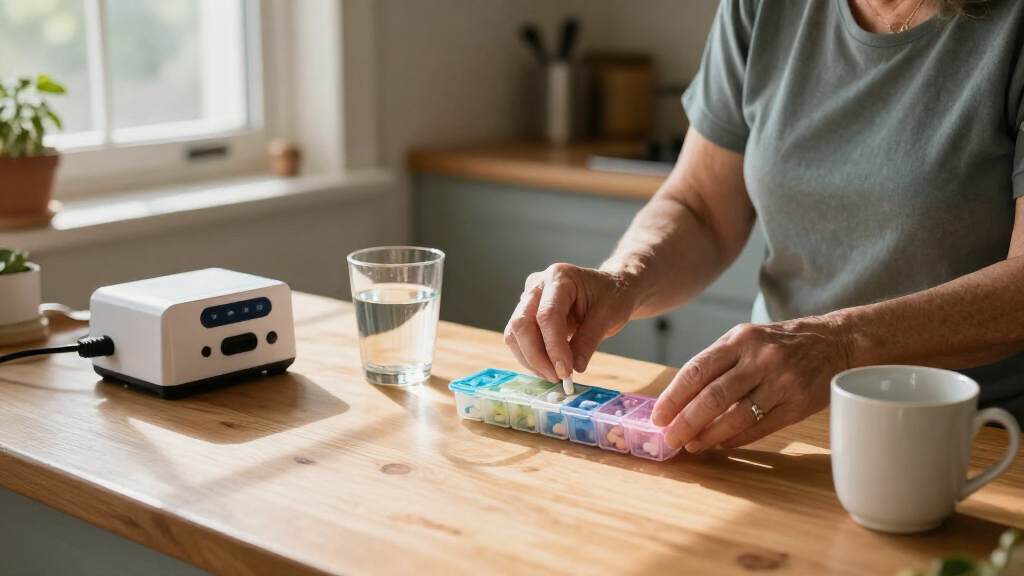

TL;DR

Turn quiet afternoons into listening time
- Thousands of audiobooks, podcasts and originals
- Listen on your phone, tablet or Echo — also offline
- Cancel anytime
A simple pill organizer often suits a stable schedule when someone can fill it, read it, and remember to take each dose. An automatic pill dispenser may help with complicated timing, missed doses, or caregiver oversight, but it adds setup, upkeep, cost, and possible power or connectivity issues. Neither device confirms that medicine was swallowed or replaces advice from a pharmacist or clinician.
A pill organizer can sit quietly beside the kettle, while an automatic dispenser may chirp at the exact moment a dose is due. That difference sounds small until a routine involves several medicines, changing times, stiff fingers, or a family member who wants to know whether a reminder was missed.
This guide explains how simple pill organizers and automatic pill dispensers work, where each can help, and what tradeoffs deserve a closer look. You’ll get practical questions to ask about schedules, storage, accessibility, alerts, and backup plans—so the tool fits the person’s day instead of making it harder.
A simple organizer can suit a stable schedule when the user or helper can fill, read, and open it reliably.
An automatic dispenser may help with reminders or limited access when those features address a clear problem.
Ask a pharmacist whether each medicine can safely be stored outside its original packaging.
Caregiver alerts may record dispensing or opening events, but they do not prove that medicine was swallowed.
Check setup, recurring fees, accessibility, power or network backup, and the plan for missed doses before choosing.
Medication routine guide · At a glance
Automatic Pill Dispensers vs Simple Pill Organizers
Matching the tool to the need starts with the person’s real schedule, abilities, and support. A simple organizer may suit a steady routine; an automatic dispenser can add timed reminders or dose access controls, with more setup and upkeep.
01 / Understand the tools
Two ways to support a routine
A pill organizer quietly holds doses sorted in advance. An automatic dispenser stores doses and makes a scheduled dose available, often with a sound or light alert. Features vary by model.
| What to compare | Simple pill organizer | Automatic pill dispenser |
|---|---|---|
| Preparation | Sort doses ahead of time, often weekly or monthly | Load medication, program the schedule, and maintain the device |
| Reminders | Usually none | Often sound or light; some models offer remote alerts |
| Dose access | Compartments may expose several days | Some models release only the dose due |
| Ongoing demands | Refill and check labels | Refill, check programming, and maintain the device |
| Cost and complexity | Usually lower | Higher; fees and features vary |
02 / Match schedule to support
Choose the least complicated tool that works reliably
The number of pills is only part of the picture. Timing, schedule changes, food instructions, and whether doses can be taken together all shape the fit.
Steady routine
A clear weekly view
For a few medicines taken at consistent times, a labeled organizer can make the week easy to scan. The user or helper must be able to fill, read, open, and remember each compartment.
More timing demands
Prompts may help
Several daily dose times, missed-dose concerns, or frequent changes may make reminders useful—if the device supports the prescribed schedule and someone programs it correctly.
What the device does—and what it does not
An automatic dispenser can alert at a set time and may limit access to a scheduled dose. It does not choose the right medicine, check a prescription, or decide what to do after a missed dose. Ask a pharmacist or clinician about medication questions and missed-dose instructions.
03 / Five practical checks
Test the fit on an ordinary day
Vision, hand strength, memory, hearing, routine, and who fills the device affect whether it will work when the morning is busy or the person is tired.
Schedule
Does timing fit?
Write the schedule in plain language. Check that device options match actual dose times and instructions.
Accessibility
Can they use it?
Can the person read labels, open compartments, hear alerts, and reach the device comfortably?
Dose security
What stays accessible?
Organizers may expose later doses. Some dispensers restrict access; security differs by model.
Caregiver support
What is reported?
Confirm whether alerts mean a dose was released, a compartment opened, or a device needs attention.
Reliability & cost
What if it fails?
Check batteries, power, network, recurring fees, upkeep, support, and the missed-dose backup plan.
Who fills it?
Keep setup dependable
Agree who loads and checks the schedule. A simpler system may be safer if nobody can maintain complex settings.
04 / Reminder reality check
Alerts show an event, not an outcome
Connected products may provide caregiver alerts, app schedules, missed-dose notifications, or remote status checks. Availability and capabilities vary.
Release, opening, or alert status
Depending on the model and service, an event may indicate a dose was dispensed, a compartment accessed, or attention needed.
That medicine was swallowed
A person may hear an alert while away, take medicine from another container, or open a compartment without taking the dose.
05 / Decision path
Five steps from routine to choice
Use these questions with the person taking the medicine and, when needed, a pharmacist or clinician.
Map the schedule
List times, changes, and medicine instructions.
Check storage
Ask whether each medicine can leave original packaging.
Try the controls
Read, open, hear, reach, and acknowledge a prompt.
Name the helper
Decide who fills, programs, and checks the device.
Set a backup
Plan for missed doses, outages, and device problems.
See what each tool actually does
An automatic pill dispenser stores medicines and releases a scheduled dose, often with a sound or light alert; a simple organizer holds doses that a person or helper sorted in advance. The first can add a timed prompt and, on some models, restrict access to the dose due. The second is a set of labeled compartments: straightforward, visible, and usually inexpensive.
Think of a weekly organizer as a row of small drawers marked Monday through Sunday, sometimes divided into morning and evening. A person fills it before the week begins, then opens the matching compartment when it is time. An automatic dispenser works more like a kitchen timer connected to a locked container: it alerts at a set time and makes the scheduled dose available, though details differ by model.
| What you need to compare | Simple pill organizer | Automatic dispenser |
|---|---|---|
| Preparation | Sort doses ahead of time | Load medicines and program the schedule |
| Reminders | Usually none | Often sound or light; some offer remote alerts |
| Dose access | Compartments may expose several days | Some models release only the dose due |
| Ongoing demands | Refilling and checking labels | Refilling, programming, and device upkeep |
| Cost | Usually lower | Higher; fees and features vary |
For example, someone taking two medicines with breakfast might find a weekly organizer easy to scan over a cup of tea. A person with separate doses at breakfast, lunch, and bedtime may value a timed alert—if the device can support that schedule and the user can operate it.
Neither device selects the right medicine, checks whether a prescription is appropriate, or decides what to do after a missed dose. The device manages parts of a routine; medication questions belong with a pharmacist or clinician.
Popular right now

Dyson Ball Animal 3 Corded Upright Vacuum

Roborock F25 Ultra Steam Wet Dry Vacuum Mop

TCL QM64L 85-Inch QD-Mini LED 4K Smart Fire TV
As an affiliate, we earn on qualifying purchases.
Match the tool to how complicated the schedule is
Automatic pill dispensers vs simple pill organizers come down first to how complicated a person’s medication schedule is and how reliably they can manage it. A stable routine with a few medicines taken once or twice daily may fit a basic weekly organizer. Different times, frequent changes, or several daily doses can make a visual plan and reminder more useful.
Imagine that Sam takes one tablet with breakfast and another at bedtime, every day. A Sunday refill into a labeled organizer may make the week easy to follow. Now imagine that Lee takes medicines at four different times, and one prescription changes each month. Sorting compartments and remembering every time may demand more attention; an automatic reminder could address one part of that burden, provided the schedule is programmed correctly.
The phrase “complex a person’s medication schedule” can describe more than the number of pills. Timing, changes, instructions about food, and whether doses can be taken together all matter. A device’s schedule options should match the actual prescription, not just the number of compartments advertised.
Storage is another part of the fit. Some medicines may be affected by moisture, light, air, or removal from original packaging. Before filling any organizer or dispenser, ask a pharmacist whether each specific medicine can be stored that way. A routine that looks tidy on the counter is not helpful if the storage method does not suit the medicine.
Write down the schedule in plain language and bring it to the pharmacist if there is any uncertainty. A clear written list can also help the person filling the device catch a mismatch before the week begins.
Choose something the person can use on an ordinary day
The best medication tool is one the person can manage during a normal morning, even when the room is dim and the kettle is boiling. Vision, hand strength, memory, hearing, and routine all affect whether an organizer or dispenser will work in practice. A flashing alert does little good if the user cannot see it, and a loud alarm may not help someone who cannot reach the device.
Consider Maria, who reads labels easily but has arthritis in her fingers. Tiny snap-shut compartments may be hard for her to open, even though the weekly layout is simple. An automatic dispenser could reduce the need to sort small compartments, yet its buttons, screen, and loading process may create a different challenge. The useful question is not whether the device has more features; it is whether Maria can use it when she is tired.
Try a short, hands-on check before committing. Can the person read the labels? Open the compartment or acknowledge the alarm? Hear the reminder from the next room? Reach the device without moving a chair or stretching across a hot stovetop? A family member can observe these everyday details without turning the routine into a test.
Who fills the device matters too. It may be the user, a caregiver, a pharmacist, or another trained helper, depending on the product and situation. Whoever fills it should follow the prescription and device instructions, then verify the schedule carefully. A system that is easy for the caregiver but confusing for the person taking the medicine may not be the right fit.
A simpler setup can be safer than a feature-rich device that nobody has time to program. If a person’s abilities or routine change, review the arrangement with a qualified professional.
Decide whether reminders or restricted access solve a real problem
A reminder can help bring a dose to mind, and restricted access can limit some opportunities to take the wrong compartment. Those features matter most when they address a specific difficulty in the person’s daily routine. An alert is a prompt, not proof, and a locked dispenser cannot make a confusing or incorrect schedule safe.
For example, if Pat sometimes forgets a lunchtime dose while gardening, a dispenser with a clear audible alert may make the missed moment easier to notice. If Pat hears the sound but is away from home, the device may report an alert or a dose left behind, depending on the model. It still cannot know whether Pat swallowed the medicine later from another container.
Simple organizers usually leave several days of medication accessible at once. That can be convenient for a capable user, but it may make it easier to open a later compartment early. Some automatic models expose only the dose due at that time, which may be useful when taking an extra dose would be dangerous. Security differs by device, and household storage still matters.
A caregiver should check exactly what a connected service records. It may report that the device dispensed a dose, that a compartment was opened, or that an alert was acknowledged. Those are different events from swallowing a medicine correctly. A notification can guide a check-in, but it should not be treated as a clinical measurement.
A device can record an event around a dose; it generally cannot confirm that the medicine was swallowed.
If the concern involves missed or extra doses, discuss the situation with a pharmacist or clinician. They can help clarify the schedule and what action to take when a dose is missed.
Check the costs, upkeep, and backup plan before buying
An automatic dispenser can add reminders and caregiver features, but it also brings more things to set up and maintain. Compare the purchase price with any recurring fees, then ask how refills, cleaning, power, and support work. A simple organizer needs regular filling and checking; an electronic device may need programming, batteries, a network connection, or a subscription.
Picture a power outage on a rainy evening. Does the dispenser have battery backup? Will it still release the next scheduled dose if the home internet is down? What does the device do if a compartment jams or a caregiver alert service stops working? Answers vary, so check the manual and ask the supplier about the exact model rather than relying on a broad claim such as “smart” or “secure.”
Make a backup plan that the person and helper can follow. Keep a written medication schedule, know whom to call about a missed dose, and understand how the device handles an outage or malfunction. Do not improvise an extra dose or change timing just because an alarm sounded; follow the medicine-specific instructions or contact a pharmacist or clinician.
Privacy and ongoing service matter when a dispenser sends information to an app or caregiver. Check what data it shares, who can see it, and whether remote alerts stop when a trial or paid service ends. Also ask whether the device needs a phone that the user does not own or a connection that is unreliable in the home.
Finally, ask the insurer and supplier directly about coverage. Payment rules vary by plan and location, and a monthly service charge can change the total cost. A lower-cost organizer may meet the need; a more expensive device makes sense when its specific features solve a real problem.
Use five checks to make a confident choice
Choose the least complicated tool that can support the person’s real routine reliably. A short conversation and a written schedule can reveal more than a long list of features. Use these five checks before deciding whether to keep a simple organizer or consider an automatic dispenser.
- Write down the schedule. List each medicine’s time and any special instructions. Ask a pharmacist whether the schedule is clear and whether medicines can leave their original packaging.
- Name the current problem. Is a dose forgotten, a compartment difficult to open, or a caregiver unsure whether a reminder was missed? Pick a feature only if it addresses that problem.
- Try the everyday actions. Have the person read, open, fill, or respond to the device in the place they will use it. Notice small obstacles such as glare, stiff lids, or an alarm that is hard to hear.
- Check the limits. Confirm dose access, schedule capacity, alerts, fees, data sharing, and power or network backup for the particular model.
- Agree on who does what. Decide who fills the tool, checks the schedule, and handles a missed dose or malfunction. Write the plan where the person and helper can find it.
For instance, a household might discover that the actual problem is not forgetting pills but opening a small organizer with sore fingers. That points toward easier-to-open compartments or help with setup, rather than automatically choosing a connected dispenser. Another household may find that repeated missed evening reminders are the sticking point, making a timed alert worth investigating.
Review the choice after a routine or prescription changes. A tool that once fit may become cumbersome when new doses are added; a device that seemed complicated may become easier when a caregiver takes over programming. Matching the tool is an ongoing practical decision, not a one-time technology upgrade.
Frequently Asked Questions
Are automatic pill dispensers better than simple organizers?
Neither is better for everyone. A simple organizer is often lower-cost and easier to understand; an automatic dispenser may help when timed reminders or restricted dose access address a specific need. The right fit depends on the schedule and the person’s ability to use the device.
Can an automatic pill dispenser prevent missed or double doses?
It may reduce some chances for error by sounding an alert or limiting access to a scheduled dose. It cannot guarantee that a dose is taken or prevent every mistake. Follow the medicine’s instructions or ask a pharmacist or clinician what to do after a missed dose.
Can I put all my medicines in a pill organizer?
Not necessarily. Some medicines need protection from moisture, light, or air, or may need to stay in their original packaging. Ask a pharmacist about the specific medicines and storage conditions before moving them into an organizer or dispenser.
Do connected dispensers tell caregivers whether someone swallowed a dose?
Generally, no. A model may report that it dispensed a dose, that a compartment was opened, or that an alert was acknowledged. Check what the specific device can detect; those events do not confirm the medicine was swallowed.
What should I check before choosing a dispenser?
Confirm that it supports the person’s schedule and medicines, feels manageable to use, and has a clear plan for power or network problems. Check refill steps, ongoing fees, caregiver notifications, privacy terms, and what the device does after a missed dose. Ask a pharmacist or clinician about medication questions.
Conclusion
Choose the tool that makes the person’s actual medication routine easier to follow, with the fewest steps they can manage reliably. Start with the schedule, name the problem, and ask a pharmacist about storage or dosing questions before changing how medicines are organized.
A good system should feel like a clear note beside the kettle, not another alarm to fight with.