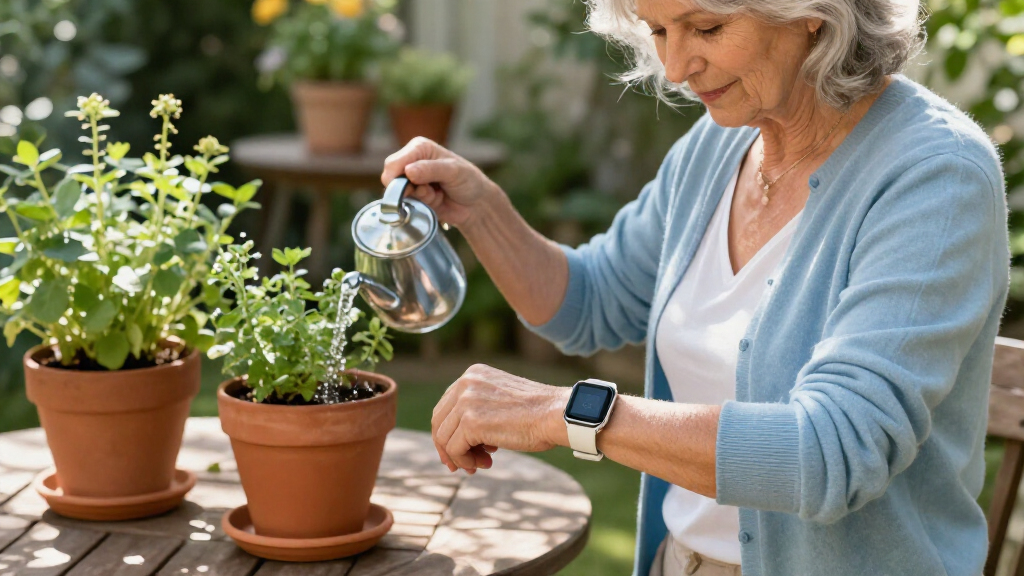
Senior-friendly smart watches range from cellular medical alert devices with SOS calling to simple pedometer watches that work without a phone or app. My best overall pick is the 4G GPS Smart Watch for Seniors with SOS, Calls, and Geo-Fencing for combining communication, location features, and emergency support. The TYKOIT Pedometer Watch is a simpler choice for people who want step counts without a phone, while the Seculife Cellular Medical Alert Smartwatch is aimed at buyers prioritizing dedicated safety support. The main tradeoff is between connected safety features—which may require a cellular plan and setup—and simpler watches that are easier to use but offer less communication or emergency assistance. Read on for how all 15 options compare and which type of watch best fits your needs.

Turn quiet afternoons into listening time
- Thousands of audiobooks, podcasts and originals
- Listen on your phone, tablet or Echo — also offline
- Cancel anytime
Complete the kit


Key Takeaways
- Connected safety and simple activity tracking are different jobs. The cellular and SOS models prioritize calls, alerts, or location sharing; the pedometer-focused watches favor straightforward daily movement tracking.
- The 4G GPS Smart Watch ranks first for breadth of safety features. Its combination of calls, SOS, GPS, and geo-fencing covers more needs than a basic fitness tracker, though cellular setup is a tradeoff.
- TYKOIT is the clearest pick for phone-free simplicity. Its no-phone-or-app approach may suit a wearer who wants steps without managing a companion app.
- Fall detection is not the same as guaranteed emergency response. Buyers should check how alerts are sent, who receives them, and whether service or a subscription is required.
- Several DAVIKO and Pautios options focus on everyday tracking. Their pedometer and fitness-tracking emphasis makes them a better fit for routine activity than for buyers seeking a dedicated medical alert device.
| 4G GPS Smart Watch for Seniors with SOS, Calls, and Geo-Fencing |  | Best for Location Sharing and Family Calls | Display: 1.3-inch LCD touchscreen | Connectivity: 4G, GPS, Wi-Fi, and LBS positioning | SIM requirement: Nano SIM with calling and data service | VIEW LATEST PRICE | See Our Full Breakdown |
| Fajocru Fall Detection Smart Watch for Seniors with GPS and SOS Alerts |  | Best for Automatic Fall Alerts | Connectivity: 4G cellular | Fall detection: Automatic alerts to preset emergency contacts | GPS: Built-in GPS with geofencing | VIEW LATEST PRICE | See Our Full Breakdown |
| TYKOIT Pedometer Watch for Seniors, No Phone or App Required |  | Best for Phone-Free Simplicity | Display: 1.4-inch color touchscreen | Smartphone requirement: No phone or app required | Tracking: Steps, calories, distance, activity time, sleep, heart rate, and blood oxygen | VIEW LATEST PRICE | See Our Full Breakdown |
| Seculife Cellular Medical Alert Smartwatch for Seniors with Fall Detection and GPS |  | Best for Medication Reminders and Caregiver Response | Safety features: Automatic fall detection, GPS tracking, and SOS button | Calling: Two-way calling with pre-approved contacts | Reminders and activity: Medication reminders and pedometer | VIEW LATEST PRICE | See Our Full Breakdown |
| Senior-Friendly Pedometer Watch with Heart Rate and Sleep Tracking |  | Best for Flexible App-Optional Fitness Tracking | Display: Color LCD touchscreen | Operating system: Proprietary OS | Tracking: Steps, heart rate, stress, calories, distance, sleep, and manually measured blood oxygen | VIEW LATEST PRICE | See Our Full Breakdown |
| DAVIKO Pedometer Watch with Heart Rate and Sleep Tracking |  | Best for App-Free Simplicity | Display: 41 mm LCD touchscreen | Tracked metrics: Heart rate, blood oxygen, sleep duration, steps, distance, calories burned, and active minutes | Phone or app required: No | VIEW LATEST PRICE | See Our Full Breakdown |
| DAVIKO Senior-Friendly Smart Watch with Pedometer |  | Best for a Color Display Without an App | Display: Large color LCD touchscreen | Shape: Rectangular | Activity tracking: Steps, calories, distance, and activity time | VIEW LATEST PRICE | See Our Full Breakdown |
| Pautios EW1 Pedometer Watch with Fitness Tracking |  | Best for Standalone Fitness Tracking | Model: EW1 | Display: Large color LCD touchscreen | Tracked metrics: Steps, calories, distance, activity time, sleep, heart rate, and blood oxygen | VIEW LATEST PRICE | See Our Full Breakdown |
| Yihou Smart Watch for Seniors with Fall Detection and SOS Calling |  | Best for Fall Alerts with Smartphone Support | Model: US-X-F240blkSS | Operating system: Joeme Fit | Compatibility: Android and iOS smartphones | VIEW LATEST PRICE | See Our Full Breakdown |
| Fall Detection Smart Watch for Seniors with SOS |  | Best for Calling and Family Monitoring | Screen size: 1.55 inches | Connectivity: Bluetooth | App: Joemefit | VIEW LATEST PRICE | See Our Full Breakdown |
| Pautios TW2 Fitness Smartwatch with Step Counter |  | Best for a Clear, Vivid Display | Display: 1.8-inch AMOLED touchscreen, 368 × 448 | Health and activity tracking: Heart rate, blood oxygen, sleep, steps, distance, calories, activity time | Battery life: Up to 7 days | VIEW LATEST PRICE | See Our Full Breakdown |
| Cellular Medical Alert Smart Watch with Emergency Button |  | Best for Emergency Monitoring | Connectivity: 4G cellular | Display: 2-inch touchscreen | Emergency features: SOS button, two-way voice, fall detection and GPS alerts with a qualifying plan | VIEW LATEST PRICE | See Our Full Breakdown |
| DAVIKO Senior-Friendly Fitness Tracker with 1.83-Inch Display |  | Best for Phone-Free Activity Tracking | Display: 1.83-inch LCD touchscreen | Activity tracking: Steps, distance, calories, and active minutes | Health tracking: Heart rate, blood oxygen, and sleep | VIEW LATEST PRICE | See Our Full Breakdown |
| DAVIKO Senior-Friendly Fitness Tracker Smartwatch |  | Best for Simple Everyday Tracking | Display: 1.83-inch HD touchscreen | Health tracking: Heart rate, blood oxygen, and sleep | Activity tracking: Steps, distance, calories, active minutes, and sports | VIEW LATEST PRICE | See Our Full Breakdown |
| Choiknbo Smart Watch Fitness Tracker with Heart Rate, Blood Oxygen and Sleep Monitoring |  | Best for Multi-Sport Tracking | Display: 1.83-inch LCD, 320 × 340 | Tracking: Steps, distance, calories, heart rate, blood oxygen, sleep, and sports modes | Compatibility: Android and iOS smartphones | VIEW LATEST PRICE | See Our Full Breakdown |
| senior-friendly smart watch | Water resistance | Display | GPS | Battery life |
|---|---|---|---|---|
| 4G GPS Smart Watch for Seniors | Listed as waterproof to a depth of 1 meter | 1.3-inch LCD touchscreen | — | — |
| Fajocru Fall Detection Smart W | IP67 | — | Built-in GPS with geofencing | — |
| TYKOIT Pedometer Watch for Sen | IP68 | 1.4-inch color touchscreen | — | Up to 7 days |
| Seculife Cellular Medical Aler | IP67; listed depth of 1.5 meters | 2 inches | — | 12 hours |
| Senior-Friendly Pedometer Watc | IP68; listed depth of 1.5 meters | Color LCD touchscreen | No GPS | Up to 7 days |
| DAVIKO Pedometer Watch with He | IP68; rated to 1.5 meters | 41 mm LCD touchscreen | No | Up to 7 days |
| DAVIKO Senior-Friendly Smart W | IP68; rated to 1.5 meters | Large color LCD touchscreen | — | Up to 7 days |
| Pautios EW1 Pedometer Watch wi | IP68 | Large color LCD touchscreen | — | Up to 7 days |
| Yihou Smart Watch for Seniors | Rated to 30 meters | — | Via smartphone | Up to 10 days |
| Fall Detection Smart Watch for | — | — | No | — |
| Pautios TW2 Fitness Smartwatch | 30 meters | 1.8-inch AMOLED touchscreen, 368 × 448 | None | Up to 7 days |
| Cellular Medical Alert Smart W | Water resistant; not waterproof | 2-inch touchscreen | Built in | — |
| DAVIKO Senior-Friendly Fitness | IP68 | 1.83-inch LCD touchscreen | Via smartphone | — |
| DAVIKO Senior-Friendly Fitness | IP68 | 1.83-inch HD touchscreen | — | Up to 7 days |
| Choiknbo Smart Watch Fitness T | 1.5 meters | 1.83-inch LCD, 320 × 340 | Via smartphone | — |
More Details on Our Top Picks
4G GPS Smart Watch for Seniors with SOS, Calls, and Geo-Fencing
I’d choose this model for families who want location updates and direct communication in one watch. Its GPS, Wi-Fi, and LBS positioning supports real-time tracking, while geo-fencing can notify caregivers when the wearer crosses a set boundary. The watch also supports two-way calls, video calls, and voice messages, and its SOS button can call three preset numbers. Compared with the TYKOIT Pedometer Watch, this is built for caregiver contact rather than independent fitness tracking; unlike the Seculife Cellular Medical Alert Watch, its listed features do not include automatic fall detection. The main catch is setup: a Nano SIM with calling and data service is required. Its water resistance is listed to only one meter, so I wouldn’t treat it as a watch for swimming.
Pros:- Real-time positioning and geo-fencing support caregiver check-ins.
- Offers two-way phone calls, video calls, and voice messages.
- SOS button can call up to three preset contacts.
- Stores GPS route history for up to 90 days.
Cons:- Requires a Nano SIM and separate calling and data service.
- Water resistance is listed to a depth of only one meter.
- Compared with the Seculife model, it does not list automatic fall detection.
Best for: Families who want GPS and boundary alerts alongside calls or video check-ins with an older relative.
Not ideal for: People seeking automatic fall alerts, a phone-free setup, or a watch intended for swimming.
- Display:1.3-inch LCD touchscreen
- Connectivity:4G, GPS, Wi-Fi, and LBS positioning
- SIM requirement:Nano SIM with calling and data service
- Emergency calling:SOS calls up to three preset numbers
- GPS route history:Up to 90 days
- Water resistance:Listed as waterproof to a depth of 1 meter
- Compatibility:Android and iOS
Our verdict“Choose this watch if location sharing and family calls matter more than automatic fall detection or phone-free simplicity.”
Fajocru Fall Detection Smart Watch for Seniors with GPS and SOS Alerts
For a caregiver prioritizing an alert that can go out without the wearer pressing SOS, the Fajocru stands apart from the lineup’s basic pedometer watches. Its fall detection can notify preset contacts, and built-in GPS with geofencing adds location context. It also tracks steps, sleep, heart rate, blood oxygen, and other listed metrics, with an IP67-rated design. Compared with the 4G GPS Smart Watch with SOS, Calls, and Geo-Fencing, this adds automatic fall alerts, but its calling setup needs close attention: the preinstalled data-only SIM does not support voice calls, so voice service requires a separate compatible SIM. Video calls and voice chat are listed, but I wouldn’t treat the health readings as medical measurements; blood pressure is specifically described as a reference metric.
Pros:- Automatic fall detection can alert preset emergency contacts.
- Built-in GPS and geofencing support location monitoring.
- Tracks steps, sleep, heart rate, blood oxygen, and other listed metrics.
- IP67 rating and magnetic charging cable are listed.
Cons:- The included data-only SIM does not support voice calls; voice service needs a separate SIM.
- Health readings are not described as medical-grade, and blood pressure is a reference measurement.
- The red watch and black band may not suit buyers seeking a discreet appearance.
Best for: Caregivers who want automatic fall alerts, GPS geofencing, and a watch with health and activity tracking.
Not ideal for: Buyers who want ready-to-use voice calling from the included SIM or rely on watch readings for medical decisions.
- Connectivity:4G cellular
- Fall detection:Automatic alerts to preset emergency contacts
- GPS:Built-in GPS with geofencing
- Communication:Video calls and voice chat; included data-only SIM does not support voice calls
- Health tracking:Heart rate, blood pressure reference, blood oxygen, sleep, steps, and temperature
- Water resistance:IP67
- Compatibility:Android and iOS
Our verdict“Pick the Fajocru if automatic fall alerts are a priority and you’re prepared to arrange a voice-capable SIM separately.”
TYKOIT Pedometer Watch for Seniors, No Phone or App Required
The TYKOIT is the clearest choice here for someone who wants basic tracking without managing a smartphone app. It works independently and puts a 1.4-inch color touchscreen over steps, distance, activity time, sleep, heart rate, and blood oxygen tracking. Its battery is listed for up to seven days, which means fewer charging reminders than the Seculife Cellular Medical Alert Watch, whose stated battery life is 12 hours. The tradeoff is that TYKOIT is a fitness-focused watch, not a caregiver alert device: the provided features do not list GPS, calls, SOS, or fall detection. Blood oxygen must also be started manually, so it is less hands-off than everyday step tracking. I’d favor it over app-dependent options when independence from a phone matters most.
Pros:- Basic watch functions work without a smartphone or app.
- Tracks steps, calories, distance, activity time, sleep, heart rate, and blood oxygen.
- Battery life is listed as up to seven days.
- IP68 water resistance is listed.
Cons:- The listed features do not include GPS, SOS calling, or fall detection.
- Blood oxygen measurement must be started manually.
- Provides less caregiver communication than the 4G GPS Smart Watch with SOS, Calls, and Geo-Fencing.
Best for: Older adults who want a simple activity and sleep tracker that works without a smartphone or app.
Not ideal for: Wearers or caregivers who need GPS location sharing, emergency calling, fall alerts, or automated blood oxygen readings.
- Display:1.4-inch color touchscreen
- Smartphone requirement:No phone or app required
- Tracking:Steps, calories, distance, activity time, sleep, heart rate, and blood oxygen
- Battery life:Up to 7 days
- Charging time:1.5 hours
- Water resistance:IP68
- Band material:Silicone
Our verdict“Choose TYKOIT for independent, phone-free activity tracking, but look elsewhere if safety alerts or location sharing are needed.”
Seculife Cellular Medical Alert Smartwatch for Seniors with Fall Detection and GPS
Seculife combines automatic fall detection, GPS, SOS, and two-way calls with medication reminders, making it a more care-oriented choice than the TYKOIT or the app-optional fitness watch in this group. Its location history is listed for up to one year, which gives caregivers a longer record than the 90 days offered by the 4G GPS Smart Watch with SOS, Calls, and Geo-Fencing. The tradeoff is substantial: cellular service requires a $25 monthly subscription, and the stated battery life is just 12 hours. That charging schedule may be difficult for someone who forgets routine tasks, even with medication reminders on the watch. I’d choose it when the alert and reminder features justify daily charging and an ongoing service plan.
Pros:- Automatic fall detection can send alerts without pressing SOS.
- GPS tracking includes up to one year of location history.
- Supports two-way calls with pre-approved contacts.
- Includes medication reminders, step tracking, and listed health metrics.
Cons:- Requires a cellular subscription listed at $25 per month.
- Stated battery life is only 12 hours, calling for frequent charging.
- Its 2-inch display may feel large for wearers who prefer a compact watch.
Best for: Families seeking fall alerts, approved-contact calling, GPS history, and medication reminders in a cellular watch.
Not ideal for: People who want a long-lasting battery, no recurring service charge, or a small, lightweight display.
- Safety features:Automatic fall detection, GPS tracking, and SOS button
- Calling:Two-way calling with pre-approved contacts
- Reminders and activity:Medication reminders and pedometer
- Health metrics:Heart rate, blood pressure, and blood oxygen
- Cellular subscription:$25 per month
- Battery life:12 hours
- Display:2 inches
- Water resistance:IP67; listed depth of 1.5 meters
- GPS location history:Up to 1 year
Our verdict“Choose Seculife when fall response and medication reminders outweigh the ongoing subscription and frequent charging.”
Senior-Friendly Pedometer Watch with Heart Rate and Sleep Tracking
This watch suits someone who wants everyday fitness tracking without needing a phone for basic use, but would like extra functions available through an app later. It tracks steps, heart rate, sleep, stress, calories, and distance; pairing adds calls, notifications, and music controls. Compared with the TYKOIT Pedometer Watch, it offers sports modes and app-based extras, while TYKOIT is the more straightforward phone-free pick. Neither should be mistaken for a GPS safety watch: this model lists no GPS, fall detection, or SOS. Blood oxygen readings are manual, and calls and notifications depend on a paired smartphone and app. I’d choose it for activity tracking and optional connectivity, not for caregiver location monitoring or emergency response.
Pros:- Basic features work without a smartphone or app.
- Tracks steps, heart rate, sleep, stress, calories, and distance.
- Battery life is listed as up to seven days, with 1.5-hour charging.
- Offers 20 sports modes without the app and more than 100 with it.
Cons:- No GPS is listed, so it cannot provide location tracking.
- Calls, notifications, and expanded features require a paired phone and app.
- Blood oxygen measurement is manual.
Best for: Older adults who want basic tracking without a phone but may use a smartphone app for calls, notifications, and extra sports modes.
Not ideal for: People who need GPS location tracking, automatic fall alerts, SOS calls, or watch features that work without any phone pairing.
- Display:Color LCD touchscreen
- Operating system:Proprietary OS
- Tracking:Steps, heart rate, stress, calories, distance, sleep, and manually measured blood oxygen
- Sports modes:20 without the app; more than 100 with the app
- Battery life:Up to 7 days
- Charging time:1.5 hours
- Water resistance:IP68; listed depth of 1.5 meters
- GPS:No GPS
- Compatibility:iOS and Android smartphones
Our verdict“Choose this model for app-optional fitness tracking, not for emergency alerts or location sharing.”
DAVIKO Pedometer Watch with Heart Rate and Sleep Tracking
For someone who wants everyday activity and wellness tracking without pairing a watch to a phone, this DAVIKO is the clearest fit in this group. Its 41 mm LCD touchscreen gives the display room for basic on-wrist checks, while step, sleep, heart-rate, and blood-oxygen tracking cover more than a basic pedometer. Unlike the DAVIKO Senior-Friendly Smart Watch with Pedometer, which has a rectangular color screen, this model is round; the listed data does not establish which is easier to read, so screen shape comes down to preference. Its main advantage over the Yihou Smart Watch for Seniors is not requiring a smartphone or app. The tradeoff is that it has no GPS, and its water rating is specified to 1.5 meters, so it is for routine tracking rather than route recording or deeper-water use.
Pros:- Works without a smartphone or companion app
- Tracks steps, sleep, heart rate, and blood oxygen
- 41 mm LCD touchscreen provides a sizable display
- Listed battery life is up to 7 days, with magnetic charging
Cons:- No GPS for tracking routes or location
- Water resistance is specified to 1.5 meters
- Blood-oxygen tracking is listed, but no measurement method or accuracy details are provided
Best for: Older adults who want step, sleep, and basic health tracking on the watch without owning or setting up a smartphone app.
Not ideal for: People who want GPS route tracking, phone-connected features, or a water-resistance rating suited to deeper immersion.
- Display:41 mm LCD touchscreen
- Tracked metrics:Heart rate, blood oxygen, sleep duration, steps, distance, calories burned, and active minutes
- Phone or app required:No
- GPS:No
- Water resistance:IP68; rated to 1.5 meters
- Battery life:Up to 7 days
- Charging:Magnetic; 1.5-hour charge time
- Band material:Silicone
Our verdict“Choose this DAVIKO if standalone simplicity matters more than GPS, smartphone features, or deeper water resistance.”
DAVIKO Senior-Friendly Smart Watch with Pedometer
This DAVIKO suits buyers who want a large color touchscreen and familiar activity tracking without dealing with a phone or app. It measures steps, distance, calories, activity time, sleep, heart rate, and blood oxygen, with a buckle closure that gives the band a conventional watch-style fit. Compared with the round-screen DAVIKO Pedometer Watch with Heart Rate and Sleep Tracking, this model uses a rectangular display, which may better suit people who prefer that layout, though neither listing provides text-size or readability measurements. Both share app-free operation, IP68 water resistance rated to 1.5 meters, magnetic charging, and up to seven days of battery life. This model’s manual blood-oxygen measurement adds a step when checking that metric, and the lack of GPS rules it out for route tracking.
Pros:- Large color LCD touchscreen
- Does not require a phone or app
- Tracks activity, sleep, heart rate, and blood oxygen
- Up to 7 days of listed battery life and magnetic charging
Cons:- No GPS
- Blood-oxygen measurement is manual
- Water resistance is rated to 1.5 meters
Best for: Older adults who prefer a rectangular color screen and want basic activity and sleep tracking without a smartphone.
Not ideal for: Buyers who want GPS, automatic blood-oxygen readings, or a watch that connects to phone-based services.
- Display:Large color LCD touchscreen
- Shape:Rectangular
- Activity tracking:Steps, calories, distance, and activity time
- Health and sleep tracking:Heart rate, blood oxygen, and sleep
- Phone or app required:No
- Water resistance:IP68; rated to 1.5 meters
- Battery life:Up to 7 days
- Charging:Magnetic; about 1.5 hours
Our verdict“Pick this model over the round-screen DAVIKO if its rectangular color display is your preference and app-free use is a priority.”
Pautios EW1 Pedometer Watch with Fitness Tracking
The Pautios EW1 covers the core of a senior-friendly fitness watch without making a smartphone part of setup or everyday use. It records steps, distance, calories, activity time, sleep, and heart rate, then adds blood-oxygen measurement for buyers who want another wellness metric. The large color LCD touchscreen, magnetic charging, IP68 rating, and listed seven-day battery life put it close to the two app-free DAVIKO watches. Its distinction is a straightforward standalone fitness focus rather than a phone-linked safety feature set like the Fall Detection Smart Watch for Seniors with SOS. The tradeoff is that blood oxygen must be measured manually, and the product data gives no specific accuracy details. It also has no listed GPS, so it is better for routine on-wrist tracking than mapping walks.
Pros:- Works without a smartphone or app
- Tracks activity, sleep, heart rate, and blood oxygen
- Large color LCD touchscreen
- IP68 water resistance and up to 7 days of listed battery life
Cons:- Blood-oxygen readings are manual
- No specific measurement-accuracy details are provided
- No GPS or listed fall-detection and SOS features
Best for: Older adults who want a standalone watch for daily steps, sleep, and basic fitness metrics without phone setup.
Not ideal for: People seeking fall alerts, SOS calling, GPS routes, or clearly documented health-measurement accuracy.
- Model:EW1
- Display:Large color LCD touchscreen
- Tracked metrics:Steps, calories, distance, activity time, sleep, heart rate, and blood oxygen
- Connectivity:No app or smartphone required
- Water resistance:IP68
- Battery life:Up to 7 days
- Charging:Magnetic; 1.5-hour full charge
- Included components:Charging cable and user manual
Our verdict“Choose the EW1 for app-free daily fitness tracking, but choose the Fall Detection Smart Watch if emergency features matter more.”
Yihou Smart Watch for Seniors with Fall Detection and SOS Calling
The Yihou stands apart from the app-free pedometer watches because it pairs fall detection and SOS alerts with a companion app for Android and iOS. That makes it a stronger match for someone whose family wants phone-connected alerts and activity information, rather than simply checking steps on the wrist. It also lists heart-rate, blood-pressure, stress, sleep, and fitness tracking, more than the core metrics offered by the Pautios EW1, and supports over 150 sports modes. The tradeoff is that it depends on a compatible smartphone for its app and GPS functions; GPS is via phone, not built into the watch. The product listing also does not explain alert configuration or validate fall-detection performance, so I would not treat it as a replacement for a dedicated medical alert service.
Pros:- Fall detection can send an SOS alert to an emergency contact
- Tracks heart rate, blood pressure, stress, sleep, and fitness
- Supports more than 150 sports modes
- Free companion app is listed without subscription fees
Cons:- GPS depends on a connected smartphone
- Requires an Android or iOS phone for companion-app features
- Fall-detection performance and alert setup are not detailed in the product information
Best for: Older adults with an Android or iOS smartphone who want app-connected fall alerts, SOS contact notifications, and broad activity tracking.
Not ideal for: People without a compatible smartphone, those needing standalone GPS, or anyone relying on verified medical-alert performance.
- Model:US-X-F240blkSS
- Operating system:Joeme Fit
- Compatibility:Android and iOS smartphones
- GPS:Via smartphone
- Sports modes:150+
- Battery capacity:380 mAh
- Battery life:Up to 10 days
- Water resistance:Rated to 30 meters
- Charging time:2 hours
Our verdict“Choose the Yihou for smartphone-linked fall alerts and broader tracking, but not as a standalone GPS or verified medical-alert device.”
Fall Detection Smart Watch for Seniors with SOS
This watch is the most communication-focused pick among the five: besides fall detection and an SOS button, it lists Bluetooth calling and family monitoring through the Joemefit app. Its 1.55-inch touchscreen, oversized fonts, and distinct icons are aimed at people who find dense menus harder to read. Compared with the Yihou Smart Watch for Seniors with Fall Detection and SOS Calling, this listing calls out Bluetooth calling and family monitoring, while the Yihou specifies over 150 sports modes and a 30-meter water-resistance rating. This model has no GPS, and its fall-detection accuracy is not independently verified in the supplied information. It also requires a compatible smartphone for app features, so it is less suitable than the app-free DAVIKO watches for someone who wants a self-contained tracker.
Pros:- Includes fall detection and an SOS button
- Bluetooth calling and family monitoring through the Joemefit app
- 1.55-inch touchscreen with oversized fonts and distinct icons
- Tracks heart rate, steps, sleep, and sports activity
Cons:- No GPS functionality
- App-based features require a compatible Android or iOS smartphone
- Fall-detection accuracy is not independently verified in the supplied product information
Best for: Older adults and family members who want Bluetooth calling, app-based monitoring, and a display described with oversized fonts and distinct icons.
Not ideal for: People who need GPS, want a watch that works without a smartphone, or require independently verified fall detection.
- Screen size:1.55 inches
- Connectivity:Bluetooth
- App:Joemefit
- Compatibility:Android 5.0 and above; iOS 10.0 and above
- GPS:No
- Battery capacity:380 mAh
- Shape:Round
- Band material:Silicone, leather, or steel
Our verdict“Pick this model for calling and family monitoring, while the Yihou is a better fit for a broader listed sports-mode selection and specified water resistance.”
Pautios TW2 Fitness Smartwatch with Step Counter
The 1.8-inch AMOLED touchscreen gives this watch a display advantage over the LCD screens on the DAVIKO and Choiknbo trackers, which may help readers who prefer stronger contrast and a crisp view of activity details. It tracks steps, sleep, heart rate, and blood oxygen, so it suits someone seeking everyday wellness and activity information rather than a dedicated medical alert service. Up to seven days of battery life also means fewer charging interruptions than the cellular Smart Med Alert watch, which needs daily charging. The tradeoff is that the TW2 has no GPS and no SOS monitoring or fall detection. Its health readings are not a substitute for professional medical devices, either. I’d rank it above basic LCD trackers for screen quality, but below alert-focused watches for users who need emergency support.
Pros:- AMOLED screen with 368 × 448 resolution offers a sharper, higher-contrast view than the LCD DAVIKO and Choiknbo models
- Tracks steps, distance, calories, activity time, heart rate, blood oxygen, and sleep
- Up to seven days of battery life reduces charging frequency
- 30-meter water-resistance rating supports wear around water
Cons:- No GPS for location tracking or route recording
- Does not provide emergency calling or fall detection
- Health readings should not replace measurements from professional medical devices
Best for: Older adults who want a high-contrast touchscreen and routine health and activity tracking without a cellular monitoring plan
Not ideal for: People who need SOS calling, fall detection, built-in GPS, or medical-grade health measurements
- Display:1.8-inch AMOLED touchscreen, 368 × 448
- Health and activity tracking:Heart rate, blood oxygen, sleep, steps, distance, calories, activity time
- Battery life:Up to 7 days
- Charging time:About 1.5 hours
- Connectivity:Bluetooth
- Compatibility:iOS and Android phones
- GPS:None
- Water resistance:30 meters
- Case and band:Metal case; silicone band
Our verdict“Choose the Pautios TW2 if a vivid, readable display and broad everyday tracking matter more than GPS or emergency monitoring.”
Cellular Medical Alert Smart Watch with Emergency Button
For a buyer whose priority is reaching help, the dedicated SOS button and two-way voice connection make this a different kind of watch from the activity-focused Pautios TW2 or Choiknbo tracker. It can connect to a live monitoring professional without a nearby smartphone, and a qualifying subscription adds fall detection and GPS alerts. That independence is useful for someone who may leave their phone behind, but it depends on cellular coverage and an active monitoring plan. The watch also needs daily charging, a more demanding routine than the up-to-seven-day DAVIKO trackers. Its water resistance is for everyday wear, not submersion, and fall detection cannot catch every fall. I’d put this ahead of fitness watches when monitored assistance is the main need, but not for someone seeking a low-maintenance step counter.
Pros:- SOS button connects to a live monitoring professional
- Two-way voice communication works without a nearby smartphone
- Fall detection and GPS alerts are available with a qualifying subscription
- Includes heart rate and blood oxygen monitoring
Cons:- Requires an active monitoring subscription and cellular coverage
- Needs daily charging
- Water resistant but not waterproof, and fall detection may miss some falls
Best for: Older adults who want a wearable SOS connection to live monitoring and can maintain a subscription, cellular coverage, and a daily charging routine
Not ideal for: People who want a subscription-free fitness tracker, rarely have cellular coverage, or need a watch suitable for swimming or bathing
- Connectivity:4G cellular
- Display:2-inch touchscreen
- Emergency features:SOS button, two-way voice, fall detection and GPS alerts with a qualifying plan
- Health monitoring:Heart rate and blood oxygen
- GPS:Built in
- Subscription:Active monitoring subscription required
- Charging:Magnetic rechargeable; charge daily
- Water resistance:Water resistant; not waterproof
- Band:Silicone
Our verdict“Pick this watch when monitored SOS access and phone-independent calling outweigh subscription and daily charging requirements.”
DAVIKO Senior-Friendly Fitness Tracker with 1.83-Inch Display
The DAVIKO’s clearest advantage for seniors who prefer to leave a phone at home is that core activity tracking works without one. Steps, distance, calories, and active minutes remain useful on their own, while the 1.83-inch touchscreen gives key information more room than a compact tracker screen. Like the Pautios TW2, it adds heart-rate, blood-oxygen, and sleep tracking; unlike the Pautios, its GPS relies on a smartphone, so it cannot independently record location. Its up-to-seven-day battery life is a more forgiving routine than the daily-charging Smart Med Alert watch, though this DAVIKO is not a substitute for an emergency alert device. Blood-oxygen checks are manual, and paired calls and notifications require a phone. I’d choose it over the Choiknbo for standalone activity logging, but not for independent GPS or monitored help.
Pros:- Core activity tracking works without a phone
- Large 1.83-inch touchscreen with simple touch controls
- Tracks steps, distance, calories, active minutes, heart rate, blood oxygen, and sleep
- Up to seven days of battery life and IP68 water resistance
Cons:- GPS requires a connected smartphone
- Blood-oxygen checks are manual
- Calls and notifications require pairing with a smartphone
Best for: Older adults who want a large-screen tracker for steps and daily activity without carrying a phone during walks
Not ideal for: People who need built-in GPS, automatic blood-oxygen checks, emergency monitoring, or phone-free calls and notifications
- Display:1.83-inch LCD touchscreen
- Activity tracking:Steps, distance, calories, and active minutes
- Health tracking:Heart rate, blood oxygen, and sleep
- Battery:300 mAh; up to 7 days
- GPS:Via smartphone
- Water resistance:IP68
- Operating system:AsteroidOS
- Warranty:1 year
- Band closure:Buckle
Our verdict“Choose this DAVIKO if standalone step and activity tracking is more important than built-in GPS or emergency assistance.”
DAVIKO Senior-Friendly Fitness Tracker Smartwatch
This DAVIKO is a straightforward pick for someone who wants activity tracking and a few connected conveniences without needing a dedicated medical alert watch. Its 1.83-inch HD touchscreen displays steps, active minutes, and health information on a broad screen, while standalone activity tracking means a phone does not have to be carried on every walk. Compared with the DAVIKO tracker with AsteroidOS, this model specifies magnetic charging in about one hour and adds timers and sports tracking. Both still rely on a phone for connected features such as calls and notifications, and neither offers built-in GPS. The up-to-seven-day battery life is far less demanding than the Smart Med Alert model’s daily charging, but this watch does not connect the wearer to live emergency monitoring. Its plastic construction may also feel less substantial than the metal-cased Pautios TW2.
Pros:- 1.83-inch HD touchscreen provides a large area for viewing tracking information
- Core activity tracking works without a smartphone
- Includes timers, sports tracking, heart rate, blood oxygen, and sleep tracking
- Up to seven days of battery life, IP68 water resistance, and approximately one-hour magnetic charging
Cons:- Calls and notifications require a paired smartphone
- No built-in GPS is listed
- Plastic construction may feel less substantial than the metal-cased Pautios TW2
Best for: Older adults who want a large-screen daily activity tracker with timers and smartphone-linked notifications when their phone is nearby
Not ideal for: People who need phone-independent calls, built-in GPS, a monitored SOS service, or a more substantial case material
- Display:1.83-inch HD touchscreen
- Health tracking:Heart rate, blood oxygen, and sleep
- Activity tracking:Steps, distance, calories, active minutes, and sports
- Connectivity:Standalone activity tracking; calls and notifications when paired with a smartphone
- Battery life:Up to 7 days
- Charging:Magnetic; approximately 1 hour
- Water resistance:IP68
- Material:Plastic
- Warranty:1 year
Our verdict“Choose this DAVIKO for large-screen activity tracking and quick charging, but look elsewhere for independent communication or emergency response.”
Choiknbo Smart Watch Fitness Tracker with Heart Rate, Blood Oxygen and Sleep Monitoring
The Choiknbo makes the most sense for someone who wants multiple sports modes alongside everyday step, sleep, heart-rate, and blood-oxygen tracking. Its 1.83-inch LCD is similar in size to the DAVIKO trackers, but it does not match the Pautios TW2’s AMOLED display for screen technology. GPS is phone-connected rather than built in, so walks can use location data only when a compatible smartphone is along. Battery life ranges from about three to seven days depending on settings and use, making it less predictable than the DAVIKO models’ stated up-to-seven-day runtime. The 1.5-meter water-resistance depth also calls for more caution around water than the other listed trackers’ IP68 or 30-meter ratings. I’d pick it for varied exercise modes, not for swimming, independent GPS, or emergency response.
Pros:- Tracks steps, distance, calories, heart rate, blood oxygen, sleep, and activity
- Multiple sports modes support varied exercise routines
- Works with Android and iOS smartphones
- 300 mAh battery recharges in approximately 1.5 hours
Cons:- GPS requires a connected smartphone
- Battery life varies from about three to seven days with settings and use
- 1.5-meter water-resistance depth is more limited than the IP68 DAVIKO trackers
Best for: Older adults who want a broad set of sports modes and routine wellness tracking while carrying a compatible Android or iOS phone
Not ideal for: People who want built-in GPS, longer or more predictable battery life, stronger stated water resistance, or SOS monitoring
- Display:1.83-inch LCD, 320 × 340
- Tracking:Steps, distance, calories, heart rate, blood oxygen, sleep, and sports modes
- Compatibility:Android and iOS smartphones
- GPS:Via smartphone
- Battery:300 mAh; about 3–7 days depending on settings and use
- Charging time:Approximately 1.5 hours
- Water resistance:1.5 meters
- Band and case:Silicone band; zinc case
- Warranty:1 year
Our verdict“Choose the Choiknbo for sports-mode variety if you carry a phone and can accept variable battery life and limited water resistance.”
How We Picked
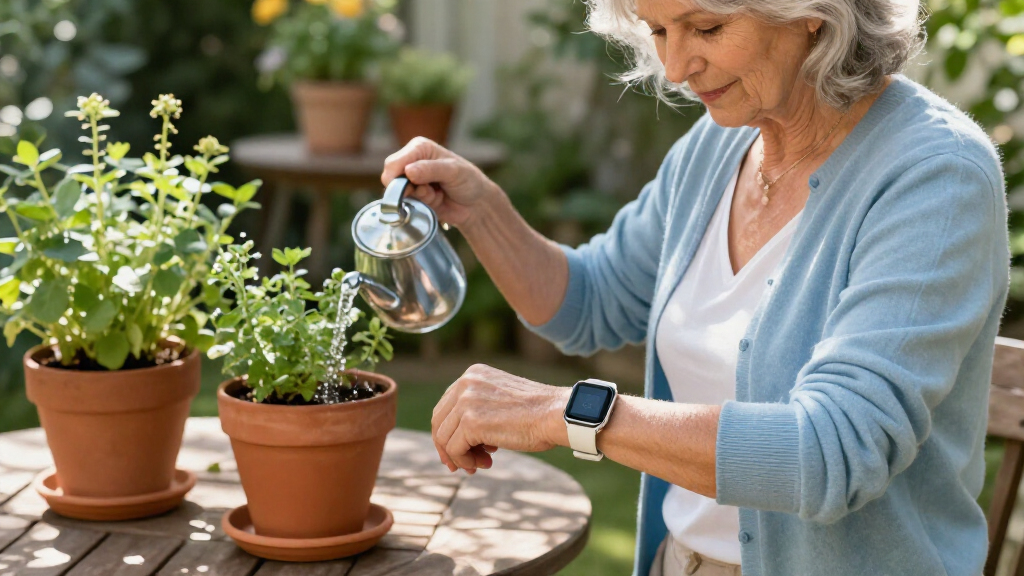
I ranked these senior-friendly smart watches by how well their stated features match common needs: getting help, staying in contact, tracking everyday activity, and using a watch without needless complexity. Safety features such as SOS, fall detection, GPS, and cellular calling received more weight for buyers seeking an alert device, while a phone-free setup and a clear focus on step counting mattered more for shoppers seeking basic activity tracking. I also considered the likely setup burden, whether the feature set suggests an ongoing service requirement, and how distinct each model’s role is.
The order reflects usefulness for the intended buyer, not a claim that every wearer needs the same features. The 4G GPS model leads for its broad safety and communication feature set; TYKOIT stands out for simple, phone-free step tracking; and cellular medical alert watches suit shoppers who place emergency support ahead of fitness tools. Watches centered on steps, heart rate, sleep, or general fitness rank lower for safety-led use, though they may be the better match for someone who does not need calling or emergency alerts. Product names and feature descriptions alone cannot establish alert reliability, service terms, or ease of use, so buyers should confirm those details with the seller before choosing.
| senior-friendly smart watch | GPS |
|---|---|
| 4G GPS Smart Watch for Seniors | — |
| Fajocru Fall Detection Smart W | Built-in GPS with geofencing |
| TYKOIT Pedometer Watch for Sen | — |
| Seculife Cellular Medical Aler | — |
| Senior-Friendly Pedometer Watc | No GPS |
| DAVIKO Pedometer Watch with He | No |
| DAVIKO Senior-Friendly Smart W | — |
| Pautios EW1 Pedometer Watch wi | — |
| Yihou Smart Watch for Seniors | Via smartphone |
| Fall Detection Smart Watch for | No |
| Pautios TW2 Fitness Smartwatch | None |
| Cellular Medical Alert Smart W | Built in |
| DAVIKO Senior-Friendly Fitness | Via smartphone |
| DAVIKO Senior-Friendly Fitness | — |
| Choiknbo Smart Watch Fitness T | Via smartphone |
Factors to Consider When Choosing Senior-friendly Smart Watches
Before choosing a watch, decide what you need it to do on an ordinary day and during an emergency. A long feature list can hide practical differences in setup, ongoing service, and who actually receives an alert.
Decide Whether You Need a Medical Alert or a Fitness Watch
Start by separating emergency communication from activity tracking. A pedometer or fitness watch may count steps and monitor selected health metrics, but that does not make it a substitute for a medical alert service. If the wearer needs a way to call for help, check whether the watch places calls itself or only sends an alert through a paired phone. Ask who will receive the alert and what action follows; an SOS button is useful only if its notification path suits the household. Buyers who mainly want a nudge to walk may find a simpler tracker easier to live with than a safety device. Avoid choosing by feature count alone, since the right category depends on the risk and routine the watch is meant to support.
Check Cellular Service, Phone Pairing, and Ongoing Requirements
Cellular calling and GPS features can depend on service arrangements, so verify what is included before buying. Find out whether the watch needs a separate plan, a particular carrier, a companion app, or a nearby smartphone to send alerts. A watch advertised as phone-free may still have limits on communication or data features, so confirm exactly what works independently. Consider who will handle activation, app permissions, contact lists, and account maintenance. For a wearer who dislikes phone settings, fewer dependencies may matter more than a larger feature set. The common mistake is to treat “GPS” or “SOS” as proof that a device can contact help without checking the required connection.
Treat Fall Detection as an Alert Tool, Not a Safety Guarantee
Fall detection can add a layer of support, but it should not be treated as a promise that every fall will be detected or that help will arrive automatically. Ask whether the wearer must confirm an alert, whether the watch calls a contact or a response center, and what happens if there is no answer. A wearable may be missed, uncharged, removed for bathing, or unable to connect, so it should fit into a broader safety plan when risks are high. Check the seller’s explanation of alert handling and test the setup with the intended contacts after activation. Buyers can make a poor choice by focusing on the words “fall detection” while overlooking the steps between detection and assistance. If immediate professional response is the priority, compare the service model as carefully as the hardware.
Prioritize Readability, Controls, and Comfort
A watch is only helpful if the wearer can read and operate it comfortably. Check the display size, text clarity, button layout, and menu complexity rather than relying on a product name that says “senior-friendly.” Consider vision, dexterity, hearing, and whether the wearer can reliably charge and fasten the device. A larger screen may help with legibility but can feel bulky on a smaller wrist. If possible, review the return policy and fit details before purchase, especially when the watch will be worn all day or overnight. A feature-rich model that is hard to charge or navigate may be less useful than a simpler watch the person will wear consistently.
Match Health Tracking to the Decision You Want to Make
Step counts, heart rate, sleep, and blood oxygen readings can support general awareness, but buyers should not assume they replace medical equipment or professional advice. Decide which information the wearer will actually use; extra metrics can add menus and notifications without improving daily life. Ask how the data is displayed, whether it requires a phone app, and whether a family member can access it if that matters. For a person who wants a simple walking goal, a clear pedometer may be a better fit than a tracker with many health measurements. Avoid buying based on a long sensor list unless the readings are accessible and relevant to the wearer’s routine. For medical decisions, follow guidance from a qualified clinician and use appropriate medical devices.
Weigh Convenience Against Service and Maintenance
Setup and upkeep shape long-term usefulness as much as the feature list. Ask how often the watch needs charging, how alerts behave when the battery is low, and whether the wearer or a caregiver must update contacts or software. Cellular and connected safety models can provide more independence, but they may also call for activation, connectivity, and account management. Basic pedometer watches can reduce those demands, though they offer fewer ways to contact someone. Decide who will take responsibility for charging and troubleshooting before choosing a more involved device. Paying more in complexity only makes sense when the extra communication or safety functions will be used and supported.
Frequently Asked Questions
Can a senior-friendly smart watch call for help without a smartphone?
Some cellular watches are designed to make calls without a paired smartphone, while many fitness trackers rely on a phone for app features or notifications. Check whether the specific model needs an active cellular plan, which contacts it can call, and whether SOS works when the phone is out of range. A “no phone required” claim may apply only to basic functions such as step counting. Confirm the watch’s connection requirements before purchase, then test calling and emergency contacts during setup. If independent emergency calling is the main need, choose based on verified service details rather than the product category name.
Does fall detection automatically contact emergency services?
Not necessarily. Depending on the watch and its service, a fall alert may notify a chosen contact, prompt the wearer to respond, or connect to a monitored response service. Some functions may require cellular connectivity, a subscription, or a paired phone. Ask what happens if the wearer cannot respond and whether the service contacts emergency responders or only family members. Fall detection can miss events or trigger false alerts, so it should be treated as one part of a safety plan rather than a guarantee.
Should I choose a cellular SOS watch or a simple pedometer watch?
Choose a cellular SOS watch when the wearer needs direct calling, location sharing, or an emergency alert path and someone can manage activation and service requirements. A simple pedometer watch makes more sense when the main goal is tracking steps with fewer connected features to learn. TYKOIT is the standout here for phone-free step tracking, while the 4G GPS and cellular medical alert options serve safety-led needs. Think about what the wearer will use every day, not just what a device can do on paper. If the person is unlikely to charge or operate a connected watch, a simpler device—or another safety arrangement—may be more practical.
Are heart rate, sleep, and blood oxygen readings suitable for medical monitoring?
These watch features are generally best treated as general wellness information, not a replacement for clinical tests or prescribed monitoring equipment. Readings can vary with fit, movement, and device design, and a consumer watch may not be intended to diagnose or manage a condition. If a clinician has asked the wearer to monitor a specific measure, ask which device and method they recommend. Also check whether the readings are easy to review and share, since data that is hard to access may not help. For this roundup, models with heart rate, sleep, or blood oxygen features are better viewed as activity and wellness trackers than medical devices.
What should I verify before buying a watch for a family member who lives alone?
Check how the wearer can request help, who receives the alert, and whether the watch can connect from places they commonly go. Verify service costs or activation requirements, battery and charging expectations, and whether location sharing needs a phone or app. Make sure the wearer can read the screen, reach the controls, and keep the device on comfortably. Set up contacts together and test the alert process rather than assuming it works as advertised. A watch can support a safety plan, but it should not be the only response arrangement if the person needs regular check-ins or monitored assistance.
Conclusion
For the broadest mix of calling, GPS, SOS, and geo-fencing, my best overall recommendation is the 4G GPS Smart Watch for Seniors, provided its cellular and setup requirements suit the wearer. For best value in simplicity, the TYKOIT Pedometer Watch is the clearest fit for someone who wants steps without a phone or app. The best premium-style safety choice is the Seculife Cellular Medical Alert Smartwatch for buyers prioritizing a dedicated medical-alert approach, after confirming service terms. For beginners who mainly want everyday activity tracking, a straightforward DAVIKO or Pautios pedometer-focused model is a more approachable starting point than a cellular safety watch. For specific emergency needs, compare the Fajocru, Yihou, and other SOS or fall-detection watches by their alert recipients, connectivity, and response arrangements; the label alone cannot tell you which one fits. Choose the simplest device that meets the wearer’s actual needs and can be maintained reliably.