
TL;DR
Listen free for 30 days with Audible
Thousands of audiobooks and originals — cancel anytime.
Start your free trialAs an affiliate, we earn on qualifying purchases.
Lighted magnifiers help people with vision difficulties read small print on mail, menus, and medicine labels more easily and safely. Recent advances like digital options and better LEDs make them more effective and versatile than ever. Choosing the right one depends on your specific needs and lifestyle.
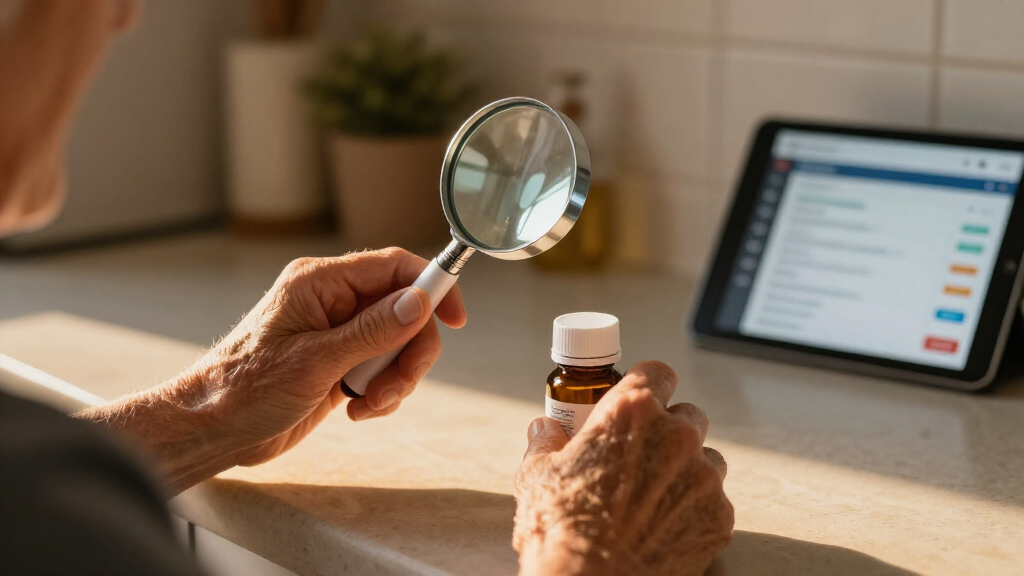
Have you ever squinted at a tiny print on a medicine bottle or struggled to read a dim restaurant menu? If so, you’re not alone. Millions face this daily challenge, especially as eyesight naturally declines with age. Lighted magnifiers are powerful tools that turn small, blurry text into crisp, clear words.
In this guide, you’ll learn how different types of lighted magnifiers work, what’s new in the world of assistive tech, and how to pick the perfect match for your needs. Whether you’re reading mail, menus, or medicine labels, these gadgets can restore your confidence and independence.
Select a magnifier with adjustable LED brightness to suit different lighting conditions.
Digital magnifiers with OCR can read labels aloud and save images for later, offering extra convenience.
Portability is key; handheld models are great for on-the-go reading in dim environments.
Higher magnification isn’t always better—balance power with field of view and ease of handling.
Regular cleaning and practice improve clarity and comfort during extended use.
Why a Lighted Magnifier Could Be Your New Best Friend
Lighted magnifiers are more than just magnifying glasses—they serve as essential tools that help bridge the gap created by age-related or temporary visual impairments. By enlarging small text and providing consistent illumination, they reduce the effort needed to read, which is crucial for safety—such as avoiding medication errors—and for maintaining independence. The significance lies in their ability to empower users to perform everyday tasks without relying on others or risking misinterpretation. The tradeoff, however, can include the need for batteries or power sources, and some models may require a learning curve to optimize their features effectively. Understanding these aspects helps users choose devices that truly enhance their daily life without adding unnecessary complexity.
For example, a senior with early macular degeneration might find that a magnifier with adjustable lighting not only makes reading easier but also helps preserve their confidence and safety in managing medications and reading important information. The broader implication is that access to such tools can delay or reduce the need for more invasive interventions, fostering independence and quality of life.
They’re especially helpful in dim environments, like restaurants or grocery stores, turning dark, unreadable menus into a clear display. Recognizing these benefits underscores why investing in a good lighted magnifier can have a meaningful impact on daily routines and overall well-being.
LED lighted magnifier for reading small print
As an affiliate, we earn on qualifying purchases.
As an affiliate, we earn on qualifying purchases.
Which Type of Lighted Magnifier Fits Your Lifestyle?
Not all magnifiers are created equal, and choosing the right type involves understanding how each design aligns with your specific needs and environments. For instance, handheld magnifiers offer portability, making them ideal for quick checks on mail or labels when you’re out and about. However, their reliance on a steady hand can limit usability for extended periods or for those with tremors. Stand magnifiers provide stability and are excellent for stationary tasks like reading recipes or doing crafts, but they lack portability, which can be inconvenient if you need to switch locations frequently. Magnifying glasses worn like glasses offer hands-free, consistent magnification, but they tend to be more expensive and less adaptable to different tasks or environments. Digital magnifiers combine the benefits of adjustable zoom, contrast, and image capture, providing versatility but often at a higher cost and with a dependence on batteries or power sources. The tradeoffs involve balancing convenience, cost, and functionality—knowing which factors matter most to you helps in selecting a device that truly enhances your daily activities without adding undue complexity or expense.
Understanding these differences enables you to tailor your choice to your routine, whether it’s a quick glance at a menu or detailed craft work, ensuring the magnifier complements your lifestyle rather than complicates it.
digital magnifier with OCR and voice reading
As an affiliate, we earn on qualifying purchases.
As an affiliate, we earn on qualifying purchases.
What’s New? Cutting-Edge Features Making Magnifiers Better
Recent innovations have supercharged these simple devices, making them more effective and user-friendly. Brighter, more energy-efficient LEDs with adjustable settings allow users to customize lighting based on ambient conditions, significantly reducing glare and eye fatigue—especially important for those with sensitive eyes or conditions like dry eye syndrome. Digital magnifiers now feature high-resolution screens, contrast controls, and OCR technology, which can read text aloud or convert it into digital formats, profoundly expanding their utility. These features are not just about convenience—they can transform the way users interact with their environment, making reading more accessible and less stressful. The integration of smartphones and tablets with magnification devices further enhances portability and functionality, allowing users to capture and store images for future reference. For example, a digital magnifier with a built-in camera can instantly capture medication labels, providing a clear, enlarged view later without needing to handle the original small print. These advancements mean magnifiers are evolving from simple optical tools into comprehensive assistive tech solutions that adapt to diverse needs and environments, fostering greater independence and confidence.
handheld magnifier with adjustable brightness
As an affiliate, we earn on qualifying purchases.
As an affiliate, we earn on qualifying purchases.
Picking the Right Magnifier: 5 Tips for Making a Smart Choice
Choosing the right magnifier involves understanding your specific needs and how different features can address them. First, assess your typical reading material: small mail, detailed menus, or tiny medication labels each require different magnification levels and lighting. Second, consider portability—if you frequently move between locations, a lightweight, compact device makes sense, but if you mostly read at home, a larger stand magnifier might be more comfortable. Third, determine the level of magnification needed; generally, 2x to 5x covers most daily tasks, but some situations may call for higher power, which can narrow the field of view and make handling more challenging. Fourth, adjustable lighting, especially LED brightness, can significantly enhance readability by reducing glare and increasing contrast; this flexibility allows you to adapt to different environments. Fifth, explore digital features such as image capture, contrast enhancement, or speech functions—these can provide additional support, especially in challenging lighting or for users with additional disabilities. For example, if you often dine out and want to read menus easily, a compact handheld magnifier with adjustable LED lights and 3x–5x magnification offers a practical balance of portability and functionality, making your outings more enjoyable and stress-free.
portable magnifying glass for mail and medicine labels
As an affiliate, we earn on qualifying purchases.
As an affiliate, we earn on qualifying purchases.
Real-Life Scenarios: How These Magnifiers Make a Difference
Imagine Jane, a retiree who loves dining out. She often faces dimly lit restaurants and tiny print on menus, which can cause frustration and slow her decision-making. With her portable lighted magnifier, she can quickly adjust the brightness and magnification to clearly read the menu, restoring her confidence and enjoyment during meals. This simple change reduces her reliance on others and enhances her social experience. Similarly, Mike manages diabetes and needs to accurately read tiny labels on medication bottles. Previously, this task was stressful and error-prone, but now, with a digital magnifier equipped with OCR, he can scan labels and have the text read aloud, minimizing mistakes and anxiety. These stories highlight how such devices do more than improve vision—they restore independence, safety, and peace of mind, transforming ordinary moments into opportunities for self-reliance. Recognizing these real-world benefits underscores the profound impact of choosing the right magnifier tailored to individual lifestyles and needs.
Key Steps to Maximize Your Use of Lighted Magnifiers
To truly harness the potential of your lighted magnifier, consider these practical strategies. First, select the appropriate magnification level and lighting settings—testing different combinations helps identify what’s easiest on your eyes and most effective for specific tasks. Second, always adjust the LED brightness to match ambient lighting—dimming or brightening the light reduces glare and enhances contrast, making small text easier to decipher. Third, regularly clean the lens with a soft, lint-free cloth to maintain clarity and prevent distortion. Fourth, practice steady handling; supporting the device with your hand or using a stand minimizes shaking and improves readability. Fifth, explore digital features like image capture and contrast adjustments—these tools can compensate for challenging conditions and extend the device’s usefulness. For example, increasing contrast and lowering brightness in a dim restaurant can make small print pop into focus, reducing eye fatigue and improving comfort during extended reading sessions. Implementing these steps ensures you get the most out of your device, making everyday reading safer and more comfortable.
Conclusion
Lighted magnifiers turn tiny, blurry print into clear, easy-to-read words—transforming daily frustrations into confidence. Whether for mail, menus, or medicine labels, modern designs pack power, portability, and smart features into devices that fit real lives.
Pick the right magnifier today, and suddenly, those small print tasks feel a whole lot easier—and safer. Because sometimes, all it takes is a little extra light and magnification to see the world clearly again.
Grilling season Picks
grills
As an affiliate, we earn on qualifying purchases.