TL;DR
Listen free for 30 days with Audible
Thousands of audiobooks and originals — cancel anytime.
Start your free trialAs an affiliate, we earn on qualifying purchases.
Plate guards and non-slip mats are cost-effective tools that support independent eating by preventing spills and dish movement. They help maintain dignity, reduce reliance on caregivers, and are adaptable to different needs.
Imagine sitting at a table, eager to enjoy your favorite meal, but struggling to keep food on your plate or prevent it from sliding around. That’s where simple aids like plate guards and non-slip mats step in. These small, unassuming tools can make a big difference—preserving your autonomy and dignity during mealtimes.
Whether you’re managing arthritis, recovering from an injury, or caring for someone with neurological challenges, understanding how these aids work can transform the dining experience. This guide explains what they are, how to choose the right ones, and practical tips for making mealtime smoother and more respectful of independence.
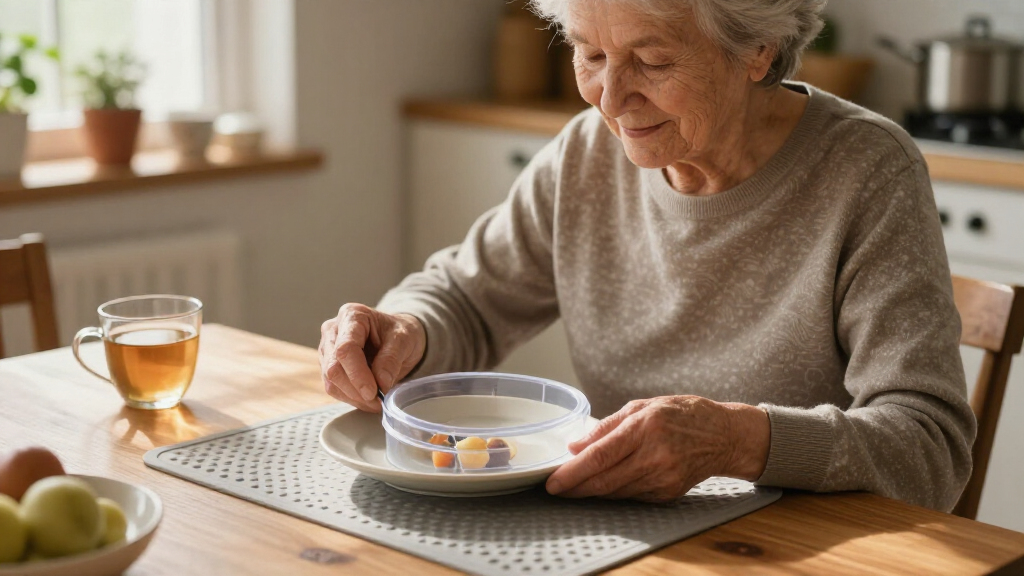
Plate guards create a physical barrier that makes scooping easier and reduces spillage, especially for those with limited hand control.
Non-slip mats secure dishes to the table, giving confidence to users with tremors, weakness, or impaired coordination.
Choosing aids that look discreet and respect personal style helps maintain dignity and confidence during meals.
A practical, step-by-step approach ensures the right fit and function for each individual’s needs.
While these tools are simple and inexpensive, they significantly boost independence, reducing reliance on caregivers.
Plate Guards and Non-Slip Mats
Small, cost-effective dining aids can make scooping easier, keep dishes steady, reduce spills, and preserve a person’s control over how they eat. The best solution supports ability without making the diner feel conspicuous.
Potential improvement in eating independence reported for users with mobility or coordination impairments.
The guard provides resistance for scooping while the mat prevents the entire dish from moving.
Two simple tools, two distinct jobs
Plate guards guide food toward the utensil. Non-slip mats stabilize the place setting. Used separately or together, they reduce the physical effort and frustration that can interrupt a meal.
Plate guards
A raised rim creates a firm surface against which food can be pushed onto a fork or spoon. This is especially useful for one-handed eating or limited hand control.
- Clip-on guards for compatible standard plates
- Full or partial raised rims
- Scoop dishes with a high curved side
- Low-profile and divided designs
Non-slip mats
A high-grip surface holds plates, bowls, cups, or cutlery in place, reducing the need to steady the dish with a second hand.
- Small coasters and full placemats
- Cut-to-size rolls
- Molded bases for specific dishes
- Portable options for dining away from home
Choose by function, not diagnosis alone
Movement, vision, posture, cognition, food choice, and table surface all affect performance. The same diagnosis can produce very different dining needs.
| Observed challenge | Plate guard | Non-slip mat | Best setup detail |
|---|---|---|---|
| Food is pushed off the plate | ✓Strong match | Helpful if the plate also moves | Choose a curved or nearly vertical rim |
| Dish slides during scooping | May add resistance | ✓Strong match | Test grip against both dish and table |
| One-handed eating | ✓Guides the utensil | ✓Anchors the plate | Combine both aids when needed |
| Tremor or impaired coordination | Can contain food | ✓Improves stability | Use a broad, stable dish with low tipping risk |
| Difficulty locating food visually | Raised edge may help orientation | Supports a consistent plate position | Increase contrast between food, plate, and table |
| Soup or very loose foods | Limited benefit | Still stabilizes the bowl | Consider a deep bowl or specialized scoop bowl |
Compatibility check: plate diameter + rim shape + rim thickness + table surface + temperature requirements
From observation to a real-meal trial
A practical trial is more reliable than choosing from product claims alone. Test the aid in the setting, with the food, utensils, and movements that are part of the diner’s normal routine.
Identify whether the main issue is scooping, sliding, tipping, vision, or a combination.
Check plate diameter, rim shape, thickness, and available table space.
Consider handedness, posture, grip, coordination, and preferred foods.
Press and move the dish gently to confirm grip and stability.
Let the diner assess appearance, comfort, placement, and ease of use.
Confirm that clips, crevices, and materials can be sanitized easily.
Use the complete setup during a typical meal, then adjust or replace it.
The person matters more than the product
A technically effective aid can still fail if it feels clinical, restrictive, or embarrassing. Dignity-centered support preserves choice, time, privacy, and meaningful control.
What a strong setup should deliver
The percentages below are a practical decision profile, not clinical outcome rates. They visualize the relative importance of common selection criteria.
Selection priorities
The right product should remain stable throughout the meal, support the required movement, and fit naturally into everyday dining.
Before every trial
Simple does not mean maintenance-free
Regular checks prevent a helpful tool from becoming unreliable. Real meals reveal issues that may not appear during a quick demonstration.
Guard detachment
An incompatible clip or excessive force can loosen the guard during use.
Plate tipping
A lightweight plate may tilt even when the guard itself remains attached.
Reduced traction
Mats can lose grip when wet, greasy, dusty, curled, stretched, or worn.
Wrong tool
Soup, loose rice, and some mixed foods may require a deeper or specialized bowl.
What exactly do plate guards do — and why are they a game-changer?
A plate guard is a raised rim attached to or built into a plate, acting like a barrier that helps push food onto a utensil. For someone with limited hand control or tremors, it’s like having a small wall that guides the food where it needs to go.
But beyond just helping with scooping, the importance of a plate guard lies in its ability to reduce frustration and increase autonomy. When a person doesn’t have to fight with their plate, they can focus more on enjoying their meal rather than battling spillage or awkward utensil use. This can lead to a more positive dining experience, encouraging independence rather than reliance on assistance. However, the tradeoff is that if the guard is not properly fitted or is too rigid, it might restrict the user’s natural movement, potentially making eating feel less intuitive. Choosing the right style and size is crucial to balancing support and freedom of movement.
As an affiliate, we earn on qualifying purchases.
How non-slip mats keep dishes steady — and what that means for independence
Non-slip mats are not just simple grips; they serve as a foundation that prevents dishes from shifting or sliding during a meal. This stability is vital because it minimizes the risk of spills, which can be both embarrassing and dangerous, especially if hot liquids or sharp objects are involved. For users with tremors or weakened grip strength, the implications are profound: a secure plate means fewer accidents, less cleanup, and more confidence in their ability to feed themselves.
Choosing the right non-slip mat involves understanding the environment — a mat that works on a smooth, dry surface may not perform well on a textured or wet table. The tradeoff here is that some mats might lose their grip over time if not cleaned properly, which could lead to unexpected slips. This highlights the importance of regular maintenance and selecting high-quality materials. Ultimately, a good non-slip mat promotes independence by reducing the need for constant caregiver intervention, enabling users to focus on the act of eating without fear of their dish moving or tipping over.
As an affiliate, we earn on qualifying purchases.
Why choosing aids that respect dignity matters more than the fancy features
When selecting dining aids, your goal should be preserving independence and respecting dignity. An aid that makes someone feel like they’re being treated as a child defeats its purpose. Instead, opt for discreet, adult-looking designs that blend into regular tableware.
For example, a person might prefer a sleek, dark-colored plate guard that looks like part of their usual dinnerware, rather than a bulky, clinical-looking device. Placing the aid before the meal starts and giving the person space to eat without interruption fosters confidence and control.
Remember, the right aid isn’t just about function; it’s about how it’s introduced and used. Involving the individual in choosing the product, respecting their preferences, and avoiding over-assistance helps maintain their self-esteem. The tradeoff is that overly discreet aids might sometimes be less effective or harder to use for some individuals, so balancing aesthetic appeal with functionality is key to ensuring the aid truly supports independence without causing frustration.
adaptive plate guard for arthritis
As an affiliate, we earn on qualifying purchases.
As an affiliate, we earn on qualifying purchases.
How to pick the perfect plate guard or non-slip mat — a step-by-step guide
- Assess the person’s specific needs: Do they struggle more with scooping, stability, or both? Understanding this helps tailor the choice; for example, someone with tremors might need a guard that provides more guidance, while someone with weak grip might benefit from a non-slip base.
- Measure and compare: Check plate diameters, rim shapes, and material compatibility. Proper measurements ensure the aid fits securely and comfortably, preventing slipping or discomfort that could discourage use.
- Evaluate the environment: Is the table smooth or textured? Are there safety concerns like hot dishes? Compatibility with the setting can influence the effectiveness and safety of the aid.
- Test for grip and stability: Try placing the aid on a clean surface and gently press to see if it stays put. An aid that shifts or slides during testing might not be reliable during a meal, so this step helps prevent disappointment.
- Involve the user: Ask their opinion on look, feel, and ease of use. Comfort and familiarity encourage consistent use, which is essential for gaining independence.
- Check cleaning and maintenance: Can it be washed in the dishwasher? Is it easy to sanitize? Ease of cleaning ensures the aid remains hygienic and functional over time.
- Trial run: Use the aid during a typical meal, observing whether it reduces spills and improves control. This real-world test helps confirm if the aid truly supports the individual’s needs and routines.
As an affiliate, we earn on qualifying purchases.
What to watch out for — limits and pitfalls of these simple aids
While plate guards and non-slip mats may seem straightforward, they aren’t perfect. A guard might detach if pushed too hard, or a lightweight plate could tip despite the guard. Mats can trap crumbs or become less sticky over time, especially if not cleaned properly.
Beyond these mechanical issues, it’s important to recognize that not all foods benefit equally from these aids. For example, liquids like soup or rice dishes may not be suitable for a guard, as they require different strategies such as spoons or specialized bowls. Relying solely on these tools without considering the specific eating context might lead to frustration or unmet needs. Testing the aids during actual meals and being open to combining multiple solutions — like a guard with a wider, stable plate or a textured surface — can help address these limitations effectively, ensuring the individual’s safety and independence are maximized.
Recent trends and innovations — what’s new in adaptive dining tools?
In recent years, designers have focused on making aids more discreet, user-friendly, and inclusive. Now, you’ll find products that look like regular dinnerware—no more obvious medical equipment. Some combine raised rims with divided sections and suction bases for extra stability.
Newer materials like food-grade silicone offer flexibility, making them easier to transport and clean. There’s also a push toward universal design—products that anyone can use, regardless of age or ability—plus greater availability through mainstream stores.
These innovations aren’t just about aesthetics; they also improve functionality. For example, integrated non-slip bases in plates eliminate the need for separate mats, reducing clutter and simplifying the dining process. This not only makes mealtime less stressful but also encourages ongoing independence, as users are less likely to feel self-conscious or overwhelmed by visible assistive devices. The implication is a future where adaptive tools seamlessly blend into everyday life, promoting dignity and confidence for all users.
Frequently Asked Questions
Who benefits most from a plate guard?
Anyone who has difficulty coordinating a utensil or keeping food on the plate, especially those with limited hand strength, tremors, or reduced coordination, can benefit from a plate guard. It’s particularly useful for one-handed eating.
Is a scoop dish better than a removable plate guard?
A scoop dish is an all-in-one solution providing stability and built-in barriers, often best for those who prefer a single, integrated item. A removable guard offers flexibility, allowing the use of familiar plates, and can be easier to transport or replace.
Can plate guards fit any dinner plate?
No. Clip-on models are designed for specific plate sizes and rim shapes. Thick, square, or rimless plates may not be compatible. Always check measurements before purchasing.
Do non-slip mats work on every table surface?
Not quite. They perform best on smooth, dry surfaces like wood or laminate. Textured, wet, or uneven surfaces can reduce grip, so it’s important to test the mat in the actual environment.
Are silicone mats safe for dishwasher cleaning?
Many silicone mats are dishwasher-safe, but check the manufacturer’s instructions. Some may require hand washing, especially if they have suction features or textured surfaces that trap food.
Conclusion
Simple as they are, plate guards and non-slip mats can dramatically change mealtimes from stressful to self-directed. They’re small tools with big impacts—fostering dignity, independence, and confidence at every bite.
Remember, the goal isn’t perfection but progress. A well-chosen aid can make a familiar ritual feel normal again—like sitting down to a meal, not a challenge.
Labor Day sales Picks
labor day deals
As an affiliate, we earn on qualifying purchases.