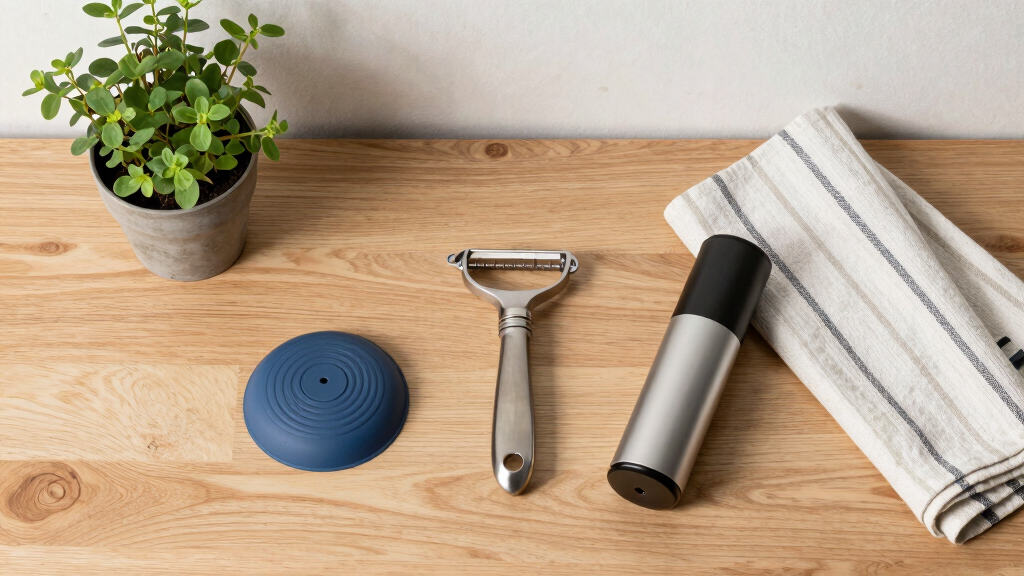

TL;DR
Listen free for 30 days with Audible
Thousands of audiobooks and originals — cancel anytime.
Start your free trialAs an affiliate, we earn on qualifying purchases.
Kitchen gadgets tailored for seniors focus on safety, ease of use, and ergonomic design. Recent innovations like voice-activated appliances and automatic stirrers help seniors cook more independently and confidently, reducing accidents and physical strain.
Imagine peeling potatoes with a gadget so lightweight and easy to grip that even arthritis won’t cause discomfort. Or controlling your oven with just a simple voice command. These aren’t scenes from a sci-fi movie — they’re real advancements in kitchen tech that help seniors cook more safely and independently.
If you’re caring for an elderly loved one or want to make your own kitchen safer, understanding which gadgets truly make a difference can transform mealtime. This isn’t about gadgets packed with features — it’s about simple, practical tools that fit the physical and cognitive needs of seniors, turning cooking from a challenge into a pleasure.
Choose gadgets with large, easy-to-press controls and minimal buttons to accommodate limited dexterity.
Smart appliances with voice control simplify operation and enhance safety, especially for those with mobility challenges.
Safety features like non-slip bases, automatic shut-offs, and spill sensors are essential for a secure kitchen environment.
Prioritize ergonomic, lightweight tools to reduce strain and make prep work easier.
Assess physical challenges first to select gadgets that truly support independence and comfort.
Kitchen Gadgets That Make Cooking Easier for Seniors
The best senior-friendly tools are not the ones packed with features. They are the ones that feel safe, obvious and comfortable: easy-grip utensils, automatic openers, talking thermometers and appliances that respond to a simple voice command.
Projected annual growth as demand rises for accessible kitchen technology.
Simple controls, stable construction and automatic safety features.
Less strain and fewer hazards while preparing everyday meals.
Why easy-to-use tools matter
Arthritis, reduced vision, limited mobility and changes in memory can turn ordinary controls into barriers. Intuitive gadgets reduce effort, confusion and risk while helping seniors keep cooking familiar meals.
Ease of use
Choose large controls, clear labels and as few buttons as possible. A single dial can be more useful than a crowded touchscreen.
Safety first
Non-slip grips, stable bases, spill sensors and automatic shut-offs help prevent drops, burns and unattended heating.
Ergonomic design
Lightweight tools with wide or weighted handles reduce pinching, twisting and repetitive strain on hands and wrists.
Assistive technology
Talking devices, high-contrast displays and voice commands compensate for visual, mobility or dexterity challenges.
Useful multi-functionality
One dependable device that handles several common tasks can reduce clutter—provided every function remains obvious.
Features second.
Start with the daily challenge
Identify whether grip, strength, sight, balance or reach is the real obstacle. The right gadget should remove that obstacle without adding a new learning burden.
Five gadgets seniors love
These tools target common kitchen pain points: weak grip, painful joints, hard-to-read displays, tiring preparation and difficulty standing near an appliance.
Ergonomic utensils
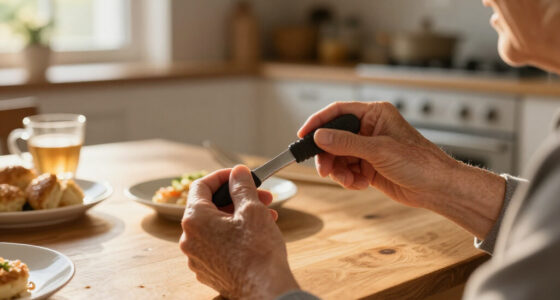
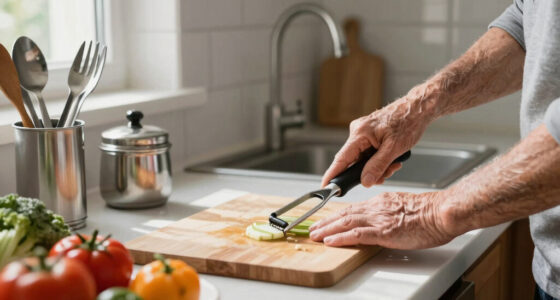
Wide, non-slip handles make peeling, stirring and cutting more comfortable. Best for: arthritis and reduced grip strength.
Automatic jar openers
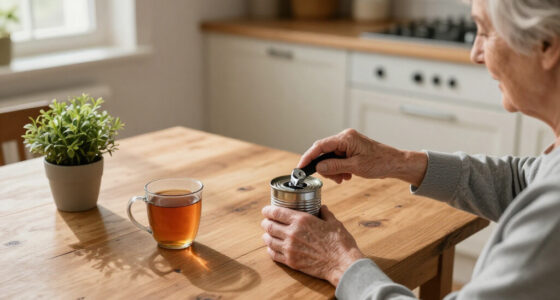
Electric gripping and turning removes the need for painful force. Best for: weak hands, wrists or joints.
Talking thermometers & scales
Spoken readings improve accuracy without squinting or bending. Best for: reduced vision and food-safety confidence.
Voice-controlled appliances
Operate compatible microwaves, ovens, timers or coffee makers from a seated position. Best for: limited reach, mobility or dexterity.
Electric choppers, mixers & stirrers
Powered preparation reduces fatigue and the need for repetitive motion. Best for: low strength, joint pain and shorter prep sessions.
Smart or traditional?
Smart technology can add voice control, monitoring and automatic protection. Traditional tools may still be the better fit when familiarity, affordability and zero setup matter most.
| Feature | Traditional gadgets | Smart gadgets |
|---|---|---|
| Ease of use | ~Manual controls may include small buttons or stiff dials. | ✓Voice commands, large labels and simplified presets. |
| Safety | ~Non-slip grips and stable construction. | ✓Auto shut-off, heat detection, spill sensors and alerts. |
| Connectivity | —Works independently with no network or account. | ✓Remote monitoring by phone or voice assistant. |
| Learning curve | ✓Usually familiar and immediately understandable. | ~Setup and unfamiliar commands may require support. |
| Cost | ✓Many effective tools are inexpensive. | ~Higher initial cost and possible ecosystem requirements. |
Choose with confidence
A useful gadget should fit the senior’s abilities, kitchen routine and comfort with technology. Test the complete task—not merely the product’s headline feature.
Identify the barrier
Note pain, weak grip, poor vision, limited reach, balance concerns or memory challenges.
Match the aid
Choose a device that directly compensates for the most important limitation.
Check safeguards
Look for stable bases, non-slip surfaces, automatic shut-off and protected blades.
Test the controls
Confirm labels are readable and every essential action is easy to remember and perform.
Review in use
Observe a real meal-prep task and adjust the setup if effort or uncertainty remains.
From challenge to independence
The strongest solutions create a clear chain: identify the need, remove unnecessary effort and add protection without increasing complexity.
The senior-friendly kitchen checklist
Small improvements can have an outsized effect. Begin with the tasks that currently cause pain, fatigue, uncertainty or risk.
- Large controls: easy to see, press and understand.
- Stable design: non-slip bases and secure grips.
- Automatic protection: shut-offs, timers and sensors.
- Low physical effort: lightweight or powered operation.
- Clear feedback: spoken, audible or high-contrast signals.
- Comfortable fit: matched to ability and technology confidence.
Why Easy-to-Use Kitchen Tools Matter for Seniors
When it comes to cooking, simplicity isn’t just a convenience — it’s a necessity for many seniors. Devices with minimal buttons, large controls, and clear labels reduce confusion and frustration. This is especially important because as physical and cognitive abilities decline with age, complex controls can become barriers rather than aids. For example, a microwave with a single large dial and straightforward instructions minimizes the risk of accidental misuse, fostering confidence and independence.
Research shows that using intuitive gadgets decreases the risk of accidents like spills or burns, which are common hazards in kitchens. Moreover, familiar, simple controls can encourage more frequent use, which supports better nutrition and emotional well-being. For seniors with limited dexterity, a jar opener with a large, ergonomic handle not only makes opening containers easier but also reduces the physical strain that can lead to fatigue or injury. The key is understanding that the goal isn’t just functionality but creating an environment where seniors can operate appliances safely and comfortably, thereby maintaining their independence longer.
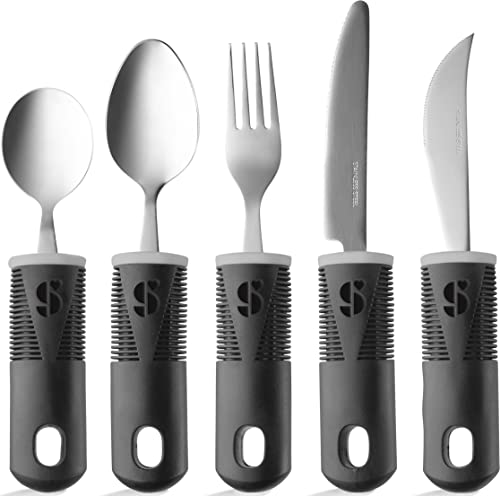
Special Supplies Adaptive Utensils (5-Piece Kitchen Set) Wide, Non-Weighted, Non-Slip Handles for Hand Tremors, Arthritis, Parkinson’s or Elderly Use – Stainless Steel (Black)
- Supportive Design: Wider, non-weighted utensils for stability
- Non-Slip Handles: Wide, textured grips for better control
- Durable Materials: Stainless steel with silicone handles
As an affiliate, we earn on qualifying purchases.
As an affiliate, we earn on qualifying purchases.
Top 5 Kitchen Gadgets Seniors Love for Easy Cooking
- Ergonomic Utensils: Designed with large, non-slip handles, these tools reduce hand fatigue and improve grip, which is crucial for seniors with arthritis or limited grip strength. Proper ergonomics can prevent strain injuries and make repetitive tasks like stirring or chopping less tiring, encouraging more frequent cooking sessions. Choosing utensils with ergonomic design also means fewer accidental slips, which can cause injuries or frustration, ultimately fostering a more positive cooking experience.
- Automatic Jar Openers: Electric devices that grip and twist lids open with minimal effort significantly reduce the physical strain of opening stubborn jars. This is particularly important because struggling with jars can lead to accidents, such as dropping the jar or applying excessive force that causes slips. By easing this task, these gadgets promote independence and reduce the risk of injury, especially for those with limited hand strength or joint issues. They also help prevent frustration, which can discourage seniors from cooking regularly.
- Talking Thermometers & Scales: These devices enhance safety and accuracy by vocalizing measurements, eliminating the need for squinting or bending over to read tiny displays. For seniors with visual impairments or cognitive challenges, this feature reduces errors in cooking or food safety, such as overcooking or undercooking, which can have health implications. Accurate readings are critical for preventing foodborne illnesses and ensuring proper meal preparation, especially when traditional visual cues become less reliable with age.
- Voice-Controlled Appliances: Integrating voice commands into microwaves, ovens, and coffee makers allows seniors to operate appliances without physical interaction, especially useful if mobility or dexterity is limited. This hands-free operation not only makes cooking more accessible but also minimizes risks associated with handling hot or heavy appliances. For example, a voice-activated microwave can be used from a seated position, reducing the need for risky movements and helping seniors maintain autonomy while reducing physical strain.
- Electric Food Choppers & Mixers: One-touch operation speeds up prep work and reduces manual effort, which is beneficial for seniors with limited strength or joint issues. These gadgets simplify tasks like chopping vegetables or mixing ingredients, which can otherwise be exhausting or painful. By making prep work less physically demanding, they encourage seniors to cook more frequently, supporting healthier eating habits and fostering a sense of independence. Additionally, they help prevent accidents caused by fatigue or improper technique during manual chopping or mixing.
Imagine a senior using a voice-controlled microwave to heat up soup while seated comfortably, or a caregiver helping with dinner prep using an electric chopper that cuts prep time in half. These gadgets not only make tasks easier but also contribute to a more autonomous and less stressful cooking experience, allowing seniors to enjoy their time in the kitchen rather than struggle through it.
voice-activated kitchen appliances for seniors
As an affiliate, we earn on qualifying purchases.
As an affiliate, we earn on qualifying purchases.
Compare Smart & Traditional Kitchen Devices
| Feature | Traditional Gadgets | Smart Gadgets |
|---|---|---|
| Ease of Use | Manual controls, small buttons, complex interfaces | Touchscreens, minimal buttons, large labels, voice commands |
| Safety Features | Basic, like non-slip grips | Automatic shut-offs, spill sensors, remote alerts |
| Connectivity | Stand-alone devices | Wi-Fi enabled, controllable via smartphone or voice assistant |
For example, a traditional kettle might require lifting and precise pouring, which can be challenging for seniors with limited strength or balance. A smart kettle, on the other hand, can be voice-controlled to boil at a specific time, with safety sensors that alert if water levels drop or if the kettle overheats. This comparison highlights how smart devices can adapt to the physical and cognitive needs of seniors, offering enhanced safety and convenience. While these features are beneficial, it’s important to consider potential tradeoffs such as the initial cost and the learning curve involved. For some seniors, the complexity of smart technology might be intimidating or unnecessary, so choosing devices that match their comfort level and technological familiarity is crucial for success.

Automatic Hands Free Pot Stirrer with 3 Adjustable Speeds, Battery Operated Self Stirring Kitchen Mixer for Sauces, Soups, Gravy, Cream, Custard, Non Stick Cookware Safe, Black
- Hands-Free Cooking: Automatically stirs to save time
- 3 Adjustable Speeds: Switch speeds for different recipes
- Non-Stick Safe: Gentle silicone legs protect cookware
As an affiliate, we earn on qualifying purchases.
As an affiliate, we earn on qualifying purchases.
How to Choose the Best Kitchen Gadgets for Your Loved One
- Identify their physical challenges — arthritis, vision issues, or limited mobility. Understanding specific limitations helps in selecting gadgets that truly assist rather than hinder, avoiding frustration or safety risks. Consider how these challenges affect daily tasks and choose tools that compensate for those difficulties without introducing new hazards or complexities.
- Prioritize safety features — non-slip, automatic shut-off, stable bases. These features are critical because they directly reduce common accidents like slips, burns, or electrical mishaps. For example, a stable base prevents tipping, and automatic shut-offs can stop appliances from overheating or running unattended, especially important if the user tends to forget or is prone to distraction.
- Select gadgets with simple controls — large buttons, clear labels, minimal steps. Ease of operation is essential because it encourages independence and reduces frustration. When controls are intuitive, seniors are more likely to use appliances confidently, which promotes regular cooking and better nutrition.
- Think about ease of storage and cleaning — compact, dishwasher-safe options. Practicality ensures that gadgets are used regularly and maintained properly. Easy-to-clean appliances prevent the buildup of grime or bacteria, which is especially important in a kitchen environment that needs to be safe and hygienic.
- Consider smart tech if they’re comfortable with technology — voice control, remote monitoring. While smart devices can significantly boost independence, they require a certain level of tech familiarity. Assess whether the user is willing and able to learn new systems, and provide training or support if needed to maximize benefits without causing frustration or confusion.
For example, if your parent struggles with small buttons, opt for appliances with large, easy-to-press controls. If they have trouble standing for long periods, look for gadgets that can be operated from a seated position or with remote control. Balancing features with individual needs ensures a positive experience that promotes safety and independence in the kitchen.

Deofun 4pcs Rubber Jar Opener Bottle Gripper for Weak Hands, Seniors
- Multi-functional Design: Serves as coasters and heat mats
- Durable Non-slip Material: Made of high-quality, flexible rubber
- Easy to Use: Simply place and twist to open bottles
As an affiliate, we earn on qualifying purchases.
As an affiliate, we earn on qualifying purchases.
Safety Tips When Using Kitchen Gadgets for Seniors
Safety isn’t just about gadgets — it’s about how they’re used. Always check that appliances have non-slip bases to prevent tipping, and ensure cords are tucked away to avoid tripping hazards. Good lighting is essential, particularly for seniors with visual impairments, to help them see clearly and avoid accidents.
For example, placing non-slip mats near sinks and stoves helps prevent slips, which are common in busy kitchens. Using stove knob covers can prevent accidental turning, especially if mobility is limited or if cognitive issues affect judgment. Installing motion-activated lights or under-cabinet lighting can brighten dark corners, reducing the risk of mishaps at night.
Additionally, gadgets with automatic shut-off features, spill sensors, or remote alerts can provide extra layers of safety, alerting caregivers or the user to potential problems before they escalate. These safety measures collectively create a kitchen environment where seniors can cook with confidence, minimizing risks and encouraging independence.
Frequently Asked Questions
What are the most affordable gadgets to help seniors cook more easily?
Basic tools like non-slip mats, easy-open jars, manual can openers, and simple electric kettles are budget-friendly and highly effective. These small investments can make a big difference in daily safety and independence.
How can I make my kitchen safer for an elderly family member?
Install non-slip mats, improve lighting, and add safety gadgets such as stove knob covers and motion sensor lights. Keep pathways clear and cords out of walking areas to prevent trips and falls.
Are voice-controlled gadgets easy for seniors to learn and use?
Many seniors find voice-controlled appliances very accessible, especially if they’re familiar with basic voice commands. Starting with simple devices like smart speakers and controlling kitchen gadgets through clear, direct speech can facilitate learning and confidence.
Which gadgets are best for seniors with limited mobility?
Look for electric choppers, automatic stirrers, and adjustable-height work surfaces. These tools reduce physical strain and help seniors cook more independently, even with limited strength or mobility.
Conclusion
Making your kitchen safer and easier for seniors isn’t about fancy gadgets — it’s about thoughtful choices that fit real needs. Simple, ergonomic tools can turn cooking into a joyful, independent activity rather than a daily struggle.
Remember, a few well-chosen devices can transform the kitchen into a space of confidence, safety, and even delight. So next time you’re shopping, focus on ease, safety, and comfort — your loved ones will thank you for it.
Flea & tick season Picks
flea and tick prevention
As an affiliate, we earn on qualifying purchases.