
TL;DR
Open a free Amazon Business account
Business pricing, bulk buying and tax-exempt orders.
Create a free accountAs an affiliate, we earn on qualifying purchases.
Many people have trouble opening medication bottles due to weak grip or arthritis. Using assistive tools, ergonomic caps, and proper techniques can make it much easier, helping you stay consistent with your medications. Recent innovations aim to balance safety with accessibility.
Imagine trying to open a bottle of pills after a long day. The cap won’t budge. It’s frustrating, especially when your hands feel weak or stiff. You’re not alone. Many people, from seniors to those recovering from injuries, face this challenge daily.
In this guide, you’ll learn simple, effective ways to open medicine bottles with limited hand strength. Whether you’re dealing with arthritis or just weaker grip strength, these tips and tools can help you stay on top of your medications safely and confidently.
Use leverage and body weight techniques for easier opening.
Invest in assistive devices like lever openers or grip pads for daily convenience.
Ask your pharmacist for medications with easier-to-open packaging options.
Warm caps with water to expand plastic slightly—just be cautious.
Seek professional advice if persistent difficulty hampers your medication routine.
How to Open Medicine Bottles with Limited Hand Strength
A stubborn cap should not stand between you and your medication. Use leverage, better grip, adaptive tools, and pharmacy-provided packaging to reduce strain while keeping every dose safe and accessible.
Leverage and assistive devices can substantially reduce the force needed to open a bottle.
Estimated share who experience difficulty opening medication bottles.
Your pharmacist may offer easier-to-open caps or alternative packaging when appropriate.
Recruit larger muscles
Adds friction instantly
Strong help, moderate cost
Stop before pain or slipping
Why can a small cap feel so difficult?
Child-resistant closures deliberately combine pressure, rotation, alignment, and grip. Arthritis, injury, reduced dexterity, or weak grip can make that coordinated motion much harder.
Push + turn
The cap must be pressed down while rotating. Losing either downward force or alignment prevents the mechanism from releasing.
Low torque
Painful finger joints and reduced grip strength limit twisting force, especially on narrow or smooth caps.
Less dexterity
Stiffness, tremor, numbness, or injury can make it difficult to stabilize the bottle while turning the cap.
Use stronger muscles, not sore fingers
Keep the bottle upright on a dry, stable surface. Move slowly and stop if the cap slips, the bottle cracks, or your hand begins to hurt.
Push down with your palm
Place the broad heel of your palm on the cap. Lean gently with body weight while turning. This spreads pressure across a larger area and reduces finger strain.
Brace with your forearm
Stabilize the bottle against a countertop or nonslip surface. Use your forearm and shoulder to help generate controlled torque.
Warm only the cap
Briefly run warm—not hot—water over the closed cap, then dry it completely. Slight plastic expansion may help. Keep water away from the medicine.
Match the tool to your level of strength
The right aid increases friction, enlarges the gripping surface, or multiplies force. Choose a tool that feels stable and does not require painful pinching.
Rubber grip pads
Increase friction around a smooth cap. Best for mild weakness, slippery hands, and occasional difficulty.
Lever-style openers
Long handles multiply force and reduce wrist effort. A strong everyday choice for arthritis or dexterity limitations.
Electric openers
Motorized assistance can restore independence for severe weakness, though sizing and bottle compatibility vary.
Ergonomic caps
Larger, textured, flip-top, or non-child-resistant closures may be available after discussing household safety with a pharmacist.
| Option | Ease of use | Best for | Relative cost | Key consideration |
|---|---|---|---|---|
| Grip pad | ✓ High | Mild weakness, arthritis | ✓ Low | Requires some twisting force |
| Lever opener | ✓ High | Weak grip, joint pain, low dexterity | ~ Medium | Check cap-size compatibility |
| Electric opener | ✓ Very high | Severe weakness or disability | ✗ Higher | Needs power and correct positioning |
| Easy-open cap | ✓ Very high | Routine independent access | ✓ Often low | Not suitable where children are present |
Protect your hands—and the medication
More force is not always safer. Good positioning, patience, and the right packaging are better than struggling through pain.
Do
- Keep your hands, the cap, and the work surface clean and dry.
- Check the label for the exact opening motion before applying pressure.
- Inspect for a damaged cap, seal, or cross-threaded closure.
- Use a stable surface and an aid designed for medication bottles.
- Ask a pharmacist about accessible caps, blister packs, or dose packaging.
Don’t
- Do not force a cap through sharp pain, slipping, or sudden resistance.
- Do not use knives, pliers, or tools that can crack the container.
- Do not use very hot water or allow moisture to reach the medication.
- Do not transfer pills to an unlabeled container without professional advice.
- Do not disable child-resistant packaging when children could access it.
Independence starts at the pharmacy counter
Persistent difficulty is worth discussing with a pharmacist, occupational therapist, caregiver, or clinician—especially if missed doses or hand injuries are becoming a concern.
Opening difficulty is common
An estimated 20–30% of adults over 65 have difficulty opening medication bottles. Accessible packaging and correctly chosen aids can support safer, more consistent medication use.
What Makes Opening Medication Bottles So Hard?
Opening medication bottles can be tough because of the caps. Child-resistant caps are designed to be secure, which means they often require more force or specific techniques. If your hands are weak, this can feel like trying to twist a stubborn jar lid with oven mitts.
Plus, aging, arthritis, or injuries can reduce your grip strength or dexterity. Think of trying to open a tight screw without enough torque — it just won’t turn. Understanding this helps you choose the right tools and techniques to make things easier.

3-Pack WATER BOTTLE Opener ERGO OPENER | Arthritis Sufferers Elderly Seniors Weak Hands | Easy Twist-Off Plastic Bottle Opening Tool Travel On-Go | Carpal Tunnel | MADE in USA
- Set of 3 Openers: Includes three patented water bottle openers
- Ergonomic Design: Provides grip and leverage for easy opening
- Ideal for Seniors: Perfect for elderly, arthritis sufferers, and weak hands
As an affiliate, we earn on qualifying purchases.
As an affiliate, we earn on qualifying purchases.
Simple Techniques to Open Bottles Without Extra Tools
- Push Down and Turn: Use your palm or body weight to push down on the cap while turning. This technique leverages larger muscle groups and body weight, which are typically stronger than your hands alone. It reduces strain and increases the force you can apply, making stubborn caps easier to loosen. Over time, consistently using this method can help prevent frustration and reduce injury risk.
- Use Your Forearm: Rest your forearm against a sturdy surface, such as a countertop or table, then twist the cap with your hand. This creates a mechanical advantage, allowing you to generate more torque without exerting excessive force on your fingers or wrist. By engaging larger, stronger muscles, you decrease fatigue and improve control.
- Warm the Cap: Hold the bottle under warm water for a minute. The heat causes the plastic of the cap and bottle threads to expand slightly, reducing the tightness of the seal. This makes turning easier and can prevent the need for excessive force that might cause injury or damage. However, be cautious to avoid burns or water entering the medication.
Understanding why these techniques work is crucial. For example, pushing down and turning utilizes the strength of your larger muscle groups, making the task less taxing and reducing the risk of repetitive strain injuries. Warming the cap addresses the material properties—plastic contracts in cold and expands when heated—making the threads easier to turn, which is especially helpful if the cap is tightly sealed due to manufacturing tolerances or environmental factors. Using your forearm to stabilize the bottle reduces the need for your hand to exert all the force, decreasing joint stress and making the process more controlled and safer. Recognizing these principles helps you choose the most effective method and adapt techniques to your specific situation.

Jokari Easy Open Medicine Bottle Opener with 4x Magnifier for Seniors and Arthritis Built-in Cap Grip Tool for Pill Bottles Prescription Labels Vitamins and Supplements
- Easy Open for Childproof Bottles: Grips and twists tight caps easily
- Built-in 4x Magnifier: Enhances small print readability
- Battery-Free Design: No batteries or tech needed
As an affiliate, we earn on qualifying purchases.
As an affiliate, we earn on qualifying purchases.
Best Assistive Devices That Make Opening Bottles a Breeze
Assistive devices are game-changers for limited hand strength. They work by either increasing grip surface, reducing the amount of force needed, or both. Choosing the right device depends on your specific needs, strength level, and the types of bottles you frequently open. Proper use of these tools can prevent injuries, reduce frustration, and enhance independence.
- Rubber Grip Pads: These are placed around the cap or the bottle neck, providing a textured, non-slip surface. They increase friction, making it easier to hold and turn the cap, especially if your hands are sweaty or slippery. They are simple, inexpensive, and versatile, suitable for a wide range of bottles.
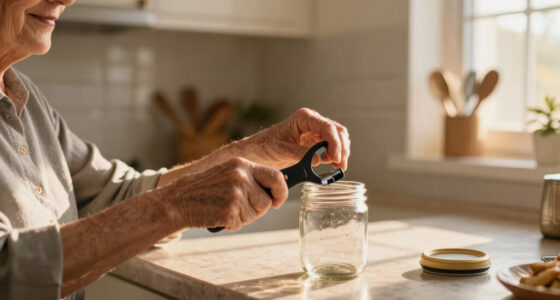
- Lever-Style Openers: These tools feature long handles and leverage mechanisms that multiply your applied force, allowing you to open caps with less effort. They are especially useful for caps that require significant torque, such as child-resistant types. By reducing the physical effort needed, these devices help prevent hand fatigue and joint strain.
- Electric or Motorized Bottle Openers: For those with severe weakness or disabilities, these devices automate the opening process. They are designed to be operated with minimal effort—often just a button press. While more expensive, they can restore independence and reduce the risk of injury caused by forcing caps.
- Ergonomic Caps: Some bottles now come with larger, textured caps designed specifically for easier gripping and turning. They are particularly beneficial for packaging designed for seniors or those with arthritis, as they require less force and provide better control.
Choosing the right assistive device is not just about convenience; it directly impacts your safety and long-term hand health. For example, a caregiver demonstrated how a lever-style opener reduced effort for her parent, preventing joint pain and enabling more independent medication management. The tradeoff with assistive devices is often cost versus benefit—more specialized tools may be pricier but can significantly improve quality of life and reduce injury risk. Understanding this helps you make informed decisions tailored to your needs, balancing affordability with safety and ease of use.

Soeenaper Mini Bottle Opener Botox Vials Opener Phial Cap Remover Oral Liquid Cap Lifter Clinic Hospital Medicine Bottle Opener Soad Beer Canned Beverages Opener Simple Small Strong (2 PCS)
- Material: Stainless steel, rustproof and durable
- Design: Rounded corners for safety and comfort
- Functionality: Leverage-based bottle opening
As an affiliate, we earn on qualifying purchases.
As an affiliate, we earn on qualifying purchases.
Comparison of Common Opening Tools: Which Is Right for You?
| Tool | Ease of Use | Best For | Cost |
|---|---|---|---|
| Grip pads | High | Limited hand strength, arthritis | Low |
| Lever openers | High | Weak grip, arthritis, dexterity issues | Medium |
| Electric openers | Very high | Severe weakness, disabilities | Higher |
Choosing the right tool depends on your needs and budget. For daily use, a lever opener offers a good balance of ease and affordability. For severe limitations, electric devices are worth the investment. Consider your specific challenges—if you struggle with repetitive strain or joint pain, investing in electric or ergonomic options may provide long-term relief and safety. Conversely, if you only occasionally encounter difficulty, simpler tools like grip pads or lever openers may suffice without added expense.
As an affiliate, we earn on qualifying purchases.
Safety First: Do’s and Don’ts When Opening Bottles
Always prioritize safety. Use tools properly, avoid excessive force, and double-check that caps aren’t damaged or cross-threaded. If a bottle feels too tight, don’t force it — you might hurt your hands or break the cap. Forcing caps can lead to injuries such as strains, sprains, or cuts, especially if the cap suddenly slips or the bottle breaks. Proper technique and patience are essential to prevent accidents and preserve the integrity of your medication packaging.
Rushing or applying excessive force can cause slips or sudden breaks, leading to potential injuries or damage to the medication container. Keeping your hands dry and clean reduces the risk of slipping, which could result in injury or contamination. If you doubt your ability to open a bottle safely, seek assistance. Remember, taking your time and using appropriate tools minimizes risks and helps ensure your medication remains uncontaminated and effective.
Are There Medications in Easier-To-Open Packaging?
Yes. Many pharmacies now offer bottles with larger, textured caps designed for those with limited strength. These caps provide a better grip and require less force to turn, reducing strain and frustration. Additionally, you can request blister packs, which eliminate the need for twisting caps altogether, or pump dispensers, which allow you to dispense medication with a simple push. These options are especially useful for individuals with arthritis or weakened hands, as they significantly reduce the physical effort involved in accessing your medication.
Switching to easier packaging isn’t just about convenience; it can be a critical safety measure. For example, blister packs minimize the risk of caps breaking or being difficult to open, which can lead to skipped doses or medication errors. Push-and-turn caps designed for ease of use can prevent frustration-induced accidents like dropping bottles or applying excessive force. When requesting these options, consider how your routine might change and whether the new packaging suits your specific needs, ultimately enhancing your independence and safety in medication management.
What if My Hands Keep Failing Me?
If opening bottles remains a struggle despite tools and techniques, consider consulting your healthcare provider. They can suggest alternatives like pre-filled packs, medication delivery services, or different packaging options that better suit your needs. These solutions can save time, reduce frustration, and ensure you maintain your medication regimen without unnecessary difficulty.
In some cases, physical therapy or hand exercises can help improve strength, dexterity, and joint function over time. These interventions address the root causes of difficulty, potentially making future bottle openings easier and less painful. Recognizing the importance of ongoing hand health is crucial—neglecting it can lead to worsening limitations. Collaborating with healthcare professionals ensures you’re using the best strategies and tools, maintaining your independence and safety in medication management for the long term.
Frequently Asked Questions
What is the easiest way to open a child-resistant medication bottle?
Push down firmly on the cap while turning, or use a rubber grip pad to increase grip. Some people find that warming the cap with warm water beforehand also helps, but always follow safety guidelines.
Are there tools recommended for people with arthritis?
Yes, ergonomic lever-style openers, grip pads, and larger textured caps are especially helpful. These tools reduce the amount of force needed and improve grip stability.
Can I modify my medication bottles to make them easier to open?
While some try warming caps or using non-permanent grips, it’s best to use commercially available assistive devices or ask your pharmacist for options suited to your needs.
Are there medications with easier-to-open packaging?
Many pharmacies provide bottles with larger, textured caps or alternative packaging like blister packs. Request these options when filling prescriptions for easier access.
What safety precautions should I take when opening bottles with limited strength?
Keep your hands dry, use appropriate tools, avoid excessive force, and follow manufacturer instructions. If difficulty persists, seek help to prevent injury or damage.
Conclusion
Opening bottles with limited hand strength is often about choosing the right tools and techniques. Small adjustments can make a huge difference, turning a frustrating chore into a simple task.
Remember, your independence is worth the effort. With the right approach, you can manage your medications confidently and safely—no matter how weak your grip feels.
Back to school Picks
back to school
As an affiliate, we earn on qualifying purchases.