
TL;DR
Open a free Amazon Business account
Business pricing, bulk buying and tax-exempt orders.
Create a free accountAs an affiliate, we earn on qualifying purchases.
The best jar openers for stiff hands use leverage, ergonomic design, or motor assistance to reduce effort. Electric models are especially helpful for arthritis or limited grip strength, making everyday tasks easier.
Opening jars can turn into a small battle, especially if your hands are stiff or affected by arthritis. It’s frustrating to struggle with a lid that won’t budge, and it can even be painful. Luckily, the right jar opener can turn this chore into a simple twist or press.
Understanding the different styles—manual, lever, electric—helps you pick the best tool for your needs. Whether you want a quick fix or a gadget that takes all the effort off your hands, there’s an option that can make your kitchen safer and more accessible.
Electric jar openers dramatically reduce effort—cutting force by up to 90%, ideal for stiff or arthritic hands.
Choose ergonomic, non-slip handles to improve grip and comfort during manual opening.
Lever-style openers leverage arm strength, making stubborn lids easier without requiring much grip strength.
Always check product reviews and care instructions to ensure durability and safety.
Assess your specific needs—mobility, strength, jar types—to pick the most effective opener for you.
Kitchen accessibility / grip guide
Jar Openers Explained: Which Style Works for Stiff Hands?
A stubborn lid should not become a battle. The right opener replaces painful finger strength with better grip, mechanical leverage, or motor assistance—making everyday kitchen tasks safer and easier.
01 / Understand the options
Three ways to beat a tight lid
Every style solves a different part of the problem. Rubber grips improve traction, lever tools multiply arm force, and electric models remove most of the twisting work.
Rubber or silicone
A textured sheet, cone, or handled grip prevents slipping. It is compact and affordable, but still depends on the user’s ability to squeeze and twist.
Best fit: mild stiffness with usable grip strengthLever-style
A long handle or lid-release mechanism uses leverage and arm strength instead of concentrated finger force. Large cushioned handles improve control.
Best fit: moderate stiffness or painful finger jointsElectric
A powered mechanism grips and turns the lid after a button press. It requires minimal hand force, though it costs more and needs batteries or charging.
Best fit: arthritis, weak grip, or limited mobility02 / Side-by-side
Which style matches your hands?
Prioritize the motion that is hardest for you. If squeezing is manageable but twisting hurts, leverage may be enough. If both are difficult, motor assistance is the safer match.
| Feature | Manual rubber grip | Lever-style | Electric |
|---|---|---|---|
| Ease of use | ~ Moderate | ✓ Easy | ✓ Very easy |
| Grip strength needed | ✗ Moderate | ✓ Low | ✓ Minimal |
| Fit for arthritis | ~ If grip remains | ✓ Excellent | ✓ Excellent |
| Storage | ✓ Very compact | ✓ Compact | ~ Bulkier |
| Cost | ✓ Lowest | ✓ Moderate | ~ Highest |
| Care | Often washable | Check mechanism | Wipe only; protect motor |
✓ Strong match ~ Depends on model or ability ✗ Potential limitation. Always follow the manufacturer’s care and safety instructions.
03 / Effort profile
Less twisting, less strain
The values below are an illustrative index based on the supplied “up to 90%” force-reduction figure. Actual effort varies with lid seal, jar size, opener design, and individual technique.
Relative user-applied effort / lower is better
A manual grip improves traction but does not remove twisting. Leverage shifts work toward the arm; an electric motor performs most of the turning action.
04 / Five-step selector
Pick the right opener
Comfort matters more than novelty. Work through these five checks before comparing brands, prices, or extra features.
Assess movement
Notice whether squeezing, twisting, reaching, or stabilizing causes pain.
Choose assistance
Select added grip, mechanical leverage, or full motor assistance.
Check comfort
Look for a broad handle, soft contact points, and non-slip surfaces.
Match jar sizes
Confirm the opener adjusts to the lids and containers used most often.
Verify quality
Read reviews, inspect care guidance, and avoid sharp or pinch-prone parts.
It keeps the tool compact while reducing finger effort through leverage.
It minimizes manual twisting and can reduce repeated stress on painful joints.
05 / Safety check
What to watch out for
A low price is not a bargain if the opener slips, pinches, or breaks. Reliable contact with both jar and lid is essential for safe, controlled opening.
Slipping grips
A smooth or undersized surface can release suddenly. Choose textured, non-slip contact areas.
Weak materials
Thin plastic may flex or crack. Rubber, reinforced plastic, and stainless steel tend to feel sturdier.
Pinch points
Avoid exposed gears, sharp edges, and mechanisms that may snap closed near fingers.
Wrong cleaning
Manual tools may be dishwasher safe; electric motor sections should never be submerged unless specified.
06 / Quick answers
Frequently asked questions
The safest opener is one that feels stable, fits the lid correctly, and does not require you to push through pain.
What is best for arthritis?
An electric opener or a lever model with a large, soft grip is usually the strongest match because both reduce joint strain.
Are electric models safe?
Most are designed for one-button use. Place the device correctly, keep fingers clear of moving parts, and follow the product instructions.
Can an opener damage a lid?
A well-made, correctly sized opener should limit damage. Excessive force or a poor fit may dent a lid or destabilize the jar.
Can it go in the dishwasher?
Many manual openers can, but check the label. Electric models typically require surface cleaning with a damp cloth.
The bottom line
For mild stiffness, a non-slip grip may be enough. For painful fingers, choose leverage. For arthritis or very limited strength and mobility, electric assistance offers the least demanding route to a securely opened jar.
What makes a jar opener easy for stiff hands?
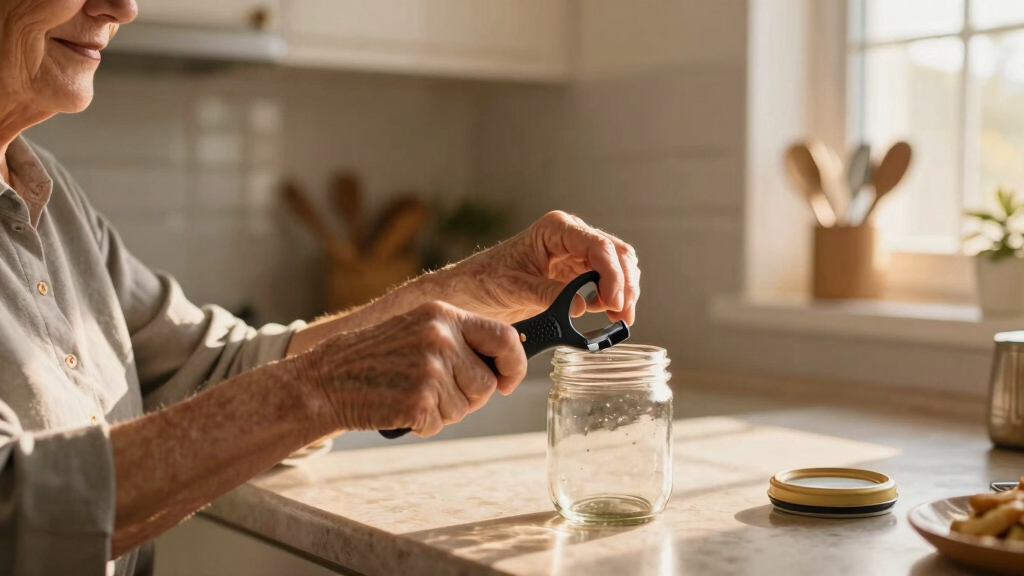
For stiff hands, a jar opener needs to reduce the physical effort required. Think soft, ergonomic handles that fit comfortably in your palm, or leverage mechanisms that multiply your strength without extra strain. An example? A rubber-coated grip that molds to your hand can make twisting easier, especially if your grip is weak.
Some openers offer a lever action—like a tiny pry bar—that uses your arm’s strength rather than your fingers. This simple shift in design can turn a stubborn lid into a quick twist, with less pain or fatigue.

Higher Torque Electric Jar Opener for Seniors with Arthritis Fit Almost Jars Size, Strong Tough Automatic Jar Opener for Weak Hands, Hands Free Battery Operated Bottle Opener for Arthritic Hands White
- Easy One-Button Operation: Simple, hands-free jar opening for seniors
- Effortless Lid Removal: No grip or twist needed, reduces hand strain
- Powerful High-Torque Motor: Handles various jar sizes and tight lids
As an affiliate, we earn on qualifying purchases.
As an affiliate, we earn on qualifying purchases.
Which jar opener styles are best for arthritis or limited grip?
For arthritis or limited grip, electric and lever-style openers top the list. Electric models require minimal effort—just press a button and let the device do the work. This is crucial because joint pain and reduced strength can make manual twisting painful or impossible, so reducing effort helps prevent aggravating existing conditions. Lever-style openers, with their long handles and strong leverage, significantly decrease the amount of force needed, which not only makes opening easier but also reduces the risk of joint injury over time. Think of these as tools that compensate for weakness or pain, allowing you to open jars safely without overexertion.
Choosing between these options involves considering the tradeoff: electric openers are very convenient but may be bulkier or more expensive, while lever openers are manual but still greatly reduce effort. Both options help preserve joint health by minimizing strain during use.
Here’s a quick comparison:
| Feature | Manual Rubber Grip | Lever-Style | Electric |
|---|---|---|---|
| Ease of use | Moderate, depends on grip strength | Easy, uses leverage | Very easy, just press a button |
| Best for arthritis | Good if grip is enough | Excellent | Excellent |
| Effort required | Moderate to high | Low | Minimal |
For those with stiff hands, electric or lever openers significantly cut down effort and pain, making everyday jar opening less of a challenge and reducing the risk of joint strain or injury.

2Pcs Adjustable Jar Opener, Stainless Steel Labor-Saving Can Opener for Weak Hands Seniors, Universal Bottle Lid Gripper Tool for All Size Jars & Bottles
- Package Includes: 2 adjustable jar openers with ergonomic handles
- Labor-Saving Mechanism: Twist design amplifies force for easy opening
- Universal Fit: Adjustable buckle fits lids 2.5cm to 9.5cm
As an affiliate, we earn on qualifying purchases.
As an affiliate, we earn on qualifying purchases.
How to pick the right jar opener for your stiff hands
- Assess your grip strength and hand mobility. Do you struggle with twisting, or do you need motorized help?
- Decide if you prefer manual or electric. Electric openers are best for minimal effort, but manual openers are cheaper and easier to store.
- Look for features like soft, ergonomic handles and non-slip surfaces.
- Check the jar sizes you open most often. Some openers are adjustable, fitting a range of lid sizes.
- Try holding or testing the opener before buying, if possible. Comfort and grip matter most.
For example, if you have arthritis and limited hand mobility, an electric jar opener might be the best choice because it eliminates the need for manual twisting, reducing joint stress. If your stiffness is moderate, a lever-style opener with a large, cushioned handle can provide enough leverage while still being easy to grip and control.

Master Jar & Bottle Opener,Adjustable Multifunctional Stainless Steel Can Opener Jar Lid Gripper,Manual,Kitchen Accessories(Silver)
- Adjustable opening size: Lid opening from 1 to 5 inches
- Maximum length adjustment: Adjusts up to 5.3 inches
- Product dimensions: 7.7 inches long, 1.18 inches wide
As an affiliate, we earn on qualifying purchases.
As an affiliate, we earn on qualifying purchases.
What to watch out for when choosing a jar opener
Not all openers are created equal. Some cheap models might slip, damage lids, or break easily under repeated use. This can lead to frustration or even safety concerns if the opener slips unexpectedly. Checking reviews helps identify products that hold up over time and perform reliably. Additionally, consider whether the opener is dishwasher safe—cleaning is essential for hygiene and maintaining grip quality.
Be cautious with very cheap, unbranded models—they often lack the necessary grip or leverage, especially for stubborn jars. A good jar opener should feel sturdy, with a comfortable grip and a mechanism that reliably applies force without slipping. The choice of materials—rubber, stainless steel, or reinforced plastic—also impacts durability and safety.
And always prioritize safety: avoid openers with sharp edges, parts that can pinch fingers, or mechanisms that might unexpectedly release under pressure. Proper design and quality ensure that opening jars remains a safe and manageable task.
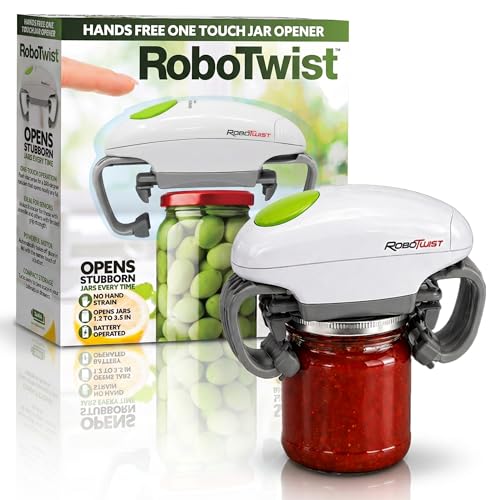
Robotwist Automatic Jar Opener Deluxe Model with Improved Torque
- Ease of Use: Automatic, hands-free jar opening
- Enhanced Torque: Powerful grip for stubborn lids
- Universal Fit: Adjusts for jars 1.2 to 3.5 inches
As an affiliate, we earn on qualifying purchases.
As an affiliate, we earn on qualifying purchases.
Frequently Asked Questions
What is the best jar opener for someone with arthritis?
An electric jar opener or a lever-style opener with a large, soft grip is typically best. These options minimize effort and reduce joint strain, making opening jars safer and less painful.Are electric jar openers safe and easy to use?
Yes, most electric models are designed with safety features and require just the push of a button. Follow manufacturer instructions for safe, effective use and maintenance.How do I know which jar opener suits my needs?
Consider your hand strength, mobility, and the types of jars you open most often. For limited grip, electric or lever openers are recommended. Testing a few models in store can help you find the most comfortable fit.Can jar openers damage lids or jars?
Good quality openers are designed to avoid damaging lids or jars. Applying excessive force or using cheap, poorly made openers may cause deformation or breakage. Always use the appropriate size and type for your jars.Are jar openers dishwasher safe?
Many manual openers are dishwasher safe, but check the product label. Electric openers may require wiping with a damp cloth—avoid submerging the motor parts.Conclusion
Finding the right jar opener can transform a frustrating task into a simple, pain-free moment. Whether you pick an electric model or a lever-style tool, the goal is to make your kitchen safer and more accessible.
Don’t let stiff hands hold you back. With the right tool, opening jars becomes just another everyday activity—easy and effortless.
Back to school Picks
back to school
As an affiliate, we earn on qualifying purchases.