TL;DR
Listen free for 30 days with Audible
Thousands of audiobooks and originals — cancel anytime.
Start your free trialAs an affiliate, we earn on qualifying purchases.
Bidet attachments mount beneath existing toilets, offering water-based cleansing that can help seniors with mobility or skin issues. Proper installation, simple controls, and realistic expectations are key for safe, effective use.
Choose bidet attachments with large, simple controls to accommodate limited dexterity.
Proper installation is crucial—consider professional help if plumbing is old or complicated.
Start with low water pressure and gradually increase to avoid surprises or discomfort.
Regular cleaning and inspections extend the life of your bidet and maintain hygiene.
Prioritize features like adjustable nozzles, warm water, and air drying for maximum comfort and safety.
Bidet Attachments for Seniors
Water-based cleansing can reduce difficult reaching, twisting and wiping while supporting comfort and independence. Success depends on three things: a compatible installation, controls that are easy to operate and a gentle first-use routine.
Four products, four different demands
A simple attachment is often easiest to learn and maintain. Seniors with very limited reach or grip may gain more from an electric seat with a large remote and air dryer.
Non-electric attachment
Fits beneath the existing seat and normally uses cool water. Large lever controls can be straightforward and reliable.
Warm-water attachment
Connects to the toilet supply and a nearby sink hot-water line. Warm water may take time to reach the nozzle.
Electric bidet seat
May provide heated water, nozzle positioning, a heated seat, air drying and remote controls. A suitable outlet is required.
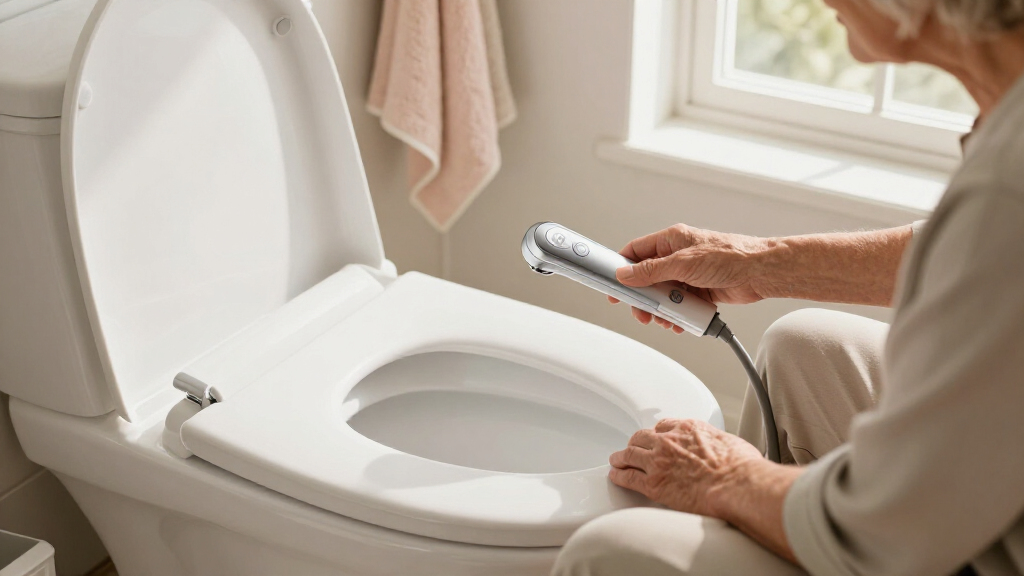
Handheld sprayer
Offers flexible aiming but requires more grip, coordination and pressure control. Overspray is also more likely.
From shutoff valve to leak check
Most attachments use the toilet’s existing supply. Confirm that the valve works, the hose is accessible and the seat will remain stable before removing anything.
Compatibility deserves a physical check
One-piece, skirted, wall-hung and flushometer toilets may require adapters or may be incompatible. Raised seats, safety frames, grab-bar systems and seat risers can obstruct the mounting plate. If the seat rocks after installation, compatible bumpers may be needed.
Plumbing is old, hidden or unusual
Professional help is the safer choice when a valve is seized, a connection already leaks, rigid pipe must be replaced or local backflow rules are unclear.
Confidence begins at the control
The user should be able to find “off,” select a wash and adjust pressure without twisting sharply or applying a strong pinch grip. Fewer choices may be safer for memory or cognitive difficulties.
Large and high-contrast
Labels and markings should remain easy to distinguish in typical bathroom lighting.
Reachable without twisting
Controls positioned too far behind the hip may be difficult for shoulder, spinal or hip limitations.
Low-force operation
Large levers, textured knobs and substantial remote buttons are easier than tiny smooth dials.
Predictable pressure
The design should prevent sudden full-pressure activation and make the off position obvious.
Senior-friendly control priorities
A practical selection hierarchy for comparing models.
A gentle learning curve
Cool water and the direction of the spray may feel surprising at first. Brief exposure is often easier than expected, and small changes in pressure, nozzle position or sitting position can improve comfort.
Begin in the comfort zone
Remain seated and start at the lowest available pressure. Increase only after the flow feels controlled and predictable.
Remain seated
Settle into a stable position before reaching for the control.
Activate gently
Choose the lowest pressure and expect a brief, unfamiliar sensation.
Adjust in small steps
Fine-tune sitting position, nozzle position or pressure without rushing.
Stop, then dry
Return the control fully to off. Pat dry gently unless an air dryer is available.
Match features to real needs
More features do not automatically mean easier use. Choose the simplest product that addresses the user’s reach, grip, temperature and drying needs.
| Feature | Non-electric attachment | Warm-water attachment | Electric bidet seat | Handheld sprayer |
|---|---|---|---|---|
| Existing seat retained | YES | YES | NO — seat replaced | YES |
| Warm water | NO — normally cool | YES — sink connection | YES — model dependent | NO — normally cool |
| Electrical outlet needed | NO | NO | YES | NO |
| Grip and aiming demand | Low with a large lever | Low with a large lever | Low with a large remote | Higher |
| Air drying available | NO | NO | OFTEN | NO |
| Installation complexity | Usually low | Moderate | Moderate | Usually low |
| Overspray risk | Lower when seated | Lower when seated | Lower when seated | Higher without careful control |
Model features vary. Confirm toilet dimensions, bolt spacing, plumbing access, outlet requirements and compatibility with any mobility equipment before purchase.
Independence is built as a system
A bidet can reduce difficult movement during cleaning, but it does not replace bathroom fall-prevention measures or a stable transfer routine.
Keep existing supports
Grab bars, adequate lighting, a stable seat and clear floor space remain essential.
Inspect before problems grow
Clean the nozzle as directed and check hoses, adapters and the floor for moisture regularly.
Avoid overtightening
Plastic threads can crack under excessive force. Begin by hand-tightening every fitting.
What buyers ask first
These answers cover the most common expectations, but the individual product manual and the toilet’s actual dimensions should guide the final decision.
Will an attachment fit every toilet?
No. Most fit standard two-piece toilets, while wall-hung, skirted, flushometer and unusual one-piece designs may need adapters or may be incompatible.
Can it be installed without a plumber?
Many basic models can be installed with simple tools. Use a professional when valves are seized, plumbing is corroded or access is difficult.
Is household supply water suitable?
Yes. The device uses the home’s regulated water supply. Keep the nozzle separate from bowl contact and clean it according to the manufacturer’s instructions.
Will toilet paper become unnecessary?
Basic attachments usually reduce wiping but still require patting dry. An electric seat with an effective air dryer may reduce paper use further.
How to Install a Bidet Attachment Without a Hassle
Most bidet attachments mount quickly and use your existing toilet, but a smooth installation depends on your plumbing and toilet type. The process typically involves turning off the water, disconnecting the supply hose, attaching a T-adapter, and connecting the bidet hose. It usually takes between 20 and 60 minutes, depending on your plumbing setup.
Key steps include:
- Shut off the toilet’s water supply.
- Drain the tank by flushing.
- Disconnect the supply hose from the fill valve.
- Install the T-adapter onto the fill valve.
- Reconnect the supply hose to the T-adapter.
- Attach the bidet hose to the T-adapter and the bidet unit.
- Place the attachment beneath the toilet seat, making sure it’s stable.
- Turn the water back on slowly, checking for leaks.
Compatibility is key. Some toilets, like wall-hung or skirted models, need adapters, or may not fit at all. If your plumbing is old, corroded, or difficult to access, hiring a professional can save time and frustration.
Understanding the installation process is important because it impacts the device’s effectiveness and safety. Improper installation can lead to leaks, water damage, or reduced functionality. For example, a loose connection might cause water to spray unpredictably, which can be uncomfortable or even hazardous. Recognizing these potential issues emphasizes the value of careful installation or professional help when needed, ensuring the bidet functions correctly and safely for daily use.
As an affiliate, we earn on qualifying purchases.
Simple, Senior-Friendly Controls That Make Water Cleansing Easy
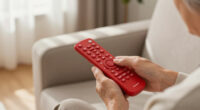
Controls should be straightforward, visible, and easy to operate. Large levers or buttons with high-contrast markings help those with limited vision or dexterity. Remote controls with big, textured buttons can reduce confusion and make adjustments easier, especially for users with arthritis or limited hand strength.
Having simple, intuitive controls matters because it directly influences a senior’s confidence and safety during use. Complex controls or unclear labels can lead to hesitation, misuse, or accidental activation, which might cause discomfort or even injury. For example, a tiny button labeled ‘Jet’ might be difficult to locate or press for someone with limited dexterity, leading to frustration or incomplete cleaning. Conversely, large, clearly labeled controls allow users to operate the device confidently, reducing the risk of mishaps. Demonstrating how controls work and practicing routines helps build familiarity, making the experience more comfortable and encouraging independence. For caregivers, selecting models with preset options or memory functions can streamline daily routines, minimize errors, and support those with cognitive challenges, ultimately fostering a safer, more autonomous bathroom experience.
As an affiliate, we earn on qualifying purchases.
What First-Time Users Should Expect (And How to Prepare)
Starting with a bidet attachment can be a surprisingly new experience, especially if the water isn’t heated and the sensation feels unfamiliar. Recognizing what to expect helps reduce initial discomfort and builds confidence. Most users find that the water spray is gentle, especially when starting at low pressure, and that comfort improves as they adjust the settings. Understanding that the initial sensation might feel unusual—like a sudden splash or a cool spray—can help users stay calm and focused. It’s important to realize that these sensations are temporary and designed for safety; with small adjustments, the experience becomes more natural. Expect to sit still while experimenting with pressure and nozzle position, as finding the right combination is key to a comfortable and effective cleaning routine. For example, starting with a low-pressure setting and gradually increasing it allows the user to gauge sensitivity and avoid surprises. Models with adjustable nozzle positions and pressure controls provide more control over the experience. For those with sensitive skin or medical conditions, consulting a healthcare professional before use can help tailor the settings to their needs, ensuring a safe, comfortable introduction to water cleansing.
Being prepared for these sensations and understanding the routine makes the transition smoother. It also helps in setting realistic expectations—knowing that initial discomfort or unfamiliarity is normal and temporary encourages patience and persistence. This mindset can lead to a more positive experience, ultimately promoting hygiene and independence with confidence.
electric bidet seat with warm water
As an affiliate, we earn on qualifying purchases.
As an affiliate, we earn on qualifying purchases.
Frequently Asked Questions
Will a bidet attachment fit any toilet?
Most bidet attachments fit standard two-piece toilets, but some models may not work with wall-hung, skirted, or unusual shapes. Check the bolt spacing and dimensions before buying, and consider adapters if needed. Compatibility varies, so measure carefully.
Can I install one without a plumber?
Many people install basic bidet attachments themselves using simple tools. If your plumbing is corroded, the shutoff valve is stuck, or you have a complex toilet style, professional installation is wise. Ensuring proper fittings prevents leaks and long-term problems.
Does a non-electric bidet use cold water?
Yes. Most non-electric models connect directly to your toilet’s water supply, providing cool water unless connected to a hot-water line. Some models can be adapted for warm water, but that often involves more installation steps.
Is household water sanitary enough for bidet use?
Absolutely. The water comes from your home’s supply, which is regulated for safety. The nozzle remains separate from the bowl and should be cleaned regularly to maintain hygiene. Proper maintenance prevents contamination.
Will it eliminate toilet paper use?
It depends. Basic attachments usually reduce the need for wiping but still require patting dry. Electric models with air dryers can nearly eliminate toilet paper, making hygiene easier and more comfortable, especially for sensitive skin.
non-electric bidet attachment for toilet
As an affiliate, we earn on qualifying purchases.
As an affiliate, we earn on qualifying purchases.
Conclusion
A well-chosen bidet attachment can bring real comfort and independence to seniors. Focus on simple controls, safe installation, and realistic expectations. Remember, it’s not just about the device—it’s about making bathroom routines easier and more hygienic, every day. Take your time, ask questions, and choose what truly fits your needs. Your bathroom routine could become a moment of gentle comfort, every single time.Grilling season Picks
grills
As an affiliate, we earn on qualifying purchases.