
TL;DR
Listen free for 30 days with Audible
Thousands of audiobooks and originals — cancel anytime.
Start your free trialAs an affiliate, we earn on qualifying purchases.
Easy-grip utensils with weighted, angled, and built-up handles help people with tremors, arthritis, or limited hand strength eat more comfortably. Choosing the right type depends on individual needs, improving independence and dignity during mealtime.
Imagine trying to eat with shaky hands or a stiff wrist. Frustrating, right? Now picture a simple tool that makes it easier—an ordinary-looking utensil with a special handle that fits your grip perfectly. That’s what easy-grip utensils do. They’re designed to turn a challenging task into a manageable one, giving you or a loved one more independence during meals.
This guide will walk you through the different types—weighted, angled, and built-up handles—and show you how they can make eating safer, steadier, and more comfortable. Whether you’re caring for someone with arthritis or recovering from hand surgery, understanding these features helps you pick the right tool for the job.
Choosing the right handle type—weighted, angled, or built-up—depends on specific motor challenges like tremors, wrist pain, or weak grip.
Comparison tables help quickly understand features and match them to individual needs.
Testing different styles before buying ensures the best fit and comfort.
Recent innovations include textured grips, adjustable angles, and hygienic coatings, making utensils more effective and appealing.
Proper cleaning and regular check-ups extend the lifespan of your adaptive utensils.
Easy-Grip Utensils: Weighted, Angled and Built-Up Handles Explained
Imagine eating with shaky hands or a stiff wrist. Adaptive utensils turn that struggle into a manageable task — restoring independence, safety, and dignity at every meal. This guide breaks down the three core handle types and shows you how to match each one to specific motor challenges.
What Are Weighted, Angled, and Built-Up Handles?
Each design feature targets a specific issue — shaking, awkward wrist position, or weak grip. Choosing the right combination comes down to understanding the user’s challenges, comfort, and the trade-offs between weight and stability.
Weighted Handles
Added mass dampens involuntary movements, allowing more precise actions — vital for safe eating. Often paired with a non-slip grip without compromising balance.
Angled Handles
The handle angles away from the utensil shaft so the wrist stays in a natural position — reducing strain, pain, and fatigue over longer meals.
Built-Up Handles
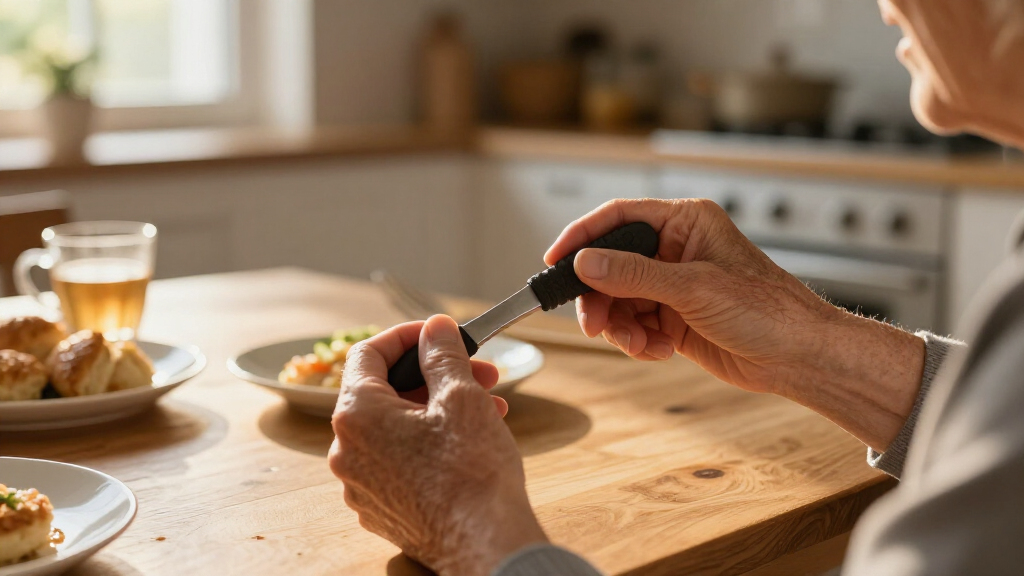
A thicker, cushioned — sometimes textured — surface minimizes the effort needed to grasp, reducing joint strain and pain during meals.
Which Handle Is Right for You?
Every feature carries a trade-off. Weight adds stability but may fatigue weaker arms; angles ease wrists but need an adjustment period; thicker grips help arthritic hands but can feel bulky for precise control. Follow this path to your best fit.
Identify the Challenge
Tremors and shaking? Wrist pain or stiffness? Weak or painful grasp? Name the primary barrier first.
Match the Feature
Weighted for tremors, angled for wrist strain, built-up for grip strength — or a combination for overlapping needs.
Weigh Trade-Offs
Consider weight vs. stability, size vs. control, and any conditions like osteoporosis or fragile bones.
Test Before Buying
Trial different styles for fit and comfort — the best utensil is the one that feels right in the hand.
Compare These Handles Side-by-Side
| Feature | Weighted Handles | Angled Handles | Built-Up Handles |
|---|---|---|---|
| Purpose | Reduce tremors, stabilize the hand, and improve control by adding mass that dampens involuntary movements — leading to more precise, safer eating. | Improve wrist position and reduce strain by aligning the hand naturally, lessening fatigue over longer periods of use. | Enhance grip strength and comfort with a thicker, cushioned surface that is easier and less painful to hold securely. |
| Best For | Tremors, shaky hands, and control issues stemming from involuntary movements. | Wrist pain, stiffness, or discomfort affecting natural eating motion. | Weak grip, arthritis, or conditions making a standard handle hard to grasp. |
| Design | Heavier handle that adds weight without compromising balance, often with a non-slip grip. | Handle angled away from the shaft for an ergonomic wrist position and reduced strain. | Thicker, cushioned, and sometimes textured to cut the effort of holding and controlling the utensil. |
| Combination | Often combined with angle or grip enhancements for tailored solutions. | Usually standalone, but can be paired with other modifications for specific needs. | Frequently combined with angled or weighted features to maximize ease of use. |
What’s New in Adaptive Utensils
Modern designs look less clinical and work harder — with textured slip-resistant grips, antimicrobial coatings, and modular builds that let you customize handle size and angle.
Hygienic
Antimicrobial coatings and materials that are easier to clean — most are dishwasher safe.
Adjustable
Customizable angles and modular designs let handle size and bend suit each user.
Textured
Softer, slip-resistant surfaces improve grip security even with wet or weak hands.
Modern Look
Bright colors and contemporary styling reduce stigma and encourage daily use.
Common Questions, Answered
Can I use these utensils with severe arthritis?
Yes. Built-up handles are especially helpful because they require less grip strength and reduce joint strain. Choose a size and grip that feels comfortable for your specific condition.
Are weighted utensils safe for everyday use?
Generally, yes. They are designed to be safe and durable — just ensure the weight is comfortable. Check manufacturer instructions, especially with conditions like osteoporosis or fragile bones.
Do they work for children with developmental challenges?
Absolutely. Many easy-grip utensils come in smaller sizes and fun colors, making mealtime easier and more engaging for kids with motor or developmental challenges.
How often should I replace my adaptive utensils?
Inspect regularly for cracks, worn grips, or loose handles. Replace as needed to maintain safety and effectiveness — most last several years with proper care.
Simple upgrades in utensil design turn mealtime from a struggle into a moment of independence. Picture that steady hand and a peaceful plate — because the right grip makes all the difference.
What Are Weighted, Angled, and Built-Up Handles? Here’s the Quick Breakdown
Weighted, angled, and built-up handles are design features that make utensils easier to hold and control for people with hand or wrist challenges. Each feature targets specific issues—shaking, awkward wrist position, or weak grip. These modifications are crucial because they directly impact a person’s ability to eat independently and comfortably. For example, a weighted handle can significantly reduce tremors, allowing for more precise movements, which is vital for safe eating. An angled handle can help those with wrist pain maintain a natural, less strained position, preventing fatigue and discomfort during extended use. Built-up handles provide a thicker, cushioned grip that minimizes the effort needed to grasp, which is especially beneficial for those with arthritis or weak hand strength. Choosing the right combination of these features involves understanding the user’s specific challenges and preferences, as well as weighing the trade-offs—such as the potential increased weight of a utensil versus the stability it offers. These ergonomic enhancements are not just about comfort; they can be the difference between independence and reliance on others for daily meals.
weighted adaptive utensils for tremors
As an affiliate, we earn on qualifying purchases.
As an affiliate, we earn on qualifying purchases.
How Do You Know Which Handle Is Right for You?
Choosing the right handle depends on the specific challenge you want to address and understanding the implications of each feature. For instance, selecting a weighted handle can dramatically reduce tremors, but it also adds weight to the utensil, which might cause fatigue if overused or if the user already has limited strength. An angled handle improves wrist positioning, reducing strain, but may alter the natural angle of eating, which could require an adjustment period. Built-up handles provide a larger surface area, making gripping easier, but they may also increase the overall size of the utensil, potentially making it less suitable for smaller hands or precise control. Consider the user’s daily needs, comfort level, and any trade-offs—such as weight versus stability—to find the most effective solution. For example, an elderly person with tremors might benefit most from a weighted utensil, but if they also have arthritis, combining this with a built-up grip could offer even better control. Understanding these nuances helps in making informed decisions that enhance safety, comfort, and independence during meals.
As an affiliate, we earn on qualifying purchases.
Compare These Handles Side-by-Side — Which One Do You Need?
| Feature | Weighted Handles | Angled Handles | Built-Up Handles |
|---|---|---|---|
| Purpose | Reduce tremors, stabilize hand, and improve control by adding mass, which dampens involuntary movements, leading to more precise and safer eating actions. | Improve wrist position and reduce strain by aligning the hand naturally, which can lessen fatigue and discomfort over longer periods of use. | Enhance grip strength and comfort with a thicker, cushioned surface, making it easier for users with arthritis or weak grip to hold utensils securely and with less pain. |
| Best For | Tremors, shaky hands, and control issues that stem from involuntary movements. | Wrist pain, stiffness, or discomfort that affects the natural motion needed for eating. | Weak grip, arthritis, or conditions that make grasping a standard handle difficult or painful. |
| Design | Heavier handle that adds weight without compromising balance, often with a non-slip grip for safety. | Handle angled away from the utensil shaft, allowing a more ergonomic wrist position, which can reduce strain during use. | Thicker, cushioned, and sometimes textured to improve grip and reduce the effort needed to hold and control the utensil. |
| Combination | Often combined with other features like angle or grip enhancements for tailored solutions. | Usually standalone but can be paired with other modifications for specific needs. | Frequently combined with angled or weighted features to maximize ease of use and comfort. |
As an affiliate, we earn on qualifying purchases.
Frequently Asked Questions
Can I use these utensils if I have severe arthritis?
Yes. Built-up handles are especially helpful for arthritis sufferers because they require less grip strength and reduce joint strain. Always choose a size and grip that feels comfortable for your specific condition.Are weighted utensils safe for everyday use?
Generally, yes. They are designed to be safe and durable, but ensure they are lightweight enough for your comfort. Check manufacturer instructions, especially if you have issues like osteoporosis or fragile bones.Will these utensils work for children with developmental challenges?
Absolutely. Many easy-grip utensils come in smaller sizes and fun colors, making mealtime easier and more engaging for kids with motor or developmental challenges.How often should I replace my adaptive utensils?
Inspect them regularly for cracks, worn grips, or loose handles. Replace as needed to maintain safety and effectiveness—most last several years with proper care.easy grip utensils for limited hand strength
As an affiliate, we earn on qualifying purchases.
As an affiliate, we earn on qualifying purchases.
Conclusion
Simple upgrades in utensil design can turn mealtime from a struggle into a moment of independence. Understanding the differences between weighted, angled, and built-up handles helps you pick the perfect tool for your needs or those of a loved one.
Remember, comfort and control are key. With the right utensil, every bite becomes easier, more confident, and dignified. So next time you’re shopping, picture that steady hand and a peaceful plate—because the right grip makes all the difference.
College move-in / dorm season Picks
dorm essentials
As an affiliate, we earn on qualifying purchases.