
TL;DR
Open a free Amazon Business account
Business pricing, bulk buying and tax-exempt orders.
Create a free accountAs an affiliate, we earn on qualifying purchases.
Button hooks and zipper pulls are inexpensive, practical aids that reduce strain and make fastening clothes easier for those with stiff fingers. They support independence and can often be used one-handed, improving daily life with minimal effort.
Getting dressed can turn into a frustrating puzzle when your fingers refuse to cooperate. Tiny buttons, fiddly zippers, and delicate hooks suddenly seem impossible. But what if a simple, inexpensive tool could turn that struggle into a quick, painless task?
Button hooks and zipper pulls are small aids designed to help people with arthritis, tremors, or hand injuries. They’re straightforward but effective — turning a frustrating morning routine into a manageable task. If you or someone you care for faces stiff fingers, understanding these tools can open a world of easier dressing.
Button hooks and zipper pulls are simple, effective tools that reduce strain and make fastening clothes easier for those with limited finger mobility.
Choosing the right tool depends on handle size, material, weight, and your specific clothing needs. Test them with your actual garments.
Practicing proper technique improves effectiveness—start with larger buttons or zippers to build confidence.
Recent innovations focus on ergonomic, combined, and adaptable designs, but basic mechanical tools remain affordable and reliable.
Always use these aids gently and consult a healthcare professional if your hand symptoms worsen or new issues appear.
Independent dressing · practical guide
Button Hooks and Zipper Pulls: Small Tools for Stiff Fingers
Less pinching. Less twisting. More control. These inexpensive dressing aids enlarge the job your fingers must grasp, helping people with arthritis, tremors, weakness, injuries, or limited dexterity fasten familiar clothing with less strain.
01 · What the tools do
Two simple mechanisms, one easier routine
Both aids compensate for reduced grip, strength, or coordination. They simplify fastening; they do not treat the condition causing stiffness or pain.
Capture and pull
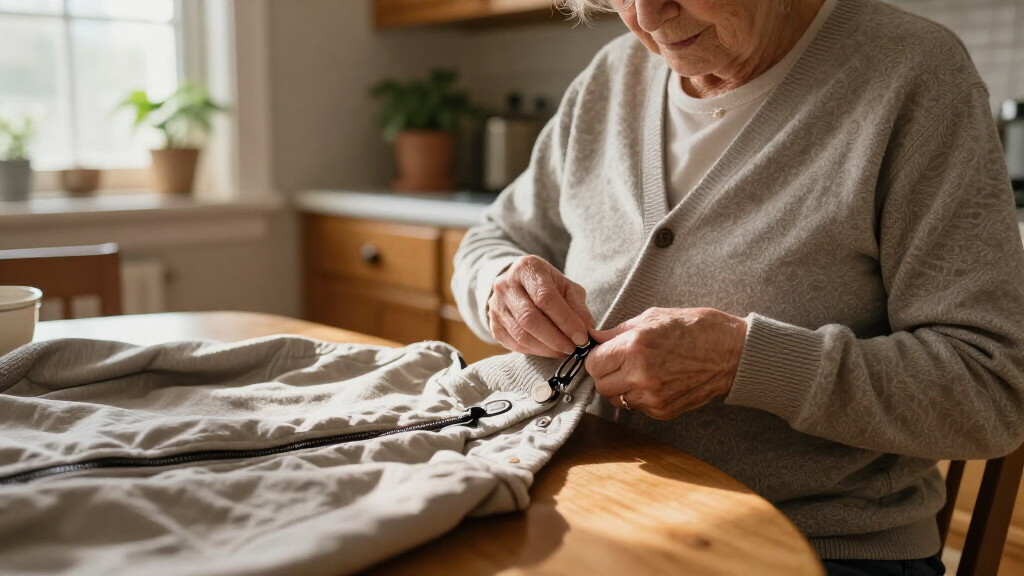
A narrow wire loop passes through the buttonhole, slips around the button, and pulls it back through. Precise pinching becomes a larger arm-and-hand movement.
Enlarge the grip
A handled hook, removable loop, or enlarged tab gives the zipper slider a more substantial surface. The user can grip securely and pull steadily.
Switch without searching
Many designs place a button loop at one end and a zipper hook at the other. One compact tool can cover shirts, trousers, coats, and bags.
02 · Why they matter
The biggest gain is not mechanical—it is independence
Fastening clothes can become painful, tiring, and emotionally frustrating when joints are stiff or coordination is limited. A small aid can preserve privacy, choice, and confidence.
Keep the clothes. Change the interface.
Dressing aids often make existing garments usable without costly alterations. They are especially relevant for people living with arthritis, Parkinson’s disease, stroke-related weakness, tremors, neuropathy, or hand injuries.
Qualitative profile based on the tools’ intended functions; results vary with the user, garment, and fastener.
03 · Match tool to task
Choose with your hand—and your wardrobe
No single design works for every person or garment. Test prospective tools with the shirts, trousers, coats, shoes, and bags used most often.
Handle size
Thicker handles usually need less grip strength and spread pressure across the hand.
Surface
Rubberized or textured materials resist slipping when hands are weak or shaky.
Weight
Light tools suit weakness; a little extra weight may feel steadier with tremor.
Length
Longer handles improve reach but may reduce control around small fasteners.
Loop size
The loop must pass through the hole and fit around the garment’s button.
Wire strength
Rigid wire suits firm fabric; excessive force can bend a thin loop.
Orientation
A stable, easy-to-aim handle is important when operating with one hand.
Portability
Compact and folding designs travel discreetly and store conveniently.
| Design | Best fit | Grip demand | Control | Watch for |
|---|---|---|---|---|
| Thick cushioned handle | Arthritis or painful joints | ✓ Lower | ✓ Secure | May be bulky for travel |
| Lightweight slim tool | Weakness or delicate clothing | ✓ Low weight | ~ Less stabilizing | Narrow grip may be harder |
| Slightly weighted handle | Some users with tremor | ~ Moderate | ✓ May feel steady | Fatigue with prolonged use |
| Flexible zipper loop | Coats, bags, or footwear | ✓ Easy grasp | ~ Garment dependent | ✗ Snag risk if too long |
| Combined two-ended aid | Mixed daily fasteners | ~ Varies by handle | ✓ Versatile | Check both ends on real clothing |
Best test: try the tool while seated, standing, and using the hand position normally required for dressing.
04 · Button-hook technique
Five movements from buttonhole to secure fastening
Begin with a loose garment and a larger button. Slow, repeatable movements build confidence before moving to cuffs, small buttons, or firmer fabric.
Push the wire loop completely through the buttonhole.
Slip the loop over and around the button.
Turn slightly so the button sits securely inside the loop.
Draw the button steadily through the opening.
Turn or slide the hook away without tugging the fabric.
05 · Practical decision guide
Find the balance between lightness and stability
Your ideal tool depends on the movement that is hardest: gripping, aiming, pulling, reaching, or keeping the garment stable.
Painful pinching?
Start with a thick, cushioned, nonslip handle that reduces fingertip pressure.
Weakness?
Favor a lightweight tool and practice with the garment supported on a surface.
Tremor?
Try a contoured or slightly weighted handle and compare control before buying.
One-handed use?
Prioritize stable orientation and brace the garment against the body or a table.
06 · Limits and safety
Use steady technique, never extra force
Very small buttons, tight cuffs, thick fabric, decorative buttons, or damaged zippers may remain difficult. The tool should reduce effort—not transfer excessive force to the garment or hand.
Do not force a jammed zipper or bend a button-hook loop. Look for trapped fabric, damaged teeth, a worn slider, or a mismatched loop size. Position long zipper loops so they cannot snag on furniture, mobility equipment, or machinery. Seek professional advice if pain, swelling, weakness, numbness, or coordination problems worsen or newly appear.
07 · Quick answers
What to know before the first try
Will a button hook work with every shirt?
No. Standard buttons and looser holes are easiest. Tiny buttons, tight holes, and thick or delicate fabrics may require a different loop or another clothing solution.
Can it be used with one hand?
Often, yes. Stabilizing the garment against the body, a table, or another surface can make one-handed fastening practical.
Is it suitable for arthritis?
Frequently. A thick cushioned handle can reduce painful pinching, but comfort varies. Stop if the movement aggravates symptoms.
Can it help with tremor?
It may. A larger contoured or slightly weighted handle can improve control for some people, but individual testing matters.
Do zipper pulls fit every zipper?
No. The attachment must pass through the slider or existing tab. Inspect the zipper’s opening and shape before choosing a pull.
What if a basic aid is not enough?
Consider magnetic closures, snap conversions, hook-and-loop fasteners, larger tabs, adaptive clothing, or a custom 3D-printed handle.
What Are Button Hooks and Zipper Pulls? Find Out in a Flash
Button hooks and zipper pulls are tiny, clever devices that make fastening clothes a breeze. A button hook features a narrow wire loop that slips through buttonholes, grabs the button, and pulls it through. It acts like an extension of your finger, compensating for reduced dexterity or strength, which is especially useful when your grip is weak or painful. This design minimizes the need for pinching or fine motor control, making it easier to handle small buttons, especially on stiff or delicate fabrics.
Zipper pulls are larger handles or loops attached to the zipper slider. They provide a substantial grip surface that can be grasped more comfortably than the small zipper tab. This is particularly beneficial when fine finger movements are difficult, as it allows for a more secure and controlled pull. Some models combine both tools into one, allowing users to switch between fastening methods without switching devices, which can streamline dressing routines and reduce frustration.
Understanding how these tools function helps appreciate their role as compensatory aids—designed not just for convenience but to reduce the physical strain and frustration associated with everyday dressing, especially for those with limited grip strength or joint pain.

Button Hook and Zipper Pull One Hand Buttons aids Button Assist Device
- Effortless Buttoning: Secure various button sizes easily
- Comfortable Handling: Soft-grip, slip-resistant handle
- Snag-Free Precision: Sturdy steel wire for smooth operation
As an affiliate, we earn on qualifying purchases.
As an affiliate, we earn on qualifying purchases.
Why Do These Small Tools Make a Big Difference? Here’s Why They Matter
Fastening clothing is a routine task that becomes surprisingly challenging when finger joints are stiff, swollen, or weak. This difficulty isn’t just about inconvenience—it can significantly impact independence and emotional well-being. Struggling with buttons or zippers often leads to frustration, embarrassment, or even avoidance of dressing altogether, which can affect self-esteem and daily functionality.
Button hooks and zipper pulls matter because they address the core issues: reducing the need for pinching, twisting, and fine motor control, which are often compromised in conditions like arthritis or after injury. By minimizing these movements, they help prevent joint pain and fatigue that can worsen with repeated effort. The tradeoff, however, is that these tools may require some initial practice to master, and they might not be suitable for all types of clothing or fasteners. For example, very small buttons or tight buttonholes can still be tricky even with the aid, and some users may find that larger or heavier tools cause fatigue over extended use.
Despite these limitations, the benefits often outweigh the tradeoffs. They enable users to maintain independence, reducing reliance on caregivers and promoting a sense of competence. Recognizing these tradeoffs helps users select the most appropriate tool for their specific needs, balancing ease of use with the clothing they typically wear and their physical capabilities.

Zipper Puller Helper for Dresses and Bracelet Helper Tool Set
- Affordable Set: Includes zipper and bracelet helpers
- Travel-Friendly Design: Compact and lightweight for portability
- Universal Compatibility: Works with all zipper types
As an affiliate, we earn on qualifying purchases.
As an affiliate, we earn on qualifying purchases.
Picking the Perfect Tool: What Features Matter Most?
Choosing the right dressing aid depends on your hand strength, clothing style, and personal preferences. Here’s what to keep in mind:
- Handle size: Thicker handles require less grip strength and can be easier to hold for tired or weak hands. Larger handles distribute pressure more evenly, reducing fatigue and joint pain during use.
- Handle material: Rubberized, textured surfaces grip better and slip less, especially if your hands are sweaty or tremor-prone. This improves control and reduces the effort needed to grasp and manipulate the tool.
- Weight: Lighter tools are generally easier to maneuver, but some users prefer a slightly heavier handle for added stability—finding a balance that prevents fatigue without sacrificing control.
- Length: Longer handles can reach awkward spots or help stabilize the tool against your body, but overly long handles may reduce fine control. Consider your typical clothing and comfort preferences.
- Loop size: The wire loop must fit through various buttonholes and around buttons without bending or breaking. Selecting the correct size ensures smooth operation and prevents frustration or damage to clothing.
- Wire strength: Rigid wires work best on sturdy fabrics and larger buttons, while thin wires might bend or break under force. The material choice affects durability and ease of use.
- One-handed operation: An ergonomic, stable handle that can be easily aimed and operated with one hand is crucial for independence, especially for those who cannot use both hands simultaneously.
- Portability: Compact, foldable designs are ideal for travel or storage, allowing users to carry their aids discreetly and conveniently.
Trying out multiple options with your actual clothing provides insight into what feels most natural and effective. For instance, a thick, rubber handle might provide the necessary grip for a stiff shirt button, while a lightweight, slim hook might be better suited for delicate blouses. Understanding these features helps ensure the tool complements your specific needs and daily routines, reducing frustration and enhancing usability.
As an affiliate, we earn on qualifying purchases.
Frequently Asked Questions
Not quite. Button hooks work best with standard-sized buttons and buttonholes. Tiny or tight buttons, like those on some coats or delicate blouses, may still be tricky. Testing with your specific clothing helps find the right match.
Can it be used with one hand?
Absolutely. Many people use button hooks one-handed, especially if they stabilize the garment against their body or a surface. Practice helps, but most find they can manage with minimal effort once familiar.
Is it suitable for arthritis?
Yes. A thicker, cushioned handle can reduce painful pinching and protect finger joints. However, comfort varies, so try different designs and stop if the tool causes discomfort.
Can it help with tremors?
Often. Larger, weighted handles can provide better control, making fastening less shaky. Experiment with different grips to find what reduces your tremor’s impact.
Do zipper pulls fit all zippers?
No. The attachment must fit through the zipper slider or tab. Some small or oddly shaped zippers may not accept certain pulls, so check before buying or attaching.
As an affiliate, we earn on qualifying purchases.
Conclusion
These tiny tools can turn dressing from a daily challenge into a manageable task. A simple button hook or zipper pull isn’t just a gadget — it’s a step toward maintaining independence and dignity.
Next time you struggle with fasteners, remember: a small change can make a big difference. Keep your tools close, and your confidence high.
Fall Picks
fall essentials
As an affiliate, we earn on qualifying purchases.