
TL;DR
Open a free Amazon Business account
Business pricing, bulk buying and tax-exempt orders.
Create a free accountAs an affiliate, we earn on qualifying purchases.
The U.S. Food and Drug Administration (FDA) has approved the first-ever wearable device capable of continuously monitoring both ketone and blood sugar levels. This device aims to improve diabetes management by providing real-time data, potentially reducing complications. The approval marks a milestone in medical device innovation, though some questions about its long-term effectiveness remain.
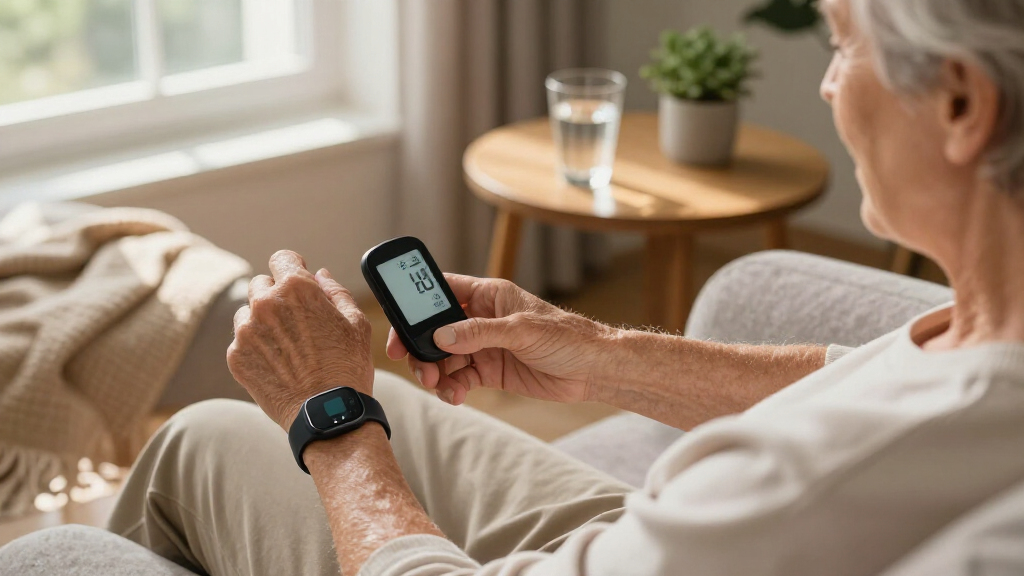
The U.S. Food and Drug Administration (FDA) has approved the first wearable device capable of continuously monitoring both ketone and blood sugar levels. This device, developed by a biotech company, aims to provide real-time data to individuals managing diabetes, potentially improving health outcomes and reducing risks associated with ketoacidosis and hyperglycemia. The approval represents a significant milestone in wearable health technology and diabetes management.
The device, named KetoMonitor, is a lightweight, patch-like sensor that users wear on their skin. It transmits data wirelessly to a smartphone app, allowing users and healthcare providers to track fluctuations in ketone and glucose levels throughout the day. The FDA approval was based on clinical trials involving hundreds of participants, which demonstrated the device’s accuracy and safety in continuous monitoring.
According to the FDA, KetoMonitor can detect rising ketone levels, which are critical for people at risk of diabetic ketoacidosis (DKA), a life-threatening complication. Simultaneously, it measures blood glucose levels, providing a comprehensive picture of metabolic status. The device is intended for adults with diabetes, particularly those with type 1 diabetes, but could also benefit type 2 patients with insulin dependence.
Manufacturers report that the device uses non-invasive sensors that analyze interstitial fluid, eliminating the need for finger-prick blood tests. The FDA emphasized that KetoMonitor has met rigorous standards for accuracy, reliability, and safety, making it the first device of its kind to receive regulatory approval in the U.S.
Implications for Diabetes Management and Patient Care
The FDA’s approval of KetoMonitor could transform how individuals with diabetes monitor their condition, enabling more real-time, less invasive tracking. By providing continuous data on ketone and blood sugar levels, the device may help prevent complications like diabetic ketoacidosis (DKA) and severe hyperglycemia, potentially reducing emergency hospitalizations. Healthcare providers could also use this data to tailor treatments more effectively, improving overall disease control.
Furthermore, this development signals a broader shift toward integrated, wearable health monitoring technologies. As devices become more sophisticated, they could eventually incorporate additional biomarkers, offering a comprehensive view of metabolic health. This progress aligns with ongoing efforts to move away from episodic testing toward continuous, personalized health management.
However, experts caution that while initial data are promising, long-term studies are needed to confirm the device’s sustained accuracy and impact on health outcomes. Patients and providers will need to evaluate how best to incorporate this technology into existing treatment protocols.
wearable ketone and blood sugar monitor
As an affiliate, we earn on qualifying purchases.
As an affiliate, we earn on qualifying purchases.
Background on Wearable Diabetes Monitoring Devices
Wearable health devices for diabetes management have been evolving over the past decade, with continuous glucose monitors (CGMs) becoming increasingly common. These devices typically measure glucose levels via sensors inserted under the skin, providing real-time data and alerts. However, until now, no FDA-approved device has been capable of simultaneously monitoring ketones, which are critical during episodes of ketosis or diabetic ketoacidosis.
The development of non-invasive sensors that analyze interstitial fluid has opened new possibilities for more comprehensive metabolic monitoring. Several companies have been working on devices that could measure multiple biomarkers, but regulatory approval has been slow due to the complexity of ensuring accuracy and safety. The recent FDA approval of KetoMonitor marks the first step toward integrating ketone monitoring into wearable tech for diabetes care.
Prior to this, patients relied on finger-prick tests and laboratory analyses to measure ketone levels, which are less convenient and provide only snapshot data. The new device aims to fill this gap by offering continuous, real-time insights, potentially improving patient outcomes and quality of life.
continuous glucose and ketone monitoring device
As an affiliate, we earn on qualifying purchases.
As an affiliate, we earn on qualifying purchases.
Long-Term Effectiveness and Adoption Questions
It is not yet clear how the device will perform over extended periods outside clinical trials, or how widely it will be adopted by healthcare providers and patients. Long-term data on accuracy, durability, and impact on health outcomes are still pending. Additionally, questions remain about insurance coverage, cost, and user adherence to continuous monitoring protocols.
Regulatory agencies and manufacturers are expected to monitor real-world use closely, but comprehensive post-market studies are still needed to confirm initial findings and address potential issues that could arise with broader use.
non-invasive diabetes health tracker
As an affiliate, we earn on qualifying purchases.
As an affiliate, we earn on qualifying purchases.
Next Steps in Regulatory Approval and Market Launch
Following FDA approval, the manufacturer plans to initiate broader commercial distribution of KetoMonitor within the next few months. Healthcare providers will begin integrating the device into clinical practice, with ongoing education and training. Meanwhile, the company and regulators will monitor user feedback and collect real-world data to evaluate long-term performance.
Additional studies are likely to be conducted to assess the device’s impact on health outcomes, cost-effectiveness, and patient adherence. Future updates may include expanded features, such as integration with other health metrics or AI-driven alerts, to further enhance diabetes management.
As an affiliate, we earn on qualifying purchases.
Key Questions
How does the KetoMonitor device work?
KetoMonitor uses non-invasive sensors to analyze interstitial fluid, measuring ketone and glucose levels continuously. Data is transmitted wirelessly to a smartphone app for real-time monitoring.
Who can benefit from this device?
It is primarily designed for adults with diabetes, especially those with type 1 diabetes, but could also benefit some with insulin-dependent type 2 diabetes.
Is the device safe and accurate?
According to the FDA, clinical trials demonstrate that KetoMonitor is both safe and accurate for continuous monitoring of ketone and blood sugar levels, meeting regulatory standards.
Will insurance cover this device?
Insurance coverage details are still being determined. Patients should consult their providers and insurers for coverage options once the device is available commercially.
When will the device be available to consumers?
Manufacturers plan to begin broad distribution within the next few months following FDA approval, with some regions possibly receiving it sooner than others.
Source: hn
Grilling season Picks
grills
As an affiliate, we earn on qualifying purchases.