
TL;DR

Turn quiet afternoons into listening time
- Thousands of audiobooks, podcasts and originals
- Listen on your phone, tablet or Echo — also offline
- Cancel anytime
A Sept. 29 MedPage Today roundup summarized reports on alcohol and the brain, possible Alzheimer’s drug targets, and human stem cell-derived brain tissue integrated into mice. It also covered studies and trial results involving Huntington’s disease, epilepsy, dementia, stroke and ALS. The roundup reports developments from separate sources; several findings do not establish cause, treatment benefit or a safe level of alcohol use.
MedPage Today published a neurology roundup on Sept. 29 covering reports on alcohol’s effects on the brain, emerging Alzheimer’s drug targets and experiments in which human brain cells integrated into mice. The items come from separate studies, trial updates and media reports, so they describe distinct developments rather than one coordinated research finding.
The roundup said The New York Times examined what alcohol does to the brain and what amount, if any, may be safe. MedPage Today’s summary did not provide the article’s specific evidence or conclusions, so it does not establish a safe drinking level. It also cited an investment banking firm’s report, carried by Axios, that tau-targeting Alzheimer’s drugs could have an expected value as high as $70 billion. That figure is a market estimate, not a clinical finding or a forecast of treatment effectiveness.
In Huntington’s disease, uniQure said ongoing phase I/II studies of AMT-130, also called ifezuntirgene inilparvovec, showed continued slowing of disease progression. The company said the effects were not statistically significant at four years compared with a natural history cohort. In a separate ALS development, data from the HEALEY ALS platform trial showed that DNL343 did not demonstrate benefit, according to the roundup’s account of results published in JAMA Network Open.
Other research findings included a sharp rise in epilepsy incidence after symptomatic Alzheimer’s disease onset among people with Down syndrome, reported in an international longitudinal study in The Lancet. A Canadian cohort study in Neurology linked transient ischemic attacks with a large, sustained increase in dementia risk. Another Neurology study found that stroke rates among U.S. adults ages 20 to 54 nearly doubled over 27 years, alongside increases in vascular risk factors and substance abuse. The roundup also cited a Nature study in which nervous systems of mice engineered without a cerebral cortex integrated transplanted human stem cell-derived cortical organoids.
Research Spans Alcohol, Dementia and Stroke
Together, the items point to several active questions in neurology: how alcohol affects the brain, which biological targets might support future Alzheimer’s treatments, and how vascular events relate to later dementia risk. The reports also cover conditions with substantial effects on patients and families, including Huntington’s disease and ALS. For readers, the findings are useful as a snapshot of research activity, but each needs to be understood within its own evidence base.
The stroke study’s long time span and younger age group make its reported increase relevant to public health discussions. The source summary, however, gives no absolute stroke rates or study methods. The reported association between transient ischemic attacks and dementia risk likewise does not show that a TIA directly caused dementia. Those limits matter when translating population findings into individual risk.
The mouse experiment may inform basic research on how transplanted human-derived tissue interacts with a host nervous system. It does not show that such tissue can treat human disease. Similarly, the tau market estimate describes potential commercial value, not proof that a drug aimed at tau will work or reach patients.
Popular right now

TCL T7 Series 85-Inch 4K 144Hz QLED Smart Google TV

Ninja DualZone 6-in-1 Air Fryer, 8-Qt, Grey, DZ801

Ninja CREAMi 7-in-1 Ice Cream Maker, NC299AMZ
As an affiliate, we earn on qualifying purchases.
Separate Studies, Different Evidence
The roundup combines items from media coverage, scientific journals, a company statement and an investment banking analysis. These sources answer different questions. Clinical trial data assess a candidate intervention in people; cohort studies track patterns and associations; laboratory experiments test biological possibilities in animals; and financial analyses estimate commercial prospects.
AMT-130’s comparison with a natural history cohort is not the same as a direct comparison in a randomized control group, based on the details in the summary. The report gives no sample size or statistical estimates. For the DNL343 result, the summary says the drug did not show benefit but does not include effect sizes or details of the trial analysis. The Alzheimer’s and Down syndrome finding is described as an increase in epilepsy incidence after symptomatic disease onset, without figures in the roundup.
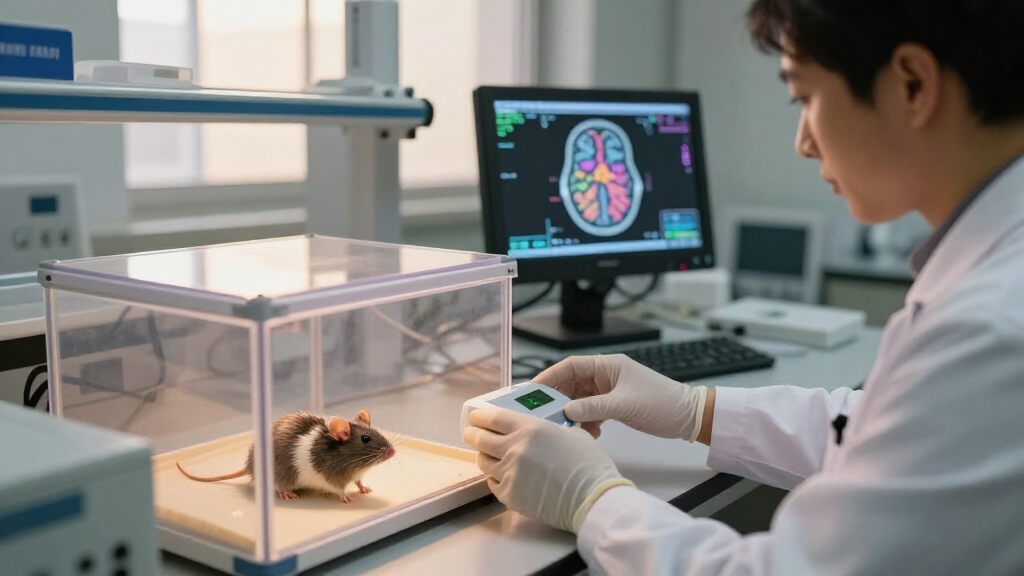
The mouse work involved animals engineered to lack a cerebral cortex and transplanted cortical organoids derived from human stem cells. The result described is integration into the mice’s nervous systems. The summary does not say that the organoids recreated a complete human brain or that the mice acquired human cognition.
“Effects were not significant at 4 years compared with a natural history cohort.”
— uniQure, as summarized by MedPage Today
What the Roundup Leaves Open
The summary does not identify the alcohol article’s conclusions about brain effects or whether any level of consumption may be safe. It also omits the underlying figures, methods and limitations for several studies, including the TIA and dementia association and the change in stroke rates among younger adults.
For AMT-130, the size and durability of any effect remain uncertain from the information provided, as does how the natural history comparison should be interpreted. The summary does not state which measures informed the DNL343 conclusion or whether further analyses are planned. It gives no details on the tau drugs behind the market estimate, their development stage or the assumptions used to calculate value.
The mouse study’s longer-term results and relevance to human disease are not described. The roundup reports integration of transplanted organoids, but it does not establish what functions the tissue performed or whether the approach could have clinical use.
Evidence to Watch in Follow-Up
Readers can look for full study publications and trial disclosures for the methods, participant numbers, outcome measures and statistical results that the roundup does not provide. For AMT-130, future updates may clarify how the four-year results compare with other measures of disease progression. Further reporting on DNL343 may explain the trial’s findings and whether researchers plan additional analyses.
Follow-up studies will be needed to test whether the reported associations involving TIA, dementia, epilepsy and stroke rates hold across populations and to clarify their causes. Research on transplanted human-derived organoids in mice may describe their function and limits in greater detail. For alcohol and the brain, the cited coverage would need to be read directly to understand what evidence it reviewed and what it concluded about safety.
Key Questions
What was the main news development?
MedPage Today published a neurology roundup on Sept. 29, 2026, summarizing separate reports and findings on alcohol, Alzheimer’s disease, stroke, ALS and other topics.
Did the roundup establish a safe amount of alcohol?
No. It said The New York Times examined what alcohol does to the brain and what amount, if any, may be safe, but MedPage Today’s summary did not provide the article’s conclusion.
Did AMT-130 significantly slow Huntington’s disease?
uniQure reported continued slowing in ongoing phase I/II studies, but said the effects were not significant at four years compared with a natural history cohort.
What did the mouse study show?
The study reported that nervous systems in mice engineered without a cerebral cortex integrated transplanted cortical organoids derived from human stem cells. The roundup did not report evidence of a treatment for people.
Does the tau drug estimate show that Alzheimer’s treatments will work?
No. The figure of up to $70 billion was an investment banking firm’s estimate of expected value, cited by Axios. It is a market assessment, not evidence that tau-targeting drugs are effective.
Source: rss