
TL;DR

Turn quiet afternoons into listening time
- Thousands of audiobooks, podcasts and originals
- Listen on your phone, tablet or Echo — also offline
- Cancel anytime
A pulse oximeter estimates oxygen saturation and pulse rate by shining light through your finger. It provides an estimate, not a diagnosis, and accuracy varies by device, technique, and skin tone. Always prioritize symptoms over numbers.
You clip a small plastic device onto your fingertip, wait a few seconds, and stare at a glowing number. It feels scientific. It feels precise. But that number is actually an estimate, not a direct measurement of the oxygen flowing through your veins.
Many people buy these devices during flu season or after a respiratory illness, hoping to catch trouble early. That is a smart instinct. But without knowing how the technology works, you might misinterpret a reassuring reading or panic over a glitch. You need to know what the device sees, what it misses, and when to trust your body over the screen.
This guide breaks down the pulse oximeter basics without the medical textbook jargon. You will learn exactly what the device measures, why your hands might be causing errors, and how to use this tool as a helpful companion to your health, not a replacement for professional care.
A pulse oximeter estimates oxygen saturation and pulse rate using light absorption; it does not directly measure blood oxygen.
Accuracy is affected by nail polish, cold hands, movement, and skin tone, with known biases potentially overestimating oxygen in darker skin.
Standard devices cannot detect carbon monoxide poisoning, which can cause falsely high oxygen readings.
Always prioritize physical symptoms like shortness of breath or confusion over a normal-looking device reading.
Consumer smartwatches are for wellness trends, while medical-grade fingertip devices are better for clinical monitoring.
What Exactly Is This Clip Measuring?
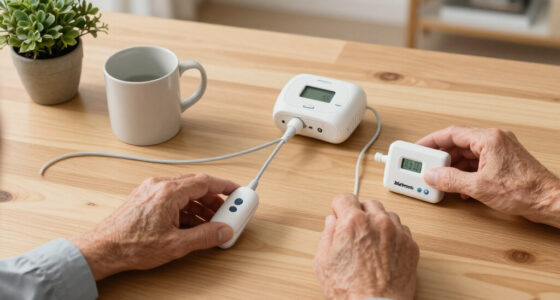
A pulse oximeter is a small, noninvasive device—usually clipped to a fingertip—that estimates two things: oxygen saturation (SpO₂) and pulse rate. It does not measure the amount of oxygen in your blood directly. Instead, it calculates a percentage based on how light behaves as it passes through your tissue.
Think of it like checking the color of a liquid to guess its ingredients. Oxygenated blood is bright red. Deoxygenated blood is dark, almost purplish-red. The device shines two types of light—red and infrared—through your finger. Oxygen-rich hemoglobin absorbs more infrared light. Oxygen-poor hemoglobin absorbs more red light. By comparing how much light gets through, the device calculates the percentage of hemoglobin carrying oxygen.
The second number, your pulse rate, is derived from the same light signal. Every time your heart beats, blood volume in your finger increases slightly, changing the light absorption pattern. The device counts these pulses to estimate your heart rate. It is a clever trick of physics, but it relies entirely on the quality of the light signal reaching the sensor.
Popular right now

Vitamix Propel Series 750 Professional-Grade Blender, 4 Programs, Black

Vitamix 5200 Professional-Grade Blender, 64 oz. Container, Black

Samsung 85-Inch QN70H Neo QLED 4K Smart TV (2026)
As an affiliate, we earn on qualifying purchases.
Why Your Reading Is an Estimate, Not a Diagnosis
It is critical to understand that a pulse oximeter provides an estimate, not a definitive diagnosis. The device never touches your blood. It infers oxygen levels from light absorption, which means external factors can skew the result. A reading of 96% might actually be 94% or 98% depending on the device’s precision and your current physical state.
For many healthy people at sea level, SpO₂ is often around 95%–100%. However, this range is not a universal rule. Your baseline might be lower if you have chronic lung conditions like COPD or if you live at high altitude. A reading that looks “normal” for a healthy 25-year-old might be dangerously low for someone else, while a slightly lower reading might be perfectly stable for a patient with long-term respiratory issues.
Furthermore, the device cannot tell you why your oxygen is low. It does not measure carbon dioxide levels, which is crucial for assessing breathing quality. You could have normal oxygen saturation but still be retaining dangerous amounts of CO₂ if your breathing is shallow. This is why clinicians emphasize that trends and symptoms matter more than a single number on a screen.
5 Steps to Get a More Accurate Reading
Technique matters more than most people realize. A sloppy measurement can give you a false sense of security or unnecessary panic. Follow this step-by-step process to minimize errors and get the most reliable data from your device.
- Warm up your hands. Cold fingers restrict blood flow. Rub your hands together or run them under warm water for a minute before clipping on the device. Good circulation is essential for a strong signal.
- Remove nail products. Nail polish, gel nails, and acrylics can block light transmission. Dark polish is particularly problematic. If you cannot remove it, try a different finger or accept that the reading may be less accurate.
- Sit still and rest. Movement creates noise in the signal. Sit comfortably for five minutes before taking the reading. Keep your hand relaxed and supported on a table or your lap. Do not hold your hand in the air.
- Position the sensor correctly. Ensure your fingernail is facing the light source (usually the top of the clip). The finger should be fully inserted. If the device has a display, make sure you are looking at it upside down or correctly oriented depending on the model.
- Wait for stability. Do not trust the first number that pops up. Wait until the reading stabilizes for at least 10–15 seconds. If the number fluctuates wildly, check your placement or try a different finger.
Record the time and the reading. If you are monitoring a health condition, consistency is key. Taking a reading after a walk versus sitting still will yield different results, so always measure under similar conditions to track trends accurately.
The Skin Tone Bias: A Critical Limitation
One of the most significant issues with pulse oximetry in recent years is unequal accuracy across skin tones. Research and regulatory reviews have highlighted that some pulse oximeters may overestimate oxygen saturation in people with darker skin. This means a device might show a normal reading (like 95%) when the actual oxygen level is dangerously low (like 88%).
This is not a user error. It is a limitation of the technology as it is currently built and tested. The light absorption properties of melanin can interfere with the device’s ability to distinguish between oxygenated and deoxygenated hemoglobin. The size of this error varies by device and circumstances, and there is no simple mathematical correction you can apply at home.
The FDA and other health authorities have been working to improve testing standards to ensure devices perform equally well across diverse populations. However, until those improvements are universal, users with darker skin tones should be particularly vigilant. Do not rely solely on the number. If you feel short of breath, dizzy, or confused, seek medical attention immediately, even if the oximeter says you are fine. Your symptoms are a more reliable indicator of distress than a potentially biased device reading.
When the Device Can Be Dangerously Wrong
Beyond skin tone and technique, there are specific scenarios where a pulse oximeter fails completely. The most dangerous example is carbon monoxide poisoning. Standard pulse oximeters cannot distinguish between oxygenated hemoglobin and carboxyhemoglobin (hemoglobin bound to carbon monoxide). If you are exposed to carbon monoxide, the device will likely show a falsely high oxygen saturation, giving you a deadly false sense of security.
Carbon monoxide is odorless and colorless. If you suspect exposure—perhaps from a faulty furnace or a car running in a garage—leave the area immediately and call emergency services. Do not wait for the oximeter to confirm your fears. It will not.
Other factors can also skew readings. Bright ambient light, such as direct sunlight or strong fluorescent lights, can flood the sensor and cause errors. Poor circulation from conditions like Raynaud’s phenomenon or severe shock can make it difficult for the device to detect a pulse at all. Certain dyes used in medical procedures, like methylene blue, can also cause inaccurate readings. Always consider your environment and medical history when interpreting the data.
Smartwatches vs. Medical-Grade Devices
Not all pulse oximeters are created equal. There is a distinct difference between a consumer smartwatch or fitness tracker and a clinical-grade fingertip device. While both use similar photoplethysmography (PPG) technology, their intended use, testing, and regulatory oversight vary significantly.
| Feature | Consumer Smartwatch | Medical-Grade Fingertip Oximeter |
|---|---|---|
| Intended Use | Wellness and fitness tracking | Screening and monitoring under medical guidance |
| Regulatory Status | Often not FDA-cleared for diagnosis | FDA-cleared as a medical device |
| Accuracy Focus | Trends over time; less precise | Point-in-time accuracy; higher precision |
| Sensor Placement | Wrist (more motion artifact) | Fingertip (less motion, better signal) |
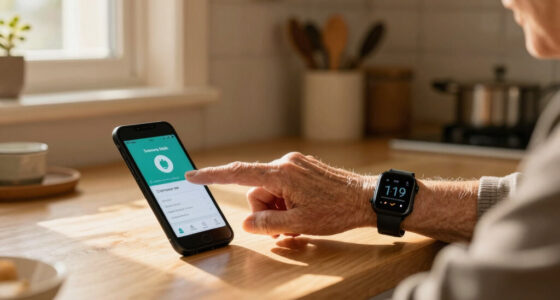
Smartwatches are great for spotting trends, like a drop in average oxygen levels during sleep. However, they are generally not designed to diagnose acute respiratory distress. The wrist is a harder place to get a clean signal because of movement and blood flow differences compared to the fingertip. If you are monitoring a specific health condition, consult your doctor about whether a dedicated fingertip device is necessary. Do not assume your watch’s “SpO2” feature is equivalent to a clinical measurement.
Frequently Asked Questions
What does SpO₂ actually mean?
SpO₂ is the device’s estimate of the percentage of hemoglobin in your arterial blood that is carrying oxygen. It is a calculated value derived from light absorption, not a direct chemical measurement of oxygen content.Is a reading of 94% dangerous?
For a healthy person at sea level, 94% might be slightly low and worth monitoring or contacting a doctor if it persists. However, for someone with chronic lung disease, 94% might be their normal baseline. Always follow the specific thresholds provided by your healthcare provider.Why is my reading jumping around?
Fluctuations are often caused by movement, poor sensor placement, or weak pulse signals. Try warming your hands, sitting still, and ensuring your finger is correctly positioned. If the reading remains unstable, try a different finger or check for nail polish interference.Can I use a pulse oximeter to diagnose pneumonia?
No. While pneumonia can lower oxygen saturation, a normal reading does not rule it out, and a low reading does not confirm it. Only a medical professional can diagnose pneumonia through examination and imaging. Use the device for monitoring, not diagnosis.Does the device work if I have dark nail polish?
Dark nail polish can block the light signal, leading to inaccurate or failed readings. For the most accurate results, remove the polish or use a finger without polish. If you cannot remove it, be aware that the reading may be unreliable.Conclusion
Your pulse oximeter is a helpful flashlight in the dark, not the sun. It sheds light on your oxygen levels, but it casts shadows where it cannot see. Use it to track trends and inform your doctor, but never let it override your body’s urgent signals. If you feel sick, trust your instincts over the plastic clip.