
TL;DR
Open a free Amazon Business account
Business pricing, bulk buying and tax-exempt orders.
Create a free accountAs an affiliate, we earn on qualifying purchases.
Water leak detectors are small devices that detect unwanted water, preventing major damage. Proper placement, recent smart features, and quick action make them essential for home safety.
Imagine waking up to a flooded basement or a ruined hardwood floor because of a hidden leak. It happens more often than you’d think. Water leak detectors are tiny devices with a big job — catching leaks early before they turn into costly disasters.
As technology advances, these devices have become smarter, easier to install, and more affordable. This guide breaks down everything you need to know about these small but mighty safety tools.
Smart water leak detectors connect to your home system, offering remote alerts and early leak warnings.
Proper placement — under sinks, near water heaters, along pipes — is essential for effective detection.
Investing in leak detectors can save thousands by preventing water damage and mold growth.
Choose detectors with high sensitivity and reliable connectivity to avoid false alarms or missed leaks.
Combine detectors with routine maintenance for the best protection against water disasters.
Water Leak Detectors Explained: Small Devices, Big Messes Avoided
A hidden drip can quietly become mold, ruined flooring, or structural damage. Leak detectors act as an early-warning layer—sensing unwanted water, flagging abnormal flow, and giving you time to respond before a small problem becomes a flood.
Three ways to spot trouble
The right detector depends on what you need to monitor. Surface sensors catch water where it collects, flow devices watch plumbing behavior, and smart models add remote visibility and automation.
Basic moisture sensor
Conductive probes sense water touching a floor or surface and trigger a local audible alarm.
BEST FORUnder sinks, beside toilets, near water heaters
Flow-based detector
Monitors pipe flow and flags unusual volume, duration, or usage patterns—even when water stays hidden.
BEST FORMain lines, concealed pipes, whole-home coverage
Smart leak detector
Connects through Wi-Fi or Zigbee to deliver phone alerts, automation, and sometimes shutoff control.
BEST FORRemote monitoring, travel, multiple properties
Match capability to risk
More technology brings broader coverage, but it can also add cost, setup, connectivity dependencies, and privacy considerations.
| Capability | Moisture | Flow-based | Smart connected | Why it matters |
|---|---|---|---|---|
| Detects pooled water | ✓ YES | ✗ NO | ✓ YES | Finds appliance drips and floor-level leaks. |
| Finds abnormal pipe flow | ✗ NO | ✓ YES | ~ MODEL | Can expose hidden or continuous water loss. |
| Remote phone alerts | ✗ NO | ~ MODEL | ✓ YES | Lets you act while away from home. |
| Automatic shutoff | ✗ NO | ~ MODEL | ~ MODEL | Limits damage when nobody can respond. |
| Typical cost | Under $20 | $50–$100+ | $30–$100+ | Even one avoided incident can outweigh the cost. |
What makes a detector truly useful?
A smart label is not enough. Reliable protection combines sensitive sensing, dependable alerts, durable power, sensible installation, and clear control over automation.
High sensitivity
Catches small leaks early without reacting constantly to ordinary humidity.
Reliable connectivity
Wi-Fi or Zigbee enables remote alerts, provided the network stays available.
Long-life power
A 1–3 year battery window reduces maintenance, but low-power alerts are vital.
Pattern intelligence
Some systems learn usage and distinguish leaks from condensation or normal flow.
Spend modestly, place strategically
Price matters less than coverage. Multiple well-placed basic sensors may outperform one premium detector sitting too far from a likely leak path.
Under sinks
Cabinet joints, supply lines, and drains
Water heater
Tank base, valves, and nearby floor
Washing machine
Behind hoses and beneath the appliance
Basement
Sump pump, low points, exposed pipes
Dishwasher
Supply connection and cabinet edge
Refrigerator
Ice-maker line and rear wall area
From first drop to avoided disaster
The detector does not repair the leak. Its value lies in shortening the time between water escaping and decisive action.
Leak begins
A hose, fitting, appliance, or pipe starts releasing water.
Sensor detects
Moisture contact or unusual flow crosses the alert threshold.
Alarm travels
A siren, phone notification, or home-system alert is triggered.
Water stops
You or an automated valve shuts down the supply.
Damage shrinks
Fast cleanup limits saturation, mold growth, and repair costs.
Five rules for stronger protection
Choose remote alerts when you travel or manage more than one property.
Place sensors low and close to the likely path of escaping water.
Use several devices across high-risk areas instead of relying on one point.
Check alarms, connectivity, and batteries on a routine schedule.
Know the main shutoff location and act immediately when an alert arrives.
What Are Water Leak Detectors and Why Do They Matter?
Water leak detectors are devices designed to sense water where it shouldn’t be. Think of them as the home’s early warning system against hidden leaks. They can alert you with a loud alarm or send notifications straight to your phone.
For example, a leak under your kitchen sink can cause mold, wood rot, and thousands in damage if not caught early. A simple detector placed nearby can alert you instantly, allowing quick action that stops the mess before it starts.
These devices matter because water damage costs homeowners an average of $10,000 per incident, according to industry reports. Early detection turns a potential disaster into a minor inconvenience.
Beyond saving money, early leak detection helps protect your home’s structural integrity and prevents health hazards like mold growth. The implications are significant: the sooner you detect a leak, the less damage occurs, reducing repair costs and health risks. However, relying solely on these devices isn’t foolproof; they need proper placement and maintenance to be effective, and tradeoffs include false alarms or missed leaks if not chosen carefully.

GoveeLife Upgraded Smart Water Leak Detector 1s with High Alarm, 5 Pack
- Long-Range Connectivity: Up to 1804 feet through walls
- Multiple Alert Methods: SMS, app, email notifications
- Loud Alarm: 105 dB sound and flashing light
As an affiliate, we earn on qualifying purchases.
As an affiliate, we earn on qualifying purchases.
Different Types of Water Leak Detectors — Which One Fits Your Home?
| Type | How It Works | Best For |
|---|---|---|
| Basic Moisture Sensors | Detect water on surfaces or floors, trigger an alarm | Under sinks, near water heaters |
| Flow-Based Detectors | Monitor water flow in pipes, alert if abnormal | Along main water lines, washing machines |
| Smart Leak Detectors | Connect to Wi-Fi, send alerts via app | Anywhere you want remote monitoring |
Each type has its strengths. Basic sensors are affordable and easy to place. Flow-based ones give early warning for pipe issues, especially in hidden or hard-to-access areas. Smart detectors add convenience with remote alerts and integration with other smart home devices, but they may involve higher costs and require Wi-Fi stability. Choosing the right type depends on your home’s layout, the risk areas, and your budget. Neglecting to select the appropriate detector can lead to missed leaks or false alarms, which may cause complacency or unnecessary panic, respectively.
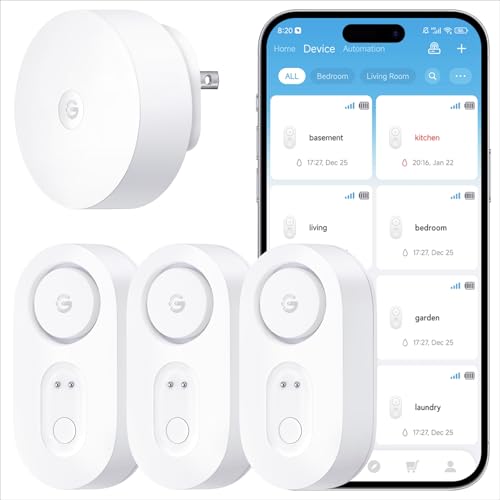
GoveeLife Upgraded Smart Water Leak Detector 1s with High Alarm, 3 Pack
- Long-Range Connectivity: Up to 1804 feet through walls
- Multiple Alert Methods: SMS, app, email notifications
- Loud Alarm and Flashing Light: 105 dB sound with red flash
As an affiliate, we earn on qualifying purchases.
As an affiliate, we earn on qualifying purchases.
What Features Make a Leak Detector Truly Smart and Reliable?
Smart leak detectors now go beyond just sensing water. They connect to your home network, send instant alerts, and sometimes even predict leaks before they happen. Imagine getting a notification when your washing machine’s hose starts to leak — before water pools on the floor.
Key features include:
- High sensitivity sensors that catch tiny leaks early, reducing the chance of extensive damage and giving you more time to respond.
- Wi-Fi or Zigbee connectivity for remote alerts, which is crucial if you’re away from home or managing multiple properties.
- Long-lasting batteries, often 1-3 years, reducing maintenance frequency but requiring awareness of battery life for continuous protection.
- Easy installation in common trouble spots, but improper placement can lead to missed detections or false alarms, impacting reliability.
Some detectors even learn your home’s patterns, warning you of unusual water flow that could signal a developing problem. This AI-driven approach enhances predictive maintenance, but it also introduces complexity and potential privacy concerns. The tradeoff is a smarter, more proactive system that can prevent disasters before they start, but it requires a balance between sophistication and user control.
GoveeLife Upgraded Smart Water Leak Detector 1s with High Alarm, 3 Pack
- Long-Range Connectivity: Up to 1804 feet through walls
- Multiple Alert Methods: SMS, app, email notifications
- Loud Alarm and Flashing Light: 105 dB sound with red flash
As an affiliate, we earn on qualifying purchases.
As an affiliate, we earn on qualifying purchases.
Latest Tech Trends Improving Water Leak Detection
Water leak detection is evolving fast. Today’s smart detectors incorporate features like AI, which helps identify false alarms caused by humidity or condensation. They also connect with home automation systems, giving you control and alerts from your phone, no matter where you are.
For instance, some systems analyze leak patterns over time, predicting pipe failures before water escapes. Wireless models with battery life of up to three years make installation simple and flexible, even in hard-to-reach spots.
Additionally, multi-function devices now monitor humidity or temperature, providing a comprehensive safety net. These innovations make leak detection more reliable, proactive, and seamlessly integrated into daily life. The implication is that future systems will become even more intuitive and less prone to false alarms, but they also demand more from users in terms of understanding and managing these advanced features.
GoveeLife Upgraded Smart Water Leak Detector 1s with High Alarm, 5 Pack
- Long-Range Connectivity: Up to 1804 feet through walls
- Multiple Alert Methods: SMS, app, email notifications
- Loud Alarm: 105 dB sound and flashing light
As an affiliate, we earn on qualifying purchases.
As an affiliate, we earn on qualifying purchases.
How Much Do Water Leak Detectors Cost, and Are They Worth It?
Prices range from under $20 for basic models to over $100 for advanced smart systems. While initial costs vary, the long-term savings from preventing water damage—often thousands of dollars—far outweigh the investment. This makes leak detectors a highly cost-effective part of home maintenance, especially in flood-prone areas.
Most detectors last 1-3 years on batteries, and replacing them is straightforward, but neglecting to do so can lead to false security. The tradeoff is between upfront expense and peace of mind. For example, a $30 sensor placed under your washing machine can detect leaks early, preventing a flood that could cost thousands in repairs. Proper investment in quality detectors can significantly reduce the financial and emotional toll of water disasters.
Where Should You Place Your Leak Detectors for Maximum Protection?
Place leak detectors in spots most vulnerable to leaks. Think about the spots where water damage can sneak up on you — under sinks, near water heaters, around washing machines, and in basements.
Proper placement is crucial because it directly impacts detection speed and effectiveness. For example, placing a detector behind your washing machine ensures early detection if a hose develops a tiny crack, preventing flooding and extensive damage. Using multiple detectors in high-risk areas creates a layered safety net, but improper placement—such as too high or too far from the source—can lead to missed leaks or false alarms. The tradeoff is ensuring comprehensive coverage without overwhelming yourself with alerts, which requires careful planning and understanding of your home’s plumbing layout.
Can Leak Detectors Really Prevent Water Damage? What You Need to Know
Leak detectors don’t promise to stop every leak, but they significantly cut down your risk. They alert you early enough to shut off water or clean up before a small leak turns into a flood.
For example, a leak detector under your kitchen sink might catch a slow drip that could otherwise cause mold, wood rot, or structural issues over weeks or months. Early alerts mean you can respond promptly, often saving thousands in repairs and health hazards. However, their effectiveness depends on proper placement, regular testing, and quick action. Relying solely on detectors without routine maintenance or manual inspections can create a false sense of security. Combining these tools with proactive home maintenance creates a comprehensive defense against water damage, but understanding their limitations is key to maximizing their benefits.
Are Leak Detectors Suitable for Commercial or Industrial Settings?
Yes, specialized leak detection systems exist for larger buildings, factories, and industrial facilities. These systems often feature advanced sensors, networked alerts, and integration with building management systems.
For instance, a warehouse storing sensitive goods might use multiple detectors linked to a central system, triggering alarms across the property if a leak is detected. In these environments, the implications are more significant: a single unnoticed leak can compromise entire inventories or cause structural damage, leading to costly downtime. Commercial detectors are designed to handle larger volumes of water, operate continuously, and integrate with other safety systems. Their deployment requires careful planning to ensure coverage and reliability, but the investment can prevent catastrophic failures, making them indispensable for large-scale safety management.
Frequently Asked Questions
How do water leak detectors work?
Most use moisture sensors or flow sensors to detect water presence or abnormal flow. When triggered, they sound alarms or send alerts to your phone, helping you react quickly.
Where should I place leak detectors?
Place them in high-risk areas like under sinks, near water heaters, around washing machines, sump pumps, and exposed pipes. Proper placement is key to early detection.
Are smart leak detectors worth the extra cost?
Yes, especially if you want remote alerts, instant notifications, and integration with your smart home system. They provide peace of mind and can prevent costly damage.
How long do batteries last, and how do I replace them?
Most last 1-3 years. Replacement usually involves opening the device and swapping out batteries, often AA or coin cell batteries. Check your model’s instructions for specifics.
Can leak detectors prevent all water damage?
They greatly reduce risk but aren’t foolproof. Proper placement, regular maintenance, and quick response are essential to maximize their effectiveness.
Conclusion
Small devices, big impact. Water leak detectors are your first line of defense against hidden leaks that could cost thousands.
Installing a few well-placed detectors and staying alert can turn a potential flood into a minor inconvenience, saving your home and your peace of mind. Think of them as tiny guardians, quietly watching over your home — so you don’t have to.
Flea & tick season Picks
flea and tick prevention
As an affiliate, we earn on qualifying purchases.