
TL;DR
Open a free Amazon Business account
Business pricing, bulk buying and tax-exempt orders.
Create a free accountAs an affiliate, we earn on qualifying purchases.
Bed rails are safety devices that prevent falls, assist mobility, and boost confidence for seniors. Proper selection, installation, and supervision are key for safe use, with recent innovations making them smarter and more adaptable.
Imagine waking up in the middle of the night, feeling unsteady, and having a sturdy barrier at your side. That’s what a well-chosen bed rail provides for seniors—safety, security, and a boost of confidence. But not all bed rails are created equal, and choosing the right one can feel overwhelming.
In this guide, you’ll learn about the different types of bed rails, how they’re used, and the safety basics to keep your loved ones secure. Whether you’re a caregiver, a family member, or just curious, understanding these tools helps you make smarter choices for everyday safety and peace of mind.
Choose the right type of bed rail based on your loved one’s mobility and safety needs.
Proper installation and regular inspections are essential to prevent entrapment and falls.
Innovations like smart sensors add extra layers of safety but should complement supervision.
Always consult healthcare professionals before installing bed rails, especially for cognitively impaired seniors.
Safety isn’t just about equipment; supervision and ongoing assessment matter just as much.
Bed Rails for Seniors: Types, Uses and Safety Basics
A well-chosen rail can prevent rolling falls, support repositioning and make getting in or out of bed feel steadier. Safe use depends on matching the rail to the person, the mattress and the care environment—not simply adding the largest barrier available.
What a bed rail should actually do
Bed rails attach to or sit beneath a bed frame or mattress. Their value lies in targeted support—not restraint.
Limit rolling
A suitable barrier may reduce the chance of unintentionally rolling out during sleep or rest.
Provide leverage
An ergonomic handle can help some seniors reposition, sit upright or steady themselves during transfers.
Create security
A stable point of contact can reduce nighttime anxiety and support a greater sense of independence.
Assist routines
The right rail can make planned movement safer and help caregivers manage mobility more consistently.
Five rail types, five different tradeoffs
Maximum coverage is not automatically the safest choice. Balance fall protection with access, mobility and entrapment risk.
| Type | Best suited to | Access | Fall barrier | Primary watchpoint |
|---|---|---|---|---|
| Full-length | Maximum side coverage during sleep | ✕ Restricted | ✓ High | Climbing and gaps near the mattress |
| Half-length | Support with an open transfer area | ✓ Easier | ~ Moderate | Open section may not stop every fall |
| Adjustable | Changing mobility or bed configurations | ✓ Flexible | ~ Variable | Locks must engage securely each time |
| Folding | Frequent access and temporary support | ✓ High | ~ Moderate | Hinges and release points need checks |
| Hospital-style | Clinical beds and supervised care | ~ Managed | ✓ High | Compatibility and professional assessment |
Important: A full-length rail may appear more protective but can increase danger if a confused person tries to climb over it. A shorter rail may preserve independence while providing a handhold. The senior’s behavior matters as much as the product specification.
From measurement to monthly checks
Safe installation is a continuing process. Mattress movement, loose hardware and normal wear can create new gaps over time.
Assess
Review mobility, cognition, climbing behavior and transfer needs with a professional.
Measure
Record mattress height, thickness, frame dimensions and intended rail position.
Install
Follow the manufacturer’s instructions and confirm every anchor and lock is secure.
Observe
Supervise initial use, inspect routinely and reassess whenever health or behavior changes.
Safety inspection checklist
Rail is approved for the exact bed frame and mattress combination.
No hazardous opening exists between the rail, mattress, headboard or footboard.
Anchors, screws, straps, hinges and quick-release mechanisms are secure.
Padding, mesh and handles show no tears, compression or sharp edges.
The floor and transfer path remain clear of clutter and entanglement hazards.
The senior can use the rail comfortably without feeling trapped or restricted.
What drives safe use?
The rail, mattress and frame must function as one system.
Check again after changing bedding or moving the mattress.
Watch for anxiety, resistance, climbing or changed mobility.
Use mild soap and water; replace worn components promptly.
Know when a rail may cause more harm
Entrapment, climbing and emotional distress are serious risks. Stop and reassess if the rail changes behavior or restricts safe movement.
Higher-risk signals
- Severe confusion, agitation or wandering behavior
- Repeated attempts to climb over the rail
- Limbs, clothing or bedding entering rail gaps
- Visible fear, resistance or a feeling of confinement
- A mattress that shifts away from the rail
Conditions to maintain
- Professional assessment supports the chosen rail
- The senior understands and accepts its purpose
- The rail remains stable under normal hand pressure
- Transfer space is open, clear and well lit
- Caregivers routinely observe and document changes
Smarter, lighter and more adaptable
Modern features may improve comfort and caregiver response, but technology should complement—not replace—assessment and supervision.
Movement sensors
Integrated sensors or alarms may alert a caregiver when a senior starts to rise, shifts unexpectedly or attempts to climb.
Improved materials
Breathable mesh, hypoallergenic surfaces and lighter durable frames can improve visibility, comfort and handling.
Flexible mechanisms
Quick-release, folding and adjustable designs can simplify access—provided every locking component is checked before use.
Questions families often ask
The safest answer is personal: evaluate the senior, the bed, the room and the available level of supervision together.
Are bed rails safe for every senior?
No. Cognitive impairment, agitation, climbing behavior or an incompatible mattress may make a rail hazardous. A healthcare professional should assess individual risk.
Can a rail be used to help someone stand?
Only when the product is specifically designed as a transfer aid, securely installed and appropriate for the user’s strength and balance.
How often should it be checked?
Look for movement or damage during routine use and complete a detailed inspection at least monthly, after moving the bed and after changing the mattress.
Do smart sensors make rails safer?
They can shorten caregiver response time, especially overnight, but they cannot correct poor fit, prevent entrapment or replace human observation.
If a rail causes distress, encourages climbing or limits safe movement, stop using it and ask a qualified healthcare professional about alternatives.
What Are Bed Rails and Why Do Seniors Use Them?
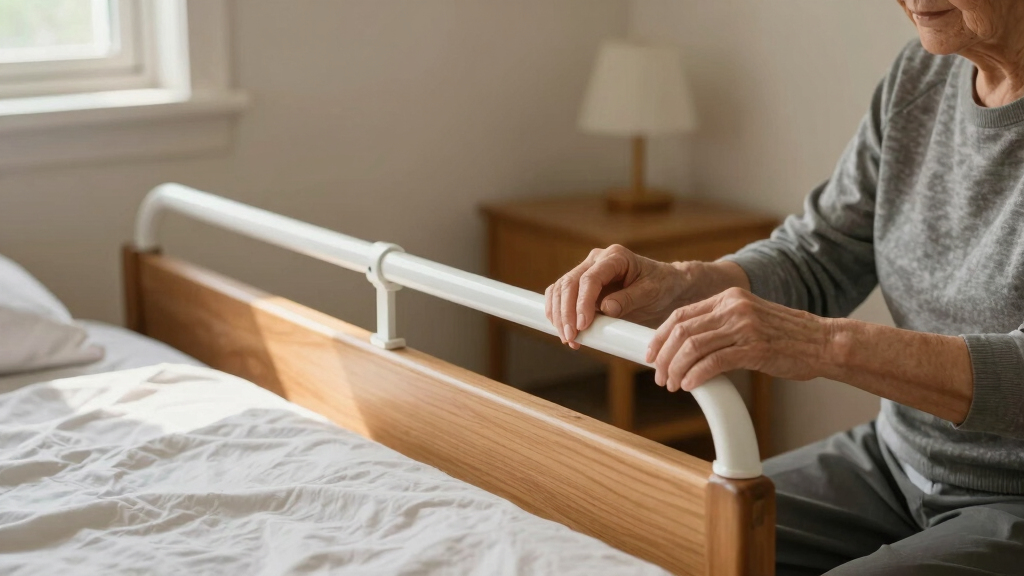
Bed rails are safety devices that attach to a bed’s frame or mattress, creating a barrier to prevent falls and assist with mobility. They’re especially helpful for seniors who struggle with balance, memory, or simply want extra security at night. Imagine a grandma who’s prone to slipping out of bed—adding a bed rail can give her a sense of stability without feeling confined.
Some use bed rails to help pull themselves up, while others see them as a safety net during sleep. Properly chosen, they support independence and peace of mind for families too.

KingPavonini Bed Rails for Elderly Adults Safety, 380 LBS, Model BM03-1
- Heavy-Duty Support: Supports up to 380 lbs, ASTM-Approved
- Adjustable Fit: Height from 17.6 to 20.9 inches, extends from 28.6 to 34.7 inches
- Universal Compatibility: Fits Twin to King beds (not adjustable beds)
As an affiliate, we earn on qualifying purchases.
As an affiliate, we earn on qualifying purchases.
The Main Types of Bed Rails and What They Do Best
Choosing the right bed rail starts with understanding the options. Here’s a quick breakdown:
| Type | Best For | Features |
|---|---|---|
| Full-Length Bed Rails | Maximum fall prevention | Cover entire side, sturdy, often with padding |
| Half-Length Bed Rails | Support without feeling restrictive | Cover half the bed, easier to get in/out |
| Adjustable Bed Rails | Custom needs, changing preferences | Move or bend, some with quick-release |
| Folding/Collapsible Rails | Versatility, easy access | Fold down when not in use, lightweight |
| Hospital-Style Bed Rails | Medical settings, extra features | Sturdy, may include alarms or sensors |
Understanding these differences helps tailor safety solutions to individual needs. For example, a full-length rail might seem ideal for maximum security, but it can also limit mobility or create entrapment risks if not properly installed. Conversely, half-length rails offer support while allowing easier access, but might be less effective in preventing falls. Recognizing these tradeoffs ensures safer, more appropriate choices for each senior, balancing security with independence.
KingPavonini Bed Rails for Elderly Adults Safety, 380 LBS, Model BM03-1
- Heavy-Duty Support: Supports up to 380 lbs, ASTM-Approved
- Adjustable Fit: Height from 17.6 to 20.9 inches, extends from 28.6 to 34.7 inches
- Universal Compatibility: Fits Twin to King beds (not adjustable beds)
As an affiliate, we earn on qualifying purchases.
As an affiliate, we earn on qualifying purchases.
Smart and Innovative Bed Rails: What’s New?
Recent innovations turn simple bed rails into smart safety tools. Some now include sensors that detect movement or attempts to climb over, sending alerts to caregivers’ phones. Imagine a sensor that buzzes or sends a message if a senior tries to get up unexpectedly—helping prevent falls before they happen.
Materials have also evolved. Lightweight, breathable mesh panels make them more comfortable. Adjustable, quick-attach mechanisms simplify installation, and some designs cater specifically to users with cognitive impairments, adding features like visual cues or alarm systems.
According to recent safety guidelines, these advancements help reduce injury risks and make managing safety easier for families. Incorporating technology can significantly improve response times and reduce the likelihood of accidents, especially during nighttime or when caregivers are not nearby. However, it’s important to consider how these features integrate with the overall safety plan and whether they are appropriate for the senior’s specific condition and environment.

Healthcraft Smart-Rail Pivoting Bed Rail, Adjustable Bedside Grab Bar
- Dual-Position Support: Pivots between in-bed and floor support
- Certified Safety Standards: Meets ASTM safety certifications for reliability
- Height Adjustable: Adapts to various mattress depths and user heights
As an affiliate, we earn on qualifying purchases.
As an affiliate, we earn on qualifying purchases.
Safety First: How to Pick and Maintain a Bed Rail
Choosing a bed rail isn’t just about size; safety starts with proper installation and ongoing checks. Here’s a step-by-step:
- Measure your bed to find a compatible rail—full or half-length. Accurate measurements prevent gaps that could trap limbs or heads, which are serious safety hazards.
- Follow the manufacturer’s instructions carefully during installation. Improper setup can compromise stability, increasing fall or entrapment risks.
- Ensure the rail fits snugly, with no gaps large enough to trap limbs or heads. Regularly check for looseness or damage, as wear over time can reduce effectiveness and create hazards.
- Inspect for wear, loose screws, or damage at least monthly. Tighten or replace parts as needed to maintain safety integrity.
- Clean the rail with mild soap and water, avoiding harsh chemicals that could degrade materials or cause skin irritation. Proper cleaning maintains hygiene and prevents deterioration.
For example, a caregiver might notice a rail’s padding is worn after six months and replace it before it becomes a safety hazard. Regular vigilance ensures that safety measures remain effective, and ongoing supervision during initial use helps build confidence and identify unforeseen issues.

Solid Wood Conversion Kit Bed Rails for Evolur Convertible Cribs
- Crib Compatibility Guide: Fits various Evolur cribs with 53” slats
- Supports Up to 600 lbs: Heavy-duty support with lifetime warranty
- Solid Wood Construction: Made from durable, 100% solid wood
As an affiliate, we earn on qualifying purchases.
As an affiliate, we earn on qualifying purchases.
Risks and When to Avoid Using Bed Rails
While bed rails add safety, they can also pose risks. Entrapment—where limbs or head get caught between the rail and mattress—is a real concern that can lead to injuries or suffocation. For example, a senior with severe dementia might try to climb over a rail and fall, or get limbs trapped, causing panic or injury.
According to safety organizations, if a person is confused, prone to wandering, or has a history of agitation, bed rails might do more harm than good. They can inadvertently trap or restrict movement, increasing the risk of injury or emotional distress. Always consult healthcare providers before installation to assess individual risks and determine whether alternative safety measures might be safer.
Alternatives like low-profile mattresses, alarms that alert caregivers when the bed is occupied, or repositioning the bed lower to the ground can sometimes be safer options, especially for high-risk individuals. Understanding the specific needs and behaviors of the senior is crucial before deciding on the safest approach.
How to Use and Keep Bed Rails Safe
Proper use is key. Always supervise seniors when they’re first using a bed rail. Make sure the rail stays secure and check regularly for damage or looseness. Keep the bed area clear of clutter, which can cause tripping or entanglement.
Remember, a bed rail should support, not restrict. If your loved one feels trapped or uncomfortable, reconsider its use. For example, if a senior starts resisting or trying to climb over, it’s time to reassess safety measures. Understanding individual responses and adjusting accordingly helps prevent accidents and maintains dignity.
In every case, staying attentive helps prevent accidents and maintains independence safely. Regularly communicate with the senior about their comfort and safety, making adjustments as needed to ensure their well-being and autonomy.
Frequently Asked Questions
Are bed rails safe for all seniors?
Not for everyone. Bed rails can pose risks of entrapment or injury, especially for those with cognitive impairments or tendency to climb. Carefully assessing individual needs and consulting healthcare providers is essential, as some seniors might be better protected with alternative safety measures. The safety implications depend heavily on the senior’s specific condition, mobility, and behavior patterns, making personalized evaluation crucial to avoid unintended harm.
How do I choose the best bed rail?
Consider your loved one’s mobility, cognitive status, and bed type. Look for features like ease of installation, whether it’s full or half-length, and if it offers quick-release options for emergencies. Understanding the tradeoffs—such as maximum security versus ease of access—is key. Selecting a rail that aligns with the individual’s specific needs can help prevent falls without restricting movement or causing feelings of confinement, thereby supporting both safety and independence.
Can bed rails cause injuries?
Yes, if improperly installed or used, they can cause entrapment, falls, or choking hazards. Regular inspections and supervision are key to safe use. Recognizing potential risks, such as gaps that trap limbs or corners that could cause cuts, allows caregivers to mitigate hazards proactively. Proper maintenance and vigilant supervision help ensure that the safety benefits of bed rails outweigh their risks, especially for vulnerable seniors.
Are there alternatives if bed rails aren’t suitable?
Absolutely. Options include alarms, repositioning the bed lower, or using floor mats. These strategies can sometimes provide safer solutions depending on the individual’s needs and safety risks. For example, alarms alert caregivers to movement, while lowering the bed reduces fall severity. Evaluating the senior’s specific health status and behavioral tendencies can help determine the most appropriate safety measures, which might be less restrictive yet equally effective.
How should I maintain and check bed rails?
Follow manufacturer instructions for installation. Regularly examine the rail for damage, loose parts, or wear. Clean it with mild soap and water to keep it free from dust and debris, ensuring ongoing safety. Routine checks—monthly or after any incident—are crucial to identify issues early. Maintaining the integrity of the bed rail through consistent inspection and cleaning helps prevent accidents and prolongs its effective lifespan, ensuring continuous protection for your loved one.
Conclusion
Bed rails can be a valuable safety tool, helping seniors stay secure and independent at night. But they’re not a one-size-fits-all solution. Thoughtful selection, correct installation, and ongoing vigilance make all the difference.
Think of bed rails as a safety handshake—supportive, but only when used with care. As you weigh options, remember: safety and freedom go hand in hand, and the right choice depends on your loved one’s unique needs.
Labor Day sales Picks
labor day deals
As an affiliate, we earn on qualifying purchases.