TL;DR

Turn quiet afternoons into listening time
- Thousands of audiobooks, podcasts and originals
- Listen on your phone, tablet or Echo — also offline
- Cancel anytime
Fit&Well published a 10-minute, no-equipment Pilates routine for beginners, created by instructor Andrew Griffiths. It includes six movements, from pelvic tilts to a child’s pose, and Griffiths recommends doing it three times a week with a rest day between sessions.
Fit&Well has published a 10-minute Pilates routine for beginners that requires no equipment and uses six floor-based movements to work on core control and stability. The workout was created by Pilates instructor Andrew Griffiths, who recommends doing it three times a week, with a day off between sessions.
The routine moves from gentle pelvic tilts to exercises that challenge coordination, including the hundred, dead bug, glute bridge and bird dog. It ends with a child’s pose. Participants need only space on the floor; the report says no Pilates experience is needed. Griffiths’s instructions emphasize controlled movement and linking breathing to each exercise rather than working quickly.
For the pelvic tilt, lie on your back with knees bent and feet flat. Exhale as you gently tilt the pelvis so the lower back moves toward the floor, then inhale back to neutral. Griffiths recommends eight to 10 repetitions, focusing on movement from the pelvis rather than the legs.
The hundred starts on the back with the knees bent above the hips. Lift the head and shoulders if comfortable, hover the arms beside the body and pulse them while breathing in for five pulses and out for five. The routine sets 40 pulses as a starting target, with a 30-second rest. Griffiths says people can build toward 100 pulses; beginners may keep their feet on the floor or leave their head and shoulders down if needed.
A Short Routine With Clear Modifications
A 10-minute format gives beginners a defined way to try Pilates at home without equipment or a prior class. The instructions also offer ways to reduce the challenge, such as keeping the feet down during the hundred, which may make the session more approachable for people still learning the movements.
The stated focus goes beyond abdominal effort. Griffiths says the exercises involve muscles that help stabilize the spine and support the back and pelvis. The report presents these as the routine’s intended training effects; it does not provide research findings or evidence that this particular sequence produces a measured health outcome. The workout is a general fitness suggestion, not an individualized assessment.
Popular right now

Ninja CREAMi 7-in-1 Ice Cream Maker, NC299AMZ

De'Longhi Rivelia Automatic Espresso Machine with Milk Frother

Samsung 85-Inch QN70H Neo QLED 4K Smart TV (2026)
As an affiliate, we earn on qualifying purchases.
Six Moves From Floor Work to Rest
After the hundred, the routine moves to the dead bug: from a lying position with arms raised and knees bent, lower one arm overhead while extending the opposite leg, then return and switch sides. It calls for two sets of eight to 10 repetitions per side, with a 30-second rest. Griffiths advises moving slowly and keeping the lower back connected to the floor.
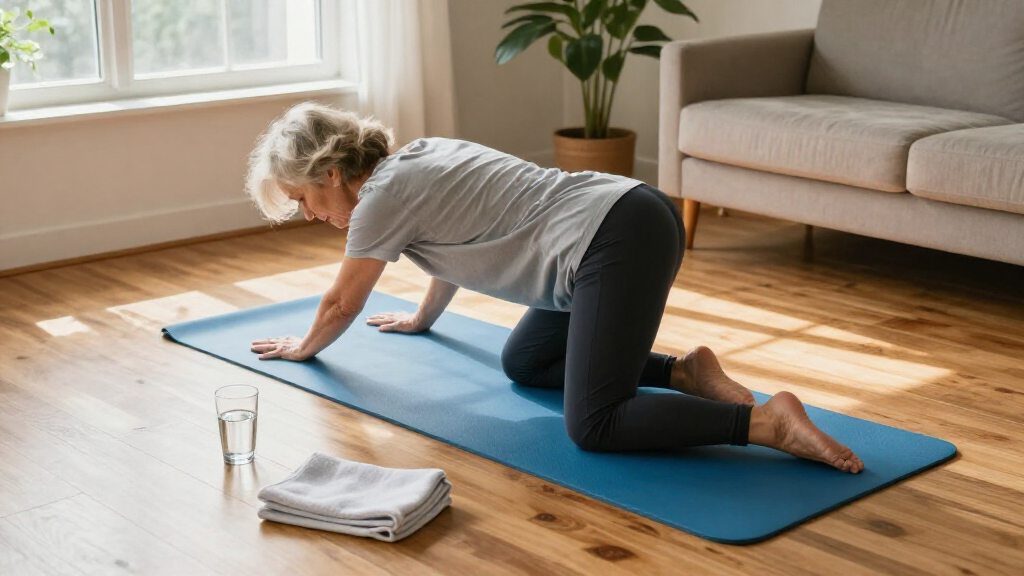
The glute bridge is prescribed for two sets of 10 to 12 repetitions. With feet flat and knees bent, lift the hips until the body forms a line from shoulders to knees, squeeze the glutes without arching the lower back, then lower with control. The bird dog follows on hands and knees: extend one arm forward and the opposite leg back while keeping the back flat and hips level. The routine calls for two sets of eight to 10 repetitions per side, resting 30 seconds.
To finish, the child’s pose is held for 30 to 60 seconds, with knees widened slightly, hips moving toward the heels and arms reaching forward. The report says to rest the forehead on the floor only if comfortable. Griffiths recommends repeating the session three times weekly with a rest day between workouts, and progressing the programme when it starts to feel easy.
“Small and controlled is the aim. The movement comes from the pelvis, not the legs.”
— Andrew Griffiths, Pilates instructor and fitness expert at Net World Sports, as quoted by Fit&Well
Evidence and Individual Suitability
The Fit&Well report describes the workout and attributes expected benefits to Griffiths, but it does not cite a clinical study testing this exact six-exercise sequence. Its statements about core strength, stability, posture and stress should be understood as general claims about Pilates, not guaranteed results for every participant. The source also does not set out screening guidance or discuss how the exercises should be changed for particular injuries, pain or health conditions.
It is not clear from the report when the article was published, how the 10-minute duration was calculated, or how long a participant might need to complete all sets and rests. People who experience pain or have concerns about whether a movement suits them may want to ask a qualified health or fitness professional for guidance.
Repeat, Recover, Then Progress
Griffiths’s proposed next step is to repeat the workout three times a week, leaving a day between sessions for recovery. When the sequence feels easy, he suggests treating that as a signal to progress the programme. The report does not specify a follow-on routine, a timeline for increasing difficulty or a formal measure of progress, so those details remain open.
Key Questions
What exercises are in the 10-minute routine?
It includes pelvic tilts, the hundred, dead bugs, glute bridges, bird dogs and child’s pose. The first five are performed for repetitions or pulses; child’s pose is held for 30 to 60 seconds.
Does the workout require equipment or Pilates experience?
No equipment is listed. Fit&Well says participants need space on the floor and that the routine is designed for people with no previous Pilates experience.
How often does the instructor recommend doing it?
Andrew Griffiths recommends doing the session three times a week, with a day off between workouts. This is the schedule in the report, not a personalized training plan.
Can beginners make any movements easier?
For the hundred, the report suggests keeping the feet on the floor; participants can also keep their head and shoulders down if lifting them feels too challenging. Griffiths says beginners can start with 40 or 50 pulses rather than aiming immediately for 100.
What should someone do if an exercise causes pain?
The report does not provide individualized medical guidance. Stop a movement that causes pain and consult a qualified health or fitness professional about whether the exercise is appropriate.
Source: rss