TL;DR

Turn quiet afternoons into listening time
- Thousands of audiobooks, podcasts and originals
- Listen on your phone, tablet or Echo — also offline
- Cancel anytime
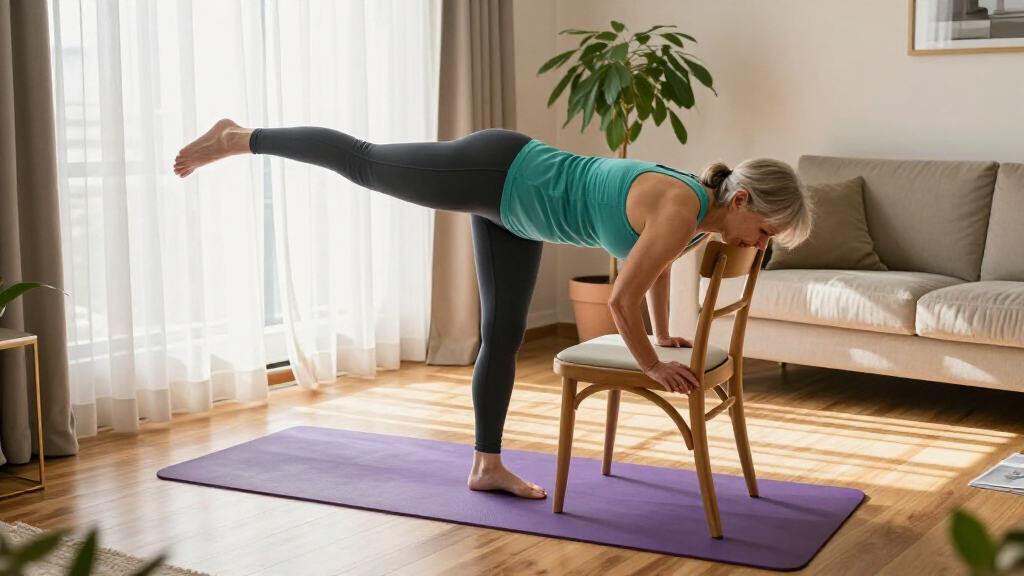
Fit&Well published five beginner-friendly Pilates exercises recommended by teacher Claire Seager for women in their 60s and 70s. The moves combine mobility, strength and balance work, with modifications described for each; the report does not present clinical evidence that they correct posture or are suitable for everyone.
Fit&Well has published five beginner-friendly Pilates moves recommended by instructor Claire Seager for women in their 60s and 70s who want to work on strength, flexibility and posture. The list includes modifications for each exercise, but the report offers an instructor’s guidance rather than clinical evidence that the routine will correct posture or suit every person.
The exercises are rocking cat and cow, reverse tabletop, knee circles, triceps push-up and thread the needle. Seager, a Pilates teacher and founder of Pilatify, told Fit&Well she selected them to combine strength and flexibility work with movements intended to address posture. Each is presented as a set of 10 repetitions, with knee circles prescribed in both directions on each side and thread the needle performed 10 times per side.
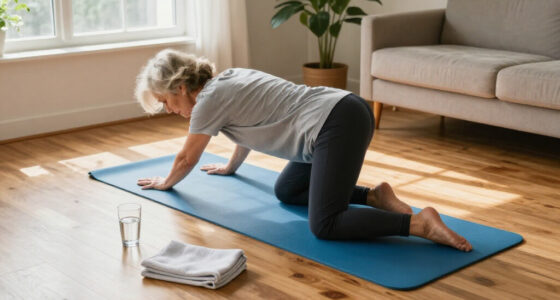
The report describes rocking cat and cow as a hands-and-knees sequence that alternates between rounding and arching the back, with a gentle forward-and-back rocking motion. Reverse tabletop involves lifting the hips from a seated position. Knee circles are performed on all fours with one bent leg raised and moved outward in a circle. Seager’s list also includes a triceps push-up from a plank and thread the needle, a kneeling movement that combines a raised leg with torso rotation.
Modifications are provided for all five moves. They include removing the rocking motion, bending the knees for reverse tabletop, lifting and lowering the leg instead of circling it, placing the knees on the floor for the push-up, and keeping both knees down during thread the needle. The article does not give a full weekly plan or describe how to progress beyond the listed repetitions.
Modifications Make the Routine More Adaptable
The practical value of the list is that it gives readers specific movements and lower-demand variations rather than presenting a single fixed routine. That can help people identify an easier starting point, particularly for exercises such as the push-up or reverse tabletop, which may be challenging when performed in their full versions.
Seager told Fit&Well that Pilates can help with strength, balance and stress, and that it aims to counter a head-forward or stooped posture. Those are the instructor’s stated benefits, not outcomes established for every reader by the article. The report does not cite a study testing these five moves or quantify their effects. Readers should treat the list as general exercise guidance, not a guarantee of strength gains or posture changes.
That distinction matters because movement ability and health needs vary. A modification may make a move easier, but the article does not assess individual mobility, pain, balance, or other health factors. Anyone unsure whether an exercise is suitable can seek guidance from a qualified fitness or health professional before trying it.
Popular right now

Vitamix 5200 Professional-Grade Blender, 64 oz. Container, Black

Samsung 85-Inch QN70H Neo QLED 4K Smart TV (2026)

Shark HydroVac MessMaster Corded Wet/Dry Vacuum, Mop & Self-Clean (WD161)
As an affiliate, we earn on qualifying purchases.
Why Seager Chose These Five Moves
Fit&Well framed Pilates as a low-impact option for people who may not feel confident lifting heavy weights or doing high-impact cardio. It also noted that Pilates varies across classes and that not every modern class may suit every older participant. The report therefore asked Seager, whose Pilatify program is designed with women over 50 in mind, to suggest beginner-friendly exercises for those in their 60s and 70s.
Seager described Pilates as working the body in balance, pairing muscle work with stretching. She also linked modern life and ageing with a tendency toward head-forward and stooped posture. The five exercises reflect a mix of positions and movement types: spinal flexion and extension, hip and leg work, arm strength, and torso rotation. The source provides no independent evaluation of the sequence, and it does not say that the exercises replace other forms of strength or balance training.
““Pilates brings the whole body into balance and once we’ve worked one set of muscles, we will stretch them.””
— Claire Seager, Pilates teacher and Pilatify founder, as quoted by Fit&Well
Who Should Adapt or Avoid a Move?
The report does not specify whether the five exercises have been tested in a clinical study, how often readers should perform them, or how long it may take to notice a change. It also provides no screening guidance for pain, injuries, balance limitations or other health conditions, and does not establish that the moves are appropriate for all women over 60.
Although easier variations are included, the article does not explain how readers should judge whether a variation is suitable or when to stop. Its posture and wellbeing benefits are attributed to Seager, not confirmed as outcomes for every participant. The supplied material also does not include the report’s publication date, so its timing cannot be stated more precisely.
Choosing a Safe Starting Variation
The next step for readers interested in the routine is to review the instructions and begin with the listed easier variations where appropriate, rather than assuming the full versions are required. The source does not prescribe a schedule, progression, or follow-up assessment, so no such plan can be attributed to Seager or Fit&Well.
People with concerns about whether a movement is suitable can ask a qualified fitness or health professional for individualized guidance. No further study, program update or clinical review is identified in the supplied report; whether Fit&Well or Seager will provide additional detail is not stated.
Key Questions
Which five Pilates exercises does the report recommend?
The list includes rocking cat and cow, reverse tabletop, knee circles, triceps push-up and thread the needle. Pilates teacher Claire Seager shared the selection with Fit&Well for women in their 60s and 70s.
Are there easier versions of the exercises?
Yes. The report suggests options such as bending the knees for reverse tabletop, keeping the knees down for the triceps push-up, and lifting and lowering the leg instead of making circles. It gives a modification for each move.
Does the report prove these exercises correct posture?
No. Seager said Pilates aims to counter a head-forward or stooped posture, but Fit&Well did not cite a study evaluating these five exercises. Posture correction is presented as the instructor’s rationale, not a demonstrated result for every reader.
How many repetitions does the routine call for?
The article lists 10 repetitions for most movements, with knee circles done in both directions on each side and thread the needle performed 10 times per side. It does not provide a weekly frequency or progression plan.
Are the moves suitable for everyone over 60?
The report does not establish that they are suitable for everyone. It includes easier variations but does not assess individual health or mobility. People uncertain about an exercise can seek guidance from a qualified fitness or health professional.
Source: rss