TL;DR

Turn quiet afternoons into listening time
- Thousands of audiobooks, podcasts and originals
- Listen on your phone, tablet or Echo — also offline
- Cancel anytime
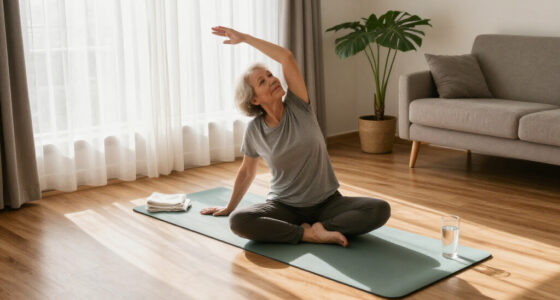
Yoga teacher Cheryl McColgan recommends tree pose, eagle pose and warrior three as single-leg exercises that can practice balance and stability. She advises beginners to start with tree pose, focus their eyes on one point and use a wall or chair for support if needed.
Yoga teacher Cheryl McColgan recommends tree pose, eagle pose and warrior three as ways to practice balance and stability, according to a Fit&Well report. The poses all involve single-leg work; McColgan says beginners can start with tree pose and use a wall or chair for support.
McColgan, founder of Heal, Nourish, Grow, says yoga trains proprioception—the body’s ability to sense its movement and position—and can also build muscular endurance and strength. She links those elements to steadiness, particularly in poses that require balancing on one leg. These are her recommendations, not evidence from a study comparing the poses or establishing that they are the best options for everyone.
For tree pose, stand on one foot and place the other foot against the standing ankle, calf or inner thigh. Avoid pressing it directly into the knee. Hands can rest in prayer position or reach overhead; a wall or chair can provide support. Hold for three to 10 breaths, then switch sides.
In eagle pose, bend both knees slightly, balance on one foot and cross the other thigh over it. The raised foot may wrap behind the standing calf, or its toes can remain on the floor. Cross the arms in front and bring the palms together if comfortable. For warrior three, hinge forward at the hips while extending the other leg behind, keeping the standing knee slightly bent. Hands may be in prayer, beside the torso or extended forward. The report suggests holding each pose for three to 10 breaths and repeating on the other side.
How Single-Leg Poses Train Balance
The recommendations offer readers a progression of balance challenges: tree pose provides a relatively supported starting point, eagle adds a crossed-leg position, and warrior three asks the practitioner to hinge forward while keeping one foot grounded. Each shifts more of the body’s weight onto one leg, giving people a structured way to practice steadiness.
McColgan says the work engages muscles around the ankles, knees and hips while developing proprioception. The practical value is that the movements can be adjusted: beginners can keep a foot on the floor in eagle pose, hold a support, or choose a simpler one-leg stand. The source does not report measured outcomes, however, so it does not establish how much or how quickly these poses improve balance.
Balance practice may be relevant to people who want to maintain physical skills as they age, but the supplied report does not present clinical findings or make a specific claim about preventing falls. Its advice is best understood as an instructor’s exercise guidance rather than a medical conclusion.
Popular right now

Apple AirPods Pro 3 Wireless Earbuds with Active Noise Cancellation

Ninja DualZone Air Fryer 10 Qt Smart 6-in-1 Grey (DZ950)

Dyson Ball Animal 3 Corded Upright Vacuum
As an affiliate, we earn on qualifying purchases.
McColgan’s Suggested Pose Progression
The Fit&Well report frames yoga as one form of movement that can support balance practice. Its central explanation comes from McColgan: yoga challenges the body to sense position and movement while sustaining muscular effort. The report does not compare yoga with other exercise programs or cite a trial testing these three poses against alternatives.
McColgan recommends that beginners start with tree pose, then work toward eagle and warrior three. She also suggests fixing the gaze on a single point during balance poses. For extra steadiness, practitioners may hold a wall or chair rather than attempting the full pose unsupported.
For a simpler starting exercise, McColgan suggests standing on one leg while brushing the teeth. That suggestion is a practical example from the instructor, not a tested program with a specified schedule or promised result.
“One of my favorite things about yoga is that it trains proprioception—your body’s ability to sense its own movements and position—so it can definitely help with balance and stability.”
— Cheryl McColgan, yoga teacher and founder of Heal, Nourish, Grow, as quoted by Fit&Well
What the Pose Recommendations Do Not Establish
The supplied report does not provide a publication date, research data, or measurements showing how these poses affect balance over time. It also does not establish that these are definitively the three best poses compared with other yoga postures or balance exercises; that wording reflects the article’s framing, while the recommendations are attributed to McColgan.
No frequency, training duration or progression timetable is specified. Individual ability and comfort can vary, and the source does not give guidance for people with injuries, medical conditions or significant balance difficulties. A wall or chair is offered as support, but the report does not set out a clinical assessment or individualized instruction.
A Supported Start, Then Progress
The report gives a simple sequence rather than a formal training plan: begin with tree pose, use a steady gaze and support as needed, and try eagle and warrior three when ready. Each pose is held for three to 10 breaths before switching sides. The source does not specify how many sessions to do or when to advance, so readers should not treat that sequence as a prescribed program.
For anyone who finds standing balance difficult or has health concerns, the report does not provide tailored safety advice. Seeking guidance from a qualified yoga instructor or health professional can help determine appropriate modifications. No follow-up study or additional development is identified in the supplied material.
Key Questions
Which three poses does the report recommend?
Yoga teacher Cheryl McColgan recommends tree pose, eagle pose and warrior three as poses that involve single-leg balance work.
Which pose should a beginner try first?
McColgan suggests starting with tree pose and progressing to eagle pose and then warrior three. She also recommends using a wall or chair for support when needed.
How long should each pose be held?
The Fit&Well report gives a hold of three to 10 breaths for each pose, followed by switching sides. It does not specify how many repetitions or practice sessions to do.
What modifications can make the poses more manageable?
McColgan advises focusing the eyes on one point and holding a wall or chair for support. In eagle pose, the crossed foot’s toes can stay on the floor rather than wrapping around the standing calf.
Does the report prove these are the best exercises for balance?
No. The report presents McColgan’s recommendations but supplies no comparative research or measured results establishing that these poses outperform other balance exercises.
Source: rss