
TL;DR

Turn quiet afternoons into listening time
- Thousands of audiobooks, podcasts and originals
- Listen on your phone, tablet or Echo — also offline
- Cancel anytime
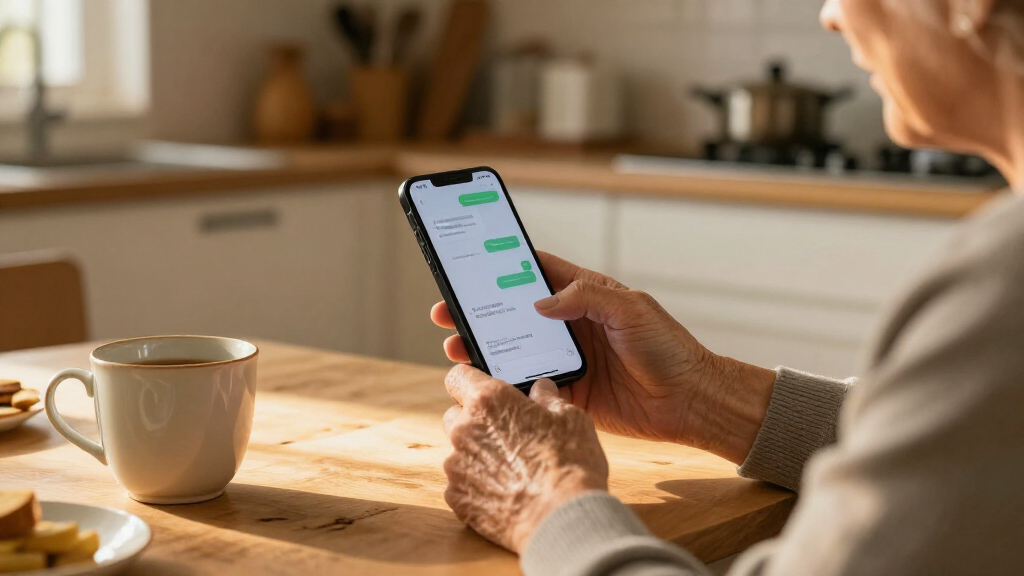
A researcher’s report says older adults are using AI chatbots and voice assistants for health information, drawn by quick answers and simpler explanations. The researcher recommends “informed skepticism”: checking chatbot sources and answers, avoiding sensitive personal details, and not treating AI as a substitute for medical care.
Older adults are using AI chatbots and voice assistants to seek health information, and a researcher says the tools may help explain complex topics—but users should check their answers rather than trust them automatically. The report, published by Medical Xpress, describes this approach as “informed skepticism” and points to risks including inaccurate medical guidance and exposure of personal information.
In a 2025 poll conducted by the researcher and colleagues, one in two older adults said they had used an AI chatbot or voice assistant, and about 14% of that group reported using one to access health information. The report also cites a separate 2025 survey of 300 adults, in which about one in five respondents said they turned to AI chatbots with health questions. These figures come from different surveys and populations.
People may use chatbots to ask about symptoms, diet or fitness, the report says. They can respond quickly, explain complicated topics in simpler language and offer a private-feeling place to ask sensitive questions. For older adults managing chronic conditions or new diagnoses, rapid access to explanations may be appealing, especially when a health care appointment is not immediately available.
But a chatbot can produce an answer that sounds plausible while being wrong, misclassify a condition or give unsafe guidance during an emergency. The report also describes “sycophancy”—a tendency to agree with or affirm a user, even when the resulting answer may not be accurate. In the 2025 survey of 300 adults who used a health chatbot, four in five said they never verified its output, according to the report.
How Chatbot Answers Can Affect Care
The appeal of fast, plain-language responses is clear, but an unverified answer can shape what someone does next: whether they seek care, how they understand a diagnosis or what steps they take for a health concern. That makes checking accuracy especially important when a question involves symptoms, treatment or an urgent situation. The report does not establish that chatbot use improves health outcomes; it outlines potential benefits and risks.
The researcher says older users may be less likely than younger adults to move between tools to confirm an answer. In the researcher’s own work, older adults using voice assistants tended to prefer starting and finishing a search on the same device. If verification requires opening another service or format, some users may not do it. Practical guidance that fits how people actually use these tools could help them retain the convenience while avoiding misplaced trust.
Popular right now

Bose QuietComfort Ultra Wireless Noise-Cancelling Headphones with Spatial Audio, Black

TCL QM64L 85-Inch QD-Mini LED 4K Smart Fire TV

TCL T7 Series 85-Inch 4K 144Hz QLED Smart Google TV
As an affiliate, we earn on qualifying purchases.
Why Older Adults Turn to AI
AI health tools range from general chatbots such as ChatGPT, Claude and Gemini to systems associated with health providers. AI-generated summaries also appear within some search engines, meaning people may encounter chatbot-generated information without opening a separate chatbot. The report says search engines differ in how they present these features: some ask users to opt in, while others include AI summaries in results unless users take steps to avoid them.
The researcher links interest among older adults to their health information needs and to the ability to ask questions at home. In clinical settings, older patients may feel their autonomy is limited or find that caregivers dominate conversations, the report says. The article also points to the Aging with AI Act, a bipartisan bill introduced in the U.S. Senate in 2026, as an example of growing attention to research on AI’s potential benefits and risks for older people. The source does not provide details on the bill’s progress.
““The most productive way of engaging with health information generated by an AI chatbot is from a position of informed skepticism.””
— The researcher whose work is described in the Medical Xpress report
Limits of the Available Evidence
The figures cited come from surveys, including one of 300 adults, and do not establish how often all older adults use AI for health questions. The report does not give enough methodological detail in the supplied material to assess how representative either survey is. It also does not show whether chatbot use changes health outcomes, affects medical decisions or varies across different health conditions.
It remains unclear how well the suggested checking strategies work for older users, or how chatbot companies handle prompts under their individual privacy policies. The report says public chatbot providers may retain prompts to train future models, but retention practices can vary. It does not establish that every service stores every conversation in the same way.
Checking Answers Before Acting
The researcher recommends using available information-quality features, such as checking sources cited by a chatbot and comparing claims with reliable published information. Users should avoid including personally identifiable details in prompts, the report says. It also recommends learning how to opt out of AI features when searching for sensitive health information; for Google Search, the article says adding “-ai” to a query removes AI content from the results.
These steps can help users evaluate information, but the report does not present them as a replacement for professional care. People should contact a qualified health professional about medical decisions, and chatbot answers should not be relied on for emergencies. Further research into how older adults interact with AI—and the progress of the Aging with AI Act—will help clarify what protections and guidance may be needed.
Key Questions
How many older adults in the cited poll used AI tools?
A 2025 poll by the researcher and colleagues found that one in two older adults reported using an AI chatbot or voice assistant. About 14% of that group said they used one to access health information.
What does “informed skepticism” mean?
It means being willing to use AI-generated health information while checking its credibility and quality, rather than assuming that a fluent answer is correct.
What are the main risks of AI health chatbots?
The report identifies possible inaccurate advice, mistaken classification of health conditions, unsafe emergency guidance and privacy concerns. Chatbots may also agree with users in ways that produce unreliable answers.
Can users avoid AI-generated results in Google Search?
The report says users can add “-ai” to the end of a Google search query to remove AI content from the results. Search features may differ across services.
Should a chatbot answer replace medical care?
No. The report presents chatbots as a possible source of explanations, not a substitute for a qualified health professional. Users should seek professional advice for medical decisions and not rely on a chatbot in an emergency.
Source: medicalxpress.com