TL;DR

Turn quiet afternoons into listening time
- Thousands of audiobooks, podcasts and originals
- Listen on your phone, tablet or Echo — also offline
- Cancel anytime
Fit&Well published a yoga therapist’s seven-part seated movement routine for older adults, including arm raises, twists, side bends and cat-cow. The therapist says the gentle sequence can leave participants feeling rested and uplifted, but the report does not provide research testing the routine or claim it is suitable for every health condition.
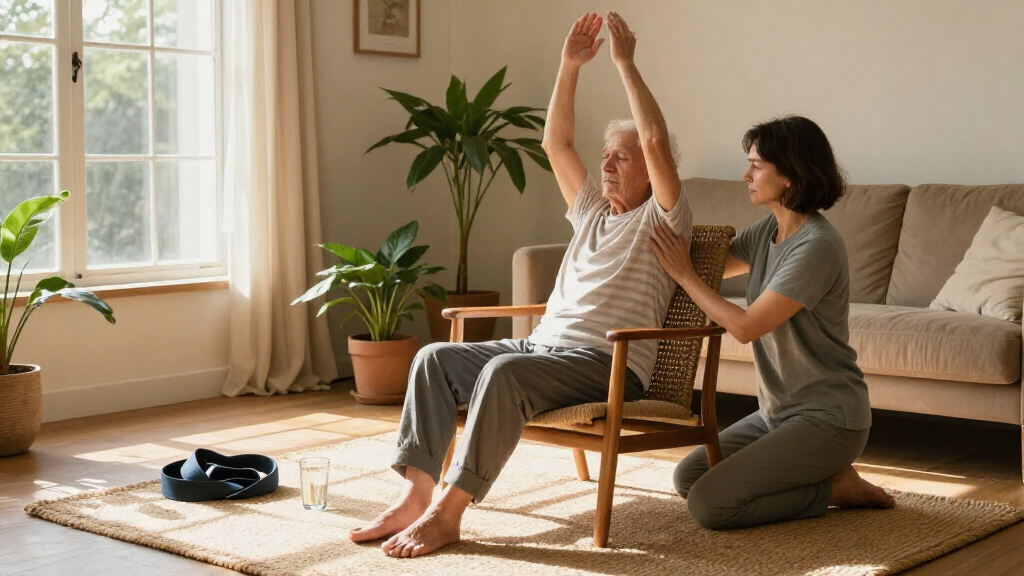
Fit&Well has published a yoga therapist’s seven-part chair-based movement routine for older adults, including people who may not be comfortable exercising on the floor. The sequence uses gentle seated movements and breathing, with adaptations suggested for some exercises; the report presents it as an accessible option, not as a clinically tested programme.
The therapist, who says they work mainly with older adults living with Parkinson’s, other movement disorders and chronic health conditions, describes using chair-based yoga with people who have limited mobility as well as those who simply feel more comfortable moving from a chair. The approach keeps participants seated while they move their joints and muscles and pay attention to their breathing.
The routine begins with a minute of settling into a sturdy chair, feet flat on the floor and hands resting on the lap. It then moves through arm arcs into prayer, seated twists, single and double arm raises, side bends, cat-cow and forward folds. The suggested counts vary: most movements call for three to five repetitions, while twists and side bends are done three times on each side.
Several instructions allow participants to adjust the range of movement. For a side bend, someone seeking extra stability can hold the chair instead of extending an arm down. During a forward fold, hands can stay on the knees for support. The therapist also advises people to move within their own capacity rather than trying to achieve a particular pose. The report gives no measured outcomes or evidence that the flow produces the same effects for everyone.
A Seated Option for Gentle Movement
The routine offers a structured way to move without getting down to the floor, which may make it more approachable for people who have difficulty with floor-based exercise or prefer the support of a chair. Its instructions combine movement with breathing and permit modifications, rather than requiring participants to match a fixed pose.
The therapist says participants can feel more rested and uplifted after gentle chair-based movement. That is the practitioner’s account of their classes, not a finding from a study described in the report. The distinction matters: readers can understand the intended experience without treating the sequence as a proven treatment for Parkinson’s, chronic illness or mobility limitations.
Popular right now

TCL QM64L 85-Inch QD-Mini LED 4K Smart Fire TV

Vitamix Propel Series 750 Professional-Grade Blender, 4 Programs, Black

Apple AirPods Pro 3 Wireless Earbuds with Active Noise Cancellation
As an affiliate, we earn on qualifying purchases.
How the Seven-Move Flow Works
The therapist’s account is based on work with groups of older adults, including people with movement disorders and chronic conditions. The report frames chair yoga as an alternative for people who cannot, or do not wish to, do floor-based movement. It does not say the routine replaces medical care or other exercise programmes.
The flow progresses from settling and breath awareness to movements for the arms, torso and back. Each movement is linked to breathing: participants generally inhale as they raise or open the body and exhale as they lower, twist or fold. The sequence calls for a sturdy chair and enough clear space to raise the arms. It does not give a total session length, apart from the one-minute opening, or prescribe how often to repeat the flow.
“I encourage everyone to move within the range and capacity of their body—there’s no particular shape or position to achieve.”
— The yoga therapist quoted by Fit&Well
Limits of the Available Guidance
The supplied report does not identify the therapist by name, provide a publication date, or cite research evaluating this exact sequence. It also does not specify which conditions or individual limitations might make particular movements unsuitable. Although it offers a few easier variations, those adaptations are not a personalised assessment.
It is also unclear how long the full routine takes, how often participants should do it, or whether the movements have been studied for effects on strength, balance, pain or symptoms associated with Parkinson’s. The report’s descriptions of feeling calmer, rested or uplifted should be read as the therapist’s experience with their groups, not guaranteed outcomes.
Considerations Before Trying the Flow
The Fit&Well report does not announce a formal programme, trial or follow-up milestone. It presents the movements as a sequence readers can try with a sturdy chair and space to move, while advising them to stay within their own capacity and use the support options given.
People with health conditions, pain, balance concerns or uncertainty about a movement should ask a qualified health professional whether the routine is appropriate for them. Any future evidence about this particular flow, its effects or its suitability for different conditions would need to come from research or further reporting; none is included in the supplied material.
Key Questions
What exercises are in the chair-based routine?
The seven parts are a brief settling exercise, arm arcs into prayer, seated twists, single and double arm raises, side bends, cat-cow and forward folds.
What equipment is needed?
The report calls for a sturdy chair and enough clear space to raise the arms comfortably. It does not list other equipment.
Can the movements be adapted?
Yes. The report suggests holding the chair for extra stability during side bends and keeping the hands on the knees during forward folds. The therapist advises moving within each person’s capacity rather than trying to reach a specific pose.
Is the routine proven to help Parkinson’s or other conditions?
The supplied report does not cite research testing this sequence or establish that it treats Parkinson’s, other movement disorders or chronic conditions. The therapist describes their experience with older adult groups, which is not the same as evidence of a clinical effect.
Should everyone with limited mobility try these exercises?
The report does not establish that the movements are suitable for everyone. People with a health condition, pain or concerns about balance or movement should consult a qualified health professional before deciding whether to try them.
Source: fitandwell.com