
For most seniors seeking rechargeable OTC hearing aids, I’d start with the ELEHEAR-Beyond for its AI noise cancellation, then compare it with the Audien Atom X if accessible touchscreen controls matter more and the EarCentric EasyCharge if a behind-the-ear fit and flexible charging are priorities. The main tradeoffs are discreet in-ear wear versus easier handling, simple controls versus extra listening features, and compact charging cases versus larger or more varied charging setups. These products differ in style and features, so the best choice depends on your hearing needs, dexterity, comfort, and comfort with technology. OTC hearing aids are intended for adults with perceived mild to moderate hearing loss; sudden or one-sided hearing changes call for professional care. Continue reading for my full comparison and guidance on which option fits different routines.

Turn quiet afternoons into listening time
- Thousands of audiobooks, podcasts and originals
- Listen on your phone, tablet or Echo — also offline
- Cancel anytime
Complete the kit

Key Takeaways
- Fit style changes daily handling: The roundup includes in-ear models for a less visible fit and behind-the-ear options that may be easier to grasp, though comfort and dexterity vary by person.
- Controls matter as much as amplification: Audien Atom X and Oction add touchscreen controls, which may appeal to some users but introduce more interface complexity than a simpler aid.
- Noise features are not interchangeable: ELEHEAR-Beyond highlights AI noise cancellation, while several other models advertise noise reduction; buyers should compare how controls and listening modes fit their usual environments.
- Charging setups can shape a routine: Many picks include a portable case, while EarCentric EasyCharge adds a desktop charger, giving it a distinct role for people who prefer a set charging spot.
- The lineup offers limited evidence for clinical fitting: These are OTC products with different stated features, not substitutes for an audiogram or individualized care; professional guidance matters when hearing needs are unclear or complex.
| Karthus Rechargeable OTC Hearing Aids for Seniors |  | Best for Simple, App-Free Controls | Fit: Behind-the-ear | Intended hearing loss: Mild to moderate | DSP channels: 16 | VIEW LATEST PRICE | See Our Full Breakdown |
| Rechargeable Behind-the-Ear Hearing Amplifier for Seniors |  | Best for Adjustable Gain | Brand and model: JMTO G-25C | Style: Receiver-in-canal, behind-the-ear | Maximum gain: 40 dB | VIEW LATEST PRICE | See Our Full Breakdown |
| Rechargeable OTC Hearing Aids with Noise Reduction, 2 Listening Modes, and Charging Case | 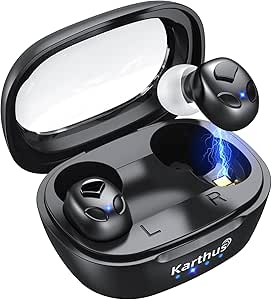 | Best Compact In-Ear Option | Type: Over-the-counter hearing aids | Fit: In-ear | Technology: 16-channel digital DSP | VIEW LATEST PRICE | See Our Full Breakdown |
| Audien Atom X OTC Hearing Aids with Touchscreen Control |  | Best for Mode Selection Without an App | Type and fit: Over-the-counter; in-ear | Controls: Touchscreen charging case | Listening modes: Conversation; Crowd; TV; Comfort | VIEW LATEST PRICE | See Our Full Breakdown |
| ELEHEAR-Beyond Rechargeable OTC Hearing Aids with AI Noise Cancellation |  | Best for App-Based Personalization | Fit: Behind-the-ear | Intended hearing loss: Mild to moderate | Amplification: 50 dB | VIEW LATEST PRICE | See Our Full Breakdown |
| LAMYOO Rechargeable In-Ear Hearing Aids with Noise Reduction and Charging Case |  | Best for Simple, Discreet Operation | Model: 955 | Fit: In-ear | Controls: One-button control | VIEW LATEST PRICE | See Our Full Breakdown |
| ZAVYVAZ GM-922 Rechargeable OTC Hearing Aids, 32-Channel, In-Ear |  | Best for Extended Case Backup | Model: GM-922 | Type: OTC digital hearing aids | Fit: In-ear; universal fit for either ear | VIEW LATEST PRICE | See Our Full Breakdown |
| Oction Touchscreen Rechargeable Hearing Aids with Bluetooth |  | Best for Smartphone Streaming | Fit: Behind-the-ear | Connectivity: Bluetooth 5.4 | Digital channels: 16 | VIEW LATEST PRICE | See Our Full Breakdown |
| Karthus Rechargeable OTC Behind-the-Ear Hearing Aids with Noise Reduction |  | Best for Straightforward Behind-the-Ear Use | Fit: Behind-the-ear RIC | Intended hearing-loss range: Mild to moderate | Digital processing: 16 channels | VIEW LATEST PRICE | See Our Full Breakdown |
| Karthus Rechargeable In-Ear Hearing Aids for Seniors with Noise Reduction |  | Best for Minimalist In-Ear Wear | Model: EC18-06 | Fit: In-ear | Listening modes: Noise Reduction and Quiet | VIEW LATEST PRICE | See Our Full Breakdown |
| Rechargeable OTC Hearing Aids with Noise Reduction and Portable Charging Case | 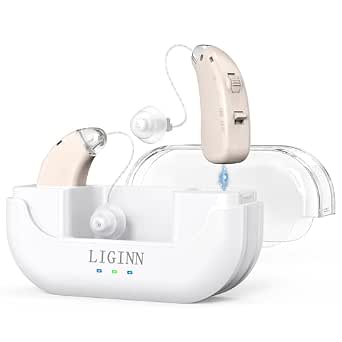 | Best for Simple Controls | Fit: Behind-the-ear | Intended hearing loss: Mild to moderate | Weight: 4.1 g | VIEW LATEST PRICE | See Our Full Breakdown |
| Oricle Standard 2.0 Rechargeable In-Ear Hearing Aids with Noise Cancellation and Portable Charging Case |  | Best for Long Use Between Charges | Model: Standard 2.0 | Fit: In-ear, completely-in-canal | Material: Silicone | VIEW LATEST PRICE | See Our Full Breakdown |
| Karthus Rechargeable OTC Hearing Aids for Adults and Seniors, Black |  | Best for Switching Listening Modes | Type: OTC hearing aids | Color: Black | Charging time: 2 hours | VIEW LATEST PRICE | See Our Full Breakdown |
| Audien Atom One OTC Hearing Aids |  | Best for Hands-On Sound Adjustment | Fit: In-ear | Hearing-loss support: Mild to moderate | Controls: Analog volume and frequency dials | VIEW LATEST PRICE | See Our Full Breakdown |
| EarCentric EasyCharge Rechargeable OTC Hearing Aids for Seniors, Behind-the-Ear Pair with Noise Reduction, Desktop Charger and Portable Charging Case, Beige |  | Best for a Flexible Charging Setup | Style: Behind-the-ear | Color: Beige | Power source: Rechargeable lithium-polymer battery | VIEW LATEST PRICE | See Our Full Breakdown |
| hearing aids for senior | Fit | Battery life | Listening modes |
|---|---|---|---|
| Karthus Rechargeable OTC Heari | Behind-the-ear | Up to 30 hours per charge; up to 100 hours with charging case | Quiet Mode; Noise Mode |
| Rechargeable Behind-the-Ear He | — | Up to 50 hours | — |
| Rechargeable OTC Hearing Aids | In-ear | — | Quiet Mode; Noise-Canceling Mode |
| Audien Atom X OTC Hearing Aids | — | — | Conversation; Crowd; TV; Comfort |
| ELEHEAR-Beyond Rechargeable OT | Behind-the-ear | Up to 20 hours per charge; up to 100 hours with charging case | 4 |
| LAMYOO Rechargeable In-Ear Hea | In-ear | Up to 100 hours, as stated by the manufacturer | — |
| ZAVYVAZ GM-922 Rechargeable OT | In-ear; universal fit for either ear | — | — |
| Oction Touchscreen Rechargeabl | Behind-the-ear | Up to 100 hours in standard hearing mode; up to 30 hours of Bluetooth playback | 4 |
| Karthus Rechargeable OTC Behin | Behind-the-ear RIC | Up to 30 hours per charge; up to 100 hours with charging case | Quiet Mode and Noise Mode |
| Karthus Rechargeable In-Ear He | In-ear | Up to 24 hours per charge; up to 96 hours total with case | Noise Reduction and Quiet |
| Rechargeable OTC Hearing Aids | Behind-the-ear | — | — |
| Oricle Standard 2.0 Rechargeab | In-ear, completely-in-canal | Up to 60 hours on a charge | — |
| Karthus Rechargeable OTC Heari | — | — | Quiet Mode; Noise-Canceling Mode |
| Audien Atom One OTC Hearing Ai | In-ear | Up to 24 hours | — |
| EarCentric EasyCharge Recharge | — | — | — |
More Details on Our Top Picks
Karthus Rechargeable OTC Hearing Aids for Seniors
For seniors who prefer buttons over phone setup, the Karthus is the clearest fit in this group. Its physical controls offer seven volume levels and two listening modes, with no app, Bluetooth, or pairing to manage. That makes it simpler to operate than the app-customizable ELEHEAR-Beyond, though ELEHEAR gives buyers more ways to tune sound. Karthus also has a useful battery advantage: up to 30 hours per charge, plus up to 100 hours with the case, compared with Audien Atom X’s stated 16 hours per charge. The tradeoff is that its two modes and fixed controls provide less fine-tuning, and fit or surroundings can affect results. It is intended for mild to moderate hearing loss, not severe or profound loss.
Pros:- Physical controls and seven volume levels work without an app or Bluetooth.
- Up to 30 hours per charge and up to 100 hours with the charging case.
- Lightweight behind-the-ear fit is designed to work with glasses.
- Quiet and Noise modes offer a straightforward choice between calmer and busier settings.
Cons:- Not intended for severe or profound hearing loss.
- Two listening modes offer less environment-specific control than Audien Atom X’s four modes.
- Fit and listening results may vary by wearer and surroundings.
Best for: Seniors with mild to moderate hearing loss who want physical controls, long battery life, and no smartphone setup.
Not ideal for: People with severe or profound hearing loss, or buyers who want app-based sound adjustments and more detailed personalization.
- Fit:Behind-the-ear
- Intended hearing loss:Mild to moderate
- DSP channels:16
- Volume levels:7
- Listening modes:Quiet Mode; Noise Mode
- Battery life:Up to 30 hours per charge; up to 100 hours with charging case
- Quick charge:15 minutes provides up to 6 hours of use
- Connectivity and controls:Physical switch and button; no app, Bluetooth, or pairing required
Our verdict“Choose the Karthus if simple buttons and extended battery life matter more than app-based sound customization.”
Rechargeable Behind-the-Ear Hearing Amplifier for Seniors
The JMTO G-25C stands out for buyers who want to change amplification in measured steps rather than rely on a small set of environment modes. Its listed gain settings run from 24 to 40 dB, giving it a different kind of control from the Karthus, which offers seven volume levels but does not list gain values. The JMTO also claims up to 50 hours per charge, more than the Karthus’s stated 30 hours per charge, and uses a Type-C charging port. Its 16-channel noise processing is a useful feature on paper, but the supplied information does not establish how well it handles particular listening situations. The item details also conflict on the number of gain or volume settings, so buyers who need exact control specifications should verify them before choosing. It is designed for mild to moderate difficulties, not every hearing profile.
Pros:- Five listed gain settings provide specific amplification choices from 24 to 40 dB.
- Up to 50 hours of stated use per charge.
- Type-C charging and a dual-slot case with LED indicators.
- RIC behind-the-ear design includes ear tips.
Cons:- Product details conflict about the number of gain or volume settings.
- Not described as suitable for all hearing-loss levels.
- The listed weight is 22.68 g, so it may feel less minimal than the Karthus, listed at 0.1 oz.
Best for: Seniors with mild to moderate hearing difficulties who want selectable gain levels and long stated battery life.
Not ideal for: Buyers who need consistent, clearly documented control steps or need a device intended for severe hearing loss.
- Brand and model:JMTO G-25C
- Style:Receiver-in-canal, behind-the-ear
- Maximum gain:40 dB
- Gain settings:24, 28, 32, 36, and 40 dB
- Noise processing:16-channel DSP
- Battery life:Up to 50 hours
- Charging:Type-C port; approximately 2 hours to charge
- Controls:Push-button volume control
Our verdict“Pick the JMTO if adjustable gain and long stated runtime are priorities and you are comfortable confirming its control specifications.”
Rechargeable OTC Hearing Aids with Noise Reduction, 2 Listening Modes, and Charging Case
These discreet in-ear aids suit seniors who would rather avoid a behind-the-ear form, including the Karthus and JMTO models in this roundup. Their 16-channel digital processing and two modes are intended to help manage background sound and emphasize speech, while the compact style keeps the devices less visible. A two-hour charge is specified to provide over 24 hours of use, with the case adding over 72 hours; that is a strong stated total, although it does not describe per-charge endurance as precisely as the Karthus’s 30-hour figure. The main drawback is limited buyer guidance: no clinical performance details or fitting information are supplied, and comfort depends on the wearer’s ear shape. Compared with Audien Atom X, this option has fewer listening modes and does not list expert-guided setup or multiple dome sizes.
Pros:- Compact in-ear design is less visible than the Karthus or JMTO behind-the-ear styles.
- 16-channel digital processing is described as reducing feedback and background noise.
- Quiet and Noise-Canceling modes offer two listening choices.
- Charging case is specified to add over 72 hours of power.
Cons:- No clinical performance details or hearing-aid fitting information are provided.
- In-ear comfort and fit may vary by user.
- Two modes provide fewer setting choices than Audien Atom X’s four.
Best for: Seniors who prioritize a discreet in-ear style and want two simple listening modes with a portable charging case.
Not ideal for: First-time OTC buyers who need fitting guidance, documented hearing-profile adjustments, or several mode choices.
- Type:Over-the-counter hearing aids
- Fit:In-ear
- Technology:16-channel digital DSP
- Listening modes:Quiet Mode; Noise-Canceling Mode
- Battery life per charge:24+ hours
- Additional case power:72+ hours
- Charging time:2 hours
- Color:Ebon Black
Our verdict“Choose this model for a discreet in-ear form and long case-supported runtime, but look elsewhere if fitting support is a priority.”
Audien Atom X OTC Hearing Aids with Touchscreen Control
The Atom X is the strongest choice here for seniors who want several environment settings but do not want to manage an app. Its touchscreen charging case selects among Conversation, Crowd, TV, and Comfort modes, giving it more named listening options than the two-mode Karthus and the compact in-ear model above. Expert-guided setup, multiple ear dome sizes, and cleaning tools also make it a more supported starting point than the in-ear option with no fitting details. The tradeoff is battery life: up to 16 hours per charge and 48 hours with the case are below the Karthus’s stated 30 hours per charge and 100 hours with its case. The touchscreen may also be less appealing to someone who prefers simple physical buttons, and the supplied details do not specify a hearing-profile adjustment range.
Pros:- Four listening modes cover conversation, crowds, TV, and comfort settings.
- Touchscreen case adjusts settings without a smartphone app.
- Expert-guided setup and multiple ear dome sizes support a more tailored initial fit.
- Includes cleaning accessories and replacement wax guards.
Cons:- Up to 16 hours per charge is less than the Karthus’s stated 30 hours.
- The supplied details do not specify a hearing-profile customization range.
- Case-based touchscreen controls may not suit buyers who prefer physical buttons.
Best for: Seniors who want multiple named listening modes, guided setup, and case-based controls without using a smartphone app.
Not ideal for: People who prioritize the longest per-charge runtime or need documented, personalized hearing-profile adjustments.
- Type and fit:Over-the-counter; in-ear
- Controls:Touchscreen charging case
- Listening modes:Conversation; Crowd; TV; Comfort
- Battery life per charge:Up to 16 hours
- Battery life with case:Up to 48 hours
- Power source:Rechargeable lithium-ion batteries
- Included fit and care accessories:Extra ear domes; replacement wax guards; cleaning brush
- Setup support:Audien Sound Check expert-guided setup
Our verdict“Choose the Atom X if guided setup and four app-free listening modes matter more than maximum battery life.”
ELEHEAR-Beyond Rechargeable OTC Hearing Aids with AI Noise Cancellation
For seniors comfortable using a phone to tune sound, ELEHEAR-Beyond offers the most detailed personalization in this batch. Its app can adjust volume, frequency, directionality, and listening modes, a wider control set than the button-operated Karthus or the case-controlled Audien Atom X. The behind-the-ear design includes nine dome sizes, which gives buyers more fit options than the products here that do not list multiple tips. It also specifies up to 100 hours with the case and a quick charge that supplies up to six hours after 15 minutes. The compromise is reliance on a compatible app for sound customization, which may be a hurdle for someone seeking uncomplicated controls. Its 20-hour per-charge claim is below Karthus’s 30 hours, and it is intended for mild to moderate hearing loss.
Pros:- App control adjusts volume, frequency, directionality, and listening modes.
- Nine dome sizes provide multiple fit options.
- Up to 100 hours of use with the charging case.
- A 15-minute quick charge provides up to six hours of use.
Cons:- Sound customization requires a compatible app.
- Designed for mild to moderate hearing loss, not severe or profound loss.
- Up to 20 hours per charge is less than the Karthus’s stated 30 hours.
Best for: Seniors with mild to moderate hearing loss who are comfortable using an app and want to adjust several sound settings and fit options.
Not ideal for: People who prefer app-free controls, need severe-loss support, or prioritize longer per-charge use than the stated 20 hours.
- Fit:Behind-the-ear
- Intended hearing loss:Mild to moderate
- Amplification:50 dB
- Noise reduction:Up to 24 dB
- Listening modes:4
- Battery life:Up to 20 hours per charge; up to 100 hours with charging case
- Quick charge:15 minutes provides up to 6 hours of use
- Connectivity and fit options:Bluetooth app control; 9 dome sizes
Our verdict“Choose ELEHEAR-Beyond if app-based sound tuning and fit choices outweigh the preference for simple, app-free controls.”
LAMYOO Rechargeable In-Ear Hearing Aids with Noise Reduction and Charging Case
For a senior who wants an in-ear aid without app menus or a separate daily charging routine, the LAMYOO 955 keeps operation simple: one button adjusts among four volume levels, and the compact case adds five full charges. Its noise-reduction processing is intended to make voices clearer, though the product details do not establish how it performs for particular hearing-loss profiles. Compared with the Karthus EC18-06, LAMYOO offers fewer volume steps, but claims a longer maximum total use period; that battery claim is not independently verified in the supplied details. The tradeoff is limited fine-tuning: four levels may not suit someone who needs small volume adjustments, and there is no stated Bluetooth or app support. I’d shortlist it for straightforward daily listening, not for precise customization.
Pros:- One-button operation keeps everyday adjustments simple.
- Compact in-ear design offers a discreet fit.
- Charging case provides five additional full charges.
- Noise reduction is designed to improve voice clarity.
Cons:- Four volume levels offer less adjustment than the six on the Karthus EC18-06.
- The stated up-to-100-hour use period is not independently verified in the supplied product information.
- No Bluetooth or app connectivity is specified.
Best for: Older adults who prefer discreet in-ear hearing aids, a single-button control, and charging-case convenience over phone connectivity or fine-grained adjustments.
Not ideal for: People who need more than four volume settings, Bluetooth streaming, or a hearing aid selected for a professionally diagnosed hearing profile.
- Model:955
- Fit:In-ear
- Controls:One-button control
- Volume levels:4
- Battery life:Up to 100 hours, as stated by the manufacturer
- Charging time:100 minutes
- Charging case:Provides 5 additional full charges
- Warranty:2 years
Our verdict“Choose LAMYOO if you want a discreet, simple in-ear aid and can work within four volume levels.”
ZAVYVAZ GM-922 Rechargeable OTC Hearing Aids, 32-Channel, In-Ear
The ZAVYVAZ GM-922 is a practical match for seniors who want rechargeable in-ear aids and long backup capacity without adding phone features. Its 100+ hours of case backup can reduce how often the case itself needs charging, while automatic on/off and memory settings cut down on routine handling. The 32-channel processing and noise and echo control give it more stated sound-processing detail than the LAMYOO 955, which instead emphasizes a very simple one-button setup. ZAVYVAZ’s tradeoff is a two-hour charge for 18–20 hours of use per charge, and it does not connect to phones, televisions, or other Bluetooth devices. It is intended for mild to moderate hearing loss, so it is not a substitute for choosing a device based on a clinician’s assessment.
Pros:- Charging case holds more than 100 hours of backup power.
- Automatic on/off and memory settings reduce routine button use.
- Universal-fit design works in either ear.
- Seven silicone ear domes and cleaning brushes are included.
Cons:- Bluetooth is not supported for phone, television, or other device audio.
- Each charge provides 18–20 hours of use after a two-hour charge.
- The stated intended range is limited to mild to moderate hearing loss.
Best for: Seniors with mild to moderate hearing loss who want in-ear aids with automatic on/off, included fit domes, and substantial charging-case backup.
Not ideal for: People who want calls or media streamed from a phone or TV, or who need support for hearing loss outside the stated mild-to-moderate range.
- Model:GM-922
- Type:OTC digital hearing aids
- Fit:In-ear; universal fit for either ear
- Channels:32
- Use per charge:18–20 hours
- Charging time:2 hours
- Charging case backup:100+ hours
- Bluetooth:Not supported
- Intended use:Mild to moderate hearing loss
Our verdict“Pick the GM-922 if long case backup and automatic operation matter more than Bluetooth streaming.”
Oction Touchscreen Rechargeable Hearing Aids with Bluetooth
Among these five, the Oction touchscreen model is the clearest choice for seniors who want hearing assistance and smartphone audio in one device. Bluetooth 5.4 supports calls and streaming from compatible phones, while its touchscreen offers per-ear volume adjustment and battery checks. That makes it more connected than the Karthus RIC, which has simple controls but no wireless function. Oction also gives users ten volume levels and four listening modes, rather than the Karthus’s seven levels and two modes. The tradeoff is a more feature-heavy interface, which may be less appealing to someone seeking one-button simplicity. Battery claims also differ by use: up to 100 hours in standard hearing mode, but up to 30 hours of Bluetooth playback. The listing does not specify a suitable degree or type of hearing loss.
Pros:- Bluetooth 5.4 supports calls and audio streaming from compatible smartphones.
- Touchscreen provides per-ear volume adjustment and battery-status checks.
- Ten volume levels and four listening modes allow more adjustment than the Karthus RIC.
- Lightweight behind-the-ear design weighs 3.5 g.
Cons:- Bluetooth playback is stated at up to 30 hours, less than the standard-mode battery claim.
- The listing does not specify the hearing-loss range it is intended to address.
- Touchscreen operation may be less straightforward than the Karthus RIC’s one-button control.
Best for: Seniors comfortable using a touchscreen who want hearing-aid controls alongside smartphone calls, music, or video.
Not ideal for: People who prefer a physical one-button control, do not use a compatible smartphone, or need clear guidance on suitability for a specific hearing-loss profile.
- Fit:Behind-the-ear
- Connectivity:Bluetooth 5.4
- Digital channels:16
- Volume levels:10
- Listening modes:4
- Battery life:Up to 100 hours in standard hearing mode; up to 30 hours of Bluetooth playback
- Charging:Hearing aids: 1 hour; case: 2 hours
- Compatible devices:Smartphones
Our verdict“Choose Oction if smartphone streaming and fine-grained touchscreen adjustments outweigh a preference for simpler controls.”
Karthus Rechargeable OTC Behind-the-Ear Hearing Aids with Noise Reduction
The Karthus RIC suits seniors who prefer a behind-the-ear style and direct physical controls over streaming or app features. One button adjusts seven volume levels, while Quiet Mode and Noise Mode offer a basic choice between listening environments. Compared with the Oction touchscreen model, Karthus gives up Bluetooth and a more elaborate interface, but its controls are less dependent on a screen and its intended range—mild to moderate hearing loss—is stated. The included charging case is described as supporting up to 100 hours of use, with up to 30 hours per charge. The tradeoff is limited flexibility: there are only two modes, and no app, wireless connection, or phone streaming. I’d favor it over Oction for buyers who value uncomplicated operation, not for those who want connected audio.
Pros:- One-button control gives access to seven volume levels.
- Quiet Mode and Noise Mode provide two straightforward listening choices.
- Up to 30 hours of use per charge is stated, with up to 100 hours using the case.
- The stated intended range is mild to moderate hearing loss.
Cons:- No app, Bluetooth, or wireless function is available.
- Two listening modes offer less variety than the Oction’s four modes.
- The product information does not specify charging time.
Best for: Seniors with mild to moderate hearing loss who want a behind-the-ear RIC fit, physical one-button controls, and no app setup.
Not ideal for: People who want Bluetooth calls or media, app-based adjustments, or more than two listening modes.
- Fit:Behind-the-ear RIC
- Intended hearing-loss range:Mild to moderate
- Digital processing:16 channels
- Listening modes:Quiet Mode and Noise Mode
- Volume levels:7
- Battery life:Up to 30 hours per charge; up to 100 hours with charging case
- Connectivity:No app, Bluetooth, or wireless function
- Included components:2 hearing aids, charging case, user manual
Our verdict“Choose the Karthus RIC if you want a simple behind-the-ear aid with stated mild-to-moderate suitability and no connected features.”
Karthus Rechargeable In-Ear Hearing Aids for Seniors with Noise Reduction
The Karthus EC18-06 is the more adjustable of the simple in-ear options here: it offers six volume levels and two listening modes, with automatic power-on to reduce startup steps. Its case is stated to provide up to 96 hours of total use, a clear figure that sits close to the LAMYOO’s advertised 100 hours, though that LAMYOO claim is not independently verified in the supplied details. Karthus also includes wax-guard tools and cleaning supplies, useful for buyers who want basic maintenance items in the box. Like the LAMYOO 955, it has no Bluetooth or app, but it offers more volume choices than LAMYOO’s four. The limits are its stated mild-to-moderate audience and lack of wireless features; this is a simple listening aid, not a streaming option.
Pros:- Six volume levels provide more adjustment than the LAMYOO 955’s four.
- Two listening modes offer a choice between noise reduction and quiet settings.
- Charging case supports up to 96 hours of total use, as stated.
- Includes wax-guard tools, domes, and a cleaning brush.
Cons:- No Bluetooth or app connectivity is available.
- Intended for perceived mild to moderate hearing loss.
- The stated total battery duration is a manufacturer claim, not independently verified in the supplied details.
Best for: Adults with perceived mild to moderate hearing loss who want a lightweight in-ear device, automatic power-on, and more volume steps than a basic four-level aid.
Not ideal for: Seniors seeking Bluetooth streaming, app controls, or a device explicitly selected for a clinically assessed hearing profile.
- Model:EC18-06
- Fit:In-ear
- Listening modes:Noise Reduction and Quiet
- Volume levels:6
- Battery life:Up to 24 hours per charge; up to 96 hours total with case
- Charging:USB-C charging case
- Power controls:Automatic power-on; no app or Bluetooth
- Item weight:3.13 g
Our verdict“Choose the Karthus EC18-06 if you want discreet in-ear wear with six volume levels and do not need wireless features.”
Rechargeable OTC Hearing Aids with Noise Reduction and Portable Charging Case
For seniors who want a behind-the-ear fit and straightforward operation, this model keeps setup simple: button and volume controls mean no app pairing or touchscreen menus. Its up-to-24-hour runtime covers a full day, while the case holds up to 96 hours of total power, so charging can be less frequent between outings. The three earplug sizes also give buyers a way to adjust the fit, which matters because a poor seal can cause feedback.
Compared with the Audien Atom One, this option puts controls on a behind-the-ear design rather than offering separate in-ear frequency and volume dials. That may be easier to handle, but it is less discreet. It is intended for mild to moderate hearing loss, and new wearers should allow time to adapt; poorly seated earplugs may whistle.
Pros:- Simple button and volume controls avoid app setup.
- Three earplug sizes allow some fit adjustment.
- USB-C charging with up to 24 hours of use per full charge.
- Case provides up to 96 hours of total power.
Cons:- A poor earplug fit can cause whistling feedback.
- New users may need time to get comfortable wearing the aids.
- Behind-the-ear form is more visible than the Audien Atom One’s in-ear design.
Best for: Seniors with mild to moderate hearing loss who prefer visible, easy-to-operate behind-the-ear controls and a charging case for daily use.
Not ideal for: Buyers seeking a nearly invisible in-ear fit, app-based adjustments, or a guaranteed feedback-free fit without trying different earplug sizes.
- Fit:Behind-the-ear
- Intended hearing loss:Mild to moderate
- Weight:4.1 g
- Charging:USB-C
- Charging time:2–3 hours
- Operating time:Up to 24 hours per full charge
- Case capacity:Up to 96 hours of total power; charges aids up to 4 times
- Controls:Button and volume control
- Earplug sizes:3
Our verdict“Choose this model if easy physical controls and a long-reserve charging case matter more than a discreet in-ear appearance.”
Oricle Standard 2.0 Rechargeable In-Ear Hearing Aids with Noise Cancellation and Portable Charging Case
The Oricle Standard 2.0 is the standout here for buyers drawn to an in-ear style and a stated up-to-60-hour battery life. Five sound levels let the wearer make basic adjustments for different listening situations, and automatic on/off removes one small daily task: the aids turn on or off when taken from or returned to their case. Silicone tips and environmental noise cancellation round out its conversation-focused design.
That longer stated runtime exceeds the 24-hour figures listed for the Audien Atom One and the behind-the-ear model in this batch, but the product information has a notable inconsistency: it lists both a rechargeable lithium-ion battery and a C battery requirement. I would verify the power setup before buying. The completely-in-canal fit may appeal to buyers who dislike behind-the-ear devices, but the listing provides limited detail about fit adjustment.
Pros:- Lists up to 60 hours of use on a charge.
- Five sound levels offer simple listening adjustments.
- Automatic on/off reduces routine button handling.
- Portable charging case is included.
Cons:- Battery information conflicts: the listing names rechargeable lithium-ion power and a C battery requirement.
- Fit options are not specified beyond the in-ear design.
- The stated runtime is longer than the other listed products, but the conflicting battery details make it harder to judge.
Best for: Seniors who want an in-ear aid with several sound levels and automatic operation, and who are willing to confirm the battery details with the seller.
Not ideal for: Buyers who need unambiguous battery information before purchase or want detailed fit options and hands-on adjustment controls.
- Model:Standard 2.0
- Fit:In-ear, completely-in-canal
- Material:Silicone
- Noise control:Environmental noise cancellation
- Sound levels:5
- Battery life:Up to 60 hours on a charge
- Controls:Button control
- Automatic operation:Auto on/off when removed from or placed in the case
- Battery information:Lithium-ion listed; product specifications also state a C battery requirement
Our verdict“Consider the Oricle if long stated runtime and automatic operation are priorities, but confirm its battery requirements before choosing it over the Audien Atom One.”
Karthus Rechargeable OTC Hearing Aids for Adults and Seniors, Black
Karthus keeps its controls conceptually simple: choose Quiet Mode or Noise-Canceling Mode for the setting, rather than working through a long menu of sound levels. A two-hour charge is listed to provide 24+ hours of use, and the case raises total available power to 72+ hours. That makes it a practical candidate for seniors who want rechargeable in-ear aids without an app or a more elaborate control system.
Compared with the Oricle Standard 2.0, Karthus specifies only two listening modes, while Oricle lists five sound levels and automatic on/off. The Karthus description emphasizes reducing feedback and background noise, but does not say how the wearer adjusts fit or hearing settings. That lack of detail makes it harder to judge whether its modes will suit a particular listener. It is also described for adults broadly, rather than providing a stated mild-to-moderate hearing-loss range.
Pros:- Two modes are designed for quiet and noisier environments.
- Two-hour charging time is listed.
- Provides 24+ hours per charge and 72+ hours with the case.
- Designed to reduce feedback and background noise.
Cons:- Only two listening modes are specified.
- The product information gives no fit options or hearing-adjustment control details.
- Does not specify a hearing-loss range as clearly as the Audien Atom One.
Best for: Adults and seniors who want a rechargeable in-ear aid with two clearly named listening modes and minimal control complexity.
Not ideal for: Buyers who need several adjustment levels, detailed fit guidance, or clearly specified controls for tailoring amplification.
- Type:OTC hearing aids
- Color:Black
- Charging time:2 hours
- Use per charge:24+ hours
- Total power with charging case:72+ hours
- Listening modes:Quiet Mode; Noise-Canceling Mode
- Intended users:Adults aged 18 and older
Our verdict“Pick Karthus if two simple listening modes are enough for you; choose a more adjustable option such as Oricle if you want more sound-level choices.”
Audien Atom One OTC Hearing Aids
The Audien Atom One suits seniors who would rather adjust sound directly on the device than use an app. Its separate analog volume and frequency dials provide more hands-on control than the basic button controls on the first behind-the-ear model in this batch. Three silicone dome sizes support fit changes, and an expert-guided setup session gives new users a source of help as they learn the controls.
Its up-to-24-hour runtime and USB-C charging dock are practical for daily wear, though the listed charging time is about three hours. Compared with the Oricle Standard 2.0, Audien offers explicit volume and frequency dials but lists a shorter runtime; Oricle’s battery information, however, is internally inconsistent. Atom One is designed for mild to moderate hearing loss, so seniors with needs outside that range should seek professional guidance rather than assume this OTC model will fit.
Pros:- Separate analog dials adjust volume and frequency without an app.
- Three ear dome sizes support fit adjustment.
- Expert-guided setup session is included.
- USB-C charging and up to 24 hours of battery life.
Cons:- No app-based controls are provided.
- About three hours of charging time is longer than the Karthus model’s stated two hours.
- Designed for mild to moderate hearing loss, limiting its fit for people outside that range.
Best for: Seniors with mild to moderate hearing loss who want discreet in-ear aids, physical sound-adjustment dials, and guided setup.
Not ideal for: Buyers who want app controls, a longer stated runtime, or a behind-the-ear style that may be easier to handle.
- Fit:In-ear
- Hearing-loss support:Mild to moderate
- Controls:Analog volume and frequency dials
- Battery:Lithium-ion; 2 batteries included
- Battery life:Up to 24 hours
- Charging time:About 3 hours
- Charging connection:USB-C
- Ear dome sizes:Small, medium, large
- Warranty:1 year
Our verdict“Choose the Atom One if direct physical sound adjustment and guided setup matter more than app control or the Oricle’s longer stated runtime.”
EarCentric EasyCharge Rechargeable OTC Hearing Aids for Seniors, Behind-the-Ear Pair with Noise Reduction, Desktop Charger and Portable Charging Case, Beige
EarCentric EasyCharge is the most charging-flexible pick in this batch: it includes a desktop dock and a portable case, with the case holding up to three additional charges. The product description states up to 12 days of use with its charging setup, although it does not give a precise runtime per charge. For seniors who keep a regular charging spot at home but also want backup power for trips, that two-part arrangement is more useful than relying on a portable case alone.
The behind-the-ear fit, adjustable volume, multiple domes and tubes, and included cleaning tools make this a more hands-on setup than the discreet in-ear Audien Atom One. That flexibility may help with fit and upkeep, but the product is bulkier and the available battery-life detail is less precise than the per-charge figures listed for Audien and the first behind-the-ear option. Buyers who need a clear daily runtime should ask for that information before choosing.
Pros:- Includes both a desktop charging dock and portable charging case.
- Portable case provides up to three additional charges.
- Multiple ear domes and tubes support fit adjustment.
- Cleaning tools and a sound booster kit are included.
Cons:- No precise runtime per charge is specified.
- The behind-the-ear design is less discreet than the Audien Atom One.
- The product description’s up-to-12-days claim is harder to compare with models that state hours per charge.
Best for: Seniors who prefer a behind-the-ear design, want a home charging dock plus portable backup, and value included fitting and cleaning accessories.
Not ideal for: Buyers who need a clearly stated runtime per charge or prefer a small, discreet in-ear aid with minimal setup accessories.
- Style:Behind-the-ear
- Color:Beige
- Power source:Rechargeable lithium-polymer battery
- Battery voltage:3.7 volts
- Product weight:1.2 ounces
- Dimensions:1.4 x 0.5 inches
- Features:Noise reduction, adjustable volume, sweatproof
- Charging accessories:Desktop charger and portable charging case
- Stated total use:Up to 12 days according to the product description; runtime per charge not specified
Our verdict“Choose EasyCharge if you want a home dock, portable backup, and a customizable behind-the-ear setup; skip it if exact runtime is a deciding factor.”

How We Picked
I ranked these 15 options around the day-to-day needs of older adults: ease of handling, fit, charging routine, control clarity, and useful listening features. I gave more weight to products whose stated design could make routine use easier, such as behind-the-ear styles, portable charging cases, or more direct controls. I also looked at whether added features—such as Bluetooth, multiple listening modes, channel counts, and noise processing—appear to serve a clear buyer need rather than simply add complexity.
The order reflects the information supplied for each product, not hands-on testing or clinical performance measurements. The ELEHEAR-Beyond leads for its stated AI noise cancellation, while the Audien Atom X and EarCentric EasyCharge stand out for different usability priorities. Models with fewer distinguishing details rank lower, not because they are proven to perform worse, but because the available information gives buyers less basis for comparing them. OTC aids suit adults with perceived mild to moderate hearing loss; anyone unsure about their hearing or fit should seek an audiologist’s advice.
| hearing aids for senior | Fit |
|---|---|
| Karthus Rechargeable OTC Heari | Behind-the-ear |
| Rechargeable Behind-the-Ear He | — |
| Rechargeable OTC Hearing Aids | In-ear |
| Audien Atom X OTC Hearing Aids | — |
| ELEHEAR-Beyond Rechargeable OT | Behind-the-ear |
| LAMYOO Rechargeable In-Ear Hea | In-ear |
| ZAVYVAZ GM-922 Rechargeable OT | In-ear; universal fit for either ear |
| Oction Touchscreen Rechargeabl | Behind-the-ear |
| Karthus Rechargeable OTC Behin | Behind-the-ear RIC |
| Karthus Rechargeable In-Ear He | In-ear |
| Rechargeable OTC Hearing Aids | Behind-the-ear |
| Oricle Standard 2.0 Rechargeab | In-ear, completely-in-canal |
| Karthus Rechargeable OTC Heari | — |
| Audien Atom One OTC Hearing Ai | In-ear |
| EarCentric EasyCharge Recharge | — |
Factors to Consider When Choosing Hearing Aids For Seniors
I’d choose hearing aids for seniors by starting with the wearer’s daily routine, not the longest feature list. These broader checks can help prevent a poor fit, confusing controls, or a charging habit that never sticks.
Match the Style to Dexterity and Comfort
In-ear aids sit within the ear and may be less visible, but small devices can be harder to insert, remove, and clean. Behind-the-ear designs have a larger body to handle, which may suit someone who finds tiny controls difficult, though fit behind the ear and glasses can affect comfort. Ask the wearer to practice with the device before deciding whether its controls and charging case are manageable. A common mistake is choosing the least visible style without considering how often it must be handled. If hand pain, tremor, or reduced vision affects daily tasks, prioritize grip, clear markings, and help from a caregiver over discretion.
Set Expectations About OTC Hearing Support
OTC hearing aids are for adults who perceive mild to moderate hearing loss, not every cause or degree of hearing difficulty. A hearing check can clarify whether amplification is appropriate and establish a useful baseline, even when a prescription is not required. Sudden hearing change, pain, drainage, dizziness, or a major difference between ears deserves medical attention rather than trial-and-error shopping. Buyers can mistake louder sound for clearer speech, but amplification alone may not address the source of trouble. When speech remains difficult after a reasonable adjustment period, professional advice may be more useful than switching among similar devices.
Choose Controls the Wearer Will Actually Use
Simple controls can be easier to learn, while touchscreens and app-based features may offer more adjustment options for users comfortable with digital devices. Before buying, check whether essential changes can be made on the hearing aid itself or require a phone, menu, or companion’s help. More listening modes can help in varied settings only if the wearer can identify and change them reliably. Avoid assuming a feature is beneficial just because it sounds advanced; unfamiliar controls can lead to an aid being left at one setting or not worn. For a first pair, a straightforward routine may matter more than a long list of adjustments.
Plan for Charging and Ongoing Care
Rechargeable aids remove the need for frequent disposable batteries, but they still depend on a regular charging habit and a reliable power source. A portable case can help when away from home; a desktop charger may work better for someone who prefers a fixed place to charge. Keep the charger near the usual nighttime routine and check how easy it is to position the aids correctly. Cleaning, keeping ear tips dry, and following the maker’s care instructions remain part of ownership. Buyers often focus on battery life claims while overlooking whether the charging case is simple to open, carry, and use.
Decide Which Listening Features Fit Real Life
Noise reduction, noise cancellation, Bluetooth, and multiple listening modes address different situations, and feature labels alone do not predict what will sound comfortable. Think about where the wearer struggles most: conversation at home, group meals, television, or time outdoors. Bluetooth can be useful for direct audio connections, but it may add pairing steps and device upkeep. Noise processing may help manage some background sound, yet it cannot make every crowded setting easy to follow. Choose the features that match repeated situations rather than paying attention to specifications that are unlikely to be used.
Check Support, Returns, and Fit Options Before Buying
Comfort and sound are personal, so clear return terms and accessible manufacturer support can matter as much as the device’s feature set. Confirm how the seller handles fit problems, troubleshooting, warranty claims, and replacement parts before making a purchase. Check which ear tips or sizes are included and whether replacements are available. A poor seal can affect comfort and sound, while a device that is difficult to maintain may stop being used. For an older adult, it can help to have a family member review the setup steps and support options with them.
Frequently Asked Questions
Should I choose an in-ear or behind-the-ear hearing aid for an older adult?
Choose by handling and comfort rather than age alone. In-ear models may be less visible, but their smaller parts can be harder to insert and clean; behind-the-ear styles have a larger body that some people find easier to grasp. Glasses, ear shape, and sensitivity can affect comfort with either design. If possible, have the wearer try the fitting steps before settling on a style. A model that feels secure and can be maintained independently is usually a better daily choice than one selected only for appearance.
Are OTC hearing aids appropriate if one ear hears much worse than the other?
A marked difference between ears is a reason to seek a hearing evaluation instead of choosing an OTC pair on your own. Uneven hearing can have causes that need medical attention, and a general-purpose device may not address the underlying issue. Sudden changes, pain, dizziness, or drainage warrant prompt professional care. An audiologist or clinician can assess whether OTC amplification is suitable and explain other options. This check can prevent spending time adjusting a device that does not fit the hearing problem.
Do rechargeable hearing aids make daily use easier for seniors?
They can simplify ownership for someone who finds small disposable batteries difficult to handle, but they replace battery changes with a charging routine. Consider whether the wearer can position the aids in the charger and remember to charge them consistently. A portable case is useful for travel, while a fixed desktop setup may be easier to keep in one familiar place. Charging does not remove the need for cleaning or careful storage. The best setup is the one that fits the wearer’s existing habits.
Is Bluetooth worth prioritizing in a hearing aid for a senior?
Bluetooth is most useful when the wearer wants to stream audio from compatible devices and is comfortable managing pairing and connection settings. It may be less valuable for someone who mainly needs help with everyday conversation and prefers simple controls. Ask whether the wearer uses a compatible phone or television and whether they can reconnect the devices if a connection drops. Extra connectivity can add setup steps and depend on device compatibility. If those steps would create frustration, a simpler aid may be a better match.
When should I stop trying OTC hearing aids and ask an audiologist for help?
Ask for professional help if speech remains unclear after careful setup, the aids cause persistent discomfort, or the wearer cannot manage the controls or fit. Sudden hearing loss, a strong difference between ears, ear pain, drainage, or dizziness should not be handled through product adjustments. An audiologist can check hearing, fit, and whether the device’s limits match the wearer’s needs. Bring notes about the settings and situations where hearing is still difficult. That information can make the appointment more useful than simply trying another model.
Conclusion
For a strong all-around feature set, I’d make the ELEHEAR-Beyond my best overall pick, based on its stated AI noise cancellation. The Karthus Rechargeable OTC Hearing Aids for Seniors are a best-value direction for shoppers seeking a straightforward rechargeable option, though the supplied details offer fewer points for direct comparison. For a best premium-style feature choice, consider the Audien Atom X if touchscreen control is appealing; that interface may not suit someone who wants the simplest routine. Beginners who prefer a familiar behind-the-ear style should look first at the EarCentric EasyCharge, with its desktop and portable charging options. For someone who values compact in-ear wear, compare the Oricle Standard 2.0 and LAMYOO; for Bluetooth and touchscreen controls, examine the Oction. I’d make the final choice around fit, ease of operation, and professional guidance—not feature count alone.