
TL;DR

Turn quiet afternoons into listening time
- Thousands of audiobooks, podcasts and originals
- Listen on your phone, tablet or Echo — also offline
- Cancel anytime
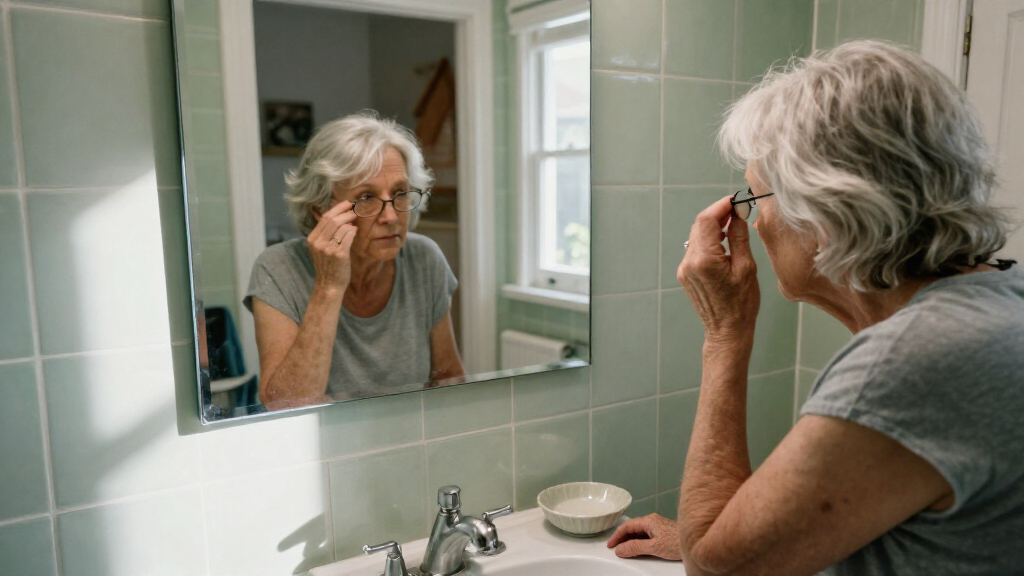
A Tiny Buddha essay argues that self-awareness can harden into fixed identity, leaving people attached to descriptions that may no longer fit. Its author, a 70-year-old former television journalist and executive coach, uses her reluctance to join local groups as an example and suggests asking when a belief began and what it helps someone avoid.
A personal essay published by Tiny Buddha examines how people can mistake old self-descriptions for permanent facts, using its author’s hesitation to join local groups as an example. The writer, a 70-year-old former television journalist and executive coach, says that questioning such beliefs may reveal choices a person has ruled out without checking whether the reasons still apply.
The author says she has spent years learning what gives her energy, what drains it and what she wants from the next stage of life. But she argues that self-knowledge can become self-definition: a person notices a pattern, then turns it into a rule about who they are. That rule can persist even when circumstances or preferences change.
Her example is the phrase “I’m not a joiner.” Although she says she wants more connection, she hesitated after finding local Meetup groups focused on interests including books, walking, museums and films. She describes signing up as easy in theory, but says she closed the computer rather than attend. The essay does not say she ultimately joined a group.
The writer also distinguishes between genuine preferences and assumptions that may have become entrenched. She says she enjoys having people in her home but dislikes cooking, and wonders whether that has led her to conclude too broadly that she does not give dinner parties. She also encourages readers to question flattering self-beliefs, such as being open-minded or a good listener, rather than examining only beliefs that feel limiting.
When Identity Becomes a Rule
The essay’s point is that a label can shape behavior even when it began as a reasonable description. If someone believes they are not creative, not sociable or unable to travel alone, they may avoid testing that belief. The author frames this as a personal reflection, not as evidence from a study or a clinical finding.
Her example also makes the distinction between wanting an outcome and accepting the discomfort that may accompany it. The writer says she wants connection but finds the prospect of entering a room where she knows no one difficult. For readers, the practical question is not whether every self-description is wrong, but whether a particular belief still fits and what it may be helping them avoid.
The essay applies the same scrutiny to positive self-assessments. Questioning whether one is truly a good listener or open-minded may be uncomfortable, but the author argues that self-awareness should include how other people experience us, not only the portrait we hold of ourselves.
Popular right now

Bose QuietComfort Ultra Wireless Noise-Cancelling Headphones with Spatial Audio, Black

TCL QM64L 85-Inch QD-Mini LED 4K Smart Fire TV

TCL T7 Series 85-Inch 4K 144Hz QLED Smart Google TV
As an affiliate, we earn on qualifying purchases.
The writer describes a life spanning several roles: she says she was a girl who rode her bicycle everywhere, later became a television journalist, left that career and built another as an executive coach. She presents those identities as parts of one continuing life, rather than versions that must be discarded through dramatic reinvention.
Her account draws on more than two decades of coaching, according to the essay, but the examples are personal anecdotes. The supplied report does not cite research, survey results or outside experts. Its focus is a question the author says she has begun asking herself: whether a belief is still true, or simply familiar.
She recommends listening for phrases such as “I always,” “I never” and “I’m just not someone who…” and then asking when the belief took hold. One further question is what a person gets to avoid by keeping it: awkwardness, failure, or the uncertainty of entering a place where no one knows them.
What the Essay Does Not Establish
The essay offers one person’s reflections; it does not establish how common these patterns are or whether questioning self-descriptions leads to particular outcomes. No study, data or independent expert commentary is included in the supplied source.
It also remains unclear whether the author later attended a Meetup event or changed her view of joining groups. She describes noticing her hesitation, not resolving it. The essay does not suggest that every long-held belief is outdated: it acknowledges that some preferences are genuine and that knowing what one dislikes can be useful.
Testing Beliefs in Daily Life
The essay gives no announced follow-up or reported next step. Its suggested next move is a small act of examination: notice an absolute self-description, ask when it began and check whether it still matches present experience. In the author’s case, that could mean revisiting the idea of attending a local group, but she does not say she has done so.
For now, the development is the publication of a personal essay rather than a new study or formal program. Whether the author changes her plans, and whether readers recognize similar rules in their own lives, is not reported.
Key Questions
What is the Tiny Buddha essay about?
It is a personal reflection on how self-descriptions can become fixed rules, even when they may no longer fit a person’s current preferences or circumstances.
What example does the author give?
The author says she has long described herself as “not a joiner”, but recently found local Meetup groups that appealed to her. She says she hesitated to attend; the essay does not report that she eventually went.
Does the essay say all self-beliefs are wrong?
No. The author says some preferences are real and useful. Her argument is to check whether a belief remains accurate rather than assume that every longstanding description is false.
Does the source cite scientific research?
No research or statistical evidence appears in the supplied source. The piece is presented as the author’s personal experience and reflection.
Source: tinybuddha.com