TL;DR

Turn quiet afternoons into listening time
- Thousands of audiobooks, podcasts and originals
- Listen on your phone, tablet or Echo — also offline
- Cancel anytime
A Fit&Well report features a trainer who incorporates coordination work into sessions with older adults, alongside strength and other exercise. The trainer outlines three movements—opposite arm and knee raises, side step-outs with an opposite-arm reach, and a ball toss—with seated or simpler variations. The report cites a 2019 review on potential balance, stability and cognitive benefits, but does not provide new research or evidence that these exercises extend lifespan.
A trainer featured by Fit&Well says they include three coordination exercises in sessions with older adults, offering standing and seated versions to match different mobility levels. The report presents the routine as practical movement training, not as new research or proof that coordination exercises extend lifespan.
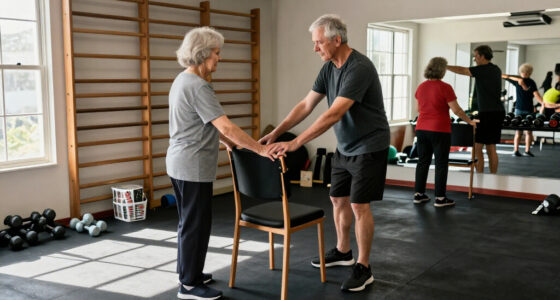
The trainer says coordination work is part of their chair-based yoga classes and personal training sessions. Their aim, as described in the report, is to practise moving the arms and legs in different patterns and to build confidence with everyday movement. The examples given include moving around other people and doing more than one task at home.
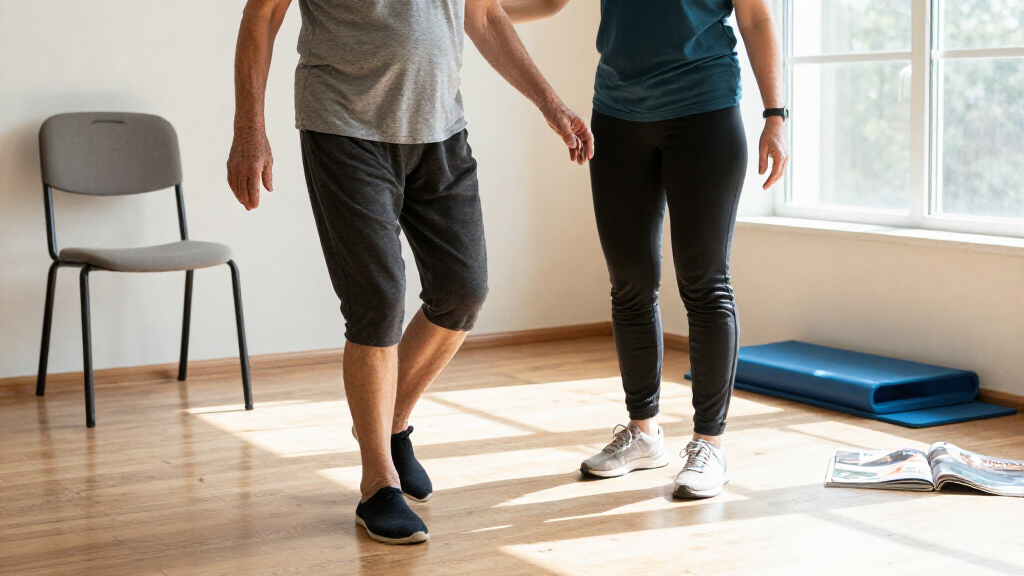
The first exercise pairs a knee raise with the opposite arm: standing participants alternate sides, while seated participants can march slowly and lift the opposite arm. The second combines a side step with a reach from the opposite arm; its seated variation uses a side step-out and an arm opening. The trainer suggests five to six repetitions per side for each of these movements.
The third activity is a catch-and-throw drill using a ball and a wall. Participants may try it while balancing on one leg, standing on both feet, or seated; the report suggests using one or two hands and changing the ball’s direction or size to adjust the challenge. It recommends five to 10 throws but does not provide a clinical assessment or individualized exercise prescription.
Coordination in Everyday Movement
The report’s practical point is that coordination activities can be adapted to different abilities, rather than reserved for people who can perform standing balance drills. That may make the examples useful to readers looking for ways an instructor can vary a class or training session. The article links the movements to tasks that require attention and controlled movement, such as reaching while stepping or responding to a moving ball.
It also places coordination alongside, not in place of, strength training. The source says strength work is known to support healthy aging, while arguing that it is not the only exercise category worth including. The report does not establish that the three named drills prevent falls, improve health outcomes for every participant, or increase longevity; those stronger conclusions would require evidence beyond the trainer’s account and the cited review.
Popular right now

Vitamix Propel Series 750 Professional-Grade Blender, 4 Programs, Black

Breville Bambino Espresso Machine, Brushed Stainless Steel (BES450BSS)

Vitamix 5200 Professional-Grade Blender, 64 oz. Container, Black
As an affiliate, we earn on qualifying purchases.
The Evidence Cited in the Report
The Fit&Well report refers to a 2019 review of balance and coordination exercises in older adults. According to the report, that review found potential improvements in cognitive processes such as spatial awareness, as well as postural control and stability in distracting environments. The source material does not name the review, provide its full results, or describe how large or consistent the reported effects were.
The trainer’s examples are presented as exercises they use in their own work, not as a standardized program. The report emphasizes that people can do variations standing or seated, and that some standing versions can be combined with balance work. It gives repetition ranges, but does not specify session frequency, duration, progression over time, or a method for measuring results.
“I always incorporate coordination training into my chair-based yoga classes and personal training sessions with older adults”
— The trainer quoted in the Fit&Well report
Limits of the Exercise Claims
The source does not identify the trainer by name in the material provided, give the report’s publication date, or link to the underlying 2019 review. It is therefore not possible from this material to check the review’s methods, participant numbers, or the size of any effects. The report also does not supply evidence that these specific three exercises produce the benefits discussed.
It remains unclear how often older adults would need to practise the movements, how the exercises should progress, or which versions are appropriate for a person’s particular health or mobility needs. The source does not report outcomes from the trainer’s clients, including changes in balance, coordination, falls, or daily function. Its longevity framing should be read as a broad topic, not a demonstrated lifespan effect from these drills.
How Readers Can Use the Routine
The report offers no scheduled follow-up study, trial, or next publication. Readers interested in trying the movements can use the stated seated alternatives as options described by the trainer, but the article does not replace advice tailored to an individual. People with health concerns or uncertainty about safe movement can ask a qualified health professional or appropriately trained exercise instructor which modifications suit them.
For the exercises to be evaluated as a program, further reporting would need to clarify the source review and distinguish its findings from the trainer’s recommendations. Evidence on frequency, progression, and measured outcomes would also be needed before making stronger claims about effects on balance, cognition, falls, or longevity.
Key Questions
Which coordination exercises does the report describe?
It describes opposite arm and knee raises, side step-outs paired with an opposite-arm reach, and a ball toss and catch. The trainer gives seated options for all three activities.
Can the movements be done seated?
Yes. The report suggests seated marching with an opposite-arm lift, seated side step-outs with an arm opening, and catching and throwing a ball while seated. These are options described in the article, not individualized medical guidance.
Does the report show that these exercises extend lifespan?
No. It describes a trainer’s routine and cites a 2019 review concerning balance and coordination exercises. The material provided does not establish that these three movements extend lifespan.
What repetition ranges does the trainer suggest?
The report lists five to six repetitions per side for the knee-and-arm raise and side step-and-reach. It suggests five to 10 throws for the ball drill.
Source: rss