
TL;DR

Turn quiet afternoons into listening time
- Thousands of audiobooks, podcasts and originals
- Listen on your phone, tablet or Echo — also offline
- Cancel anytime
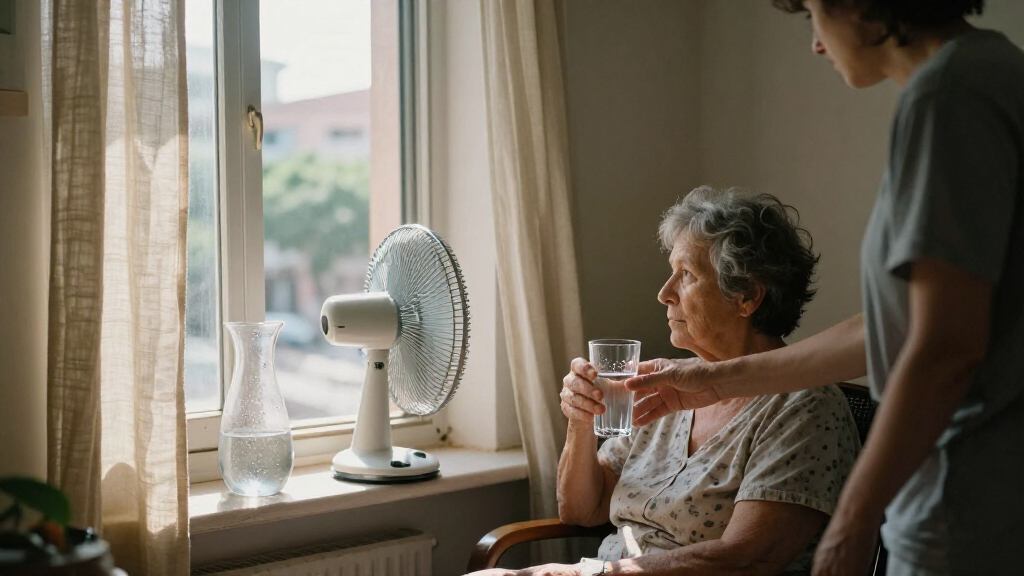
A 2026 policy analysis in Public Policy & Aging Report says older adults face heat risks that air conditioning alone may not address. The authors call for region-specific policies covering indoor temperatures, utility costs, housing and access to cooling services.
A new analysis in Public Policy & Aging Report says older adults can remain exposed to dangerous heat even when air conditioning is available, because of utility costs, housing conditions, mobility limits and gaps in public services. The authors argue that heat policies should reflect regional differences and make safe indoor temperatures more affordable and accessible.
The article, “On the Regional Spectrum of Barriers and Obstacles for Older Adults Facing Extreme Heat: Air Conditioning and Beyond,” examines financial, physical and structural obstacles to staying cool. The authors say the ability to use air conditioning depends on more than having a unit: people may be unable to afford electricity, repair or maintain equipment, or install window units. Cognitive changes can also make it harder to recognize unsafe indoor temperatures or respond to them.
The analysis describes risks that can compound with age. The body’s ability to regulate temperature can decline, while chronic conditions such as diabetes and neurodegenerative diseases, and some medications commonly prescribed to older adults, can raise heat-related risks. The article links heat exposure with cardiovascular and respiratory problems, disrupted sleep, cognitive effects, reduced attention and mental health concerns.
Cooling centers can offer relief, but the authors say they are not accessible to everyone. Transportation difficulties, mobility limitations, safety concerns, limited hours—including overnight and weekend closures—and lack of awareness can prevent older adults from using them. The analysis recommends stronger renter protections, indoor temperature standards, expanded utility assistance, help with cooling-system repairs and replacement, and more accessible cooling centers.
Why Cooling Access Is Uneven
The analysis matters because heat protection depends on whether people can use it, not simply whether a cooling device or public facility exists. A household facing high bills may limit air-conditioning use; a broken system may take time and money to repair; and a person with limited mobility may not be able to reach a cooling center. These barriers can overlap, leaving older residents with fewer practical ways to avoid prolonged heat exposure.
The authors also point to a policy mismatch: protections and assistance often reflect older assumptions about seasonal risk. In parts of the Northeast, for example, heating support is more established than comparable help with summer cooling, while housing built to retain warmth may hold heat during hot spells. Addressing the problem can affect public health, housing standards, energy assistance and emergency planning—not just individual household choices.
The proposed measures are recommendations from the authors, not findings that any one policy has already reduced heat-related illness. Their analysis makes the case for evaluating protections against regional conditions and the actual temperatures residents experience indoors.
Popular right now

Ninja DualZone Air Fryer 10 Qt Smart 6-in-1 Grey (DZ950)

Vitamix Propel Series 510 Professional-Grade Blender, 3 Programs, Black

Vitamix 5200 Professional-Grade Blender, 64 oz. Container, Black
As an affiliate, we earn on qualifying purchases.
Phoenix and Boston Show Regional Gaps
The authors compare the desert Southwest with the Northeast to show why a single national approach may miss local challenges. In the Southwest, air conditioning can be essential, making system performance and operating costs central concerns. The article notes that some Arizona cities require rental air-conditioning systems to work, be repaired promptly and cool a home to as much as 20 degrees Fahrenheit below the outdoor temperature.
That requirement does not necessarily keep indoor temperatures safe during extreme outdoor heat, the authors argue. Phoenix recorded 70 days at or above 110°F (43°C) in 2024; under the cited standard, a home could still exceed 90°F (32°C) indoors on such a day. The article says those indoor temperatures are unsafe for many older adults.
In the Northeast, the issue can be older buildings designed to retain heat and a lack of central air conditioning. The analysis cites Boston as an example and says indoor cooling standards and renter protections have not kept pace with more frequent heat waves. It also describes energy assistance in the region as focused largely on winter heating, with less comparable support for summer cooling.
““Air conditioning only protects people if they can afford to run it, maintain it and use it safely.””
— Amir Baniassadi, assistant scientist II at the Hinda and Arthur Marcus Institute for Aging Research at Hebrew SeniorLife and a co-author
Policy Effects Still Need Testing
The article is a policy analysis, not a report of a new intervention or a measured estimate of how many older adults are harmed by the barriers it describes. The supplied material does not provide a national count of affected people, quantify the health impact of each obstacle, or compare the effectiveness and cost of the recommended policies.
It also does not establish how widely the cited Arizona rental rules apply, how consistently they are enforced, or how many homes remain above a safe temperature during heat events. The Phoenix example illustrates a potential gap between an outdoor-temperature-based requirement and actual indoor conditions; it is not presented as a survey of all homes. Regional examples likewise do not describe every community in the Southwest or Northeast.
Local Protections Are the Next Test
The authors call on policymakers to consider indoor temperature standards, renter protections and cooling assistance, alongside support for repairs and replacement of cooling equipment. They also recommend improving cooling-center availability and access. The article does not announce a specific new law, funding program or implementation timetable.
For these proposals to be assessed, jurisdictions would need to determine how standards could be enforced, which households qualify for assistance, and whether services are reachable during nights and weekends. Further evaluation could track indoor temperatures, access to cooling and heat-related outcomes among older adults across different housing types and regions.
Key Questions
What did the new analysis find?
The authors say air conditioning alone does not guarantee safety for older adults during extreme heat. Costs, equipment upkeep, mobility, housing conditions and access to public cooling services can all affect whether people can stay cool.
Why can extreme heat pose particular risks to older adults?
The analysis says aging can reduce the body’s ability to regulate temperature. Chronic conditions and some commonly prescribed medications may add to heat-related risks. The article links heat exposure with cardiovascular and respiratory problems, sleep disruption and cognitive effects.
What is the Phoenix example in the report?
The analysis says Phoenix had 70 days in 2024 at or above 110°F (43°C). It uses that example to explain how a rental rule requiring cooling to a set amount below the outdoor temperature could still leave indoor temperatures above 90°F (32°C).
What policies do the authors recommend?
They recommend stronger renter protections, indoor temperature standards, expanded utility assistance, help maintaining or replacing cooling systems, and cooling centers that are easier to reach and use.
Does the analysis show that these policies have reduced illness?
No. The supplied report describes policy barriers and recommendations; it does not provide evidence that a particular proposed policy has already reduced heat-related illness.
Source: rss