
TL;DR

Turn quiet afternoons into listening time
- Thousands of audiobooks, podcasts and originals
- Listen on your phone, tablet or Echo — also offline
- Cancel anytime
In a six-month trial involving 123 healthy older adults, high-intensity interval training reduced fat mass without the small decline in lean mass seen in the moderate-intensity group. The researchers said the changes were modest, and the measurements do not establish that participants gained or maintained muscle strength.
A six-month study of 123 healthy older adults found that high-intensity interval training (HIIT) reduced body fat without the small decline in measured lean mass seen with moderate-intensity exercise. The results, published in Maturitas, suggest workout intensity may affect body composition, though the researchers described the changes as modest and did not directly measure muscle strength.
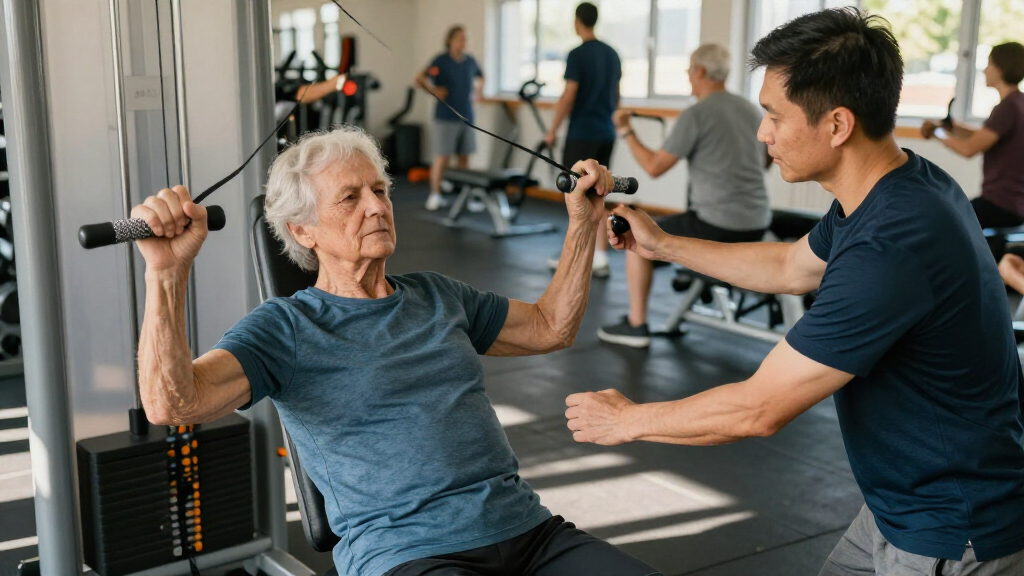
Researchers from the University of the Sunshine Coast studied participants from the Greater Brisbane region, whose average age was 72 and average body mass index was about 26. Participants were assigned to high-intensity intervals, moderate-intensity exercise or a low-intensity comparison group. They attended three supervised 45-minute sessions each week for six months.
Body composition was assessed at the start, after three months and at six months using a scan that estimates fat and lean tissue. Both the high- and moderate-intensity groups had significant reductions in fat mass compared with the low-intensity group. The moderate group also had a small decline in lean mass; the HIIT group reduced fat without the same measured decline.
The study also found improvements in visceral adipose tissue, fat stored deeper in the abdomen, in both the high- and moderate-intensity groups. The researchers said further analysis was needed for the low-intensity results. They cautioned that the differences were relatively small and not clearly clinically meaningful compared with lower-intensity exercise, particularly after accounting for measurement uncertainty.
Why Lean Mass Matters With Age
The results draw attention to a difference between losing weight and changing body composition. Weight and body mass index do not show how much of a person’s body is fat or lean tissue, or where fat is stored. Preserving lean tissue while reducing fat may be relevant as people age, when muscle loss can affect everyday movement and independence.
However, the findings do not show that HIIT improved strength, balance or the ability to perform daily activities. The scans measured lean tissue, not muscle function; lean mass includes muscle as well as other tissues and water. The study therefore offers evidence about measured body composition, not proof that one program produces better practical outcomes for every older adult.
Popular right now

Ninja DualZone Smart XL Air Fryer, 10-Qt, 6-in-1, DZ950

Ninja Foodi Smart 6-in-1 Indoor Grill and Air Fryer, 4 Qt, FG551

Sony BRAVIA 5 85-Inch Mini LED 4K HDR Smart TV (K-85XR50)
As an affiliate, we earn on qualifying purchases.
How the Exercise Trial Worked
HIIT alternates short periods of demanding exercise with easier recovery periods, rather than keeping the same pace throughout a session. Study co-author Mia Schaumberg, an associate professor of physiology at the University of the Sunshine Coast, said the intervals involved very hard effort, with heavy breathing and difficulty talking, followed by easier activity.
Lead author and exercise physiologist Dr. Grace Rose said all three exercise intensities led to modest fat loss, while only the HIIT group retained lean muscle as measured in the study. Rose said moderate training reduced fat mass but also produced a small decline in lean mass. These findings apply to the specific supervised program and participants studied; they do not establish that every HIIT routine has the same effects.
“We found that high, medium and low intensity exercises all led to modest fat loss but only HIIT retained lean muscle.”
— Dr. Grace Rose, lead author and exercise physiologist at the University of the Sunshine Coast
What the Measurements Cannot Show
The report does not establish that the differences in body composition produced meaningful improvements in health or daily function. Researchers said the changes were modest and that their clinical importance relative to lower-intensity exercise was unclear, especially given measurement uncertainty. Lean-mass scans also cannot tell whether muscle strength changed by the same amount.
The source report does not provide the precise size of each group’s fat or lean-mass changes, nor does it explain how results might vary for older adults with health conditions or limited exercise experience. The trial involved healthy participants in a supervised program, so the findings should not be assumed to apply to all older adults or all forms of HIIT.
Questions for Future Exercise Studies
The researchers said further analysis is needed to clarify the low-intensity group’s abdominal-fat results. Further research could also test whether the body-composition differences persist beyond six months and whether they correspond to changes in strength, mobility or other health outcomes. The report does not announce a follow-up study or a next publication date.
The findings describe a supervised research program, not an individualized exercise prescription. Older adults considering changes to exercise intensity should discuss their circumstances with a qualified health professional, particularly if they have health conditions or concerns about strenuous activity.
Key Questions
What did the study find about HIIT?
In the six-month trial, HIIT reduced fat mass without the small measured lean-mass decline reported in the moderate-intensity group. The researchers described the overall changes as modest.
How many older adults took part?
The study included 123 healthy older adults from the Greater Brisbane region. Their average age was 72.
Did HIIT increase muscle strength?
The report does not establish that. Researchers used scans to estimate lean tissue, which includes muscle but also other tissues and water; they did not directly measure strength in the reported findings.
Did moderate exercise reduce fat too?
Yes. Both the moderate- and high-intensity groups significantly reduced fat mass compared with the low-intensity group. The moderate group also had a small decline in measured lean mass.
Does the study mean HIIT is right for every older adult?
No. The trial involved healthy participants exercising under supervision, and its findings do not establish that every HIIT routine is suitable for every person. People considering strenuous exercise can discuss their individual circumstances with a qualified health professional.
Source: rss