
TL;DR

Turn quiet afternoons into listening time
- Thousands of audiobooks, podcasts and originals
- Listen on your phone, tablet or Echo — also offline
- Cancel anytime
Biograph reports that AI analysis of coronary CT scans found elevated inflammation in 42.9% of participants described as asymptomatic and low risk; 17.9% had very high inflammation in at least one major coronary artery. The company says routine blood markers and a standard risk calculator did not identify these participants, but the study does not establish whether the findings predict future disease or whether acting on them improves outcomes.
Biograph says a U.S. study using AI analysis of coronary CT angiography scans found elevated coronary inflammation in 42.9% of asymptomatic participants classified as low risk, with 17.9% showing very high inflammation in at least one major heart artery. The finding suggests that this scan-based measure may identify inflammation not flagged by routine tests, but the results do not establish whether those participants will develop heart disease.
The study combined coronary CT angiography (CCTA) and cardiometabolic profiling with Caristo Diagnostics’ CaRi-Heart and CaRi-Plaque technologies, according to Biograph’s announcement. CaRi-Heart was used to assess inflammation around the coronary arteries. Biograph said the study involved clinically eligible members of its Black tier; the announcement does not provide the number of participants.
Biograph reported that 42.9% had elevated inflammation and 17.9% had very high inflammation in at least one major coronary artery. It also said that about 47% of participants with no detectable coronary plaque had elevated perivascular inflammation. These figures describe the study participants and should not be read as population-wide estimates.
The company said routine measures—including ApoB and non-HDL cholesterol, HbA1c, high-sensitivity C-reactive protein and the AHA PREVENT-ASCVD risk calculator—did not correlate with the scan-based inflammation finding or identify which participants had it. The research combines an observational finding with a potential use for the technology; it does not show that AI screening prevents heart attacks or improves health outcomes.
What the Scan-Based Finding Could Add
The results point to a possible gap between traditional cardiovascular risk assessment and inflammation measured around coronary arteries on CT. If further research confirms that this measure identifies people whose risk is otherwise missed, it could add information to clinical assessment, including for some people without visible plaque.
That possibility is not the same as proven clinical benefit. The announcement does not show that elevated inflammation leads to a particular future outcome, that treating it changes that outcome, or that scanning asymptomatic, low-risk people is beneficial overall. Those questions matter before the result can be translated into screening recommendations. CCTA also involves medical imaging, so decisions about its use require clinical judgment rather than reliance on a headline statistic.
Popular right now

TCL QM64L 85-Inch QD-Mini LED 4K Smart Fire TV

TCL T7 Series 85-Inch 4K 144Hz QLED Smart Google TV

Ninja DualZone 6-in-1 Air Fryer, 8-Qt, Grey, DZ801
As an affiliate, we earn on qualifying purchases.
How Biograph Measured Artery Inflammation
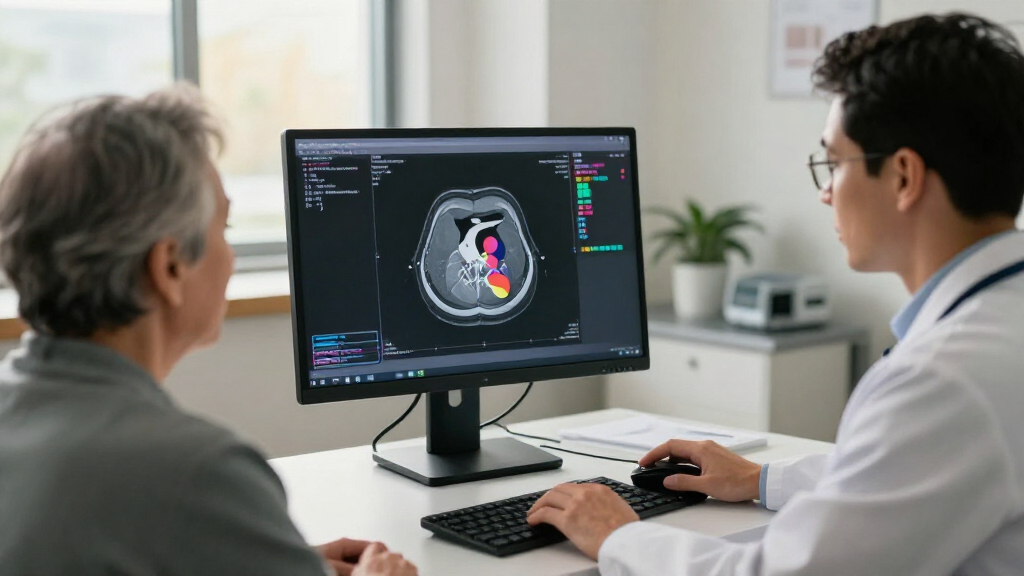
Biograph describes the work as its first U.S. study using Caristo’s CaRi-Heart technology in asymptomatic, low-risk individuals. CCTA creates images of the coronary arteries; the AI tool analyzes the surrounding tissue to estimate perivascular inflammation. CaRi-Plaque was also part of the study’s diagnostic approach, assessing plaque and stenosis.
Biograph states that CaRi-Heart has received U.S. Food and Drug Administration De Novo marketing authorization and that CaRi-Plaque has FDA clearance. Those regulatory statuses concern the tools; they do not establish that this particular study proves the clinical value of inflammation screening. Biograph says the study manuscript is available as a preprint, meaning the announcement presents findings before a complete account of peer review is supplied here.
““More than 42% of asymptomatic, conventionally low-risk adults had elevated coronary inflammation.””
— Biograph study statement
Questions the Results Do Not Answer
The announcement does not state how many people took part, provide detailed participant characteristics, or report follow-up showing whether elevated inflammation predicted later cardiovascular events. It also does not supply enough methodological detail to assess how participants were recruited or how the reported categories were defined.
It remains unclear how well the results apply beyond Biograph’s clinically eligible members, whether the finding is independently replicated, and whether acting on it changes outcomes. The reported lack of correlation with routine measures applies to this study and should not be taken to mean those tests have no value for cardiovascular assessment. The preprint’s full methods, results and any peer-review status would help readers evaluate the evidence.
Validation and Outcomes Are Next
The immediate next step is examination of the study manuscript, which Biograph says is available as a preprint. Larger and independent studies, with transparent methods and follow-up over time, would be needed to determine whether the inflammation measure predicts cardiovascular events beyond existing risk tools.
Research would also need to test whether clinical care guided by the result improves outcomes and weighs benefits against potential harms and costs of screening. Until those questions are answered, the findings are best understood as an early report of a scan-based measurement in a specific group—not evidence that all asymptomatic adults should undergo coronary CT. People considering cardiac imaging should discuss its risks and relevance with a qualified health professional.
Key Questions
What does the 42.9% figure refer to?
Biograph reports that 42.9% of participants described as asymptomatic and low risk had elevated coronary inflammation on AI analysis of CT scans. It is a result from this study, not an estimate for all adults.
Does elevated coronary inflammation mean someone has heart disease?
Not based on this report alone. The study describes a scan-derived inflammation finding; it does not establish that every person with elevated inflammation has coronary disease or will develop it.
Did blood tests identify the participants with inflammation?
Biograph said the routine markers and risk calculator assessed in the study did not identify which participants had elevated coronary inflammation. That finding does not mean those tests are useless for other parts of cardiovascular risk assessment.
Should people get a coronary CT scan because of this study?
The study does not establish that screening asymptomatic, low-risk people with CCTA improves health outcomes. Whether imaging is appropriate depends on individual circumstances and should be discussed with a qualified health professional.
What evidence is still needed?
Researchers need to report full methods and participant details, replicate the result in independent groups, and follow participants to test whether the measure predicts future events. Studies must also assess whether care based on the finding improves outcomes.
Source: hn