
TL;DR
Open a free Amazon Business account
Business pricing, bulk buying and tax-exempt orders.
Create a free accountAs an affiliate, we earn on qualifying purchases.
The best health tracking method for seniors depends on their comfort and consistency. Paper logs are straightforward and reassuring, while apps automate trends and reminders. A hybrid approach often offers the best of both worlds.
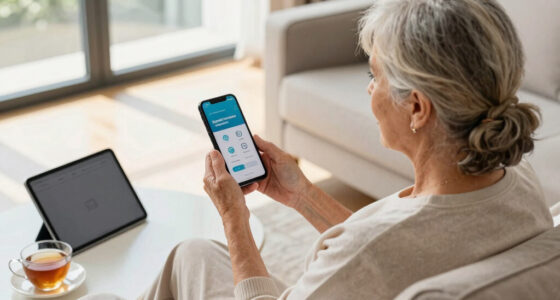
Imagine trying to keep tabs on your blood pressure or medication schedule with a tiny smartphone screen that feels unfamiliar. Now, picture flipping through a large, familiar notebook filled with your own handwriting—comforting, simple, and reliable. That’s the core of why many seniors lean toward paper logs, but technology offers tempting automation and shareability.
This guide will walk you through the real-world tradeoffs of paper versus digital for health tracking. You’ll learn what makes each method work, how to pick what suits your needs, and how even a little hybrid approach can make a difference.
Choose a tracking method that feels natural and simple for you; comfort breeds consistency.
Focus on a few key measurements rather than trying to track everything at once.
Regular review and sharing of records with your healthcare provider improve your care.
Protect your privacy and data security, whether using paper or digital tools.
A hybrid approach—paper for daily recording, digital for summaries—can offer the best of both worlds.
Paper Log vs App: Which One Will Actually Get Used?
For non-tech seniors, the most sophisticated tool is not automatically the best. A familiar notebook may support a dependable routine; an app may simplify reminders, trends and sharing. The winning choice is the one that feels comfortable enough to use accurately every day.
Start with the easiest reliable method. Add digital support only where it clearly reduces effort or improves care.
Track only the measures that directly support the care plan.
No battery, internet, password or software update required.
Date, time, measurement and relevant circumstances.
Daily paper entries plus periodic digital summaries.
Three workable paths
Eyesight, arthritis, tremors, memory and confidence can affect either method. Match the system to the person—not the person to the system.
Paper log
A large-print notebook or single-page form offers a visible routine without menus, charging or passwords.
- Easy to customize with wide writing spaces
- Simple to carry into an appointment
- Relies on legible, timely entries
- Trends and averages require manual review
Tracking app
Apps can add reminders, timestamps, graphs and connections to compatible health devices.
- Can enlarge text or support voice input
- Flags unusual values and recurring patterns
- May involve passwords, updates and subscriptions
- Misclicks or syncing failures can create errors
Hybrid method
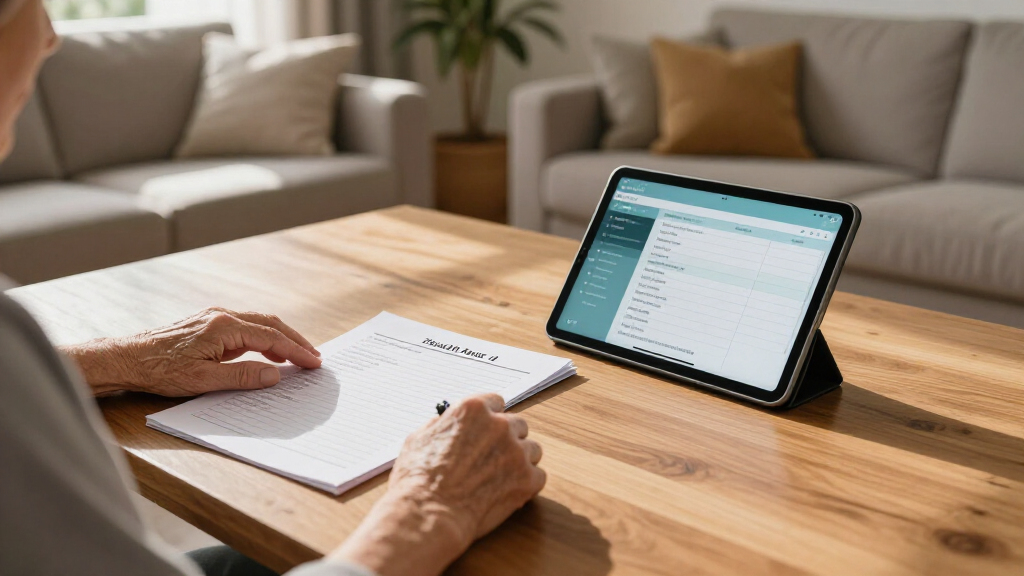
The senior records information on paper while a trusted caregiver or clinician periodically creates a digital summary.
- Preserves a comfortable daily habit
- Adds graphs without daily screen use
- Creates a concise record for appointments
- Keeps the senior involved and in control
The real-world tradeoffs
Neither option is error-proof. Paper depends on careful recording; apps depend on correct operation, reliable hardware and understandable settings.
| Decision factor | Paper log | Health app | Hybrid approach |
|---|---|---|---|
| Learning curve | ✓ Strong · usually familiar | ~ Variable · interface matters | ✓ Strong · minimal daily tech |
| Reminders | ✗ Manual · notes or alarms needed | ✓ Automatic · recurring alerts | ✓ Flexible · separate alarm or app |
| Trend detection | ~ Manual · review pages carefully | ✓ Fast · charts and averages | ✓ Clear · periodic summaries |
| Sharing | ~ Simple · bring or copy notebook | ✓ Convenient · export may be available | ✓ Practical · paper plus report |
| Privacy risk | ~ Physical · loss or unwanted viewing | ~ Digital · permissions and data use | ~ Managed · consent still essential |
| Long-term reliability | ✓ High · no device dependency | ~ Variable · battery, updates, company | ✓ Resilient · two usable formats |
Track less, learn more
A few clear gauges are better than a crowded dashboard. Begin with what the clinician recommends and expand only when another measure has a useful purpose.
Relative strengths
Illustrative comparison based on typical features—not a clinical performance score.
A focused starter set
Select only medically relevant measures and record them consistently.
Simple daily action, useful clinical insight
Separating daily recording from periodic analysis lowers the technology burden while preserving the advantages of digital summaries.
Add the date, time, value and a short note while the information is fresh.
Look for missed entries, unusual values or symptoms that need attention.
A trusted helper can enter key readings into a spreadsheet or suitable app.
Use a concise trend report plus notes about medication changes or events.
Privacy belongs in the plan
Tracking should support the senior’s choices—not become unwanted surveillance. Caregiver access should be clear, limited and based on consent wherever possible.
Secure paper
Store the notebook safely. Paper cannot be hacked, but it can be read, photographed, lost or damaged. Decide who may view it and where it belongs.
Secure the app
Use a strong password and limited permissions. Check whether data is used for advertising, can be exported or deleted, and remains available if the service closes.
Plan for failure
Keep a backup path. Consider battery life, forgotten passwords, device replacement, software updates, subscriptions and access to technical help.
The best system is the one that becomes a calm, repeatable habit.
Choose comfort first. Record a small number of useful measures, review them regularly and share concise summaries with the healthcare team. Paper, app or hybrid can all work when entries are accurate, timely and safely managed.
Why Simplicity Matters: How Ease of Use Affects Keeping Track
When it comes to health logs, simplicity is king. For many seniors, the biggest barrier isn’t forgetting — it’s frustration or confusion. Imagine trying to write in a tiny, cluttered app after a long day, or struggling with a small font on a smartphone. A well-designed paper log with large print and clear spaces feels natural.
For example, a senior with arthritis might find flipping through a thick app menu frustrating. Meanwhile, a large, single-page form with big checkboxes and wide spaces for notes can make recording blood pressure or medication adherence a breeze.
The key is matching the method to the user’s comfort level. If technology causes anxiety or errors, sticking with paper ensures consistent, accurate records.
Moreover, simplicity influences the likelihood of daily use. A complex app with many features might seem helpful but can become overwhelming, leading to skipped entries. Conversely, a straightforward paper log encourages routine, which is vital for health management. The tradeoff, however, is that paper logs lack automation and trend analysis, so you need to review your records manually. Balancing ease and insight is crucial—simplicity boosts adherence but may limit immediate data interpretation.

Exercise Log Book for Seniors | Large Print Journal for Tracking Fitness: Habit Tracker, Work Out Journal & Goal Setting to Create a Healthy Lifestyle
As an affiliate, we earn on qualifying purchases.
As an affiliate, we earn on qualifying purchases.
How Accurate and Reliable Are Paper Logs vs Apps?
Accuracy depends on how well the person records and how carefully they measure. Paper logs rely on legible handwriting, correct dates, and honest entries. For instance, a senior might forget whether they took a pill and fill in the record from memory, which can lead to inaccuracies. Additionally, handwriting can be hard to decipher over time, risking misinterpretation when reviewed by caregivers or doctors.
Apps can automate calculations, flag abnormal readings, and even timestamp entries automatically. This automation reduces human error and helps identify patterns that might be missed manually. However, they’re not foolproof. Misclicks, confusing interfaces, or syncing errors can introduce mistakes. For example, entering blood sugar levels into an app with unclear units might give a false sense of control or lead to incorrect decisions.
The real importance lies in consistency and honesty. If entries are made regularly and accurately, both methods can be reliable. The tradeoff is that paper logs depend heavily on user diligence, while apps depend on correct operation and device reliability. In the long run, combining manual checks with digital tools can enhance accuracy, but the core factor remains the user’s commitment to truthful, timely record-keeping.

Betife Automatic Pill Dispenser,28-Day Smart Bluetooth Pill Box, Easy Setup
- Bluetooth App Control: Seamless app and Bluetooth connectivity
- Customizable Medication Management: Set alarms, names, and upload pill images
- Device Name Personalization: Name device for different family members
As an affiliate, we earn on qualifying purchases.
As an affiliate, we earn on qualifying purchases.
What Should You Track? Picking the Right Information Without Overload
Not all data is equally useful. Keep it simple. Focus on key measures like blood pressure, medication adherence, or blood sugar if needed. For example, tracking blood pressure twice daily—morning and evening—can reveal patterns without overwhelming you. This consistency helps your healthcare provider see trends over time, making it easier to adjust treatment if necessary.
Adding too many variables—like mood, sleep, and diet—may become burdensome and cause frustration. While these factors are important for overall well-being, tracking too much at once can lead to burnout or inaccuracies due to inconsistent recording. Instead, choose what directly impacts your health or your care plan. Think of it like a dashboard: a few clear gauges are better than a cluttered control panel. Prioritize the measurements your doctor emphasizes, and add other data gradually if needed.
Remember, the goal is clarity, not chaos. Regularly review your recordings with your caregiver or doctor to see what’s really important. Over time, this focused approach helps you develop sustainable habits and makes your health data more meaningful.

Nile Writes Spiral Bound Blood Pressure Log Book – for Daily Tracking Record & Monitor Your Systolic, Diastolic, Heart Rate & Pulse Readings at Home,2-Year BP Diary
- Simple Daily BP Tracking: Record systolic, diastolic, pulse, and heart rate
- Compact A5 Size: Fits easily in bags or folders with 110 pages
- Personal & Medical Info Page: Includes space for contact, health, and emergency details
As an affiliate, we earn on qualifying purchases.
As an affiliate, we earn on qualifying purchases.
Sharing Records: Making Your Data Useful for Caregivers and Doctors
Sharing is key. A paper log is easy to bring to appointments, but it can be bulky or hard to interpret quickly. Creating a simple, organized summary—like a list of recent readings with dates and notes—can make a big difference during visits. Clear summaries help your healthcare provider understand your health status at a glance, enabling more informed decisions.
Apps can generate graphs, trend reports, and even send data remotely. For example, a weekly chart showing blood pressure fluctuations can alert your doctor to patterns that require attention. Digital records facilitate ongoing monitoring without needing to carry physical logs everywhere.
However, compatibility and format matter. Sometimes, you’ll need to print or export data in a common format like PDF or CSV to share with your provider. The key is to keep records organized and accessible—whether digitally or on paper—so that your health team can interpret the data effectively and make timely interventions.

APPLE WATCH ESSENTIALS FOR SENIORS: SIMPLE STEP-BY-STEP LESSONS FOR CALLS, HEALTH TRACKING, SAFETY ALERTS, APPS, AND EVERYDAY CONFIDENCE
As an affiliate, we earn on qualifying purchases.
As an affiliate, we earn on qualifying purchases.
Privacy and Independence: Protecting Your Data Without Losing Control
Paper logs are straightforward — they can’t be hacked, but anyone who finds your notebook can read it. That’s the tradeoff. Keep it in a safe place, and you control who sees it. The downside is that if lost or stolen, your health data is vulnerable, and retrieval can be difficult.
Apps store data digitally, which can be convenient but also risky. Data may be sold or shared if you’re not careful, and security depends on your choices. For example, a health app might ask for access to your contacts or location, raising privacy concerns. If not managed properly, your sensitive health information could be exposed or misused.
The best approach is to use strong passwords, limit permissions, and only download reputable, secure apps. Consider encrypting your device or using privacy-focused apps. Think of your data as personal property—protect it diligently, but remember that digital storage introduces new vulnerabilities. Balancing convenience with security ensures your privacy remains intact while maintaining your independence.
Cost, Reliability, and What You Can Count On Long Term
Paper logs are cheap and simple, with few hidden costs. A notebook and pen are all you need. No software updates or batteries required. They are durable if stored properly, and you can easily replace or update pages as needed. This makes them a very reliable long-term option, especially if you prefer physical records you can hold in your hand.
Apps can be free or subscription-based, but they depend on device support, internet access, and ongoing updates. For example, an app on a smartphone might stop working after an OS update or if the developer discontinues support. Additionally, hardware failures or loss of device can jeopardize your records unless you regularly back them up.
Long-term reliability also depends on your ability to access your data when needed. Regular backups—like taking photos of your logs or exporting data—are essential. Consider whether you prefer a low-tech, always-available option or a digital system that requires ongoing maintenance. The best choice balances cost, convenience, and your comfort with technology, ensuring your health records remain accessible over time.
Safety Limits: Knowing What Technology Can and Can’t Do
Neither a notebook nor a consumer app replaces medical advice. They’re tools for observation, not diagnosis. For example, a sudden spike in blood pressure should prompt an immediate call to your care team, not just a note in your log. Relying solely on recorded data without professional interpretation can be dangerous if you miss critical signs.
Use clear instructions from your doctor about what measurements matter, how often to record, and when to seek help. Be aware that thresholds for concern are individual—what’s normal for one person may be alarming for another. Overreliance on technology without medical guidance can delay necessary treatment or cause unnecessary worry.
Always prioritize safety over convenience. Technology can support your health management but should never replace professional medical advice. Recognize its limits, and maintain open communication with your healthcare team to ensure your safety remains paramount.
Paper Log vs App: The Big Picture
| Consideration | Paper Log | App |
|---|---|---|
| Learning Curve | Very low; just write and read | Can vary; some are simple, others complex |
| Internet or Charging | No; always ready | Often required, needs power |
| Reminders | Manual—set by you | Usually built-in |
| Trend Calculations | Manual, time-consuming | Automatic, quick |
| Sharing | Hand-delivered or photographed | Export, email, or cloud sharing |
| Accessibility | Large print, simple forms | Voice, contrast, font adjustments |
| Data Backup | Copies or photos needed | Cloud or device-based backups |
| Privacy Risk | Physical loss or theft | Online data vulnerabilities |
| Device Integration | None | Some devices sync automatically |
| Long-Term Reliability | Very durable if stored well | Depends on hardware and updates |
What’s New? How Technology Is Changing Senior Health Tracking
Recent years have seen a boom in remote monitoring, Bluetooth devices, and smart wearables. These tools can automatically record blood pressure, oxygen levels, and activity. For example, a senior might wear a smartwatch that detects falls and alerts loved ones instantly.
Voice commands, larger screens, and simplified interfaces are making digital tracking easier. AI can even spot trends or anomalies, prompting timely interventions.
But remember — tech isn’t perfect. Device accuracy varies, and privacy concerns grow. The best approach combines these advances with simple, reliable methods.
Practical Tips: How to Pick What Works for You
Choosing the right system depends on your comfort and daily routine. Here’s a quick checklist:
- Start simple — pick one or two key measurements.
- Test different methods — try a paper log and a basic app.
- Involve your caregiver or family — see what they find easiest to help you keep consistent.
- Review regularly — no matter what you choose, check your records weekly.
For example, if you dislike technology but want to track blood pressure, a large-print notebook kept by your chair can be perfect. If you prefer reminders and trend charts, a simple app on a tablet might work better.
Common Questions Seniors Ask About Health Tracking
Is a paper health log accurate enough? Yes. If you record measurements right after taking them, and keep your handwriting clear, it’s very effective. Many seniors find paper more trustworthy than struggling with confusing apps.
Are health-tracking apps safe for seniors? They can be, if you choose reputable ones and manage privacy settings carefully. Remember, apps are tools — they don’t replace medical advice.
Which method is better if I have memory problems? A simple, visible routine helps. A paper log kept in sight or a caregiver’s reminder may be more reliable than an app you forget to open.
Can my family manage the app for me? Yes, if they have your permission. Use shared access features rather than giving out passwords, respecting your independence.
What should I track first? Focus on the most critical info, like blood pressure or medication adherence. Keep it simple to avoid feeling overwhelmed.
Frequently Asked Questions
Is a paper health log accurate enough?
Yes, if entries are made promptly, measurements are correct, and handwriting is clear. Regularly reviewing your log with your care team helps catch errors.Are health-tracking apps safe for seniors?
They can be, provided you select reputable apps, use strong passwords, and are aware of privacy policies. Apps are useful but don’t replace medical advice.Which method is better if I have memory problems?
A simple, visible routine, like a large-print paper log placed near your daily activities, often works best. Caregiver support can also help keep things on track.Can my family manage the app for me?
Yes, with your permission. Use official caregiver or proxy access features to respect your independence while keeping your data secure.What’s the easiest information to track?
Start with one or two critical items—like blood pressure or medication adherence—and expand only as needed. Keep it straightforward to stay consistent.Conclusion
In the end, the best health-tracking method is the one you can keep up with. Whether it’s a trusty notebook or a user-friendly app, consistency matters most. Keep it simple, stay regular, and always check in with your healthcare team.
Picture your routine as a steady rhythm — a small, familiar drumbeat that keeps your health in tune. That’s the real goal: staying connected to your well-being without adding stress or confusion.
College move-in / dorm season Picks
dorm essentials
As an affiliate, we earn on qualifying purchases.