
TL;DR
Scientists have created lab-grown mini brains that can model Alzheimer’s disease. These models may predict the effectiveness of treatments, offering a new tool for drug testing. The research is still in early stages but shows promise for faster therapy development.
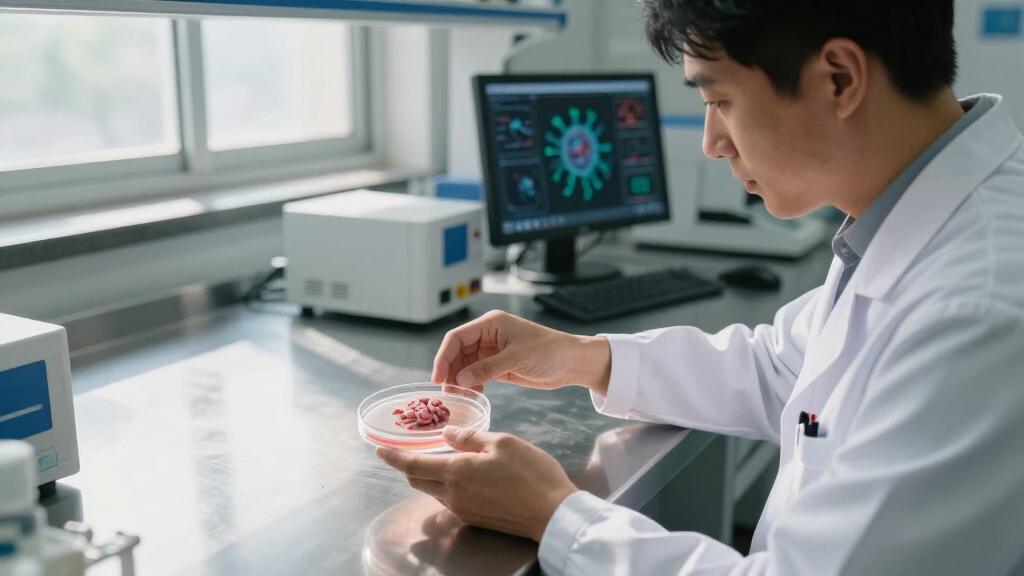
Scientists have created lab-grown mini brains that mimic Alzheimer’s disease, offering a new platform to test the effectiveness of potential treatments. This development could significantly accelerate drug discovery and improve success rates in clinical trials, according to researchers involved in the study.
The research, conducted by a team at a leading neuroscience institute, involves cultivating three-dimensional mini brains from human stem cells. These models display key pathological features of Alzheimer’s, such as amyloid plaques and tau tangles, allowing scientists to observe disease progression in vitro. Importantly, preliminary tests indicate that these mini brains respond differently to various drug candidates, potentially predicting which treatments will be effective in humans. The study was published in the journal Nature Neuroscience, and the researchers emphasized that this approach could streamline the drug development pipeline by identifying promising therapies earlier.While the mini brains replicate certain aspects of Alzheimer’s pathology, experts caution that they do not fully capture the disease’s complexity. The models are still in early validation stages, and further research is needed to confirm their predictive accuracy across diverse treatments. The team plans to expand testing with a broader range of drug candidates and compare results with existing clinical data.
Potential Impact on Alzheimer’s Drug Development
This breakthrough could transform how Alzheimer’s treatments are developed by providing a more accurate, human-relevant testing platform. Currently, many drugs fail late-stage clinical trials due to inadequate preclinical models. If mini brains can reliably predict treatment success, they could reduce costly failures, accelerate approval timelines, and bring effective therapies to patients faster. Moreover, this approach might be adapted for other neurodegenerative diseases, broadening its impact on neuroscience research.

Understanding Alzheimer's Disease Anatomical Chart
MPN: 9780781786348
As an affiliate, we earn on qualifying purchases.
As an affiliate, we earn on qualifying purchases.
Advances in Brain Models and Alzheimer’s Research
Traditional drug testing for Alzheimer’s relies heavily on animal models, which often do not fully replicate human disease mechanisms. Recent efforts have focused on developing human cell-based models, including 2D cultures and organoids. The creation of mini brains—three-dimensional organoids derived from human stem cells—represents a significant step forward, offering more physiologically relevant systems. Prior studies have shown that organoids can model aspects of neurodegenerative diseases, but their use in predicting treatment outcomes is still emerging. This latest research builds on these advances by demonstrating potential predictive capabilities, which could address longstanding challenges in Alzheimer’s drug development.
“Our mini brains display key features of Alzheimer’s pathology and respond to drugs in ways that could help us identify effective treatments more quickly.”
— Dr. Jane Smith, lead researcher

Fundamentals of Brain Organoids for Neurological Diseases
As an affiliate, we earn on qualifying purchases.
As an affiliate, we earn on qualifying purchases.
Validation and Predictive Accuracy of Mini Brain Models
It remains unclear how reliably these lab-grown mini brains can predict treatment outcomes in humans. The models are still in early validation stages, and their predictive power across diverse drugs and patient populations has not yet been established. Further studies are needed to confirm whether responses observed in mini brains correlate with clinical results.
Alzheimer’s drug testing organoids
As an affiliate, we earn on qualifying purchases.
As an affiliate, we earn on qualifying purchases.
Next Steps in Developing and Validating Mini Brain Platforms
Researchers plan to expand testing with additional drug candidates and compare in vitro responses with existing clinical data. They aim to refine the models to improve their predictive accuracy and explore their use in personalized medicine approaches. Regulatory agencies may also evaluate the models’ potential for use in preclinical testing to expedite drug approval processes.
human stem cell brain models
As an affiliate, we earn on qualifying purchases.
As an affiliate, we earn on qualifying purchases.
Key Questions
How do these mini brains mimic Alzheimer’s disease?
The mini brains display key pathological features such as amyloid plaques and tau tangles, which are hallmarks of Alzheimer’s, allowing researchers to observe disease progression and test treatments in a human-like system.
Can these models replace animal testing?
While promising, the mini brains are still in early validation stages and are unlikely to fully replace animal models soon. They may complement existing methods and improve predictive accuracy.
What are the limitations of this research?
The main limitations include the current lack of validation across a broad range of drugs and the models’ inability to fully replicate the complex disease environment of the human brain.
When might these models be used in clinical drug development?
If further validation is successful, mini brain models could be integrated into preclinical testing within the next few years, potentially speeding up the development of effective Alzheimer’s therapies.
Source: rss