
TL;DR
No single reminder works forever once memory loss worsens. Combining simple organizers, electronic alerts, and caregiver oversight creates a safety net that evolves with your parent’s needs—balancing independence and safety.
Imagine your parent forgetting they took their pills, then accidentally taking another dose. It’s a common, nerve-wracking worry for anyone caring for someone with memory loss. The truth is, no one tool can cover all stages of cognitive decline.
This guide walks you through layered approaches—starting simple and growing more advanced—to keep medication safe while supporting your parent’s independence. It’s about building a safety net that adapts as needs change, not just relying on a single alarm or box.
Start with simple routines and organizers; escalate support as memory declines.
Locked, electronic dispensers with caregiver alerts significantly reduce double-dosing risks.
Look for signs like confusion or missing pills—these indicate it’s time to upgrade your system.
Involve your parent in choosing tools to preserve dignity and independence.
Stay aware of recent tech developments and policy changes to access better support options.
Caregiving Guide · Medication Safety
Medication Reminders for a Parent With Memory Loss
No single reminder works forever once memory loss worsens. Layered approaches — simple organizers, electronic alerts, and caregiver oversight — build a safety net that evolves with your parent’s needs, balancing independence with safety at every stage.
~50%
of chronic-condition medications are not taken as prescribed (WHO estimate)
2×
double-dosing — the sharpest risk once dementia enters the picture
5+
medications = polypharmacy, the norm in older adults; every extra pill multiplies error risk
3+
layers in an effective reminder stack
1 dose
released at a time by locked dispensers
$30–60
typical monthly cost, connected dispenser subscription
2024
medicare begins paying for caregiver training services
Layer 01 — Match the tool to the stage
One System Won’t Survive the Whole Journey
The stack is rebalanced as cognition declines. Start simple, escalate deliberately, and treat each stage change as a signal — not a failure.
Routines & Organizers
- Weekly pill organizer — colorful, easy-open, grouped by day or time
- Anchored routines — pills with breakfast or next to the toothbrush
- Daily phone alarm — same time every day, reinforcing the habit
- Goal: the familiar pattern becomes the cue, not memory alone
Electronic Verification
- Locked automated dispenser — releases one dose, alarms until taken
- Caregiver alerts — your phone is notified if a dose is missed
- Voice assistants — spoken reminders with audible confirmation
- Shifts the burden from your parent’s memory to technology that enforces adherence
Caregiver Administration
- Full caregiver oversight — reminders alone are no longer safe
- Real-time app alerts for missed doses or off-schedule access
- Remote or in-person checks catch errors before emergencies
- Timely escalation preserves dignity by avoiding crisis interventions
Layer 02 — The escalation path
Build the Safety Net Step by Step
Each layer adds a new point of verification. Escalate when you observe warning signs — confusion, mixed-up compartments, or pills left out — not before.
Simplify First
Ask the doctor about deprescribing & once-daily dosing before any gadget
Anchor Routines
Organizer placed beside the coffee pot; pills paired with breakfast
Add Alarms
Phone alarms or voice-assistant reminders reinforce the daily pattern
Lock & Dispense
Time-released locked dispenser physically prevents double-dosing
Human Oversight
Caregiver alerts and check-ins verify doses actually happened
Key insight — an alarm going off is not proof a pill was swallowed. Higher layers add verification, not just noise.
Layer 03 — Tool-by-tool comparison
What Each Tool Can — and Cannot — Protect Against
The right choice depends on your parent’s current cognitive stage and comfort with technology. Note which tools actually prevent double-dosing versus merely reminding.
| Tool / Approach | Best Stage | Prevents Missed Doses | Prevents Double-Dosing | Verifies Intake | Independence Level |
|---|---|---|---|---|---|
| Pill organizer (dosette box)Low-tech · weekly | Mild | ~ Partial | ✗ No | ✗ No | ✓ High |
| Anchored routine + alarmHabit stacking | Mild | ✓ Yes | ✗ No | ✗ No | ✓ High |
| Pharmacist blister packsPre-sorted doses | Mild – Moderate | ✓ Yes | ~ Partial | ~ Visual check | ✓ High |
| Voice assistant remindersAlexa / Google Home | Moderate | ✓ Yes | ✗ No | ~ Audio confirm | ✓ Moderate |
| Locked automated dispenserTime-released · keypad | Moderate | ✓ Yes | ✓ Yes | ~ Access log | ~ Moderate |
| Connected dispenser + app alertsCellular · caregiver notified | Moderate – Advanced | ✓ Yes | ✓ Yes | ✓ Real-time | ~ Shared |
| Full caregiver administrationHuman layer | Advanced | ✓ Yes | ✓ Yes | ✓ Direct | ✗ Supervised |
✓ Reliable~ Partial / depends✗ Not protected
Layer 04 — The risk picture
Why the Danger Is Taking Too Much, Not Too Little
The most common serious error in dementia isn’t skipping a dose — it’s forgetting a dose was taken and taking it again. With blood thinners or heart medications, that mistake can cause bleeding, hypotension, and hospitalization.
Where the risk concentrates
Escalation threshold: when to upgrade
Each marker is a checkpoint, not a verdict. Observe, then escalate: full or mixed-up organizer compartments, pills found on tables or floors, confusion about whether doses were taken, or new dizziness and falls — a possible double-dosing signal.
Key Insight
“Present the tools as supporting independence — ‘this keeps you in charge’ — not as surveillance. Involve your parent in choosing the system.”
Dignity framing · avoid infantilizing language
- Double-dosing is the key danger — locked, time-released dispensers matter more than open organizers once memory worsens.
- Verification, not just alarms — dispenser sensors and daily check-ins confirm a dose was actually taken.
- Simplify before you automate — fewer pills mean fewer chances for error, and make every later layer more effective.
Layer 05 — Recognize the tipping point
Warning Signs the Current Layer Is Failing
Early recognition matters: these signals often indicate cognitive decline that can lead to serious health consequences if the system isn’t upgraded promptly.
Full or mixed-up compartments
Organizer slots still full past their day, or pills shifted into the wrong compartments.
Pills found loose
Tablets discovered on tables, counters, or floors — doses taken out but never swallowed.
Confusion about doses
Your parent can’t say whether they already took today’s pills — the classic double-dosing setup.
New dizziness or falls
Physical symptoms that may signal double-dosing — especially with blood thinners or heart medications.
Any of these signs means escalate now: move to a locked dispenser with real-time caregiver alerts, and loop in the prescriber for a medication review.
Layer 06 — Foundation first
Simplify the Regimen Before You Automate It
High-tech tools sit on top of the medication list — if the list itself is bloated, every layer works harder than it should. Always make changes in consultation with healthcare providers.
Deprescribing Review
Ask the doctor about cutting unnecessary medications and moving to once-daily dosing. The deprescribing movement (e.g., AGS Beers Criteria) directly simplifies any reminder system.
Pre-Sorted Packaging
Blister packs and multi-dose adherence strips organize pills by dose and time — tactile, visual cues with colors and shapes. Many pharmacies now offer home delivery and refill-date syncing.
Telehealth Med Reviews
Remote medication reconciliation after discharge and at intervals keeps the regimen current — and as of 2024, Medicare pays for caregiver training services billed by clinicians.
The Layered Safety Net — End to End
How the Layers Connect
Simplified Regimen
Fewer pills, once-daily where possible
Anchored Routine
Pills paired with breakfast & place cues
Electronic Reminder
Alarms & voice assistants reinforce
Locked Dispenser
One dose at a time, access logged
Caregiver Alert
Missed-dose notifications to your phone
Preserved Dignity
Maximum independence with a safety net
Start simple: How basic pill organizers and routines can keep your parent on track
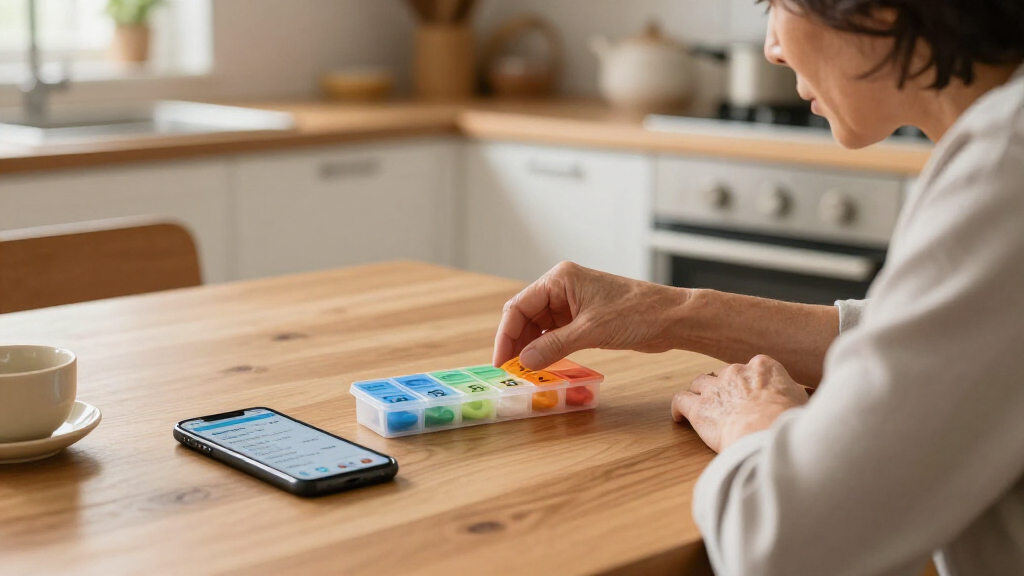
For mild memory issues, a straightforward pill organizer paired with anchored routines can do a lot of the heavy lifting. Think of a colorful, easy-open pill box that groups doses by day or time. Place it somewhere obvious—next to the coffee pot, by the toothbrush.
Pair this with a daily routine, like taking pills with breakfast. The familiar pattern becomes a cue, reducing reliance on memory alone. A simple phone alarm, set for the same time each day, reinforces the habit.
For example, a daughter might place the organizer next to her mother’s cereal bowl, with a bright yellow sticker indicating “Pills” and set a recurring alarm. This combo minimizes forgetting and helps preserve independence.

Med-Q Electronic Pill Dispenser with Alarm for Dementia and Elderly
- Loud Alarm with Growing Volume: Alarm increases in loudness over 5 minutes
- Visual Reminder with Red Light: Flashing red light indicates the next dose
- Easy-to-Open Compartments: Large letters, braille, and fingertip tabs
As an affiliate, we earn on qualifying purchases.
As an affiliate, we earn on qualifying purchases.
Escalate to electronic reminders and locked dispensers as memory worsens
Once routine reminders aren’t enough, consider electronic tools that add layers of verification. Automated locked dispensers release one dose at a time, alarm until pills are taken, and alert you if a dose is missed. These devices are crucial because they shift the focus from relying solely on your parent’s memory to using technology that enforces adherence. This reduces the risk of double-dosing, which can be dangerous, especially with medications like blood thinners or heart meds.
For instance, a caregiver might set up a keypad-locked dispenser that only opens at scheduled times. If your parent doesn’t open it, your phone receives a notification, prompting a check-in. Voice assistants, like Alexa or Google Home, can also remind your parent aloud and confirm they’ve heard the message. These layers matter because they create multiple points of verification, making errors less likely and providing peace of mind that your parent is taking medications correctly.
However, these tools also introduce tradeoffs—such as the need for some training, potential frustration if the technology isn’t intuitive, and the importance of balancing safety with respect for your parent’s autonomy. Choosing the right device requires considering your parent’s comfort with technology and their specific cognitive abilities.
Med-Q Electronic Pill Dispenser with Alarm for Dementia and Elderly
- Loud Alarm with Growing Volume: Alarm increases in loudness over 5 minutes
- Visual Reminder with Red Light: Flashing red light indicates the next dose
- Easy-to-Open Compartments: Large letters, braille, and fingertip tabs
As an affiliate, we earn on qualifying purchases.
As an affiliate, we earn on qualifying purchases.
When to involve caregivers and advanced tech: Recognizing signs that simpler tools aren’t enough
Medication management becomes risky when your parent starts confusing doses, leaving pills out, or showing signs of double-dosing—like dizziness or falls. These are clear signals that the current system isn’t sufficient anymore. Recognizing these signs early is crucial because they often indicate a decline in cognitive function that can lead to serious health consequences if not addressed promptly.
At this point, automated dispensers with real-time caregiver alerts become vital. They not only prevent double-dosing but also provide a safety net that accounts for forgetfulness or confusion. For example, systems that notify you via app if a dose is missed or if the dispenser is opened outside scheduled times allow for quick intervention, whether in person or remotely. This proactive approach helps catch issues before they escalate into emergencies, such as hospitalization from medication errors. The implication is that timely escalation of support can significantly reduce health risks and preserve your parent’s dignity by avoiding more invasive interventions.
It’s important to understand that the decision to escalate should be based on observing these signs, understanding the risks involved, and balancing safety with your parent’s desire for independence. Early recognition and intervention can make a substantial difference in their health outcomes.
While technology provides powerful tools, it’s equally critical to maintain open communication and involve your parent in these decisions, ensuring they feel respected and in control as much as possible.
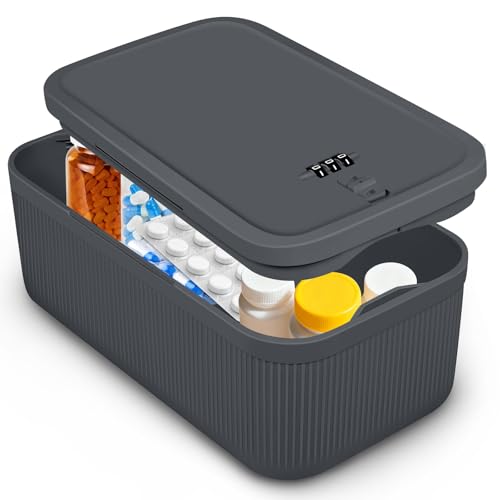
Small Lock Box,Lockable Storage Box with Combination Code for Medication Safe, Medicine Lock Box for Pills/First Aid Kits/Food/Snack Phone Jail,Locked Container for Home/Fridge/Office/School(Grey)
- Compact Size: 9.25 x 5.04 x 3.62 inches
- 2L Capacity: Fits medicines, snacks, and small items
- Combination Lock: 3-digit code for secure access
As an affiliate, we earn on qualifying purchases.
As an affiliate, we earn on qualifying purchases.
The importance of simplifying medication regimens before automating
Before adding high-tech gadgets, ask the doctor about deprescribing and reducing medication complexity. Fewer pills mean fewer chances for error, which directly impacts safety. When multiple medications are involved, the risk of missed doses or accidental double-dosing increases, especially if your parent struggles with memory or cognitive processing. Transitioning to once-daily doses or combining medications can significantly reduce these risks, but it requires careful medical oversight because some medications may need to be taken separately due to interactions or specific timing requirements.
A pharmacist can help pre-sort pills into blister packs or adherence strips, which are organized by dose and time, providing a tactile and visual cue. This simplification not only reduces daily decision-making but also minimizes errors. For example, a weekly blister pack with different colors and shapes for each dose can serve as a visual and tactile reminder, fostering independence while reducing confusion. The tradeoff here is that simplifying medication regimens may sometimes require adjustments to existing prescriptions, which should always be done in consultation with healthcare providers to ensure efficacy and safety.
This step matters because it directly impacts the likelihood of correct medication adherence, especially as cognitive decline progresses. Simplification creates a foundation that makes subsequent automation more effective and less burdensome for your parent.
Med-Q Electronic Pill Dispenser with Alarm for Dementia and Elderly
- Loud Alarm with Growing Volume: Alarm increases in loudness over 5 minutes
- Visual Reminder with Red Light: Flashing red light indicates the next dose
- Easy-to-Open Compartments: Large letters, braille, and fingertip tabs
As an affiliate, we earn on qualifying purchases.
As an affiliate, we earn on qualifying purchases.
Double-dosing dangers and how layered tools prevent them
The biggest risk isn’t missing doses—it’s forgetting they already took them, leading to double-dosing. This mistake can be especially dangerous with certain medications like blood thinners or heart medications, where dosage errors can cause serious health complications. Double-dosing can result in bleeding, hypotension, or other adverse effects, making it a critical safety concern.
Layered tools, such as locked dispensers with sensors and alerts, help prevent this by only releasing one dose at a time and logging each access. These systems can detect if your parent tries to open the dispenser multiple times or outside scheduled times, alerting you immediately. The real benefit is that these tools serve as a safeguard against human error, which becomes more likely as memory and judgment decline. They create a safety net that alerts caregivers before harm occurs, providing an extra layer of assurance.
It’s important to understand that alarms alone are insufficient; verification through system logs and caregiver alerts are essential to ensure doses are taken correctly. This layered approach significantly reduces the risk of dangerous double-dosing and ensures medication safety as your parent’s needs evolve.
Supporting dignity: How to frame medication tools as independence aids
Present tools as support, not surveillance. Emphasize that these systems help your parent stay in charge of their health, fostering a sense of control and dignity. When involving your parent in choosing devices—such as bright colors, simple interfaces, or familiar routines—you encourage acceptance and cooperation. This approach reduces resistance because it aligns with their desire for independence and respects their autonomy.
For example, a caregiver might say, “This dispenser helps you remember your pills without me having to remind you every day,” which frames the tool as a supportive aid rather than a monitoring device. Such framing reassures your parent that these tools are meant to empower them, not restrict them. Maintaining a respectful tone and involving them in the process helps preserve their dignity while ensuring safety. The tradeoff is that emphasizing independence may require ongoing reassurance and patience, especially if your parent is initially resistant to new routines or devices.
This respectful framing encourages cooperation, reduces feelings of loss of autonomy, and fosters a partnership approach to medication management that respects your parent’s self-worth.
Warning signs that your current layer needs an upgrade
Watch for signs like mixed-up organizer compartments, pills on the floor, or confusion about whether doses were taken. These are concrete indicators that your current system is no longer adequate for your parent’s needs. Such signs often reflect a decline in memory or judgment, making it more likely that errors, such as missed or double doses, will occur. Recognizing these early allows you to intervene before a serious health issue arises.
Additional clues include new dizziness, falls, or repeated questions about medication schedules, which suggest that your parent may be losing track of their medications. These indicators highlight the need for more robust support, such as electronic alerts or caregiver check-ins. The key is to act promptly—delaying escalation can lead to adverse health outcomes, including hospitalizations or medication-related complications. The implication is that ongoing observation and early action are essential to maintaining safety and dignity.
By catching these signs early, you can implement a higher level of oversight, ensuring your parent remains as safe as possible while respecting their independence. Regular reassessment of the system’s effectiveness is crucial as their condition evolves.
Recent tech advances making medication management safer and easier
New connected dispensers with caregiver alerts now cost less and are more reliable, making advanced safety features accessible for many families. Many of these devices use cellular connections, which eliminate the dependency on Wi-Fi and reduce the risk of data loss during outages. Subscription services, typically around $30–$60/month, provide ongoing alerts if a dose is missed, ensuring caregivers can respond promptly. This continuous oversight can prevent errors before they escalate, particularly in situations where the caregiver cannot be physically present at all times.
Voice assistants, such as Alexa or Google Home, continue to evolve as tools for reminders and check-ins. Although some services like Alexa Together have been discontinued, newer integrations are emerging that support medication prompts and simple confirmations, helping your parent remember without feeling monitored. Additionally, policies are shifting with Medicare and Medicaid beginning to cover caregiver training and remote support services, easing the burden on families and promoting safer medication routines.
Pharmacy innovations, such as pre-sorted dose packaging with home delivery, are reducing daily sorting chores and minimizing errors. These advancements collectively ease the transition from independence to oversight, making medication management safer and less burdensome for both caregiver and parent. The key is staying informed about these developments to leverage the best tools available.
Frequently Asked Questions
How do I know when simple reminders aren’t enough?
If your parent starts missing doses despite alarms, shows confusion about whether they took medication, or begins double-dosing, it’s time to escalate to automated dispensers or caregiver alerts. Watch for signs like dizziness or falls, which may indicate medication errors. Recognizing these early signs allows for timely intervention, reducing the risk of serious health consequences and maintaining your parent’s dignity by avoiding more invasive measures.
What’s the best pill dispenser for someone with dementia?
Look for locked, electronic dispensers with alert systems that only open at scheduled times. Devices that notify caregivers if doses are missed or if the dispenser is opened outside scheduled times provide the highest safety. Consider capacity, ease of use, and whether the device connects via cellular or Wi-Fi, ensuring it aligns with your parent’s comfort and cognitive abilities. Choosing the right device is about balancing security with usability to prevent errors and promote independence.
Can I monitor medication remotely?
Yes, many connected dispensers and apps allow you to receive alerts and check your parent’s medication status remotely. This capability offers peace of mind, especially for those living apart. However, remote monitoring should complement, not replace, regular in-person check-ins. Combining technology with personal oversight ensures comprehensive safety and respects your parent’s dignity.
When is it time to take over medication administration?
When signs of confusion, missed doses, or risky double-dosing become frequent, it’s essential to consult healthcare providers about transitioning to full caregiver administration or home health support. Prioritizing safety while respecting your loved one’s dignity means recognizing when their cognitive decline necessitates more direct oversight. Early planning can prevent emergencies and ensure appropriate care levels.
What if my parent refuses the device or keeps unplugging it?
Involve your parent in choosing the device, emphasizing how it supports their independence. Use familiar, attractive designs and place it in a prominent, accessible spot. Gentle education, reassurance, and framing the device as a helpful aid rather than surveillance can foster acceptance. Patience and understanding are key—sometimes, demonstrating how the tool benefits their daily routine encourages cooperation and reduces resistance.
Conclusion
Effective medication management for a parent with memory loss isn’t about one perfect tool—it’s about layering solutions that evolve. Think of it as building a safety net, starting simple and adding layers as needed. Your goal? Maximize your parent’s independence while keeping them safe.
Remember, the right combination of tools and vigilance can make a world of difference. A well-placed reminder today could prevent a serious mistake tomorrow—and that peace of mind is priceless.