
TL;DR

Turn quiet afternoons into listening time
- Thousands of audiobooks, podcasts and originals
- Listen on your phone, tablet or Echo — also offline
- Cancel anytime
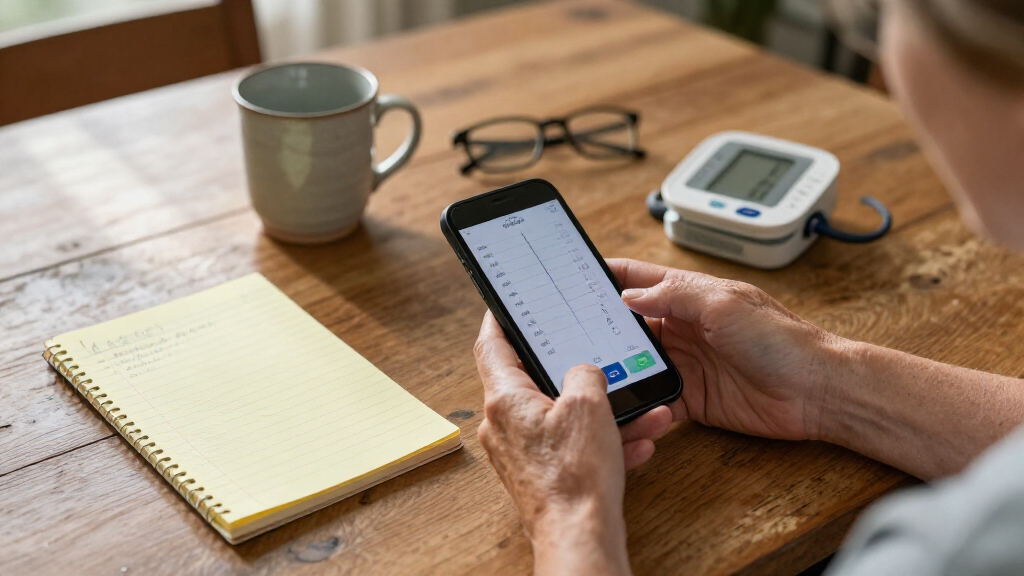
Sharing home health readings, such as blood pressure or oxygen saturation, helps family members support care. While apps offer automation, simple low-tech methods like paper logs or text messages are often more reliable and private. The key is agreeing on what to share, who sees it, and how to act on the data.
You just took your blood pressure, and the number is slightly higher than usual. You glance at your phone, wondering if you should text your sister, update an app, or just write it in a notebook. This moment of hesitation is common. Many families struggle to find a reliable way to share home readings without creating confusion, anxiety, or privacy headaches.
The truth is, there is no single “best” tool. An app might automate the process but fail if the battery dies or the Wi-Fi drops. A paper log might feel outdated but works perfectly if everyone knows where to find it. What matters most is that the system you choose is accurate, private, easy to maintain, and useful to the person’s care team.
This guide breaks down how to decide between digital apps and simple low-tech alternatives. You will learn how to set up a sharing plan that respects privacy, reduces stress, and actually helps your family support each other’s health.
Agree on what to share, who sees it, and how to act on data before choosing a tool.
Context notes (time, symptoms, meds) make readings more useful than raw numbers.
Low-tech methods like paper logs are often more reliable and private than apps.
Never assume an app shares data with your clinician; confirm this with your care team.
Create a 5-point sharing plan to ensure consistency and reduce anxiety.
Start With a Clear Plan, Not an App
Before you download anything, sit down with the person being monitored and the family members who will help. You need to agree on the basics: which readings matter, who needs to see them, and how often they should be shared. This conversation prevents misunderstandings later. Without this foundation, even the most sophisticated app becomes a source of friction rather than support.
For example, if your father is monitoring his blood pressure, does your sister need to see every single reading, or only those above 140/90? Does your brother need to know about his weight fluctuations, or just his oxygen saturation? Agreeing on these details upfront ensures that sharing supports the person’s choices rather than turning routine monitoring into constant surveillance. The implication here is significant: over-sharing can lead to “alert fatigue,” where family members become desensitized to notifications, potentially missing critical changes. Conversely, under-sharing might delay necessary interventions. Finding the middle ground requires explicit agreement on thresholds and frequency.
Remember, for adults with decision-making capacity, their permission is mandatory. They decide who has access. If they prefer a paper log over an app, respect that choice. The goal is to support their care, not to impose your preferred technology on them. Ignoring this autonomy can damage trust and reduce adherence to the monitoring regimen, ultimately compromising health outcomes more than any technical glitch ever could.
Popular right now

Bose QuietComfort Ultra Wireless Noise-Cancelling Headphones with Spatial Audio, Black

TCL QM64L 85-Inch QD-Mini LED 4K Smart Fire TV

TCL T7 Series 85-Inch 4K 144Hz QLED Smart Google TV
As an affiliate, we earn on qualifying purchases.
Why Context Matters More Than the Number
A raw number without context can be misleading. If you see a blood pressure reading of 160/100, is it because the person was stressed, had coffee, or forgot their medication? Without that context, the number might cause unnecessary panic or false reassurance. Clinicians rely on trends and patterns, not isolated data points, to make decisions. A single high reading means little if it’s an outlier; a series of slightly elevated readings tells a different story.
To make readings truly useful, record the date, time, value, and unit. Add notes about symptoms, medication timing, or whether the person had rested. For instance, a note like “10:00 AM, 150/90, felt dizzy, took meds at 8 AM” gives a clinician far more insight than just “150/90.” The tradeoff here is time: adding context takes longer than tapping a button, but the clinical value increases exponentially. Without it, you are providing data that is statistically significant but clinically ambiguous.
Follow your clinician’s specific instructions for measurement. Blood pressure, for example, is affected by posture, cuff fit, and activity. A clinician might recommend taking two readings five minutes apart and averaging them. Always follow the care plan, and never change medication based solely on a family-shared reading unless a professional has given specific instructions. The risk of acting on incomplete data is high; a misinterpreted number could lead to dangerous self-adjustments of medication.
Apps: When Automation Helps and When It Hurts
Digital apps can streamline the process by automatically transferring readings from a device to a phone. This reduces transcription errors and allows family members to view trends over time. Some apps even let you share data directly with a clinician or export a report for appointments. However, this convenience comes with hidden costs. Automation assumes a stable digital environment; if the device loses connection or the app updates incorrectly, data can be lost or corrupted without warning.
However, apps come with limitations. Not every device connects to every app, and sharing features vary widely. You might find that your blood pressure monitor works with one app, but your glucose meter requires a different one. This fragmentation can create more work, not less. The implication is that you may end up managing multiple interfaces, increasing cognitive load for the user. For older adults or those less tech-savvy, this complexity can lead to abandonment of the monitoring process entirely.
Privacy is another critical concern. Health data is sensitive. Before relying on an app, check who can view the data, how it is stored, and whether you can revoke access easily. Avoid sending health information in a group chat if the person does not want everyone in the group to see it. An app is not automatically part of the medical record, so don’t assume your doctor sees what your family sees. The tradeoff is clear: you gain ease of sharing but potentially lose control over data sovereignty. If the app company changes its terms of service or suffers a breach, that data is no longer yours to protect.
Low-Tech Options That Often Work Better
Don’t underestimate the power of a simple notebook. A paper log is inexpensive, requires no charging, and works even during power outages. It is also easy to bring to doctor’s appointments. The primary advantage is reliability; there are no software updates to break the system. A simple table layout works best:
| Date and Time | Reading | Symptoms or Notes | Shared With |
|---|---|---|---|
| Oct 12, 8 AM | 120/80 mmHg | Felt well, rested 5 mins | Daughter (via photo) |
| Oct 13, 8 AM | 135/85 mmHg | Stressful morning | Not shared |
Text messages can also be effective for occasional updates. Agree on a short format, such as “Tuesday, 8 AM: 120/80, feeling well.” This keeps communication clear and avoids the clutter of long chat threads. Just remember, a text is not a substitute for urgent care. If a reading is alarming, follow the care plan or call emergency services. The limitation of this method is searchability; finding a specific trend in months of texts is difficult, whereas a paper log can be scanned visually for patterns.
Shared spreadsheets or calendars can help multiple family members see the data, but they require careful access control. Ensure only authorized people have access, and designate one person to maintain the file to avoid confusion. The implication of using shared digital files is that they exist in the cloud, subject to the same privacy risks as apps, but without the automated data capture. You must manually enter data, which reintroduces the risk of transcription errors, but gives you total control over who sees what.
Protecting Privacy and Setting Alert Expectations
Health readings are sensitive information. Whether you use an app or a text message, protect privacy by using strong passwords and multifactor authentication. Check the app’s privacy policy to understand how your data is used. Never assume that a shared app is monitored by a healthcare professional. The implication of neglecting this is that your health history could be sold to third parties or exposed in a data breach, leading to potential insurance or employment discrimination.
Set clear expectations for alerts. Some devices send notifications when readings are out of range. Agree on who receives these alerts and what action to take. An alert is not medical monitoring. If a reading is concerning, do not wait for a family member to reply. Follow the person’s care plan or contact local emergency services immediately. The tradeoff here is between responsiveness and anxiety. Tight thresholds catch problems early but generate false alarms; loose thresholds reduce noise but may miss critical events. Calibration is key.
Be mindful of anxiety. Constant notifications can create stress for both the person being monitored and their family. If alerts are causing more worry than help, consider turning them off or adjusting the thresholds. The goal is to support care, not to create a state of constant alarm. High stress levels can actually worsen health conditions like hypertension, creating a counterproductive cycle where the monitoring tool itself contributes to the problem it seeks to solve.
How to Create Your 5-Point Sharing Plan
To make sharing effective, create a simple plan that answers five key questions. This plan keeps everyone on the same page and reduces confusion. Without a written plan, expectations diverge, and family members may interpret the same data differently, leading to conflict or inaction.
- What to record: List the specific readings (e.g., blood pressure, weight) and the required context (e.g., time, symptoms). Recording too much leads to burnout; too little leads to blind spots.
- How often: Define the frequency (e.g., daily at 8 AM, or only when symptoms occur). Consistency is more important than volume for identifying trends.
- Who can see it: Specify exactly which family members or clinicians have access. Ambiguity here is the primary source of privacy breaches within families.
- What counts as a concern: Agree on the thresholds that trigger a response (e.g., “If BP is above 160/100, call the nurse”). This prevents panic over minor fluctuations and ensures serious issues are addressed promptly.
- Who to contact: Identify the primary contact for concerning readings and the emergency protocol. In a crisis, hesitation due to unclear roles can be dangerous.
Write this plan down and keep it accessible. Review it periodically to ensure it still meets the person’s needs. If the care plan changes, update your sharing plan accordingly. This structured approach ensures that technology, whether high or low, serves the person’s health goals. The implication of a static plan is that it becomes obsolete; health conditions evolve, and the sharing protocol must evolve with them to remain relevant and safe.
Frequently Asked Questions
Do we need an app to share home readings?
No. Use the simplest reliable method that fits the person’s needs. A paper log or regular phone call may be better than an app the person finds confusing or hard to use.Can my family see readings from my device?
Sometimes. It depends on the device, its app, account settings, and whether it supports sharing. Check the manufacturer’s instructions and privacy controls to confirm access levels.Will my doctor automatically receive the readings?
Usually, not unless the device or app is specifically connected to the clinician’s system and the care team has confirmed that readings are being received and reviewed. Ask the clinic what it accepts.How often should readings be taken or shared?
Follow the clinician’s instructions. More readings are not always more useful; unnecessary monitoring can increase stress and produce confusing results. Stick to the agreed schedule.What should we do if a reading looks unusual?
Repeat or verify it only as instructed for that measurement and device, note symptoms and circumstances, and follow the person’s care plan. Contact a healthcare professional for advice when appropriate.Conclusion
Sharing home health readings is about support, not surveillance. Whether you choose a sleek app or a simple notebook, the best system is the one that is consistent, private, and easy for everyone to use. Focus on clarity and communication, not just technology.
Start by having that conversation with your family. Draft your 5-point plan today. The right method will give you peace of mind and help your loved one feel supported, not monitored.