
TL;DR
Listen free for 30 days with Audible
Thousands of audiobooks and originals — cancel anytime.
Start your free trialAs an affiliate, we earn on qualifying purchases.
For most older adults, a good digital under-the-tongue thermometer offers the most dependable home reading when used correctly. Forehead thermometers are faster and more comfortable, while ear thermometers can be accurate but depend heavily on proper technique and ear health.
When it comes to checking an older adult’s temperature at home, the choices can be confusing. You might see a quick scan of forehead thermometers or an ear thermometer and wonder which one is most reliable. The truth is, no single method is perfect, but understanding their strengths and limitations can make a big difference.
In this guide, you’ll learn how each thermometer works, what makes them accurate or tricky, and which might fit your situation best. Whether you’re monitoring for illness or just keeping an eye on health, knowing what to expect helps you act confidently.
A well-used digital oral thermometer offers the most consistent readings for most older adults at home.
Forehead thermometers excel in speed and comfort but need proper technique to be reliable.
Ear thermometers are quick but highly sensitive to placement, earwax, and ear health.
Always confirm unexpected results with a second measurement, preferably oral, especially if the person shows symptoms.
Choose a thermometer based on the user’s ability, the environment, and the need for frequent checks.
Forehead, Ear or Under the Tongue?
Three common thermometer methods offer different balances of dependability, comfort and speed. For most older adults, a correctly used digital oral thermometer gives the most consistent home reading—but the best choice must also fit the person’s abilities and health.
How the three methods differ
Each device estimates internal temperature from a different location. The reading is only as useful as the placement, surrounding conditions and the person’s ability to cooperate.
Forehead
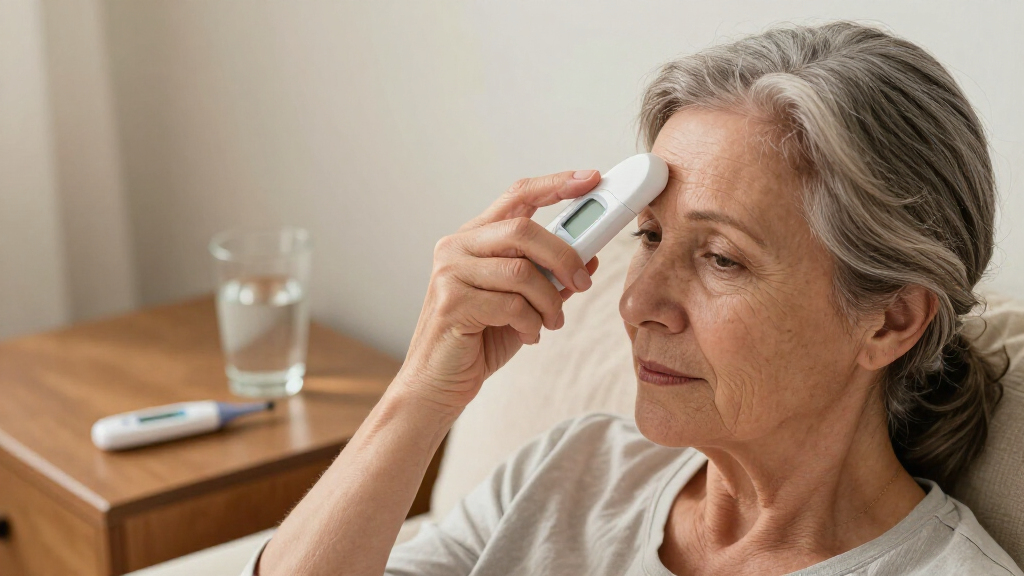
An infrared sensor measures surface heat over the temporal area. It is comfortable and minimally disruptive, but skin and room conditions can shift the result.
Ear
Infrared energy near the eardrum can provide a rapid, near-core estimate. Probe angle, earwax, canal anatomy and ear health strongly affect reliability.
Under tongue
A digital probe sits deep in a pocket beneath either side of the tongue. This familiar method is generally less affected by room conditions.
| Option | Dependability | Key advantage | Common interference | Best suited for |
|---|---|---|---|---|
| Forehead | ~Variable | Fast, hygienic and easy for repeated checks | Sweat, hats, outdoor exposure, distance and angle | People unable to tolerate oral or ear measurement |
| Ear | ~Technique-led | Very fast and does not require mouth placement | Wax, hearing aids, narrow canals, inflammation and probe direction | Cooperative adults with a caregiver trained in placement |
| Under tongue | ✓Most consistent | Reliable, familiar and less affected by room conditions | Food, drinks, smoking, mouth breathing and poor placement | Adults able to follow instructions and hold the probe safely |
| Any method | ✕Not perfect | Useful when technique remains consistent | Device variation, medicine effects and individual baseline | Trend monitoring alongside symptoms and usual temperature |
Symbols summarize practical home-use strengths and limitations—not a diagnostic accuracy rating.
Get a better reading
Use the same device, location and technique when tracking a trend. Repeat any result that seems inconsistent with the person’s condition.
Dry, indoor, aligned
- Keep the forehead dry and uncovered.
- Follow the specified distance and scanning path.
- Allow time to adjust after coming indoors from heat or cold.
- Avoid checking immediately after bathing, exercise or pillow contact.
- Repeat an unexpected result and confirm orally when feasible.
Clear, straight, aimed
- Remove hearing aids and follow the device’s waiting guidance.
- Gently pull the adult ear upward and backward.
- Aim toward the opposite temple, not straight upward.
- Avoid an ear with pain, drainage, surgery or heavy wax.
- For trends, use the same ear and technique each time.
Deep, closed, steady
- Place the tip deep under either side of the tongue.
- Keep lips closed and breathe through the nose.
- Wait after eating, drinking or smoking as directed.
- Avoid oral use when cooperation or safe placement is uncertain.
- Clean the device according to its instructions after use.
Fit the method to the person
Mobility, cognition, dry mouth, hearing aids, ear health, breathing support and the need for frequent checks can matter more than convenience alone.
A normal number may not tell the whole story
Older adults may have a lower usual temperature or a smaller temperature rise during serious infection. Medicines such as acetaminophen, anti-inflammatory drugs or corticosteroids may also suppress fever.
- Dry mouth or difficulty keeping the mouth closed
- Earwax, hearing aids or ear-canal problems
- Tremor, weakness, confusion or dementia
- Thin skin, impaired circulation or recent outdoor exposure
- Oxygen masks, mouth breathing or limited mobility
From reading to action
A single measurement is one piece of evidence. Connect the device reading with technique, the person’s usual baseline and current symptoms.
Measure consistently
Use the same device and site, following the manufacturer’s placement instructions.
Repeat surprises
Recheck unusual high, low or rapidly changing results before drawing conclusions.
Record the context
Note the time, method, reading, medicines and any changes in symptoms.
Act on the whole picture
Seek professional advice when symptoms are concerning or readings remain unexpected.
Do not delay seeking medical help when the person appears seriously unwell, has breathing difficulty, develops new confusion or declines rapidly.
Frequently asked questions
Small differences between readings are less important than consistent technique, changes from the person’s baseline and the presence of concerning symptoms.
Which thermometer is most accurate at home?
A digital oral thermometer generally provides the most consistent result when the person can use it correctly and safely.
Are forehead thermometers reliable enough?
They are useful for routine screening when used precisely. Confirm a result that conflicts with symptoms or seems unexpectedly high or low.
Can earwax or hearing aids affect a reading?
Yes. Wax can block the sensor, while hearing aids can warm or obstruct the canal. Remove the aid and follow the device’s waiting instructions.
How often should temperature be checked?
Follow healthcare guidance. During active illness, checks every 2–4 hours may be appropriate; record results and avoid unnecessary repeated measurements.
Choose oral for consistency, forehead for comfort and frequent screening, or ear for speed when correct placement and ear health can be assured.
What’s the real difference between forehead, ear, and oral thermometers?
Each method measures temperature in a different way, and that affects accuracy and convenience. An oral thermometer measures inside the mouth, close to the core, providing a direct estimate of internal temperature. Forehead thermometers scan the temporal artery, which supplies blood to the brain, offering a quick, surface-level reading that correlates with core temperature but can be influenced by external factors. Ear thermometers estimate temperature near the eardrum, which is close to the brain and generally reliable if used correctly, but this proximity makes them sensitive to technique and ear conditions.
Understanding these differences is crucial because the choice impacts not only the accuracy but also the comfort and ease of use, especially for older adults who might have mobility issues, cognitive challenges, or sensitive skin. For example, an oral thermometer’s accuracy depends on cooperation and proper technique, which might be difficult in some cases. Forehead devices are non-invasive and fast, making them suitable for quick screenings but potentially less precise if not used properly. Ear thermometers require proper placement and ear health, but can offer very quick and near-core readings if used correctly.
Recognizing these tradeoffs helps you select the most appropriate tool based on the individual’s needs and circumstances, balancing accuracy, comfort, and practicality.
digital oral thermometer for adults
As an affiliate, we earn on qualifying purchases.
As an affiliate, we earn on qualifying purchases.
How accurate is a forehead thermometer for older adults?
Forehead thermometers utilize infrared sensors to quickly measure the temperature of blood flow in the temporal artery, making them highly valued for their speed and non-invasiveness. However, their accuracy is highly dependent on technique and external conditions. For instance, sweat, hats, or recent physical activity can cool or warm the skin surface, leading to readings that don’t accurately reflect internal temperature. If the forehead skin is wet or covered, the device may produce a falsely low reading, potentially masking a fever or illness.
This sensitivity means that even slight deviations in technique or environmental factors can significantly affect the results. For example, if a caregiver measures after a child has been outside in cold weather or just finished running, the reading might not reflect the core temperature, risking misinterpretation. Therefore, understanding these limitations is essential; forehead thermometers are best used as screening tools rather than definitive diagnostic devices.
When used properly—keeping the forehead dry, at the correct distance, and scanning steadily—they can provide reliable quick assessments. But in cases of suspected illness or inconsistent readings, confirming with a more precise method, such as an oral thermometer, becomes important. The tradeoff here is speed and comfort versus potential variability, which can impact clinical decisions or responses.
forehead infrared thermometer for seniors
As an affiliate, we earn on qualifying purchases.
As an affiliate, we earn on qualifying purchases.
Why your ear thermometer’s accuracy can vary — and how to get it right
Ear thermometers estimate temperature near the eardrum, which closely reflects core temperature, making them a popular choice for quick assessment. Their speed and proximity to the brain are advantages, but these devices are highly sensitive to correct placement and ear health. Improper positioning—such as not pulling the ear back correctly or inserting the probe at an incorrect angle—can cause significant errors, sometimes as much as a degree or more. Earwax buildup or inflammation can insulate the eardrum, leading to falsely low or high readings, which could result in misdiagnosis or delayed treatment.
For example, if the probe isn’t aligned properly or if the ear canal is blocked, the temperature estimate won’t be accurate. This is especially critical in older adults who may have earwax buildup or ear infections, making the device less reliable. Ensuring the ear is clean, the device is correctly positioned, and the probe is inserted at the right angle is essential for accuracy. Removing hearing aids before measurement and using a clean probe cover are simple steps that significantly improve reliability.
Understanding these nuances helps prevent misinterpretation. The main tradeoff with ear thermometers is speed versus precision—when used correctly, they can be very accurate, but improper technique or ear health issues can compromise results. Recognizing when to trust these readings and when to seek confirmation with other methods ensures better health monitoring and timely responses.
As an affiliate, we earn on qualifying purchases.
Frequently Asked Questions
Which thermometer is most accurate for an older adult?
A digital oral thermometer, used correctly, generally provides the most consistent and reliable readings for older adults at home. Ear and forehead devices can also be accurate but depend heavily on proper technique and individual conditions.
Are forehead thermometers reliable enough for everyday use?
Usually, yes — if used precisely as directed. They’re quick and comfortable, making them ideal for routine checks. Confirm unexpected high or low readings with an oral measurement when possible.
Can earwax or hearing aids affect ear thermometer readings?
Yes. Earwax can block the sensor, causing inaccurate or falsely low results. Hearing aids can warm the ear or block the canal. Remove hearing aids before measurement and ensure the canal is clear for the best accuracy.
Should I trust forehead readings over oral ones?
Forehead thermometers are convenient but can be affected by sweat, hats, or positioning. Use them for quick screening, but confirm with an oral measurement if the result seems inconsistent with symptoms.
How often should I check temperature during illness?
Follow healthcare guidance, but generally every 2–4 hours during active illness. Avoid excessive checks that might cause confusion or anxiety. Record each reading and note any changes in symptoms.
home digital thermometer for elderly
As an affiliate, we earn on qualifying purchases.
As an affiliate, we earn on qualifying purchases.
Conclusion
Getting the right temperature reading isn’t just about the device — it’s about technique, consistency, and knowing what’s normal for the individual. In most cases, a digital oral thermometer, used correctly, offers the most dependable home assessment. Remember, symptoms matter more than numbers, and when in doubt, consult a healthcare professional.
Picture yourself checking a loved one’s temperature quickly and confidently, with a device that fits their needs and your routine. That’s the real goal — simple, accurate, and reassuring care at home.
College move-in / dorm season Picks
dorm essentials
As an affiliate, we earn on qualifying purchases.