
TL;DR

Turn quiet afternoons into listening time
- Thousands of audiobooks, podcasts and originals
- Listen on your phone, tablet or Echo — also offline
- Cancel anytime
A randomized phase I/II trial found that a bimatoprost-releasing intraocular lens reduced eye pressure over 12 months by an amount noninferior to a standard lens combined with timolol drops. Vision and safety results were similar across groups; follow-up is planned for three years, and two phase III trials have begun.
A bimatoprost-releasing intraocular lens reduced eye pressure by an amount noninferior to standard glaucoma eye drops over 12 months in a randomized trial of patients with cataracts and glaucoma, researchers reported at the American Academy of Ophthalmology meeting. The results suggest the implanted lens could combine cataract surgery and ongoing glaucoma drug delivery, but longer follow-up and phase III trials are still needed.
The phase I/II multicenter trial included 104 randomized patients, with a median age of 70. Participants were assigned in a 2:1:1 ratio to one of two bimatoprost drug-eluting lens doses, with artificial tears twice daily, or to a standard intraocular lens and timolol drops twice daily. About 85% had open-angle glaucoma; the remainder had ocular hypertension.
At 8 a.m., average intraocular pressure fell by 8.85 mm Hg in the higher-dose lens group, 11.36 mm Hg in the lower-dose group and 9.14 mm Hg in the timolol control group. At 10 a.m., average reductions were about 8 to 9 mm Hg across the groups. The reported percentage reductions did not differ significantly, and both lens groups met the trial’s criteria for noninferiority to the control treatment at both measurement times.
Vision was preserved in all three groups, and all participants achieved at least 20/32 best-corrected distance vision. At 12 months, no one in the control group needed additional glaucoma medication; the corresponding proportions remaining free of additional medication were 98.0% in the higher-dose lens group and 95.7% in the lower-dose group. Adverse events occurred at similar rates, and the report said no patient had a serious adverse event, needed secondary surgery or had the lens removed.
A Lens Could Reduce Daily Drop Dependence
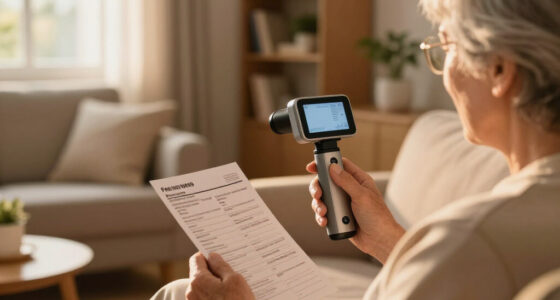
Glaucoma treatment often requires patients to use daily eye drops over the long term. At the meeting, presenting investigator Jeffrey Kammer of Vanderbilt University Medical Center said nonadherence has been reported at rates of 30% to 50%, and as high as 80%, and has been associated with worsening glaucoma. A drug-releasing lens could reduce the need to remember routine doses for some patients, although the trial does not yet establish whether it improves long-term adherence or outcomes.
The device is intended for patients already undergoing cataract surgery, so its potential appeal is combining vision rehabilitation with pressure management in one procedure. The trial compared it with a standard lens plus timolol, not with every available glaucoma treatment. Its results show comparable pressure reduction at the measured times over one year, rather than proof that it can replace drops or surgery for all patients.
Popular right now

Apple AirPods Pro 3 Wireless Earbuds with Active Noise Cancellation

Shark PowerPro Reveal Plus Cordless Vacuum Cleaner, Charcoal, IZ376H

Ninja DualZone Smart XL Air Fryer, 10-Qt, 6-in-1, DZ950
As an affiliate, we earn on qualifying purchases.
How the Drug-Releasing Lens Works
The lens carries two bimatoprost pads, each containing 39 micrograms of the medication, designed to release it continuously over three years, according to the meeting report. The lens is implanted in the capsular bag during cataract surgery. Kammer told attendees that its placement is intended to preserve the angle for possible future minimally invasive glaucoma surgery if needed.
The current findings follow a first-in-human study reported the previous year. That study included 21 evaluable patients; the report described an average 37% pressure reduction and said one patient needed additional glaucoma medication during three years of follow-up. Those early findings are separate from the randomized trial’s 12-month results and do not establish how the device will perform across a larger population.
“The BIM-IOL system represents a new direction in drug delivery.”
— Jeffrey Kammer, MD, Vanderbilt University Medical Center, presenting at the American Academy of Ophthalmology meeting
Long-Term Results Are Still Pending
The reported comparison covers 12 months, while planned follow-up extends to three years. The results do not yet show whether the medication release remains effective throughout that period, whether pressure control stays comparable over time, or how often patients will eventually need additional drops or procedures. The available report also does not provide enough detail to compare outcomes across specific glaucoma subgroups or to establish the lens’s performance against treatments beyond the timolol control arm.
The trial was relatively small, with 104 randomized participants, and the figures presented are meeting results. Two phase III trials have begun, Kammer said, but the report did not give their enrollment targets, expected completion dates or detailed protocols. Those studies will be needed to provide further evidence about effectiveness and safety.
Phase III Trials Will Test the Lens
Researchers plan to continue following participants in the phase I/II trial for three years, while two phase III trials are underway, according to Kammer. The next evidence to watch for includes longer-term pressure measurements, the need for rescue medication or additional surgery, vision outcomes and adverse events.
Until those results are available, the 12-month findings support the lens as a promising investigational approach, not a proven replacement for established glaucoma care. The source report did not specify when phase III results are expected or when the device might be considered for regulatory review.
Key Questions
What did the trial find?
At 12 months, both doses of the bimatoprost-releasing lens reduced eye pressure by an amount that met the study’s noninferiority criteria compared with a standard lens plus timolol drops. Pressure reductions at the reported 8 a.m. and 10 a.m. measurements did not differ significantly among the groups.
How many patients took part?
The analysis included 104 randomized patients with cataracts and glaucoma or ocular hypertension. Their median age was 70, and 85% had open-angle glaucoma.
Did the lens preserve vision and appear safe?
Best-corrected distance vision was preserved across all groups, and every participant achieved at least 20/32 vision. The report said adverse events occurred at similar rates, with no serious adverse events or lens removals during the reported follow-up.
Does the lens replace glaucoma drops?
The trial does not establish that it replaces drops for every patient. At 12 months, a small proportion of participants in the lens groups needed additional glaucoma medication, and longer-term results remain pending.
What happens next?
Follow-up in the phase I/II trial is planned through three years, and Kammer said two phase III trials have begun. The report did not give an expected date for their results.
Source: rss