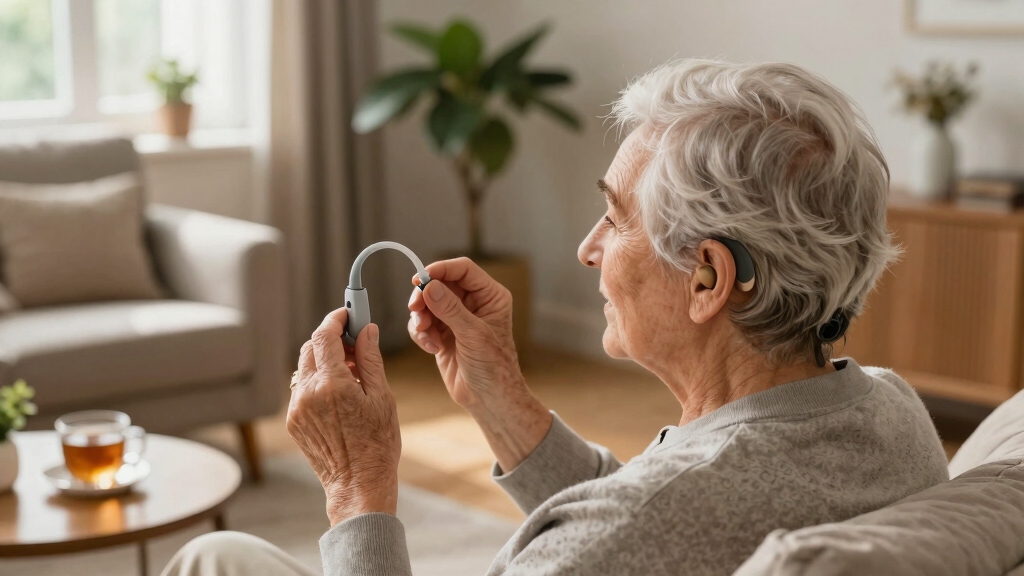

TL;DR
Hearing aids are customized medical devices aimed at treating hearing loss, while amplifiers are over-the-counter tools for mild issues or specific situations. Know which one suits your needs best to avoid ineffective or uncomfortable options.
Imagine hearing a song that’s just a little muffled, or struggling to catch what your boss is saying across the table. It’s frustrating — and often confusing.
Is a simple device enough to fix it, or do you need something more advanced? Today, we’re breaking down the difference between hearing amplifiers and hearing aids—what they are, how they work, and which one might actually help you.
Hearing Amplifiers vs Hearing Aids: The Difference That Matters
A louder world is not always a clearer one. Hearing aids process sound around an individual hearing profile; basic amplifiers broadly raise volume. Choosing between them starts with understanding what your ears actually need.
hearing amplifiers for mild hearing loss
As an affiliate, we earn on qualifying purchases.
As an affiliate, we earn on qualifying purchases.
Two devices. Two very different jobs.
The crucial distinction is not simply where a device is sold. It is whether the product is designed to treat hearing loss through regulated, hearing-specific technology or merely make environmental sounds louder.
Hearing aids
Regulated devices intended to address hearing loss. Prescription models are fitted by professionals; eligible adults in the US may also buy regulated OTC hearing aids for perceived mild-to-moderate loss.
- Programmed around hearing needs and frequency deficits
- Digital processing can prioritize speech and reduce noise
- Often includes feedback control, Bluetooth and rechargeable power
- Best suited to ongoing hearing difficulty
Hearing amplifiers
Usually general-purpose sound boosters, sometimes called personal sound amplification products. They are not a substitute for diagnosis or treatment of significant hearing loss.
- Raises sound broadly with little or no individual calibration
- May help with TV, lectures or quiet situational listening
- Can also amplify background noise and harsh sounds
- Most appropriate for limited, low-complexity use
digital hearing aids for adults
As an affiliate, we earn on qualifying purchases.
As an affiliate, we earn on qualifying purchases.
What changes when the technology is tailored?
Customization affects more than comfort. It determines which sounds are emphasized, how well speech survives background noise and whether the device adapts as the environment changes.
| Feature | Hearing aids | Basic amplifiers |
|---|---|---|
| Primary purpose | ✓ Address hearing loss | ~ Make environmental sound louder |
| Personalization | ✓ Frequency-specific programming | ✗ Typically one-size-fits-all |
| Speech in noise | ✓ Noise management and directional processing | ~ Background sound may rise with speech |
| Regulatory status | ✓ Regulated as medical devices | ✗ Not regulated as hearing-loss treatment |
| Professional support | ✓ Available with testing, fitting and follow-up | ~ Usually self-selected and self-adjusted |
| Best fit | Persistent mild-to-severe needs, depending on model and care pathway | Occasional listening support in simpler environments |
| Typical cost | $1,000–$6,000+ per pair; OTC hearing aids may cost less | Often below $200 |
over-the-counter hearing amplifiers
As an affiliate, we earn on qualifying purchases.
As an affiliate, we earn on qualifying purchases.
Hearing aids invest in clarity; amplifiers invest in volume.
These directional scores illustrate the relative technological emphasis of each device category. They are a comparison framework—not clinical performance measurements.
personalized hearing aids
As an affiliate, we earn on qualifying purchases.
As an affiliate, we earn on qualifying purchases.
Choose from evidence, not guesswork.
A short evaluation can reveal whether the problem involves certain frequencies, speech discrimination, one ear or a condition needing medical attention.
Notice the pattern
Track muffled speech, TV volume, listening fatigue, ringing and difficulty in noisy rooms.
Test your hearing
Use a professional assessment to identify severity, type and frequency-specific loss.
Match the device
Consider hearing profile, speech needs, lifestyle, dexterity, connectivity and budget.
Fit and verify
Set safe output, assess comfort and confirm that speech—not just sound—is clearer.
An amplifier may help
Occasional TV listening, a quiet lecture or another low-noise setting where broad amplification delivers a clear benefit at a comfortable volume.
Consider a hearing aid
Speech remains muffled, group conversation is exhausting or background noise repeatedly overwhelms understanding.
Seek prompt care
Sudden hearing change, one-sided loss, pain, drainage, severe dizziness or persistent ringing deserves professional medical evaluation.
The wrong device can create a louder version of the same problem.
Excessive or poorly controlled amplification may produce feedback, discomfort, fatigue and overwhelming background noise. It can also delay appropriate assessment. Start at a low volume, follow product limits and stop if sound causes pain, ringing or disorientation.
Better hearing begins before the device.
The most reliable path connects a real-world symptom to measured hearing needs, then matches technology and verifies the outcome.
Use an amplifier only when the need is mild, limited and clearly improved by simple volume. For recurring communication difficulty, begin with a hearing test and consider a regulated hearing aid matched to your needs. If an amplifier makes everything louder but speech no clearer, it is solving the wrong problem.
What’s the real difference between hearing amplifiers and hearing aids?
Hearing aids are medical devices prescribed by audiologists. They’re customized to your specific hearing profile, often with advanced features like noise reduction and Bluetooth connectivity.
Hearing amplifiers, on the other hand, are over-the-counter gadgets. They boost sound broadly, without tailoring to your needs, and are best for mild hearing issues or specific situations like watching TV.
For example, if you have moderate hearing loss, a hearing aid can be programmed to focus on speech clarity. An amplifier might just make everything louder — including background noise. This broad boost can sometimes lead to discomfort or confusion, especially if the amplification overwhelms your ears or amplifies unwanted sounds. The fundamental difference is that hearing aids offer targeted, nuanced assistance, which can significantly improve communication and quality of life. Meanwhile, amplifiers are more like volume boosters—simple, but often less effective and potentially frustrating because they lack specificity and can distort sound quality.
How regulation and customization change everything
Hearing aids are regulated medical devices. They require a prescription, fitting, and sometimes follow-up adjustments. This regulation ensures they meet safety and performance standards, but also means they are tailored specifically to your hearing loss, which can dramatically improve their effectiveness. This customization allows the device to address specific frequencies where you have difficulty, making speech clearer and reducing unwanted noise, which is crucial for daily communication.
Hearing amplifiers are sold over-the-counter, with minimal regulation. While this makes them more accessible and affordable, it also means they lack the precise calibration needed for more complex hearing issues. Using a non-customized amplifier for significant hearing loss can not only be ineffective but may also cause discomfort or further hearing damage if used improperly. This tradeoff highlights the importance of professional assessment—without it, you risk choosing a device that doesn’t suit your needs, leading to frustration or even harm. The regulation and customization differences are not just bureaucratic—they directly impact the user experience, safety, and the likelihood of achieving meaningful hearing improvement.
Compare the tech: What makes hearing aids better than amplifiers?
| Feature | Hearing Aids | Hearing Amplifiers |
|---|---|---|
| Customization | Highly personalized, tailored to your hearing loss, addressing specific frequencies and sound environments | |
| Technology | Advanced digital processing, noise filtering, feedback cancellation, AI-driven adjustments for dynamic environments | |
| Cost | $1,000 to $6,000 per pair, reflecting their complexity and customization | |
| Regulation | Regulated as medical devices, ensuring safety, efficacy, and quality control | |
| Suitability | Moderate to severe hearing loss, especially where clarity and speech understanding are critical | |
| Features | Connectivity options (Bluetooth), rechargeable batteries, discreet designs, feedback cancellation, AI features | |
| Ease of use | Requires professional fitting and adjustment, but offers personalized comfort and performance | |
| Effectiveness | Significantly improves speech understanding, reduces listening effort, enhances quality of life |
This technological sophistication makes hearing aids far more effective for complex hearing needs. They adapt to different environments, filter out background noise, and deliver clarity where amplifiers often fall short. While the higher cost might seem daunting, the tradeoff is a device that genuinely improves your communication and reduces listening fatigue. Amplifiers, lacking this level of processing, can sometimes amplify unwanted sounds or distort speech, leading to frustration and limited benefit. Therefore, the technological edge of hearing aids directly correlates with their superior performance, especially in challenging listening situations.
When a hearing amplifier might actually help you
If your hearing loss is mild or situational, a hearing amplifier can sometimes be a practical solution. For example, if you’re in a quiet environment or watching TV, an amplifier can enhance sound without the need for a costly device. These situations often involve minimal background noise, where broad amplification can improve your experience without overwhelming your ears.
However, it’s important to understand the limitations. If you notice that understanding speech becomes difficult or the muffling persists even with an amplifier, it indicates that your hearing loss may require a more sophisticated approach—like a professionally fitted hearing aid. Relying solely on amplifiers in these cases can lead to frustration, as they may not address the specific frequencies or distort speech clarity. Additionally, overusing amplifiers without proper guidance can cause discomfort or even temporary hearing damage if the volume is set too high. Recognizing when amplifiers are appropriate—and when professional help is needed—is key to maintaining hearing health and avoiding unnecessary frustration.
What happens if you pick the wrong device?
Using a device that’s not suited for your level of hearing loss can cause discomfort or even worsen your hearing issues. Over-amplification can lead to feedback, ringing, or a sense of disorientation, especially if the device isn’t calibrated for your specific needs. For example, cranking up a cheap amplifier to compensate for moderate loss might make background noise overwhelming and cause fatigue, which can discourage consistent use and hamper your hearing progress.
Choosing the wrong device may also result in a cycle of frustration, where you feel that nothing helps, leading to neglect of proper treatment. In some cases, improper amplification can contribute to further hearing deterioration or damage, especially if used improperly or excessively. The key is understanding that the right device, tailored to your specific hearing profile, can make a significant difference—both in comfort and in maintaining your hearing health. Always consult a professional before making a purchase to avoid these pitfalls and ensure your hearing needs are properly addressed.
How to choose the right device for your needs
- Get a professional hearing test. Know your level and type of hearing loss, which can reveal specific frequency deficits and help determine the best technology.
- Decide if you want a medical device or a simple amplifier based on severity, lifestyle, and budget. Consider how much you rely on clear speech and environmental sounds.
- Consider your lifestyle. Do you need Bluetooth connectivity for phone calls, rechargeable batteries for convenience, or a discreet design for social situations? These features can significantly impact daily comfort and usability.
- Set a realistic budget. Remember, investing in a quality hearing aid can be more cost-effective over time, reducing frustration and improving quality of life.
- Consult an audiologist if unsure. They can guide you through the options, ensuring you select a device that matches your specific hearing profile and lifestyle needs.
For example, if you’re in your 50s with mild loss, an OTC device might be enough. But if you have trouble understanding speech daily, investing in a hearing aid makes sense—and might save you money and frustration in the long run.
Key takeaways from this guide
- Hearing aids are tailored, regulated devices best for moderate to severe hearing loss. Their customization and advanced technology make them more effective for complex needs.
- Hearing amplifiers are over-the-counter tools suited for mild issues or situational use, but lack the precision for significant hearing loss.
- Choosing the wrong device can lead to discomfort, frustration, or worsening hearing problems. Proper assessment ensures appropriate device selection.
- Always get a professional hearing test before buying any device. This step is crucial for accurate diagnosis and effective treatment planning.
- Advances in OTC technology are expanding options, but they are not a substitute for personalized, professionally fitted hearing aids when needed.
Frequently Asked Questions
Can a hearing amplifier replace a hearing aid?
Not really. Amplifiers are designed for mild issues and lack the customization and advanced features of hearing aids. If you have moderate or severe hearing loss, a hearing aid is much more effective and appropriate.
Are OTC hearing devices reliable?
They can help with mild hearing difficulties, especially in specific situations. However, they are less effective for more significant loss and should be used with caution, ideally after a professional assessment.
How do I know if I need a hearing aid or just an amplifier?
The best step is to see an audiologist for a hearing test. They can tell you whether your loss is mild enough for an amplifier or if you need a custom-fitted hearing aid.
What are the dangers of using an amplifier if I have significant hearing loss?
Using an amplifier that’s not suited for your level can cause discomfort, feedback, or even worsen your hearing over time. Always match your device to your actual hearing needs.
How much do hearing aids and amplifiers cost?
Hearing aids typically cost between $1,000 and $6,000 per pair. Amplifiers are far cheaper, often under $200, but may not provide the same benefits for your level of hearing loss.
Conclusion
Understanding the difference between hearing amplifiers and hearing aids helps you avoid wasting money or causing more harm. It’s all about matching the device to your actual needs, not just what’s available on the shelf.
When in doubt, a quick visit to an audiologist can save you frustration and ensure you get the right support for your hearing. Clearer hearing isn’t just about louder sound — it’s about understanding what matters most.