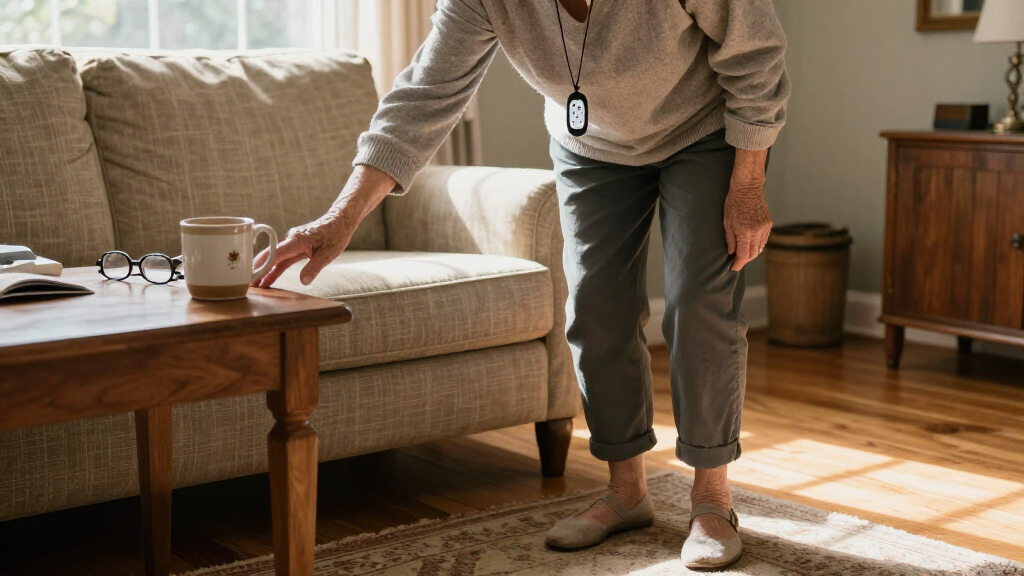

Fall detection devices for seniors range from monitored medical alert systems to GPS watches and caregiver-only room sensors, so the right choice depends on where help must reach the wearer. I’d put the Bay Alarm Medical SOS Mobile GPS Medical Alert System first for buyers prioritizing a medical alert service with mobile coverage, while the Safety+ 4G Medical Alert System stands out for GPS-equipped protection and the SecuLife SOS Wristband for wrist-worn GPS and two-way calling. The main tradeoffs are professional monitoring versus calling family directly, wearable comfort versus detection reliability, and recurring service requirements versus simpler devices. No fall detector can identify every fall or replace a response plan. Read on for how the 14 options differ and which type fits each need.

Turn quiet afternoons into listening time
- Thousands of audiobooks, podcasts and originals
- Listen on your phone, tablet or Echo — also offline
- Cancel anytime
Complete the kit


Key Takeaways
- Monitoring model separates the main choices: Bay Alarm Medical and Safety+ are medical alert systems, while several SecuLife and smartwatch options focus on GPS, two-way calling, or alerts to contacts; buyers should confirm who answers an alert before choosing.
- GPS is most useful outside the home: Mobile systems and GPS watches can share location, but that benefit depends on cellular coverage, battery life, and an active service or communication plan.
- Wear style affects daily compliance: The lineup includes pendants, wristbands, watches, and a caregiver bed-and-motion sensor. The device a senior will keep on is more useful than a feature-rich wearable left on a nightstand.
- Fall detection is not the same as a complete response service: Automatic detection, two-way communication, emergency dispatch, and caregiver notification are distinct features; buyers should check which steps each product supports.
- Caregiver sensors solve a different problem: Nesthao’s bed and motion alarm can notify a caregiver nearby, but it is not a wearable GPS alert or a substitute for a mobile medical alert system.
| Family First Alert MG Mini Medical Alert Pendant with GPS and Optional Fall Detection | 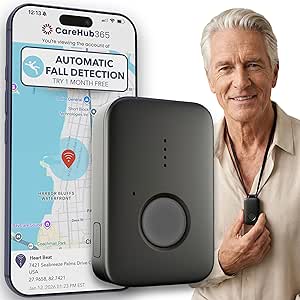 | Best for 24/7 Operator Support | Brand: Family First Alert | Model: MGMini-Black | Connectivity: 4G LTE; AT&T and Verizon networks | VIEW LATEST PRICE | See Our Full Breakdown |
| Mercury Alert AI Senior Fall Monitor |  | Best Wearable-Free Home Monitor | Brand: Mercury Alert AI | Model: MERCURY-ALERT-1 | Sensor technology: AI-powered passive infrared and motion sensing with machine learning analytics | VIEW LATEST PRICE | See Our Full Breakdown |
| LogicMark Guardian Alert 911 Plus Emergency Pendant |  | Best for Avoiding Monthly Fees | Brand: LogicMark | Model: 40711 | Power and battery: Battery powered; lithium-ion | VIEW LATEST PRICE | See Our Full Breakdown |
| SecuLife SOS Wristband with Fall Detection, GPS Tracking, and Two-Way Calling |  | Best Wristband for Active Wearers | Brand: SecuLife | Connectivity: Cellular | Emergency features: Fall alerts, SOS, GPS tracking, geofencing, and two-way calling | VIEW LATEST PRICE | See Our Full Breakdown |
| SecuLife Medical Alert Pendant for Seniors with Fall Detection, GPS Tracking, and Two-Way Calling |  | Best for Longer Battery Life | Brand: SecuLife | Connectivity: 4G LTE cellular | Emergency features: Fall alerts, SOS calling, two-way calling, GPS tracking, and geofencing | VIEW LATEST PRICE | See Our Full Breakdown |
| CoCo BT2-X Emergency Alert Smartwatch for Seniors, Silver | 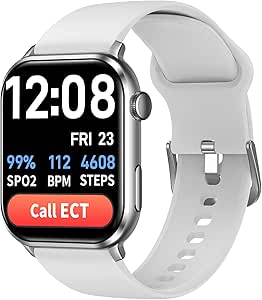 | Best for Smartphone-Connected Caregiving | Operating system: Realtek8763EW | Display: 1.85-inch HD | Emergency features: Fall detection with 20-second countdown and automatic Emergency Care Team alerts; one-touch SOS | VIEW LATEST PRICE | See Our Full Breakdown |
| Safety+ 4G Wrist-Worn Medical Alert System with Fall Detection |  | Best Wrist-Worn Pick for 24/7 Monitoring | Connectivity: 4G cellular | Monitoring: 24/7 emergency monitoring | Fall detection: Automatic | VIEW LATEST PRICE | See Our Full Breakdown |
| SkyAngelSPORT Fall Detection Emergency Watch |  | Best for Direct 911 Calling Without a Recurring Fee | Emergency calling: SOS button calls 911 over cellular | Fall detection: Can initiate an emergency call after detecting certain serious falls | Communication: Two-way voice | VIEW LATEST PRICE | See Our Full Breakdown |
| Fall Detection GPS Watch for Seniors with SOS, Two-Way Communication, and Health Tracking |  | Best for App-Based Location and Family Check-Ins | Operating system: Android Wear 1.0 | Connectivity: 4G cellular | GPS: Built-in GPS with geofencing | VIEW LATEST PRICE | See Our Full Breakdown |
| Safety+ 4G Medical Alert System with Fall Detection and GPS |  | Best for Longer Battery Life and Flexible Wear | Connectivity: Nationwide 4G | Monitoring: 24/7 emergency monitoring | Fall detection: Automatic | VIEW LATEST PRICE | See Our Full Breakdown |
| Seculife Medical Alert Smartband for Seniors with Fall Detection, GPS Tracking, and Two-Way Calling |  | Best for Direct Family Contact | Connectivity: GPRS, GPS, and satellite | Fall and SOS features: Fall alerts and SOS calling | Calling: Two-way calls; automatic answering for approved contacts | VIEW LATEST PRICE | See Our Full Breakdown |
| Nesthao Wireless Bed and Motion Sensor Alarm for Caregivers |  | Best for Bedside Fall Prevention | Model: KS-SF20R | Sensor use: Bed-exit or room-exit motion alert | Sensor technology: Contact sensor | VIEW LATEST PRICE | See Our Full Breakdown |
| Senior Smart Watch with Fall Detection, GPS Tracking, and SOS Alerts |  | Best for Reminders and Caregiver Monitoring | Operating system: Android Wear 1.0 | Connectivity: 4G cellular | Location: Built-in GPS with geofencing | VIEW LATEST PRICE | See Our Full Breakdown |
| Bay Alarm Medical SOS Mobile GPS Medical Alert System |  | Best for Operator-Assisted Emergency Calls | Connectivity: Verizon 4G LTE cellular | Location: GPS | Emergency response: One-button connection to a trained operator with two-way speaker | VIEW LATEST PRICE | See Our Full Breakdown |
| fall detection devices for senior | Connectivity | Water resistance |
|---|---|---|
| Family First Alert MG Mini Med | 4G LTE; AT&T and Verizon networks | Water resistant; suitable for shower use |
| Mercury Alert AI Senior Fall M | — | — |
| LogicMark Guardian Alert 911 P | — | Water resistant |
| SecuLife SOS Wristband with Fa | Cellular | IP67 |
| SecuLife Medical Alert Pendant | 4G LTE cellular | IP67 waterproof |
| CoCo BT2-X Emergency Alert Sma | Bluetooth | 5 feet |
| Safety+ 4G Wrist-Worn Medical | 4G cellular | Water-resistant |
| SkyAngelSPORT Fall Detection E | Cellular | Water-resistant for everyday activities |
| Fall Detection GPS Watch for S | 4G cellular | IP67 |
| Safety+ 4G Medical Alert Syste | Nationwide 4G | — |
| Seculife Medical Alert Smartba | GPRS, GPS, and satellite | IP67; listed depth of 1 meter |
| Nesthao Wireless Bed and Motio | — | — |
| Senior Smart Watch with Fall D | 4G cellular | IP67; listed depth of 1 meter |
| Bay Alarm Medical SOS Mobile G | Verizon 4G LTE cellular | Water-resistant |
More Details on Our Top Picks
Family First Alert MG Mini Medical Alert Pendant with GPS and Optional Fall Detection
The MG Mini is a strong fit for seniors who want a live operator available around the clock, rather than a device that only alerts family members. Its 4G LTE connection uses AT&T and Verizon networks, while GPS can help locate the wearer when they are away from home. Compared with the SecuLife Medical Alert Pendant, which is built around calls and alerts to preselected contacts, this model centers on trained monitoring staff.
The tradeoff is that fall detection is an optional paid add-on, on top of the required monitoring subscription. Its listed battery life is up to five days, though the product recommends daily charging, which may be a more frequent routine than that figure suggests. Water resistance supports shower use, but this is still a wearable that must be charged and kept on the person for fall alerts to help.
Pros:- 24/7 access to trained emergency operators
- 4G LTE coverage through AT&T and Verizon networks
- Water resistant for shower use
- Up to five days of battery life per charge
Cons:- Fall detection is an optional add-on rather than a standard feature
- Requires a monthly monitoring subscription
- Recommended daily charging may be inconvenient despite the listed battery life
Best for: Seniors who want 24/7 access to trained operators, GPS support, and a pendant that can be worn in the shower.
Not ideal for: People who want fall detection included without an add-on, or who do not want an ongoing monitoring subscription and charging routine.
- Brand:Family First Alert
- Model:MGMini-Black
- Connectivity:4G LTE; AT&T and Verizon networks
- Emergency features:24/7 monitoring, SOS button, GPS location; fall detection optional
- Water resistance:Water resistant; suitable for shower use
- Battery:Rechargeable; up to five days per charge
- Included items:Pendant, charging dock, two lanyards, belt clip, charging brick, and cord
- Warranty:30 days
Our verdict“Choose the MG Mini if live operator support matters more than avoiding subscription costs or keeping fall detection included.”
Mercury Alert AI Senior Fall Monitor
Mercury Alert AI takes a different approach from the wearable pendants in this roundup: it uses wall-mounted motion sensing to monitor a room without asking the senior to wear or charge a device. It can flag falls, wandering, bed or room exits, and activity patterns, then send caregivers alerts by phone call, push notification, or text. That makes it a better match than the SecuLife SOS Wristband for someone who regularly forgets or refuses to wear an alert device.
Its limits are tied to that home-based design. The monitor needs AC power and a subscription, and its stated range is 30 feet, so it is not a GPS-based way to follow someone outside the monitored space. Unlike a pendant with two-way calling, it also does not give the wearer a button to speak with help. I would choose it for caregiver awareness at home, not as a complete substitute for an emergency-response wearable.
Pros:- Monitors for falls and movement without requiring a wearable
- Can alert caregivers by phone call, push notification, and text
- Tracks activity patterns and provides safety insights
- Adhesive mounting avoids drilling
Cons:- Requires a subscription
- Needs a corded AC power connection
- Its 30-foot range limits monitoring to the covered home area
Best for: Caregivers supporting a senior who will not reliably wear a pendant or wristband and who needs home movement alerts.
Not ideal for: Seniors who need emergency communication while away from home, or households seeking monitoring without a subscription or corded power.
- Brand:Mercury Alert AI
- Model:MERCURY-ALERT-1
- Sensor technology:AI-powered passive infrared and motion sensing with machine learning analytics
- Detection:Falls, wandering, bed and room exits, and activity patterns
- Maximum range:30 feet
- Power:Corded AC power; no battery required
- Mounting:Wall mount; adhesive mounting strip included
- Dimensions and weight:3.5 × 3 × 3 inches; 4 ounces
- Subscription:Required
Our verdict“Pick Mercury Alert AI for passive, in-home oversight when wearing compliance is the main concern, not for portable emergency response.”
LogicMark Guardian Alert 911 Plus Emergency Pendant
The Guardian Alert 911 Plus stands apart by combining fall detection and two-way voice with a connection to 911 that does not require a landline or monthly fee. That makes it appealing to buyers who want a direct emergency route without the ongoing monitoring subscription required by the Family First Alert MG Mini. Its water-resistant pendant can be used at home, including in the bath or shower, where falls can be especially concerning.
This is a more direct emergency device than a caregiver-oriented monitor: the stated communication is with emergency personnel, rather than a system built around family app alerts and activity insights. The product information does not specify battery life or coverage range, so buyers have less detail for planning charging and understanding where it will work. I would weigh that uncertainty against the no-monthly-fee design, particularly if reliable coverage throughout a home is a priority.
Pros:- No monthly fees listed
- Connects to 911 without a landline
- Fall detection can alert when the wearer cannot press the help button
- Two-way voice communication with emergency personnel
Cons:- Battery life is not specified in the product information
- Coverage range is not specified
- Direct 911 response differs from a monitored service that can first contact a trained operator
Best for: Seniors who want fall detection and direct 911 communication without a monthly monitoring fee or landline.
Not ideal for: Buyers who need clearly documented battery life, coverage range, or caregiver app alerts before choosing a device.
- Brand:LogicMark
- Model:40711
- Power and battery:Battery powered; lithium-ion
- Network compatibility:4G LTE
- Communication:Two-way voice; connects to 911
- Fall detection:Yes
- Water resistance:Water resistant
- Landline and monthly fees:No landline required; no monthly fees listed
- Dimensions and weight:9 × 7.1 × 1.9 inches; 0.28 kg
Our verdict“Choose the Guardian Alert 911 Plus if avoiding recurring fees is your priority and you are comfortable with the unspecified battery and range details.”
SecuLife SOS Wristband with Fall Detection, GPS Tracking, and Two-Way Calling
The SecuLife SOS Wristband combines automatic fall alerts, GPS tracking, and two-way calling in a screen-free format. Its wrist placement may suit seniors who dislike a pendant around the neck, while geofence notifications give caregivers a way to know when the wearer leaves a set area. Compared with the Mercury Alert AI Senior Fall Monitor, this is the portable option: it travels with the wearer instead of monitoring movement only within a home space.
The biggest compromise is one-day battery life. Frequent charging can create gaps if the wristband is forgotten on its dock, a meaningful concern for any fall-detection device. It also requires a monthly subscription, and its IP67 rating is described as splash resistance rather than a guarantee that every kind of water exposure is suitable. I would favor it over a longer-life pendant only when wrist wear and location features matter more than reducing charging frequency.
Pros:- Automatic fall alerts and one-button SOS calling
- GPS tracking with geofence notifications
- Two-way calling with hands-free auto-answer
- Screen-free design with IP67 splash resistance
Cons:- Listed battery life is only one day
- Requires a monthly subscription
- Plastic enclosure may be less appealing to buyers seeking a more substantial-feeling wearable
Best for: Seniors who prefer a screen-free wristband and need portable fall alerts, GPS location, and geofence notifications.
Not ideal for: People who may forget daily charging or want a device with longer listed battery life, such as the SecuLife Medical Alert Pendant.
- Brand:SecuLife
- Connectivity:Cellular
- Emergency features:Fall alerts, SOS, GPS tracking, geofencing, and two-way calling
- Battery life:1 day
- Battery capacity:680 mAh
- Water resistance:IP67
- Enclosure material:Plastic
- Warranty:1 year
- Subscription:Required; listed at $25 per month
Our verdict“Choose this wristband when wrist comfort and portable GPS features outweigh the inconvenience of daily charging and a subscription.”
SecuLife Medical Alert Pendant for Seniors with Fall Detection, GPS Tracking, and Two-Way Calling
This SecuLife pendant earns its place for combining fall detection, GPS, and two-way calling with a listed battery life of up to six days. That longer interval gives it a practical advantage over the SecuLife SOS Wristband, whose listed battery life is one day, especially for seniors who may not remember frequent charging. GPS location and customizable geofence alerts also make the pendant more useful beyond the home than a fixed monitor such as Mercury Alert AI.
The pendant sends SOS alerts to preselected contacts, so it is better suited to families who can respond than to buyers specifically seeking 24/7 operator monitoring. Its IP67 waterproof rating supports use around water, while the easy-to-read display may help users check device information. Battery life is not a fixed promise: the specifications list an average of five days as well as up to six, and a monthly subscription is required.
Pros:- Fall detection and SOS alerts go to preselected contacts
- GPS tracking with geofence alerts and location history
- Two-way calling with hands-free auto-answer
- IP67 waterproof rating and up to six days of listed battery life
Cons:- Requires a $20 monthly subscription
- Battery life varies; specifications also list an average of five days
- Alerts go to preselected contacts rather than a stated 24/7 operator service
Best for: Seniors who want a portable pendant with fall alerts, GPS and two-way calling, plus fewer charging sessions than a one-day wristband.
Not ideal for: Households that want trained 24/7 operator monitoring or cannot reliably respond to alerts sent to preselected contacts.
- Brand:SecuLife
- Connectivity:4G LTE cellular
- Emergency features:Fall alerts, SOS calling, two-way calling, GPS tracking, and geofencing
- Water resistance:IP67 waterproof
- Battery capacity:1000 mAh
- Battery life:Up to six days; listed average is five days
- Subscription:$20 per month
- Included items:Charging cable, SIM card, and user manual
- Compatibility:Android and iOS devices
Our verdict“Choose this pendant for GPS-enabled fall alerts and less frequent charging, provided family contacts can handle incoming emergencies.”
CoCo BT2-X Emergency Alert Smartwatch for Seniors, Silver
The CoCo BT2-X is a fit for seniors who want wrist-based fall detection alongside everyday smartwatch functions. After a detected fall, it starts a 20-second countdown before sending alerts to its Emergency Care Team, and a separate SOS button gives the wearer a way to request help directly. Caregivers can use the app for alerts and medication reminders, while Bluetooth calling and a large display may make routine communication easier. Unlike the Safety+ 4G Wrist-Worn Medical Alert System, the CoCo relies on a paired smartphone for connectivity and location rather than providing standalone cellular monitoring. That avoids a stated monthly monitoring plan, but puts more responsibility on keeping the phone nearby and connected. Its heart-rate and other health readings are wellness features, not medical diagnoses.
Pros:- Fall detection uses a countdown before automatic emergency alerts are sent.
- One-touch SOS provides a separate way to request help.
- Caregiver app supports alerts and remote medication reminders.
- Large display, rotating crown, and Bluetooth calling add everyday usability.
Cons:- Location tracking depends on a paired smartphone.
- Bluetooth connectivity is not the same as standalone cellular emergency monitoring.
- Health metrics are wellness information, not medical diagnosis.
Best for: Seniors who keep an iOS or Android phone nearby and want fall alerts, caregiver reminders, and smartwatch calling in one device.
Not ideal for: People who need independent GPS tracking or 24/7 cellular emergency monitoring without carrying a paired smartphone.
- Operating system:Realtek8763EW
- Display:1.85-inch HD
- Emergency features:Fall detection with 20-second countdown and automatic Emergency Care Team alerts; one-touch SOS
- Connectivity:Bluetooth
- Location:Via paired smartphone
- Health metrics:Heart rate, blood oxygen (SpO2), sleep, stress, and breathing
- Water resistance:5 feet
- Compatibility:iOS and Android smartphones
- Materials and color:Zinc alloy case; silicone grey band; silver finish
Our verdict“Choose the CoCo BT2-X if a senior already carries a smartphone and wants fall alerts with caregiver tools, but choose Safety+ for standalone monitored service.”
Safety+ 4G Wrist-Worn Medical Alert System with Fall Detection
For someone who needs a dedicated emergency service rather than a smartwatch, this Safety+ wrist unit pairs automatic fall detection with 24/7 emergency monitoring over nationwide 4G. Built-in GPS and a caregiver app add location and activity updates, and use does not depend on the wearer having a smartphone. That makes it a more direct choice for monitored response than the CoCo BT2-X, whose location and connectivity rely on a paired phone. The tradeoff is an ongoing service commitment: activation is required, and the listed plan costs $40 per month after the first month. A charging dock and water-resistant design suit daily wear, but buyers should weigh the service requirement against the more flexible, app-dependent approach of a consumer smartwatch.
Pros:- Automatic fall detection is paired with 24/7 emergency monitoring.
- Nationwide 4G and GPS support use without a smartphone.
- Caregiver app provides location and activity updates.
- Includes a rechargeable charging dock and water-resistant design.
Cons:- Activation is required before use.
- Service costs $40 per month after the first month.
- The product is focused on medical alerts rather than broad smartwatch functions.
Best for: Seniors who want a wrist-worn device with cellular GPS and access to 24/7 emergency monitoring without carrying a smartphone.
Not ideal for: Buyers who want to avoid a recurring service plan or prefer a general-purpose smartwatch with broader everyday features.
- Connectivity:4G cellular
- Monitoring:24/7 emergency monitoring
- Fall detection:Automatic
- Location tracking:GPS
- Caregiver app:Included
- Battery:Rechargeable
- Water resistance:Water-resistant
- Mounting and weight:Wrist-worn; 7.4 g
- Service:Activation required; $40 per month after the first month
Our verdict“Pick this Safety+ wrist system when monitored cellular response matters more than avoiding a subscription or getting full smartwatch features.”
SkyAngelSPORT Fall Detection Emergency Watch
The SkyAngelSPORT takes a different path from the monitored Safety+ devices: its SOS button can call 911 directly over cellular, and certain serious falls can trigger an automatic emergency call. Two-way voice lets the wearer speak with dispatchers, while built-in GPS may help identify location. The lack of a recurring service fee is a meaningful distinction for buyers who want an emergency-calling watch without a monitoring subscription. In exchange, response and location performance depend on local 911 capabilities, and the maker warns that fall detection may miss some events. Compared with the CoCo BT2-X, it does not lean on a paired smartphone for GPS, but its emergency route is direct dispatch rather than a dedicated monitoring team. Wellness tracking is included, though fall response should be the deciding factor.
Pros:- SOS button can call 911 over a cellular network without a smartphone.
- Automatic calls may start after detection of certain serious falls.
- Two-way voice supports conversation with emergency dispatchers.
- Built-in GPS and wellness tracking are included without a recurring service fee.
Cons:- Fall detection may not identify every fall.
- Location accuracy and response depend on local 911 capabilities.
- Direct 911 calling differs from the dedicated monitoring service offered by Safety+.
Best for: Seniors who want cellular access to 911, two-way conversation, and fall-triggered calling without a recurring service fee.
Not ideal for: People who need a dedicated monitored emergency team or want assurance that every fall will be detected and reported.
- Emergency calling:SOS button calls 911 over cellular
- Fall detection:Can initiate an emergency call after detecting certain serious falls
- Communication:Two-way voice
- GPS:Built-in
- Connectivity:Cellular
- Water resistance:Water-resistant for everyday activities
- Wellness features:Heart rate monitoring, blood pressure tracking, blood oxygen measurement, and pedometer
- Operating system:Android Wear 1.5, AtsOS
- Recurring service fee:None
Our verdict“Choose SkyAngelSPORT for direct cellular 911 calling without a recurring fee, but choose Safety+ if a dedicated monitoring service is the priority.”
Fall Detection GPS Watch for Seniors with SOS, Two-Way Communication, and Health Tracking
This watch suits households that want GPS and geofence alerts alongside fall notifications, SOS contacts, and app-based check-ins. Its 4G connection supports video calls and voice messaging, giving caregivers more ways to stay in touch than the direct-to-dispatch SkyAngelSPORT. There is an important SIM distinction, though: the included data-only SIM provides one year of data service but does not support voice calls; voice calling requires a separate compatible SIM. That extra setup may frustrate buyers seeking a ready-to-use phone replacement. The IP67 rating and magnetic charging cable add practical appeal for routine wear, while health readings such as blood pressure are reference measurements rather than clinical results. This is better suited to family communication and location oversight than to buyers seeking 24/7 professional emergency monitoring.
Pros:- GPS and geofencing support caregiver location alerts.
- Fall detection and SOS notifications can alert preset emergency contacts.
- Video calls and voice messaging offer family check-in options.
- IP67 water resistance and magnetic charging support everyday use.
Cons:- Included data-only SIM does not support voice calls.
- Voice calls require a separate compatible SIM.
- Blood pressure is a reference measurement, not a medical reading.
Best for: Families who want app-based GPS and geofence alerts, video check-ins, and fall notifications for a senior who can use a touchscreen.
Not ideal for: Buyers who expect the included SIM to support voice calls or need 24/7 professional emergency monitoring.
- Operating system:Android Wear 1.0
- Connectivity:4G cellular
- GPS:Built-in GPS with geofencing
- Communication:Video calls and voice messaging; voice calls require a compatible SIM
- Health tracking:Heart rate, blood pressure reference, blood oxygen, sleep, steps, and temperature
- Water resistance:IP67
- Memory:1 GB
- Included data service:Preinstalled data-only SIM with one year of data service
- Design:Crimson watch with black rubber band
Our verdict“Choose this watch for family-managed location alerts and video check-ins, but not if you need ready-to-use voice calling or professional monitoring.”
Safety+ 4G Medical Alert System with Fall Detection and GPS
This Safety+ model is a strong match for seniors who may not want a wrist device: it can be worn with a magnetic-clasp lanyard or belt clip and offers up to six days of battery life. Like the Safety+ wrist system, it combines automatic fall detection, GPS, caregiver app access, and 24/7 emergency monitoring over nationwide 4G. The longer stated battery life and multiple wear options distinguish it from that wrist-worn version, while the lanyard or clip may be easier for someone who dislikes watches. The tradeoff is shared: service is included for the first month, then costs $40 per month. Compared with the SkyAngelSPORT, this provides a dedicated monitoring service rather than relying on a direct 911 call, but it requires an ongoing subscription.
Pros:- Automatic fall detection and 24/7 emergency monitoring use nationwide 4G.
- GPS and caregiver app provide location, activity, battery, and emergency alerts.
- Up to six days of battery life can reduce charging frequency.
- Lanyard and belt clip offer alternatives to wrist wear.
Cons:- A $40 monthly subscription starts after the included first month.
- Requires regular charging despite the stated battery life of up to six days.
- Pendant or belt-clip wear may not suit seniors who prefer a watch.
Best for: Seniors who want 24/7 monitored fall response but prefer a lanyard or belt clip and fewer charging interruptions.
Not ideal for: People who will not wear a pendant or clipped device, or who want to avoid a monthly monitoring subscription.
- Connectivity:Nationwide 4G
- Monitoring:24/7 emergency monitoring
- Fall detection:Automatic
- Location:GPS
- Battery life:Up to 6 days
- Wear options:Lanyard with magnetic clasp or belt clip
- Design:Water-resistant
- Included items:Medical alert device, charging dock with power adapter, lanyard, and belt clip
- Service:First month included; $40 per month afterward
Our verdict“Choose this Safety+ system if monitored fall response, longer battery life, and non-wrist wear matter more than avoiding a monthly fee.”
Seculife Medical Alert Smartband for Seniors with Fall Detection, GPS Tracking, and Two-Way Calling
The Seculife Medical Alert Smartband suits seniors whose caregivers want location features and a direct way to reach them. After a detected fall or a three-second SOS press, it can call preselected contacts; approved contacts can also call the band and have it answer automatically. That makes it more family-centered than the Bay Alarm Medical SOS Mobile GPS, which connects the wearer to a trained operator instead. GPS, geofencing, and a year of location history give caregivers more context than a basic alert band, while the large SOS button keeps manual help requests straightforward. The tradeoff is ongoing service cost and a listed one-day battery life, which calls for a daily charging routine. I’d choose it over the Nesthao sensor for someone who needs a wearable alert away from the bed, not just room-exit monitoring.
Pros:- Can automatically contact selected people after a detected fall or SOS activation.
- GPS, geofencing, and one year of location history support caregiver follow-up.
- Two-way calling includes automatic answering for approved contacts.
- Large SOS button and IP67 water-resistance rating support everyday wear.
Cons:- Service requires a subscription starting at $25 per month.
- Listed battery life is one day, so regular charging is part of use.
Best for: Seniors who can wear and charge a smartwatch daily and want fall alerts, GPS monitoring, and calls routed to family contacts.
Not ideal for: People who need long stretches between charges, or households that prefer a trained operator to answer emergency calls.
- Connectivity:GPRS, GPS, and satellite
- Fall and SOS features:Fall alerts and SOS calling
- Calling:Two-way calls; automatic answering for approved contacts
- Location features:GPS tracking and geofencing; one year of location history
- Water resistance:IP67; listed depth of 1 meter
- Battery:680 mAh lithium-polymer; listed average life of 1 day
- Health metrics:Heart rate, blood oxygen, and body temperature
- Compatibility:iOS and Android
- Service:Subscription required; starts at $25 per month
Our verdict“Choose this band if family-directed calling and GPS matter more than avoiding daily charging or a recurring subscription.”
Nesthao Wireless Bed and Motion Sensor Alarm for Caregivers
The Nesthao takes a different approach to fall response: it alerts a caregiver when someone gets out of bed or leaves a monitored area, rather than detecting a fall after it happens. That makes it a useful room-level complement to a wearable such as the Seculife Medical Alert Smartband, not a substitute for a device that can call for help wherever the wearer goes. The remote pager can alert a caregiver without sounding an alarm in the person’s room, and its five volume levels plus LED indicator offer flexibility for different homes. Its stated range reaches 918 feet in open areas, but walls and layout can reduce that distance, so placement and range checks matter. I’d favor it for nighttime supervision; skip it if the senior needs a portable emergency alert outdoors.
Pros:- Can alert caregivers when someone gets out of bed or leaves a room.
- Remote pager keeps alerts out of the monitored person’s room.
- Sound and LED notifications with five volume levels provide alert options.
- Sensor supports alkaline batteries or Micro USB power.
Cons:- The 918-foot range is specified for open areas and may be shorter indoors.
- Sensor placement and direction need to be tested in the intended room.
Best for: Caregivers monitoring a senior who may leave bed or a room unattended, especially overnight or during periods when a caregiver is nearby.
Not ideal for: Seniors who spend time alone outside the monitored area or need a wearable device that can summon help after a fall.
- Model:KS-SF20R
- Sensor use:Bed-exit or room-exit motion alert
- Sensor technology:Contact sensor
- Stated range:Up to 918 feet (182 m) in open areas
- Alert types:LED and sound
- Volume settings:Five levels
- Power:Alkaline batteries or Micro USB
- Included batteries:3 AA for pager and 3 AAA for sensor
- Included items:Caregiver pager, motion sensor, Micro USB cable, double-sided tape, screw kit, and manual
Our verdict“Pick the Nesthao for caregiver awareness of room exits, but pair it with a wearable alert if the senior needs help beyond the monitored space.”
Senior Smart Watch with Fall Detection, GPS Tracking, and SOS Alerts
This smartwatch is a stronger fit for households that want safety alerts alongside daily prompts and activity tracking. Fall detection, SOS alerts, GPS geofencing, and medication reminders put it closer to an all-day caregiver tool than the Nesthao Wireless Bed and Motion Sensor, which only monitors a location such as a bed or doorway. The main catch is easy to miss: its preinstalled SIM provides data service, not voice calls. Two-way calling requires a separate compatible voice-enabled SIM, so buyers should check that service arrangement before relying on it for urgent conversations. Its IP67 rating and caregiver app support regular wear and remote monitoring, but the product data does not specify battery life. I’d choose this over the Seculife smartband for reminder features, but not if out-of-box voice calling is a must.
Pros:- Combines fall detection and SOS alerts with GPS tracking and geofencing.
- Medication and sedentary reminders add support beyond emergency alerts.
- Caregiver app works with iOS and Android devices.
- IP67 water-resistance rating and magnetic charging cable support routine wear.
Cons:- The included data-only SIM does not support voice calls.
- Voice calling requires a separate compatible voice-enabled SIM.
- Battery life is not specified in the supplied product details.
Best for: Caregivers seeking a wrist-worn fall alert with GPS, medication reminders, and app monitoring, and who can arrange a compatible voice-enabled SIM if calling is needed.
Not ideal for: Buyers who need voice calling to work with the included SIM or who want a clearly specified battery runtime before choosing.
- Operating system:Android Wear 1.0
- Connectivity:4G cellular
- Location:Built-in GPS with geofencing
- Water resistance:IP67; listed depth of 1 meter
- Safety features:Fall alerts, SOS alerts, and medication reminders
- Health features:Heart rate, blood pressure reference, and blood oxygen monitoring
- Compatibility:Android and iOS caregiver apps
- Included SIM:Preinstalled data-only SIM with one year of free data service
- Voice calling:Requires a separate compatible voice-enabled SIM
Our verdict“Choose this smartwatch for reminders and caregiver monitoring if you can arrange separate voice service when two-way calls are needed.”
Bay Alarm Medical SOS Mobile GPS Medical Alert System
The Bay Alarm Medical SOS Mobile GPS is the clearest choice here for someone who wants an emergency operator, rather than a call routed only to family. A button connects the wearer to a trained operator through the built-in two-way speaker, and GPS plus caregiver app access can help with locating the user. Compared with the Seculife Medical Alert Smartband, this device is more focused on emergency response than smartwatch functions such as health metrics or geofencing. Its compact body can be worn with the included lanyard or belt clip, and it works without a smartphone. The listed battery life of up to 144 hours is a major practical advantage over the Seculife band’s one-day figure, though actual runtime varies. Fall detection is optional, and the subscription is required, so check both before relying on automatic fall alerts.
Pros:- One-button access to a trained operator with two-way audio.
- GPS location and caregiver app access support follow-up.
- Included lanyard and belt clip give two carrying options.
- Listed battery life of up to 144 hours is longer than the Seculife smartband’s one-day figure.
Cons:- A subscription is required for full functionality.
- Fall detection is optional rather than included as standard.
- Actual battery life can vary with use and network conditions.
Best for: Seniors who want a wearable cellular alert with a trained operator, GPS location support, and no need to carry a smartphone.
Not ideal for: People seeking included automatic fall detection without an add-on, or those unwilling to maintain a service subscription.
- Connectivity:Verizon 4G LTE cellular
- Location:GPS
- Emergency response:One-button connection to a trained operator with two-way speaker
- Fall detection:Optional
- Battery life:Up to 144 hours
- Dimensions:2.72 x 1.38 x 0.57 inches
- Weight:Under 2 oz
- Water resistance:Water-resistant
- Included items:SOS Mobile GPS device, charging dock with power adapter, lanyard with magnetic clasp, and belt clip
Our verdict“Choose this system for operator-assisted mobile alerts and longer listed battery life, provided you add fall detection if automatic fall alerts are needed.”

How We Picked
I ranked these fall detection devices for seniors by how clearly they address the central safety need: getting help after a possible fall. I weighed the stated detection feature alongside the response path, including professional monitoring, two-way calling, SOS access, GPS, and caregiver alerts. I also considered whether the form factor suits home-only use or movement outside the home, and how much setup, charging, connectivity, or service dependence a buyer may need to manage.
The order favors options that combine a practical way to request help with a clear use case, rather than treating a long feature list as proof of better protection. Mobile medical alert systems rank ahead of basic SOS devices for buyers who want a response service; GPS wearables rank well for seniors who travel and can manage charging. Pendant and wrist options are distinguished by wear preference, while the Nesthao sensor sits apart because it supports caregiver awareness at home rather than personal, location-sharing alerts. Product names alone do not establish monitoring terms or detection performance, so I recommend confirming current coverage, subscription requirements, and fall-detection limitations before purchase.
Factors to Consider When Choosing Fall Detection Devices For Seniors
Before choosing among these devices, decide what should happen after a fall and where the senior is likely to be. A wearable that calls a family member may suit someone with an available caregiver; a monitored mobile alert may fit a person who spends time alone away from home. These checks can prevent paying for features that do not match the household’s response plan.
Choose the response path before the device
Ask who receives an alert first: a monitoring center, a family contact, or a caregiver nearby. Those routes have different implications when relatives are asleep, out of range, or unable to answer. A product with two-way calling may let the wearer explain what happened, while an SOS-only alert may rely on someone else to call back. Check whether emergency services can be contacted through the service and whether dispatch is included or handled by a contact. Match the device to a realistic response plan rather than assuming every alert automatically brings help.
Match coverage to the senior’s routine
A home-based alarm may be enough for someone who stays near caregivers, but it will not provide the same support on errands or walks as a mobile GPS device. GPS does not guarantee a location update everywhere: cellular service, signal conditions, and the device’s connection method all matter. Ask whether the system works beyond the home, what network it uses, and whether coverage is available in the places the senior visits. Also check whether location sharing is continuous or only available after an alert. Buying a mobile device for someone who rarely leaves home can add setup and charging work without improving their day-to-day response.
Treat automatic fall detection as a backup
Fall detection can miss some falls or send an alert after a hard movement that was not a fall. It should complement, not replace, an easy-to-reach SOS button and a clear way to contact help. Ask how the wearer can cancel a false alert, whether the system gives time to respond, and what happens if the wearer cannot speak. A senior with frequent fainting or a condition that makes falls hard to predict may need a clinician’s advice alongside a device. Avoid choosing based on the phrase “fall detection” alone; the alert workflow matters just as much.
Prioritize a wearable the senior will keep on
Pendants, wristbands, watches, and smartbands feel different during sleep, bathing, dressing, and daily activities. A device left charging or removed because it feels uncomfortable cannot help during that period. Check fit, controls, screen readability, water resistance, and whether the wearer can operate the SOS feature without assistance. For someone who dislikes a pendant, a wrist-worn model may be easier to accept, but a watch can bring more charging and menu complexity. If possible, let the senior handle the device before settling on a form factor.
Add up service, charging, and upkeep
Some mobile alerts and GPS features may rely on a paid plan, while other products may have different connectivity or monitoring arrangements. Confirm any recurring service, activation, cellular, or caregiver-app requirements directly before buying; the product name may not spell out the full setup. Ask how often the device needs charging and whether it can still send an alert when the battery is low. Consider who will manage account settings, contact lists, updates, and replacement if the senior will not handle them independently. A simpler system that stays charged and connected can be a better fit than one with extra functions the household cannot maintain.
Decide whether a caregiver sensor is enough
A bed or motion sensor can alert a nearby caregiver when movement occurs, making it a different tool from a wearable fall detector. It may fit a household where someone is present to respond, but it cannot call for help when the senior is alone outside the sensor’s range. Think through where the sensor will be placed, who hears its alarm, and what the caregiver can do after receiving it. For seniors who live alone or leave home, pair a room sensor with a personal alert plan rather than treating it as full coverage. This distinction helps avoid buying a device that monitors activity but does not summon assistance.
Frequently Asked Questions
Should I choose a monitored medical alert or a device that calls family?
Choose based on who can reliably respond at any hour. A monitored service may be more suitable when the senior lives alone or family cannot consistently answer calls, while a family-contact device can work when named contacts are available and know what to do. Confirm the alert sequence, whether two-way voice is available, and how emergency services are reached. Ask whether a service plan is required and what happens if the network or contact is unavailable. The label “medical alert” by itself does not tell you who will answer.
Can fall detection replace pressing an SOS button?
No. Automatic detection can fail to recognize a fall, and a wearer may also trigger an alert during a non-fall movement. An accessible SOS button gives the senior another way to call for help when they are conscious and able to use it. Check that the button is easy to locate and press, and ask how the device handles accidental alerts. For someone who may not be able to speak or press a button after falling, confirm whether automatic alerts reach a staffed response service or only send a notification to contacts.
Do GPS fall detection devices work inside the home?
Some GPS wearables can be used at home, but GPS location may be less dependable indoors, and GPS does not by itself provide fall response. Home coverage may depend on cellular connection, Wi-Fi, a base unit, or the product’s service setup. Ask how the device communicates an alert from inside the senior’s home and whether it can identify location there. If the priority is a response at home, compare the device’s call or monitoring method as closely as its GPS features. For outdoor use, check coverage and location sharing in the senior’s usual destinations.
Is a bed or motion sensor a substitute for a wearable fall detector?
Usually not. A caregiver sensor such as the Nesthao bed and motion alarm can alert someone nearby to activity, but it does not travel with the senior or provide the same personal SOS and GPS functions as a wearable. It may suit a supervised home where a caregiver can respond promptly. If the senior spends time alone or leaves home, a personal alert device may address a different gap. Some households may use both, with the sensor supporting in-home awareness and a wearable covering time away from the sensor.
What should I check before buying a device for someone who may forget to charge it?
Look beyond stated battery life and consider who will notice a low-battery warning and recharge the device. Ask whether the warning is visible to caregivers, whether the unit can still call for help when charge is low, and how long charging takes. A watch with extra features may need more frequent charging or active management than a simpler pendant, depending on its design. Consider a regular charging routine that fits the senior’s habits, and avoid relying on a device that is often removed and forgotten. If charging cannot be managed consistently, discuss alternative safety arrangements with the caregiver or clinician.
Conclusion
For a senior who wants a mobile medical alert response, I’d start with the Bay Alarm Medical SOS Mobile GPS Medical Alert System as my best overall pick, then compare its service details with the Safety+ 4G Medical Alert System with Fall Detection and GPS. For a more value-conscious choice, the LogicMark Guardian Alert 911 Plus is worth examining if its alert method matches the buyer’s needs; confirm its fall-detection and service capabilities rather than assuming it offers the same coverage as a GPS system. Beginners should prioritize a straightforward SOS control and a response plan they can explain, making a simple pendant-style option such as the Family First Alert MG Mini a starting point only after checking its optional fall detection and connectivity. For seniors who prefer a wrist-worn device with GPS and calling, compare the SecuLife SOS Wristband with the SecuLife pendant and smartband for comfort and charging fit. Choose the Nesthao sensor for caregiver awareness in a supervised home, not as a replacement for a wearable when the senior is alone or out of range. The best fit is the device the senior will wear or the caregiver can maintain, with an alert route that someone is prepared to answer.
Halloween Picks

6-Foot Jason Voorhees Animatronic Halloween Decoration

8.5 Foot Halloween Inflatable Haunted House Castle with Skeleton, Ghost & Skulls

Gemmy 6.4 ft Beetlejuice Animatronic Halloween Decoration with Spinning Head
As an affiliate, we earn on qualifying purchases.