Bedside fall prevention sensors for seniors alert a caregiver when someone leaves bed or enters a monitored area, but the right setup depends on how alerts need to reach the caregiver. My best overall pick is the Lunderg Wireless Early Alert Bed Alarm System, which is designed to alert before a full bed exit; the EverNary WiFi Bed and Motion Sensor Alarm with Caregiver App stands out for app-based monitoring, while the Smart Caregiver Bed Exit Alarm with Wireless Pager suits caregivers who want a portable receiver. The main tradeoffs are sensor placement, alert range, false alarms, and whether the system relies on a phone, receiver, or pad. A sensor can prompt a response, but it does not prevent a fall on its own. Read on for the full comparison and guidance on matching a system to the senior, room, and caregiver routine.

Turn quiet afternoons into listening time
- Thousands of audiobooks, podcasts and originals
- Listen on your phone, tablet or Echo — also offline
- Cancel anytime
Complete the kit


Key Takeaways
- Early warning separates the Lunderg Early Alert system. It is the clearest fit for caregivers who want notice as a person begins leaving bed, rather than only after movement reaches a sensor zone.
- WiFi adds remote access but also adds setup and network dependence. The EverNary app-based models suit caregivers who need phone alerts, while a pager-based system is a more direct fit when a local receiver is enough.
- Sensor placement changes what the system detects. Bed pads, motion sensors, and floor mats monitor different moments in a bed exit; choosing by sensor type matters more than choosing by brand alone.
- Wireless sets differ in how much of the room they cover. Models with multiple sensors can monitor more than one area, while a single-sensor kit may be simpler but less adaptable.
- Pad-based alarms and motion-based alarms involve different tradeoffs. A pad can monitor movement at the bed surface, while a motion sensor avoids placing a pad under or beside the senior but may be affected by room layout.
| Evernary Upgraded Bed Sensor Alarm and Fall Prevention for Elderly Adults – Wireless Motion Detector for Seniors & Dementia Care |  | Best for Long-Range Room Monitoring | Sensor type: Wireless motion detector | Maximum stated range: 918 feet in open areas | Mounting: Wall mount with 360-degree swivel | VIEW LATEST PRICE | See Our Full Breakdown |
| Wireless Bed and Motion Alarm System for Seniors, 1 Sensor and 1 Receiver |  | Best for Flexible Alert Choices | Brand: yiwei | Model: KS-SF20R pro | Sensor type: Motion sensor | VIEW LATEST PRICE | See Our Full Breakdown |
| Smart Caregiver Bed Exit Alarm with Wireless Pager |  | Best for Direct Bed-Exit Detection | Sensor type: Pressure-sensing bed pad | Bed pad dimensions: 10 x 30 inches | Pager alerts: Sound and vibration | VIEW LATEST PRICE | See Our Full Breakdown |
| Smart Caregiver Economy Wireless Monitor and Motion Sensor |  | Best for Expandable Room Monitoring | Included components: Cordless monitor and motion sensor with swivel bracket | Sensor type: Motion sensor | Monitored areas: Bed area, doorway, or room entrance | VIEW LATEST PRICE | See Our Full Breakdown |
| Smart Caregiver Bed Exit Alarm with Monitor and Sensor Pad |  | Best for Simple, Cleanable Bed-Pad Monitoring | Model: BB45-SYS | Sensor type: Contact bed pad | Sensor pad dimensions: 10 x 30 inches | VIEW LATEST PRICE | See Our Full Breakdown |
| EverNary WiFi Bed and Motion Sensor Alarm with Caregiver App |  | Best for App-Based Caregiver Alerts | Model: AMZ01 | Connectivity: 2.4 GHz WiFi | Included components: 2 motion sensors and 1 WiFi receiver | VIEW LATEST PRICE | See Our Full Breakdown |
| EverNary Wireless Motion Sensor Caregiver Pager and Bed Alarm, 1 Receiver and 2 Sensors |  | Best for Simple Portable Pager Alerts | Included: 1 receiver and 2 motion sensors | Sensor detection range: 16.4 feet | Sensor detection angle: 110° | VIEW LATEST PRICE | See Our Full Breakdown |
| Patient Aid Bed Alarm with 10 x 30 Inch Motion Sensor Pad |  | Best for Direct Bed-Pad Monitoring | Model: PA-505B | Sensor pad size: 10 × 30 inches | Alarm volume: 80 dB or 90 dB | VIEW LATEST PRICE | See Our Full Breakdown |
| Smart Caregiver Wireless Floor Mat Alarm and Pager System, 24 x 48 Inches | 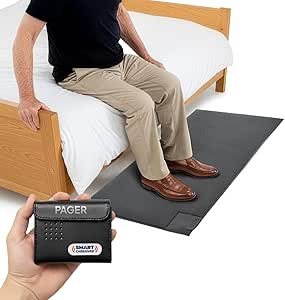 | Best for Detecting Steps Beside the Bed | Mat dimensions: 24 × 48 × 0.5 inches | Pager range: Up to 300 feet | Alert options: Audible or vibration | VIEW LATEST PRICE | See Our Full Breakdown |
| Lunderg Wireless Bed Alarm System for Elderly |  | Best for Quiet, App-Free Bedside Monitoring | Sensor pad size: 10 × 30 inches | Sensor technology: Pressure sensor | Wireless range: 400 feet in description; 300 feet in specifications | VIEW LATEST PRICE | See Our Full Breakdown |
| EverNary WiFi Bed and Motion Sensor Alarm System for Caregiving | | Best for Shared Smartphone Alerts | Brand and model: EverNary AMZ01 | Included: 1 hub and 2 sensors | Power: Battery powered; requires 4 AAA batteries | VIEW LATEST PRICE | See Our Full Breakdown |
| PILSAMAS Bed Alarms for Elderly Dementia Patients, Motion Sensor Pager Set |  | Best for Footstep-Based Detection | Sensor technology: Infrared motion sensor | Alert type: Motion only | Maximum stated range: 1,000 ft | VIEW LATEST PRICE | See Our Full Breakdown |
| Lunderg Wireless Early Alert Bed Alarm System |  | Best for Advance Bed-Exit Warning | Sensor technology: Lunderg Pre-Alert Smart Sensor Technology | Sensor pad size: 10 × 33 in | Wireless range: Up to 400 ft | VIEW LATEST PRICE | See Our Full Breakdown |
| Wireless Bed and Door Motion Sensor Alarm for Caregivers |  | Best for Simple Bed-or-Door Monitoring | Brand and model: Nesthao KS-SF20R | Sensor technology: Contact sensor (as listed) | Maximum stated range: 182 meters / 918 ft in open areas, as stated in the description | VIEW LATEST PRICE | See Our Full Breakdown |
| CallToU Bed Alarm for Elderly Adults |  | Best for Customizable Portable Alerts | Brand and model: CallToU CC32WH-HW12 | Sensor technology: Infrared motion detection | Wireless frequency: 433 MHz | VIEW LATEST PRICE | See Our Full Breakdown |
| bedside fall prevention sensors for senior | Power |
|---|---|
| Evernary Upgraded Bed Sensor A | — |
| Wireless Bed and Motion Alarm | 3 AA alkaline batteries or Micro USB |
| Smart Caregiver Bed Exit Alarm | Battery powered; 2 AA alkaline batteries included |
| Smart Caregiver Economy Wirele | — |
| Smart Caregiver Bed Exit Alarm | One included 9V alkaline battery or optional AC-02 adapter |
| EverNary WiFi Bed and Motion S | Battery powered; 4 AAA batteries required |
| EverNary Wireless Motion Senso | Battery powered; AAA batteries |
| Patient Aid Bed Alarm with 10 | AC adapter or 9V battery; 9V battery included |
| Smart Caregiver Wireless Floor | Battery powered; pager requires 2 AA batteries, not included |
| Lunderg Wireless Bed Alarm Sys | Battery powered; 2 AA alkaline batteries included |
| EverNary WiFi Bed and Motion S | Battery powered; requires 4 AAA batteries |
| PILSAMAS Bed Alarms for Elderl | — |
| Lunderg Wireless Early Alert B | Battery powered; 2 AA batteries included |
| Wireless Bed and Door Motion S | Alkaline batteries or Micro USB |
| CallToU Bed Alarm for Elderly | Battery powered; sensor uses 3 AAA batteries included |
More Details on Our Top Picks
Evernary Upgraded Bed Sensor Alarm and Fall Prevention for Elderly Adults – Wireless Motion Detector for Seniors & Dementia Care
The Evernary is a better fit for caregivers who want to detect movement near a bed or room exit than for those who need a sensor placed under the sleeper. Its wireless motion detection and stated 918-foot open-area range can help a caregiver keep the receiver nearby while positioning the sensor where a person is likely to pass. The swivel mount makes aiming more precise, while sound and LED alerts offer options for different care settings. Compared with the Smart Caregiver Bed Exit Alarm with Wireless Pager, this setup monitors movement rather than pressure leaving a bed pad, so it can cover a doorway but may alert after movement has begun. The tradeoff is battery upkeep: the sensor needs six AAA batteries and the pager uses three AA batteries. Walls and metal can also shorten the stated range.
Pros:- Motion sensing can cover a bed area or room exit, rather than relying on pressure removal from a pad.
- Swivel mount allows the sensor to be aimed toward a likely walking path.
- Receiver offers sound and LED alerts with multiple modes.
- Includes a portable pager and mounting accessories.
Cons:- Sensor and pager require nine batteries in total, adding replacement and maintenance tasks.
- The stated 918-foot range is for open areas; walls and metal structures may reduce coverage.
- USB charging cable for the receiver is not included.
Best for: Caregivers monitoring a bedroom doorway or nearby passage who want a portable receiver and adjustable sensor aim.
Not ideal for: Households that need an under-mattress or bed-pad alert before a senior gets fully out of bed, or that want fewer batteries to maintain.
- Sensor type:Wireless motion detector
- Maximum stated range:918 feet in open areas
- Mounting:Wall mount with 360-degree swivel
- Sensor batteries:6 AAA batteries required
- Pager batteries:3 AA batteries included
- Alert features:Sound and LED alerts; multiple receiver modes
- Dimensions:1.65 x 2.5 x 3.8 inches
- Model:M5
Our verdict“Choose the Evernary when adjustable, long-range motion monitoring matters more than detecting bed pressure changes directly.”
Wireless Bed and Motion Alarm System for Seniors, 1 Sensor and 1 Receiver
This yiwei system stands out for letting caregivers choose how an alert arrives: sound, LED, or silent vibration. That range is useful when a loud alarm could disturb others or when a caregiver needs a discreet prompt. Its portable receiver and stated 918-foot range give it a similar placement advantage to the Evernary motion alarm, while the Micro USB power option can reduce dependence on disposable batteries. The sensor is a motion detector, not a bed pressure pad, so it reports movement near its placement rather than the moment pressure leaves the mattress. Compared with the Smart Caregiver Bed Exit Alarm with Wireless Pager, it offers more alert modes and a longer stated range, but its loudest setting may be disruptive in a quiet bedroom. The floor-mount design also calls for careful placement to watch the intended path.
Pros:- Offers sound, LED, and silent vibration alert modes.
- Adjustable alarm volume and 17 tones allow caregivers to tailor the alert.
- Portable receiver has a stated range of up to 918 feet.
- Can run on three AA batteries or Micro USB power.
Cons:- The maximum stated alarm volume of 110 dB may be too loud for some bedroom settings.
- Motion detection depends on placement and does not sense pressure leaving the bed.
- Floor-mounted sensor placement may be less suitable where the walking path is obstructed.
Best for: Caregivers who want a choice between discreet vibration and audible alerts, plus the option to power the system by Micro USB.
Not ideal for: Buyers who need a bed-pad trigger or a consistently quiet alert at every volume setting.
- Brand:yiwei
- Model:KS-SF20R pro
- Sensor type:Motion sensor
- Alert modes:Sound, LED, and silent vibration
- Alarm tones:17
- Maximum alarm volume:110 dB
- Maximum stated range:918 feet
- Power:3 AA alkaline batteries or Micro USB
Our verdict“Pick this system if discreet vibration and flexible power matter more than direct bed-pad detection.”
Smart Caregiver Bed Exit Alarm with Wireless Pager
For caregivers whose main concern is a senior getting out of bed, this model uses a 10 x 30-inch pressure pad to alert when pressure is removed. That makes the trigger more directly tied to a bed exit than the doorway-style motion sensing in the Evernary Upgraded Bed Sensor Alarm. The pager can use sound or vibration, and support for up to six compatible sensors gives families room to add monitoring points as needs change. Its 300-foot stated range is shorter than the Evernary’s 918-foot open-area claim, so it suits a more contained home layout better. The pad only monitors the bed, though; it will not cover a doorway or another room without an added compatible sensor. Battery power is another ongoing dependency, even with the two AA batteries included.
Pros:- Pressure pad alerts when the sleeper’s weight leaves the monitored area.
- Pager offers sound and vibration alerts.
- Can connect to as many as six compatible Smart Caregiver sensors.
- Includes two AA batteries.
Cons:- The 300-foot stated range is shorter than the range claimed for the Evernary and yiwei motion systems.
- The included pad monitors the bed only; other areas need additional compatible sensors.
- Battery-powered operation requires ongoing battery checks.
Best for: Families who want a bed-specific alert when pressure leaves the mattress and may later add compatible sensors.
Not ideal for: Caregivers who need long-range monitoring across a large home or want one sensor to cover both a bed and a doorway.
- Sensor type:Pressure-sensing bed pad
- Bed pad dimensions:10 x 30 inches
- Pager alerts:Sound and vibration
- Maximum stated range:300 feet
- Compatible sensors:Up to 6
- Maximum audible volume:70 dB
- Power:Battery powered; 2 AA alkaline batteries included
- Warranty:1 year
Our verdict“Choose this pager system when a bed-pad trigger is more useful than broad motion coverage or extra-long range.”
Smart Caregiver Economy Wireless Monitor and Motion Sensor
This Smart Caregiver kit is the most adaptable choice here for monitoring movement near a bed, doorway, or room entrance and adding more coverage later. Its swivel-bracket motion sensor can be aimed at a walking path, while the monitor supports up to six cordless components. That expandability is a stronger fit for a home with several monitored areas than the single-sensor yiwei system, though the yiwei includes a portable receiver and stated long-range coverage. The Smart Caregiver monitor has adjustable low, medium, and high volume, but the listing does not provide a range figure or a vibration option. Buyers also need to supply three C batteries for the monitor and three AA batteries for the sensor, or purchase the compatible AC adapter separately. That makes setup less ready-to-use than the bed-pad kit with included battery.
Pros:- Motion sensor can monitor a bed area, doorway, or room entrance.
- Swivel bracket supports more targeted sensor positioning.
- Monitor volume has low, medium, and high settings.
- Supports up to six cordless components for expanded coverage.
Cons:- Three C batteries for the monitor and three AA batteries for the sensor are not included.
- Compatible AC-04 power adapter is sold separately.
- No wireless range or vibration-alert specification is provided.
Best for: Caregivers who want motion monitoring in more than one area over time and are comfortable supplying power components.
Not ideal for: Buyers who want batteries included, a stated wireless range, or a pressure pad that detects bed exit directly.
- Included components:Cordless monitor and motion sensor with swivel bracket
- Sensor type:Motion sensor
- Monitored areas:Bed area, doorway, or room entrance
- Monitor volume:Adjustable: low, medium, and high
- Expandable components:Up to 6 cordless components
- Monitor power:3 C batteries, not included
- Sensor power:3 AA batteries, not included
- Optional adapter:AC-04 compatible; not included
Our verdict“Select this system for expandable motion coverage if you can manage the separate battery or adapter requirements.”
Smart Caregiver Bed Exit Alarm with Monitor and Sensor Pad
This corded Smart Caregiver set is a straightforward choice for households that want a bed-pad alert without a wireless pager. Its 10 x 30-inch vinyl pad has a soft foam interior and resists incontinence, so routine cleaning is easier than with a sensor that cannot be wiped down. The monitor’s low-battery and sensor-status lights help caregivers spot two common reasons an alert system may not be ready, and the reset button offers a direct way to silence an alert. Compared with the wireless Smart Caregiver Bed Exit Alarm with Wireless Pager, this model is less flexible for a caregiver in another room unless the separately sold wireless add-on is purchased. It also uses an 80 dB audible alarm, which may be disruptive nearby. The included 9V battery gets the basic system running without a separate battery purchase.
Pros:- Incontinence-resistant vinyl pad is designed for easy cleaning.
- Low-battery and sensor-status lights provide visible system checks.
- Front reset button and two volume levels make the monitor straightforward to operate.
- Includes a 9V battery for the basic corded setup.
Cons:- Wireless alerts require a separately sold add-on kit.
- The 80 dB audible alarm may disturb a sleeping household.
- AC-02 adapter is not included.
Best for: Caregivers who want a simple bed-pressure alarm with an easy-to-clean pad and a monitor kept close to the bed.
Not ideal for: Households where the caregiver needs wireless alerts in another room without buying an add-on kit.
- Model:BB45-SYS
- Sensor type:Contact bed pad
- Sensor pad dimensions:10 x 30 inches
- Pad material:Incontinence-resistant vinyl with soft foam interior
- Audible alarm:80 dB
- Power:One included 9V alkaline battery or optional AC-02 adapter
- Mounting:Wall mount
- Warranty:1 year
Our verdict“Choose this model for simple, cleanable bed-pad monitoring when a nearby corded monitor is sufficient.”
EverNary WiFi Bed and Motion Sensor Alarm with Caregiver App
I’d choose the EverNary WiFi Bed and Motion Sensor Alarm when caregivers need alerts on their phones as well as a sound from the hub. Its sensors can monitor a bedside area or doorway, and app sharing lets additional people receive notifications without relying on a pager carried from room to room. That makes it more flexible for a family coordinating care than the EverNary Wireless Motion Sensor Caregiver Pager, which sends alerts to its dedicated receiver instead. The tradeoff is that this system depends on 2.4 GHz WiFi for smartphone alerts, and only one phone connects directly to the hub; other users must be added through device sharing. Its stated 330-foot range applies to open areas, while indoor range is listed at about 30–150 feet, so walls and layout matter.
Pros:- Sends movement alerts through the Smart Life app while sounding the hub
- Can monitor movement near a bed or doorway
- App sharing allows additional caregivers to receive alerts
- Expandable with up to 20 transmitters per hub and up to 20 hubs per transmitter
Cons:- Smartphone alerts require 2.4 GHz WiFi
- Only one phone connects directly to the hub; additional users need device sharing
- Indoor range is listed at about 30–150 feet, shorter than the open-area maximum
Best for: Families who want movement alerts on shared smartphones and a hub alarm, and have reliable 2.4 GHz WiFi near the monitored area.
Not ideal for: Caregivers who need a fully offline pager system, or households whose WiFi is limited to 5 GHz or unreliable near the bed.
- Model:AMZ01
- Connectivity:2.4 GHz WiFi
- Included components:2 motion sensors and 1 WiFi receiver
- Power:Battery powered; 4 AAA batteries required
- Open-area sensor-to-hub range:Up to 330 feet
- Indoor range:About 30–150 feet
- Expansion capacity:Up to 20 transmitters per hub and up to 20 hubs per transmitter
- Dimensions:3.9 × 0.8 × 3.9 inches
Our verdict“Choose this model if shared smartphone notifications matter more than a simple offline pager and your home has dependable 2.4 GHz WiFi.”
EverNary Wireless Motion Sensor Caregiver Pager and Bed Alarm, 1 Receiver and 2 Sensors
For caregivers who would rather carry a receiver than depend on an app, I’d put this EverNary wireless pager ahead of the WiFi-based EverNary system. Two sensors can watch a bed or doorway, and movement within their 16.4-foot detection range triggers the portable receiver, which can be placed with the caregiver. The range between sensors and receiver is listed at up to 260 feet in open areas, giving it room to work across nearby rooms, though walls can reduce that reach. Its 52 ringtones and five volume settings, including a stated maximum of 110 dB, offer more alert customization than the Smart Caregiver Wireless Floor Mat Alarm, but this is still a motion-triggered warning—not a pressure pad that detects someone leaving the bed itself. It also runs on AAA batteries, so caregivers must keep replacements available.
Pros:- Portable receiver can alert a caregiver away from the monitored area
- Includes two motion sensors for bed and doorway coverage
- Offers 52 ringtone choices and five adjustable volume levels
- Sensors can be wall-mounted near areas where movement needs monitoring
Cons:- The 260-foot wireless range is specified for open areas and may be shorter indoors
- Receiver requires AAA batteries
- Motion detection can alert to movement without directly sensing bed-pad pressure
Best for: Caregivers who want a straightforward, portable receiver for monitoring movement near a bed or doorway without app setup.
Not ideal for: Households that need smartphone notifications, a floor-level step alert, or dependable range through multiple walls and floors.
- Included:1 receiver and 2 motion sensors
- Sensor detection range:16.4 feet
- Sensor detection angle:110°
- Wireless range:Up to 260 feet in open areas
- Receiver alerts:52 ringtones; 5 adjustable volume levels, up to 110 dB
- Power:Battery powered; AAA batteries
- Mounting:Wall mount
- Warranty:1 year
Our verdict“Pick this pager set if you want customizable local alerts from two motion sensors and do not need app notifications.”
Patient Aid Bed Alarm with 10 x 30 Inch Motion Sensor Pad
I’d favor the Patient Aid Bed Alarm for care plans that call for a pad beneath the person rather than a detector aimed at a doorway. Its 10 × 30-inch pad can sit beneath the buttocks or shoulders, so a change in position can trigger an in-room alarm; that differs from the Smart Caregiver Wireless Floor Mat Alarm, which responds when someone steps onto a mat beside the bed. Ring or music sounds at 80 or 90 dB provide a choice of alert, and the unit can run from an AC adapter or the included 9V battery. The foldable, water-resistant, latex-free vinyl pad is easier to wipe clean than a floor mat spread across a bedside route. The tradeoffs are its wired setup and the stated restriction for people with a pacemaker or defibrillator; caregivers should read the instructions before use.
Pros:- Pad can be placed beneath the buttocks or shoulders to detect a shift
- Water-resistant, tear-resistant, latex-free vinyl pad folds for storage and cleaning
- Offers ring or music sounds at 80 or 90 dB
- Can use an AC adapter or the included 9V battery
Cons:- Wired design is less flexible than the wireless pager systems in this lineup
- Product information says it is not suitable for patients with a pacemaker or defibrillator
- Instructions need to be read before setup and use
Best for: Caregivers who need a wipe-clean sensor pad placed beneath the person and want an audible in-room alarm with battery backup.
Not ideal for: People with a pacemaker or defibrillator, or households seeking a wireless pager alert that reaches a caregiver in another room.
- Model:PA-505B
- Sensor pad size:10 × 30 inches
- Alarm volume:80 dB or 90 dB
- Sound options:Ring or music
- Power:AC adapter or 9V battery; 9V battery included
- Pad material:Vinyl
- Pad features:Tear-resistant, water-resistant, latex-free, foldable
- Warranty:1-year replacement for defects
Our verdict“Choose this pad-based alarm for direct bed monitoring and easy cleaning, provided its stated medical-device restriction does not apply.”
Smart Caregiver Wireless Floor Mat Alarm and Pager System, 24 x 48 Inches
The Smart Caregiver Wireless Floor Mat Alarm is the clearest fit here when the warning needs to happen as a person steps out of bed, rather than when a bed sensor registers a position change. Its large 24 × 48-inch mat can sit beside a bed or near an exit; pressure on it sends an audible or vibrating alert to the pager, which works up to 300 feet away. Compared with the Lunderg Wireless Bed Alarm System, this mat alerts at the step, while Lunderg’s pad alerts when the person gets up from the bed. That distinction can help caregivers choose where they want the warning point. The mat is sizable, though, so it needs clear floor space and careful placement. The pager’s audible alert tops out at 70 dB, and its two AA batteries are not included.
Pros:- Detects a step on the mat beside the bed or near an exit
- Pager offers audible and vibration alerts
- Pager range is listed at up to 300 feet
- Includes a one-year manufacturer warranty
Cons:- The 24 × 48-inch mat needs substantial clear floor space
- Pager requires two AA batteries, which are not included
- Additional compatible sensors for monitoring multiple locations are sold separately
Best for: Caregivers who want to be alerted when a senior steps onto a bedside or exit mat and need an audible or vibration pager.
Not ideal for: Small bedrooms with little clear floor space, or caregivers who need an alert before the person’s feet reach the floor.
- Mat dimensions:24 × 48 × 0.5 inches
- Pager range:Up to 300 feet
- Alert options:Audible or vibration
- Maximum audible noise:70 dB
- Sensor technology:Contact sensor
- Power:Battery powered; pager requires 2 AA batteries, not included
- Included items:Caregiver pager TL-2020P and wireless floor mat PTFM-07C
- Warranty:1 year
Our verdict“Choose this system when a step-on-mat alert is the right warning point and there is enough floor space for its large mat.”
Lunderg Wireless Bed Alarm System for Elderly
I’d recommend the Lunderg Wireless Bed Alarm to households that want a bed-pad alert without WiFi, an app, or a loud alarm beside the senior. Its 10 × 30-inch pressure pad sends a signal to a handheld pager, with adjustable volume or vibration-only alerts; that makes it more discreet than the Patient Aid Bed Alarm, which sounds in the room, and more directly tied to getting out of bed than the Smart Caregiver Wireless Floor Mat, which waits for a step on the floor. The wipe-clean, incontinence-resistant surface and included anti-slip stickers add practical help with placement and routine care. One limitation of the trigger point remains: the alert occurs when the person stands up, not before getting out of bed. The listed wireless range also conflicts, giving 400 feet in the description and 300 feet in the specifications.
Pros:- Pager works without WiFi or a smartphone app
- Adjustable volume and vibration-only alerts suit different household needs
- Incontinence-resistant pad surface can be wiped clean
- Includes two AA alkaline batteries and anti-slip stickers
Cons:- Alerts when the person stands up rather than before they get out of bed
- Wireless range is inconsistent in the product information: 400 feet in the description and 300 feet in the specifications
- Requires positioning the pad on the bed and keeping the pager accessible to the caregiver
Best for: Caregivers who want a wireless pressure-pad alert on a handheld pager, with a vibration option and no app or WiFi setup.
Not ideal for: Caregivers who need an alert before a senior begins getting out of bed, or who require a clearly consistent wireless-range specification.
- Sensor pad size:10 × 30 inches
- Sensor technology:Pressure sensor
- Wireless range:400 feet in description; 300 feet in specifications
- Pager alerts:Adjustable volume up to 120 dB or vibration
- Power:Battery powered; 2 AA alkaline batteries included
- Pad surface:Incontinence-resistant and wipe-clean
- Included components:Bed sensor pad, pager, batteries, anti-slip stickers, clip, wall mount bracket
- Item weight:600 g
Our verdict“Pick Lunderg for app-free bedside alerts with a quieter vibration option, but not if you need a warning before the person rises.”
EverNary WiFi Bed and Motion Sensor Alarm System for Caregiving
I’d choose this system for families who need bed-exit and room-departure alerts sent to more than one caregiver. Its hub and two sensors work with the Smart Life app, and the system can expand to as many as 50 transmitters per hub, making it more suited to a growing care setup than the simpler pager-based Lunderg Wireless Early Alert Bed Alarm System. That flexibility comes with a network dependency: phone notifications require the hub to be within WiFi range, and the system supports 2.4 GHz WiFi only. The sensor-to-hub range can also shrink indoors to roughly 30–150 feet, so I’d check the layout before relying on alerts across a large home. It makes the most sense when caregivers value shared remote notifications and can maintain a dependable connection.
Pros:- Can alert caregivers by smartphone when motion is detected
- Monitors both getting out of bed and leaving a room
- Smart Life app supports shared alerts
- Expandable to as many as 50 transmitters per hub
Cons:- Smartphone notifications depend on the hub being within WiFi range
- Supports 2.4 GHz WiFi only
- Indoor sensor-to-hub range is listed at about 30–150 feet
Best for: Families sharing caregiving who want app-based alerts for both bed exits and movement out of a room, and can place the hub within reliable 2.4 GHz WiFi coverage.
Not ideal for: Caregivers without dependable WiFi near the hub, or households that need a self-contained pager alert without app or network reliance.
- Brand and model:EverNary AMZ01
- Included:1 hub and 2 sensors
- Power:Battery powered; requires 4 AAA batteries
- Stated battery life:6 months
- Sensor-to-hub range:Up to 330 ft in open areas; about 30–150 ft indoors
- WiFi:2.4 GHz only
- Expandable capacity:Up to 50 transmitters per hub; one transmitter can connect to up to 50 hubs
- Mounting and dimensions:Wall mount; 3.9 × 0.8 × 3.9 in
Our verdict“Choose this system if several caregivers need app-shared alerts and the home has reliable 2.4 GHz WiFi where the hub will sit.”
PILSAMAS Bed Alarms for Elderly Dementia Patients, Motion Sensor Pager Set
The PILSAMAS set is a strong fit when pressure-pad false alarms are a recurring problem. Its infrared sensors detect movement at the floor rather than changes in bed pressure, so shifting position or incontinence is less likely to trigger an alert than with the Lunderg Wireless Early Alert Bed Alarm System, which uses a bed sensor pad. Caregivers also get a sensor ID with the alert, helping identify which part of the home needs attention, and the 1,000-foot stated range suits larger layouts better than the Lunderg system’s 400-foot range. The tradeoff is that this detects motion only: it does not provide audio or video context. Sensor placement height matters too, particularly in homes with pets. I’d pick it for privacy-conscious households that want room coverage without cloud storage.
Pros:- Detects floor movement rather than bed pressure, reducing alerts from bed shifting or incontinence
- Stated wireless range of up to 1,000 feet
- Caregiver pager identifies the sensor that triggered
- Multiple alert modes include chime, vibration, LED, and adjustable volume
Cons:- Sensor height and placement may need adjustment to avoid pet-triggered alerts
- Motion-only alerts provide no audio or video context
- Battery life is listed as 1–3 months per charge
Best for: Caregivers covering multiple areas of a home who want footstep-motion alerts, sensor identification, and no cloud-based audio or video monitoring.
Not ideal for: Households that need advance warning from a bed-pressure pad, want audio or video context, or cannot place sensors away from pet movement.
- Sensor technology:Infrared motion sensor
- Alert type:Motion only
- Maximum stated range:1,000 ft
- Connectivity:Wireless
- Power and battery type:Battery powered; lithium polymer
- Battery life:1–3 months per charge
- Item dimensions:2.6 × 1.2 × 3.9 in
- Item weight and color:9.6 oz; white
Our verdict“Choose PILSAMAS for privacy-minded caregivers who want identifiable footstep alerts across several areas rather than a pressure pad on the bed.”
Lunderg Wireless Early Alert Bed Alarm System
I’d put this Lunderg model first for caregivers who need an alert before a senior gets out of bed. Its pressure pad sits at hip level and detects a change associated with rising, giving a caregiver a chance to respond earlier than a floor-motion sensor such as the PILSAMAS Bed Alarms for Elderly Dementia Patients, which alerts when movement is detected at the floor. The included pager works without WiFi or an app, and vibration mode can keep alerts out of the bedroom when sound would disturb sleep. Its stated 400-foot range is more limited than PILSAMAS’s 1,000 feet, and a caregiver must keep the pager within range. The pad also has a stated 15-month lifespan, so this is a dedicated bed-based setup rather than a maintenance-free purchase.
Pros:- Pressure pad is designed to alert before the person gets out of bed
- Pager offers adjustable volume and vibration mode
- Operates without WiFi or an app
- Includes mounting hardware, bed clips, bands, and batteries
Cons:- Pager must remain within the stated wireless range to receive alerts
- Sensor pad has a stated lifespan of 15 months
- 400-foot range is shorter than the stated range of the PILSAMAS system
Best for: Caregivers who want advance notice of a bed exit, prefer a local pager over smartphone alerts, and can keep the pager nearby.
Not ideal for: Households needing whole-home room-departure coverage, or caregivers who cannot regularly carry or position a pager within range.
- Sensor technology:Lunderg Pre-Alert Smart Sensor Technology
- Sensor pad size:10 × 33 in
- Wireless range:Up to 400 ft
- Pager alerts:Adjustable volume and vibration mode
- Stated audible level:120 dB
- Power:Battery powered; 2 AA batteries included
- Sensor pad lifespan:15 months
- Included items:Bed sensor pad, pager, instructions, batteries, wall mount bracket, bed clips, and bands
Our verdict“Choose Lunderg when advance warning from a bed pad matters more than app access or broad whole-home motion coverage.”
Wireless Bed and Door Motion Sensor Alarm for Caregivers
This Nesthao system suits caregivers who want one sensor they can position near a bed or doorway and a separate receiver that alerts outside the patient’s room. That makes it more flexible for room-departure monitoring than the bed-specific Lunderg Wireless Early Alert Bed Alarm System, but it does not offer Lunderg’s pressure-pad warning before a person fully exits the bed. The receiver combines sound and LED alerts, with five volume levels, and the sensor can use alkaline batteries or Micro USB power. Its stated 918-foot range applies to open areas, so I would not assume the same reach through walls; placement and sensing direction need checking before relying on it. Setup also includes a self-test period, making this less of an immediate plug-and-place option.
Pros:- Sensor can be placed near a bed or doorway
- Remote receiver keeps the alert out of the patient’s room
- Five volume levels with both sound and LED alerts
- Can run on alkaline batteries or Micro USB power
Cons:- The 918-foot range is stated for open areas and may not reflect indoor performance
- Sensor direction and placement need testing
- Requires a self-test period before use
Best for: Caregivers who want a portable receiver and the flexibility to monitor either a bed area or a doorway without adding WiFi.
Not ideal for: Caregivers who need a pressure-pad alert before a bed exit, or who want a clearly specified indoor range without testing placement.
- Brand and model:Nesthao KS-SF20R
- Sensor technology:Contact sensor (as listed)
- Maximum stated range:182 meters / 918 ft in open areas, as stated in the description
- Power:Alkaline batteries or Micro USB
- Volume levels:5
- Alerts:LED light and sound
- Included components:1 caregiver pager, 1 motion sensor, batteries, Micro USB cable, double-sided tape, screw kit, and manual
- Item weight:10.24 oz
Our verdict“Choose this Nesthao set for flexible bed-or-door motion monitoring with a remote receiver, provided you can test its placement and range.”
CallToU Bed Alarm for Elderly Adults
CallToU is the practical choice for caregivers who want to tune how a bed-area motion alert sounds—or avoid sound altogether. Its portable receiver offers silent and vibration modes, five volume levels, and 18 ringtones, giving it more alert customization than the Lunderg Wireless Early Alert Bed Alarm System, whose main distinction is advance warning from a pressure pad. CallToU instead uses infrared motion detection, so it is intended to alert as movement is detected rather than from a bed-pressure change before the person rises. The receiver’s USB Type-C charging port is convenient, while the sensor itself uses three replaceable AAA batteries. I’d choose it for flexible alert preferences, but not for a household that needs smartphone notifications or a pressure-pad pre-alert.
Pros:- Silent and vibration alert modes support quieter monitoring
- Five volume levels and 18 ringtones allow alert customization
- Receiver charges through USB Type-C
- Sensor uses replaceable AAA batteries
Cons:- Sensor requires three AAA batteries
- Infrared motion detection does not provide the pressure-pad pre-alert offered by Lunderg
- No smartphone notification feature is listed
Best for: Caregivers who want a portable receiver with silent, vibration, and varied sound options for bed-area motion alerts.
Not ideal for: Families seeking advance warning from a pressure pad, app-based notifications, or a sensor that does not require replaceable batteries.
- Brand and model:CallToU CC32WH-HW12
- Sensor technology:Infrared motion detection
- Wireless frequency:433 MHz
- Alert settings:5 volume levels, silent and vibrate modes
- Ringtones:18
- Maximum volume:110 dB
- Power:Battery powered; sensor uses 3 AAA batteries included
- Receiver charging port:USB Type-C
- Sensor dimensions and rotation:2.75 × 2.3 × 0.59 in; 360° rotation
Our verdict“Choose CallToU if adjustable, portable receiver alerts matter more than pressure-pad advance warning or app connectivity.”

How We Picked
I compared these 15 systems by how their sensing method fits common bedside needs: detecting bed exit, monitoring movement near the bed, or alerting when someone steps onto a floor mat. I also weighed alert delivery—local receiver, pager, or app—because a detection system is only useful if the caregiver can hear or receive the signal where they are. Sensor placement, wireless setup, coverage, and the likely burden of routine use shaped the comparison alongside the product’s stated purpose.
The ranking favors systems with a clear use case and a practical path from detection to caregiver response. The Lunderg Wireless Early Alert Bed Alarm System leads for its early-alert focus; the EverNary WiFi models rank as a distinct option for remote app monitoring, not as a universal upgrade. Pager and receiver systems follow for caregivers prioritizing local alerts, while pads, floor mats, and multi-sensor sets serve more specific room and mobility needs. No sensor guarantees fall prevention, so I treat caregiver availability, home layout, and a senior’s tolerance for the device as part of the decision.
Factors to Consider When Choosing Bedside Fall Prevention Sensors For Seniors
Before choosing a model, I would start with the exact event that needs an alert and who will respond. A bed sensor, motion detector, and floor mat can all support fall-risk monitoring, but they do not detect the same action or suit every room.
Choose the event you need to detect
Decide whether the priority is movement out of bed, motion near the bedside, or a step onto a monitored floor area. These are different detection points, so a product described as a bed alarm may not provide the early warning you expect. A pad-based sensor may register a change at the bed, while a motion sensor responds when someone enters its detection area. A floor mat places the alert point on the path the person uses. Think through the usual nighttime route before buying, and avoid choosing by the word “bed” alone. The best match is the one that detects the relevant movement early enough for the caregiver to respond.
Match alerts to the caregiver’s location
Consider where the caregiver sleeps, works, or spends time during the hours the sensor will be active. A nearby receiver or pager may be straightforward when the caregiver stays in the home, while app alerts can suit someone who needs notifications on a phone. Phone-based systems may depend on WiFi, app permissions, and a charged device, so check the setup demands before relying on them. A loud local alarm can be useful in one room but disruptive to other household members. Do not assume that wireless means the alert will reach every part of the home. Check the stated range and think about walls, floors, and the receiver’s intended location.
Plan for comfort, consent, and routine
A sensor that the senior finds uncomfortable or confusing may be switched off, moved, or ignored. Pads can require placement on or near the bed, while motion sensors need a suitable position and an unobstructed detection area. Explain what the alarm does and agree on a routine for turning it on and responding to alerts. For someone with dementia, familiar cues and a consistent caregiver response may matter as much as the sensor’s detection method. Avoid treating an alarm as a substitute for a safe route, adequate lighting, or hands-on support. If the person resists a particular sensor type, consider whether a less intrusive placement can meet the same need.
Check coverage before adding sensors
A single sensor may be enough when the bed and caregiver setup are simple, but it can leave gaps if the person moves between rooms or exits by more than one route. Multi-sensor kits can cover separate areas, though more sensors also mean more placement decisions and more items to maintain. Map the route from bed to bathroom and note where a caregiver needs advance notice. A floor mat only helps if it sits where the person is likely to step and does not create an obstruction. Do not buy extra sensors without checking whether the system supports them and how alerts identify each monitored area. Start with the highest-risk route, then add coverage only if the household can manage it.
Compare alert timing with the risk of false alarms
An alert that triggers early gives a caregiver more time to act, but a highly sensitive or poorly positioned sensor may also sound during ordinary movement. Repeated false alarms can lead to alarm fatigue, making caregivers less likely to respond promptly. Ask what movement activates the sensor and whether its placement can be adjusted to distinguish routine repositioning from getting up. Test the system during the day with the caregiver present before relying on it overnight. If alert timing is the main concern, prioritize how the product describes its detection sequence, not simply the number of alerts it can send. The household should be able to hear or notice alerts and respond consistently.
Account for upkeep and backup plans
Every setup needs a maintenance routine, whether that means checking a pad’s position, testing a receiver, charging a phone, or confirming a network connection. Ask who will handle those checks and how often the household can realistically do them. Wireless convenience does not remove the need to confirm that sensors and alert devices are working together. A system that depends on WiFi should not be treated as reliable during a connection or power interruption unless its backup behavior is clear. Keep a separate care plan for nights when the device is unavailable. If a sensor’s upkeep feels too demanding, a simpler local receiver may be more useful than a feature-rich system that is rarely checked.
Frequently Asked Questions
Should I choose a bed pad, a motion sensor, or a floor mat?
Choose based on the point at which you want the caregiver to receive an alert. A bed pad monitors a change at the bed, a motion sensor detects movement in its coverage area, and a floor mat alerts when someone steps onto that surface. The best fit depends on where the senior moves and how much warning the caregiver needs. Room layout and the person’s comfort with the sensor also matter. If unsure, map the usual exit route and compare it with each sensor’s placement requirements before choosing.
Can a bedside sensor prevent a fall by itself?
No. A sensor can notify a caregiver of movement, but it cannot steady someone, clear an obstacle, or guarantee that help arrives before a fall. Its usefulness depends on the alert reaching an available caregiver who can respond. Pair it with practical steps such as a clear path, accessible lighting, and a care plan suited to the senior’s mobility. If falls or near-falls are occurring, discuss the broader risk with a qualified healthcare professional. Treat the alarm as one part of support, not a replacement for supervision or clinical advice.
Is a WiFi app alarm a better choice than a pager?
Neither is automatically better; the right choice depends on where the caregiver is and how they prefer to receive alerts. An app can make remote phone notifications possible, but it may rely on WiFi, phone settings, and battery charge. A pager or dedicated receiver can be a simpler local option when the caregiver is nearby and wants a separate alert device. Consider what happens if the phone is silent, out of charge, or disconnected. Choose the alert path the caregiver can reliably notice and act on during the hours the sensor is used.
How can I reduce false alarms without missing a bed exit?
Start by placing the sensor according to its instructions and checking that its detection area matches the senior’s usual movement. A sensor aimed at a busy walkway or positioned too close to routine movements may alert unnecessarily. Test it during the day as the senior repositions and gets out of bed, then adjust the setup if the product allows it. Avoid disabling alerts simply because they are inconvenient; repeated alarms may signal that the placement or sensor type does not fit the situation. If a reliable setup remains difficult, ask the supplier or care team about alternatives.
What should I check before relying on a wireless sensor overnight?
Confirm that the sensor and receiver or phone are paired, powered, and positioned within their stated range. Test an alert from the bed and the relevant walking area, with doors and usual household obstacles in place. For app systems, check network access, notification permissions, sound settings, and phone charge; for pager systems, check receiver power and alert volume. Agree on who will respond and what action they will take when an alert arrives. Repeat the checks after moving furniture, changing sensor placement, or altering the home network.
Conclusion
For most households seeking an early bed-exit alert, I would start with the Lunderg Wireless Early Alert Bed Alarm System as the best overall fit in this lineup. For best value in simplicity, compare the Smart Caregiver Economy Wireless Monitor and Motion Sensor with the Smart Caregiver Bed Exit Alarm with Wireless Pager, choosing the one whose alert method matches the caregiver’s routine. The EverNary WiFi Bed and Motion Sensor Alarm with Caregiver App is my best premium-style pick for caregivers who need phone-based monitoring and can manage app and network setup. Beginners may prefer a straightforward local receiver or pager rather than a WiFi-dependent system. For specific needs, choose the Smart Caregiver Wireless Floor Mat Alarm when a monitored step area suits the room, or a pad-based model when sensing at the bed is the priority. Match the sensor to the route and caregiver response plan; no alarm replaces direct support or a safer nighttime environment.