
TL;DR

Turn quiet afternoons into listening time
- Thousands of audiobooks, podcasts and originals
- Listen on your phone, tablet or Echo — also offline
- Cancel anytime
Medication dispensers with lockable compartments separate doses and limit casual access, which can help when a routine is confusing or medicines need to be kept out of reach. A lock does not prove a dose was taken, make a device childproof, or replace pharmacist guidance, safe storage, and caregiver support. Choose one only after checking the medication’s storage needs, the person’s ability to use it, and the plan for emergencies or power failure.
A medication dispenser can beep on schedule and still leave one important question unanswered: did anyone take the dose? A lockable compartment helps with access and organization, but it cannot answer that question by itself.
This guide explains when medication dispensers with lockable compartments may help, when a simpler organizer may be enough, and what to check before moving medicines into one. You’ll also see why the lock, alerts, and caregiver notifications each have limits, and how a pharmacist or clinician can help you fit the device to a real medication plan.
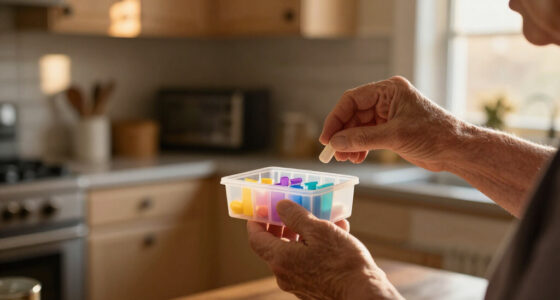
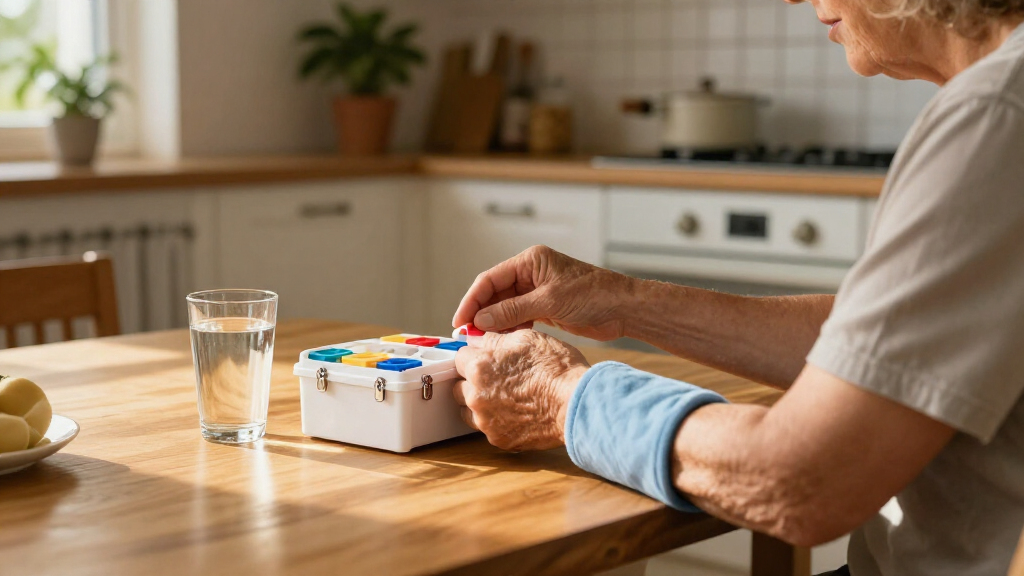
Think of a dispenser as a labeled set of small doors for scheduled doses. It can make the next step easier to see, much like setting out tomorrow’s clothes, but the person still needs a safe, workable routine around it.
Use a lockable dispenser when dose organization or limiting access addresses a specific problem.
An opening alert records access, not proof that someone swallowed the medicine.
Ask a pharmacist before moving medicines that may need original packaging or special storage.
Check who can open the device during an urgent situation and what happens if its power fails.
Review the setup after any prescription, dose, or routine change.
Medication safety · A practical guide
Medication Dispensers With Lockable Compartments: When Extra Structure Helps
A lockable dispenser can organize scheduled doses and limit casual access when a routine is confusing. Its alerts and access records have limits: they cannot confirm a dose was taken correctly. Choose a device around the person, the medicines, and a clear plan for help.
An opened compartment is an event. Taking the dose correctly is another.
Access record ≠ proof of ingestion01 / Where structure can help
Make the next step easier to see
Think of it as labeled small doors for scheduled doses. It can clarify the routine, while a person and their care plan still guide what happens.
Separate doses
Compartments by day or time can make the schedule easier to scan and mix-ups easier to notice.
Add a barrier
A lock may limit casual access by visitors or children when an adult is nearby and able to help.
Coordinate support
Some devices help caregivers prepare doses or check whether a compartment was opened.
Give a cue
A repeated sound or light can draw attention to the next step. Someone still needs to hear and respond.
Solve a real need
Use extra structure when access or organization is a specific problem—not simply because a device has more features.
Keep it workable
A labeled organizer may be enough when the person manages access safely and mainly needs a visual reminder.
The lock has limits
It can restrict access to a compartment, but it cannot confirm the right person took the right medicine—or prevent every medication error.
Plan for access
Decide who holds the key or code and how the person can get a needed dose if the caregiver is away or the device loses power.
02 / Choose by need
Lockable dispenser or simple organizer?
The right choice depends on the person, medicines, and home. Added features help only when they solve a real problem.
| Need | Simple organizer | Lockable dispenser |
|---|---|---|
| Sort doses by day | ✓ Often suitable | ✓ Can do this; some add cues |
| Limit casual access | ✗ Usually little control | ✓ A lock may restrict access |
| Notice a scheduled dose | Visual check | Some models add sound or light |
| Confirm a dose was swallowed | ✗ No | ✗ No; an opening log is not proof |
| Ease of daily use | May be simpler to operate | Controls and locks can add steps |
Broad differences only; features vary by model. Small buttons, a difficult lid, or an unavailable key can make a routine less reliable. The person taking the medicine should be able to use the device, or have dependable help.
03 / Signals and records
What alerts can tell you—and what they cannot
Alarms, lights, access logs, and phone notifications differ by product. Treat an opening record as a prompt to check in, not as proof or a clinical record.
Cue sounds
A light or alarm calls attention to a scheduled step.
Compartment opens
The device may record an access event and its time.
Notification arrives
A caregiver may receive an update, depending on the model.
Someone follows up
A call or check-in can clarify what happened.
Dose remains unverified
Opening alone does not show that medicine was taken correctly.
04 / Before you move medicines
Check these five things before choosing
Match the device to the prescription, the person’s abilities, and the household’s plan for access and support.
Compartment fit
Check that doses fit and labels match the prescribed days and times.
Ease of use
Can the person or caregiver load, open, clean, and operate it reliably?
Key and backup
Decide who has access, how urgent opening works, and what happens if power fails.
Medicine handling
Ask a pharmacist whether medicines need original packaging, special storage, or refrigeration.
Ongoing support
Consider batteries or outlet needs, travel, costs, replacement parts, and setup help.
05 / Safety and follow-through
Make the device part of a safe plan
A dispenser supports medication handling; it does not replace clinical guidance or supervision when someone cannot manage medicines safely.
Confirm whether medicines can be transferred and whether the schedule suits the device.
A lockable organizer is not necessarily childproof. Store medicines securely.
For memory problems or confusion, involve the prescribing clinician and caregiver.
Recheck setup whenever prescriptions, doses, or routines change.
If a dose may be missed or repeated
Follow that medicine’s specific instructions or contact a pharmacist or clinician rather than guessing.
Use records as clues
Ask what the device records, how quickly updates arrive, and who will respond. Product features and reliability vary.
When a Lock Can Make the Daily Routine Easier
Medication dispensers with lockable compartments can help when the main problem is keeping doses organized or limiting casual access. They separate medicines by day or time and can make a missed or repeated dose easier to spot, while a lock adds a physical barrier to compartments that should not be freely opened. This can reduce uncertainty at the moment a dose is due: instead of interpreting several bottles, the person can focus on the labeled compartment for that time.
For example, imagine a person who takes morning and evening medicines and sometimes forgets whether they already opened the bottle. A dispenser with clearly labeled compartments may make the day’s schedule easier to read at a glance. If a child visits the home, the lock may also reduce accidental access while an adult is nearby. That barrier can be useful, but it shifts responsibility to whoever has the key or code, so the household needs a reliable way to provide access when the person needs a dose.
The value depends on the problem. If someone can safely manage a basic organizer and only needs a visual reminder, a lock may add little. It can even add friction if opening the device is difficult or the key is not available. If several people share a home, or a dose needs more controlled access, that barrier may be useful. In either case, the device helps with handling and routine; it does not decide whether a medicine is appropriate or replace instructions from the prescribing clinician.
A lock can restrict access to a compartment. It cannot confirm that the right person took the right medicine.
Some devices pair a sound or light with access controls, giving the routine a steady cue. Like a kitchen timer, an alarm can call attention to the next step, but it cannot make someone hear or respond to it. Consider who will notice the cue and what they will do when it sounds. If alerts are easy to miss or nobody is assigned to follow up, the feature may create reassurance without changing what happens after a missed dose.
Popular right now

Vitamix 5200 Professional-Grade Blender, 64 oz. Container, Black

TCL QM64L 85-Inch QD-Mini LED 4K Smart Fire TV

Vitamix Propel Series 750 Professional-Grade Blender, 4 Programs, Black
As an affiliate, we earn on qualifying purchases.
Know What the Lock and Alerts Can—and Can’t—Tell You
A locked compartment can limit access, and a device log may record that someone opened it; neither tells you that the medicine was taken as prescribed. That distinction matters if you or a caregiver plans to use alerts as proof that a dose was completed. Treating an opening as proof can hide a missed dose or an error, while treating every unrecorded opening as a problem can cause unnecessary worry.
Some dispensers use alarms, lights, access logs, or caregiver-facing notifications. A phone alert might say the morning compartment opened at 8:10 a.m. That can help a caregiver check in, but it does not show whether the person swallowed the medicine, took the full dose, or opened the wrong compartment. Features and reliability vary by model. The log is most useful as a clue that prompts a conversation; it is not a substitute for checking what the person actually did when that information matters to their care.
Picture a caregiver who sees an “opened” notification while at work. It can be a useful prompt to call and ask how the morning went. It should not be treated as a clinical record or a guarantee. If tracking matters to a care plan, clarify what the device records, how quickly updates arrive, and who will act on the information. Otherwise, the alert may arrive without anyone being available to respond.
Locks also have limits as a safety measure. A lockable organizer is not necessarily childproof, and medicines still need secure storage away from children. If a person may be unable to manage medication safely because of memory problems or confusion, involve their prescribing clinician and caregiver in deciding what support fits. Restricting access can reduce some risks, but it can also make a needed dose harder to reach; the care plan should account for both.
Opening a compartment is an observable event. Taking a dose correctly is a different event.
Compare a Lockable Dispenser With a Simple Organizer
A simple pill organizer may be enough when you mainly need to sort doses and the person can manage access safely. A lockable dispenser adds value when controlled access, scheduled cues, or caregiver coordination addresses a specific need. The right choice depends on the person, medicines, and home—not on how many features a device lists. Each added feature also brings another step to learn, maintain, or troubleshoot, so it is useful only when that extra work solves a real problem.
Consider two households. In one, Sam takes one daily tablet and reliably checks a labeled weekly organizer; a lock could make refilling and access more complicated without solving a real issue. In another, several household members share the space and a caregiver helps prepare doses; separate compartments and controlled access may make the routine clearer. The difference is not simply the number of medicines: it is whether the person can follow the existing routine safely and whether another person needs a clear role in preparing or monitoring doses.
| Need | Simple organizer | Lockable dispenser |
|---|---|---|
| Sort doses by day | Often suitable | Can do this, sometimes with alarms |
| Limit casual access | Usually offers little control | Lock may restrict access |
| Notice a scheduled dose | Visual check | Some models add sound or light cues |
| Confirm a dose was swallowed | No | No; an opening log is not proof |
The table describes broad differences, not a promise about every model. A complicated keypad, small buttons, or hard-to-open lid can make daily use less reliable. The person who takes the medicine should be able to understand and operate the device, or have dependable help with it. If only a caregiver can use it, consider whether that person will be available at each dose time and for urgent access.
If the main need is a visual cue, a labeled organizer placed in a familiar spot may feel easier—provided storage remains safe. When extra structure is needed, choose only the features that solve the actual problem. A simpler device can mean fewer failure points; a more structured one can be worthwhile when its access controls or reminders make the routine safer and someone can support its upkeep.
Check These Five Things Before Choosing a Dispenser
Choose a dispenser by checking whether its compartments fit the prescribed doses, whether the intended user can operate it, and how access works in an urgent situation. Then check medication compatibility, power needs, and ongoing support. These checks matter because a mismatch can turn a device that looks organized into a source of missed doses, inaccessible medicine, or extra work for a caregiver. A tidy display cannot make up for a device that does not fit the real routine.
- Match the compartments to the schedule. Check the days and times printed on the device against the current medication plan. A person who takes doses at breakfast, lunch, and bedtime may need a different layout from someone with one daily dose. A layout that does not match the schedule makes it easier to put a dose in the wrong place or misread what remains.
- Try the controls. Have the person or caregiver practice loading, opening, and cleaning the dispenser. Small buttons or a hard-to-turn key may become a daily obstacle. A brief practice run also shows whether the labels make sense and whether someone can refill it without confusing one day or dose with another.
- Plan access in a hurry. Find out who holds the key or code, how the device opens if its battery fails, and how a caregiver can reach a needed dose urgently. A lock is only helpful if the access plan does not delay medicine when timing matters; agree on a backup before relying on the device.
- Ask about the medicines. Some medicines need original packaging, special handling, or refrigeration. Ask a pharmacist before transferring them into compartments. If a medicine is not suitable for repackaging, the dispenser may still work for other doses, but the routine needs to make that exception clear.
- Check power and support. Find out whether the model uses batteries or an outlet, what happens during an outage, and where to get help with setup or replacement parts. Power can affect alarms or dispensing, so understand which functions stop and how the person will follow the schedule if they do.
For instance, a person who travels between two homes may need a portable device and a clear backup plan, while someone who stays in one place may prefer a powered unit. A phone connection can help some caregivers coordinate, but it can also add setup, connectivity, and notification issues to manage. The practical tradeoff is whether remote information helps someone respond in time, rather than simply adding another screen to check.
Before relying on any feature, read the manufacturer’s current instructions and ask a pharmacist about the medicines involved. A five-minute practice run can reveal whether the compartments, labels, and opening method make sense to the person who will use them. It can also expose problems while there is still time to choose a different layout or access plan.
Set Up a Routine That Still Works When Plans Change
A dispenser works best when one person checks its setup against the current medication schedule and everyone knows what to do if a dose is missed or the device fails. A predictable routine can reduce confusion, but it needs a clear process for refills, prescription changes, travel, and urgent access. Without that process, several people may assume someone else updated the device, leaving old doses in compartments after the instructions have changed.
For example, if a prescription changes on Friday, the caregiver who fills the dispenser should update it using the new instructions and verify the compartments before the next dose. An old label or a half-filled tray can turn a helpful tool into a source of mix-ups. Keep the prescribing clinician’s and pharmacy’s instructions available so no one has to guess. The check matters because the dispenser reflects what someone loaded into it; it does not automatically know that a prescription has changed.
Agree on a practical handoff: who prepares the doses, who checks that the schedule changed, and who holds the key or code. If the person takes medication away from home, decide how the doses will travel and whether the dispenser suits those medicines. Follow the device instructions for cleaning and refilling; do not assume every compartment can be rinsed or every medicine can be repackaged. Clear ownership reduces the chance that a refill is missed or two people make conflicting changes.
- Review the setup whenever a prescription, dose, or timing changes.
- Keep the emergency opening method accessible to the agreed caregiver.
- Decide how to respond to a missed alert, dead battery, or unclear compartment.
- Ask a pharmacist before transferring medicines with special storage or packaging needs.
If anyone thinks a dose may have been missed or taken twice, follow the medicine’s specific instructions or contact a pharmacist or clinician rather than guessing. The dispenser supports the routine; professional guidance helps resolve an uncertain medication decision. Agreeing on this response in advance can keep an alert or confusing compartment from prompting an unsafe assumption.
Recognize When the Device Is Adding More Work
A dispenser may be the wrong fit if the person cannot use it reliably, the medicines should remain in original packaging, or the lock delays needed access without solving a clear safety problem. Extra structure helps only when the steps remain manageable for the person and caregiver. The tradeoff is practical: a device may reduce uncertainty about which dose is due while creating new uncertainty about opening, refilling, or recovering access.
Suppose a person with stiff fingers struggles to turn a small key every morning. The lock may look reassuring, but the daily friction could lead to missed access or dependence on someone who is not always present. A different layout, a simpler organizer, or more direct caregiver support may fit better; ask the care team about options. The goal is a routine the person can actually follow on an ordinary day, not one that works only when help is standing by.
Some medicines have storage or handling requirements that a pill organizer cannot meet. A dispenser may also rely on power, batteries, or a phone connection. If the alert stops during a power interruption, the household needs to know whether the device has backup access and how to follow the medication instructions in the meantime. This is especially relevant when people rely on notifications to coordinate: a silent device can leave a gap unless someone knows what the backup step is.
Take note of practical signals: repeated confusion about which compartment to open, difficulty refilling, uncertainty about who has the key, or alarms that nobody hears. These are reasons to review the setup rather than assume the person simply needs to try harder. A qualified pharmacist or clinician can help assess how the dispenser fits the medication plan and the person’s abilities, including whether a different device or more hands-on support would reduce the burden.
Keep the goal modest and useful: make the next prescribed step easier to follow. If the tool adds stress, delays access, or creates new uncertainty, revisit the arrangement with the people involved in care. A change in routine is not a failure; it is information that the current setup may no longer match the person’s needs.
Frequently Asked Questions
Who might benefit from a lockable medication dispenser?
It may help someone who needs doses sorted by time or day, or a household that needs to limit casual access. Whether it fits depends on the person’s ability to use it, the medicines involved, and their care plan. A caregiver and the prescribing clinician can help decide.
Does a lock make the dispenser childproof?
No. A lockable organizer is not necessarily childproof, and a lock does not replace secure storage. Keep medicines out of children’s reach and follow safe-storage guidance for the specific medicines.
Does an opened compartment prove that the dose was taken?
No. A log or notification may show that a compartment opened, but it cannot confirm that the medicine was swallowed or taken correctly. Treat an alert as a prompt to check in, not proof of a completed dose.
Can every medicine go in a dispenser?
No. Some medicines need special storage, handling, or original packaging. Ask a pharmacist before transferring any medicine into a pill organizer or dispenser.
What should I do if a dose may have been missed or taken twice?
Do not guess based on the dispenser alone. Follow the medicine’s specific instructions or contact a pharmacist or clinician for guidance. If the device is locked, know the emergency access method before you rely on it.
Can a caregiver monitor the dispenser remotely?
Some models offer caregiver notifications or access logs, but features and reliability vary. These tools can report events such as a compartment opening; they do not verify that a dose was taken. Check the manufacturer’s current documentation to see what a specific model records.
Conclusion
Choose a lockable medication dispenser because it solves a real problem in the person’s daily routine, not because a lock or phone alert sounds reassuring. Check that the medicines suit the compartments, the user can operate the device, and a caregiver knows how to respond when something goes wrong.
Then keep the routine simple: clear labels, a known backup plan, and a pharmacist or clinician to consult when instructions are uncertain. The best dispenser is the one that makes the next dose easier to manage—without turning the kitchen counter into a puzzle.