
The best hearing aids in this roundup balance speech clarity, comfortable fit, simple controls, and charging convenience. I’d choose the ELEHEAR Beyond Pro as the best overall candidate for shoppers who want Bluetooth alongside speech-focused features, while the Audien Atom X stands out for its touchscreen charging case and the ELEHEAR Beyond for AI-powered speech enhancement. Those strengths come with tradeoffs: app and Bluetooth features can add setup steps, while simpler in-ear models may offer fewer ways to adjust sound. Since product names alone do not establish clinical performance or fit, I weigh advertised features against practical questions buyers should verify before purchase. Read on for the full comparison, selection criteria, buying advice, and answers to common questions.

Turn quiet afternoons into listening time
- Thousands of audiobooks, podcasts and originals
- Listen on your phone, tablet or Echo — also offline
- Cancel anytime
Complete the kit



Key Takeaways
- ELEHEAR Beyond Pro is the most feature-rich named option here, with Bluetooth and speech-focused positioning; buyers should check phone compatibility and available fitting controls before choosing it.
- Audien Atom X separates itself through its touchscreen charging case, a useful control feature for people who prefer visible, direct adjustments over app-based setup.
- ELEHEAR Beyond emphasizes AI-powered speech enhancement, while simpler noise-reduction models make a less technology-heavy alternative for shoppers focused on basic listening support.
- Several listings advertise long battery life or noise cancellation, but those claims are not directly comparable without consistent test conditions; confirm runtime, charging details, and return terms with the seller.
- The roundup spans rechargeable in-ear devices, Bluetooth models, and hearing amplifiers, so the right pick depends as much on fit, controls, and intended use as on the feature list.
| Audien Atom X OTC Hearing Aid with Touchscreen Charging Case |  | Best for App-Free Controls | Fit: In-ear | Control: Touchscreen charging case (CaseControl) | Listening modes: 4: Conversation, Crowd, TV, Comfort | VIEW LATEST PRICE | See Our Full Breakdown |
| ELEHEAR Beyond OTC Hearing Aids for Seniors, AI Powered Speech Enhancement |  | Best for Speech Customization | Design: Receiver-in-the-canal | Audio technology: VocClear AI | Maximum gain: 50 dB | VIEW LATEST PRICE | See Our Full Breakdown |
| OTC Hearing Aids for Seniors with Noise Cancelling, 100-Hour Battery Life | 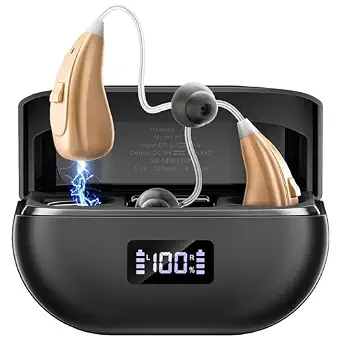 | Best for Simple Long-Run Use | Fit: In-ear | Sound processing: 16-channel | Noise control: Adaptive noise cancellation | VIEW LATEST PRICE | See Our Full Breakdown |
| Audien Atom One OTC Hearing Aids | 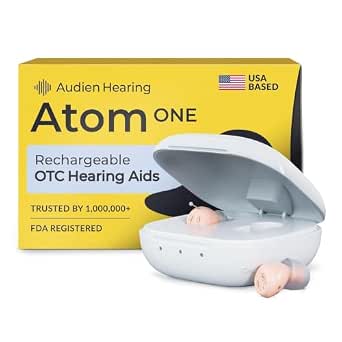 | Best for Manual Adjustments | Fit: In-ear | Controls: Analog volume and frequency dials | Battery life: Up to 24 hours | VIEW LATEST PRICE | See Our Full Breakdown |
| Oction Touchscreen Rechargeable Bluetooth Hearing Aids |  | Best for Streaming and Case Controls | Design: Dolphin-style behind-the-ear | Controls: Touchscreen | Hearing modes: 4 | VIEW LATEST PRICE | See Our Full Breakdown |
| Audien Atom Pro 2 OTC Hearing Aids for Seniors & Adults |  | Best for Discreet Wear | Design: In-canal; 15% smaller than previous generation | Battery life: Up to 24 hours per charge; 48 additional hours from case | Listening modes: Conversation, Restaurant, TV, Outdoor | VIEW LATEST PRICE | See Our Full Breakdown |
| ELEHEAR Beyond Pro Bluetooth Hearing Aids for Seniors |  | Best for Connected Features | Style: Receiver-in-canal (RIC) | Audio technology: VocClear 2.0 | Connectivity: Bluetooth; iOS and Android app | VIEW LATEST PRICE | See Our Full Breakdown |
| SOUNDFIT Hearing Aids for Seniors and Adults |  | Best for Longer Stated Battery Life | Hearing aid technology: Intricon A4 digital chip | Sound processing: 16-channel with smart noise reduction | Listening modes: Normal, Restaurant, Outdoor, Music | VIEW LATEST PRICE | See Our Full Breakdown |
| Karthus OTC Rechargeable Hearing Aids for Seniors with Noise Reduction |  | Best for Simple Controls | Design: RIC behind-the-ear | Digital processing: 16-channel | Hearing modes: Quiet Mode, Noise Mode | VIEW LATEST PRICE | See Our Full Breakdown |
| Rechargeable Hearing Aids for Seniors, Easy to Use, Clear Sound, Black |  | Best for Minimal Controls | Device type: Rechargeable hearing aids | Color: Black | Noise reduction: Yes | VIEW LATEST PRICE | See Our Full Breakdown |
| Rechargeable Hearing Aids for Seniors with Noise Cancelling |  | Best for Simple Behind-the-Ear Controls | Fit: Behind-the-ear | Sound processing: 16-channel chip with noise reduction | Volume control: 5 levels: 24 dB, 28 dB, 32 dB, 36 dB, 40 dB | VIEW LATEST PRICE | See Our Full Breakdown |
| Karthus Rechargeable In-Ear Hearing Aids for Seniors with Noise Reduction, White |  | Best for Discreet Everyday Wear | Brand: Karthus | Fit: In-ear | Intended hearing loss: Mild to moderate | VIEW LATEST PRICE | See Our Full Breakdown |
| Rechargeable Hearing Aids for Seniors & Adults with 16-Channel Noise Reduction, 5-Level Volume, and 100-Hour Battery Life |  | Best for a Fit-Tunable RIC Design | Technology: Receiver-in-canal (RIC) | Channels: 16 | Sound amplification: 40 dB ±5 dB | VIEW LATEST PRICE | See Our Full Breakdown |
| Rechargeable Hearing Amplifiers for Seniors with Noise Cancelling and Charging Case (Blue/Red) |  | Best for Tiny, Low-Visibility Fit | Product type: Hearing amplifier | Fit: Ultra-mini in-canal | Weight: 2 g per device | VIEW LATEST PRICE | See Our Full Breakdown |
| Oricle Hearing Aids for Seniors and Adults with Advanced Noise Cancellation and Portable Charging Case |  | Best for a Simple CIC Routine | Product type: OTC hearing aid | Style: Completely-in-canal (CIC) | Noise cancellation: Advanced | VIEW LATEST PRICE | See Our Full Breakdown |
| hearing aid | Battery life | Fit | Controls |
|---|---|---|---|
| Audien Atom X OTC Hearing Aid | Up to 16 hours per charge; up to 48 hours with case | In-ear | — |
| ELEHEAR Beyond OTC Hearing Aid | Up to 20 hours per charge; up to 100 hours total with case | — | — |
| OTC Hearing Aids for Seniors w | 25+ hours per use; 100+ hours with charging case | In-ear | One button; 5 volume levels |
| Audien Atom One OTC Hearing Ai | Up to 24 hours | In-ear | Analog volume and frequency dials |
| Oction Touchscreen Rechargeabl | Up to 30 hours Bluetooth playback; up to 100 hours standard mode | — | Touchscreen |
| Audien Atom Pro 2 OTC Hearing | Up to 24 hours per charge; 48 additional hours from case | — | — |
| ELEHEAR Beyond Pro Bluetooth H | — | — | — |
| SOUNDFIT Hearing Aids for Seni | Up to 38 hours | Completely-in-canal | Push button |
| Karthus OTC Rechargeable Heari | Up to 30 hours per charge; up to 100 hours with case | — | — |
| Rechargeable Hearing Aids for | Up to 30+ hours per charge; 80+ hours total with case | Lightweight ergonomic design with soft silicone tips | One-button volume control |
| Rechargeable Hearing Aids for | Up to 25 hours per charge; 80–100 hours with case | Behind-the-ear | Button control with volume memory |
| Karthus Rechargeable In-Ear He | Up to 24 hours per charge; up to 96 hours with case | In-ear | — |
| Rechargeable Hearing Aids for | — | — | — |
| Rechargeable Hearing Amplifier | — | Ultra-mini in-canal | Single button; long press for 5 seconds to power on or off |
| Oricle Hearing Aids for Senior | Up to 60 hours | — | Long press for 5 seconds to turn on or off |
More Details on Our Top Picks
Audien Atom X OTC Hearing Aid with Touchscreen Charging Case
The Atom X is the clearest fit for someone who wants to adjust hearing settings without handling tiny device controls or setting up an app. Its CaseControl touchscreen sits on the charging case, and four presets cover common listening situations from conversation to TV. Compared with the Audien Atom One, which uses manual dials on the hearing aids, the Atom X makes switching modes more direct, though it depends on keeping the case nearby for adjustments. Its up to 16 hours per charge and 48 hours with the case suit daily use without disposable batteries. Multiple dome sizes and an expert-guided setup session add practical support. The tradeoff is an in-ear fit that may not work for every ear, and the listed details do not establish software update support.
Pros:- Touchscreen case controls volume and four listening modes without an app
- Rechargeable design provides up to 16 hours per charge and 48 hours with the case
- Includes multiple ear dome sizes, wax guards, and a cleaning kit
- Expert-guided setup session is included
Cons:- The case is needed for touchscreen adjustments
- In-ear fit may not suit all ear shapes or comfort preferences
- Software update support is unspecified
Best for: Adults who want rechargeable in-ear aids with straightforward mode changes and do not want to rely on a smartphone app
Not ideal for: People who need frequent adjustments while away from the charging case or who find in-ear devices uncomfortable
- Fit:In-ear
- Control:Touchscreen charging case (CaseControl)
- Listening modes:4: Conversation, Crowd, TV, Comfort
- Battery life:Up to 16 hours per charge; up to 48 hours with case
- Power:Rechargeable lithium-ion batteries
- Noise control:Active noise cancellation
- Weight:5 g
- Included accessories:Charging case, USB cable, wall adapter, extra domes, wax guards, cleaning brush
Our verdict“Choose the Atom X if app-free mode controls matter more to you than making adjustments directly on the hearing aids.”
ELEHEAR Beyond OTC Hearing Aids for Seniors, AI Powered Speech Enhancement
The Beyond suits buyers who want more control over speech and sound settings than the preset approach of the Audien Atom X. Its VocClear AI speech enhancement, customizable compensation, noise reduction, and feedback control are aimed at making voices easier to follow for people with mild to moderate hearing loss. The app adds volume and personalized adjustments, along with features such as telephone speech enhancement and AI translation. That flexibility can help tailor the sound, but it also means setup is more involved than the Atom X’s case-based controls. The receiver-in-canal design and multiple dome sizes give buyers fit options, while the up to 20 hours per charge and 100 hours with the case reduce charging interruptions. It is not presented for severe hearing loss, and app reliance may frustrate buyers seeking simpler operation.
Pros:- AI speech enhancement, noise reduction, and feedback control target clearer listening
- App offers customizable hearing settings and volume adjustment
- Receiver-in-canal fit includes multiple dome sizes
- Up to 100 hours total use with the charging case
Cons:- Personalized setup and controls rely on the smartphone app
- Not intended for severe hearing loss
- Fit and comfort can vary with ear shape
Best for: Adults with mild to moderate hearing loss who are comfortable using an iOS or Android app to personalize speech settings
Not ideal for: People with severe hearing loss or buyers who want to adjust their aids without a smartphone
- Design:Receiver-in-the-canal
- Audio technology:VocClear AI
- Maximum gain:50 dB
- Noise attenuation:24 dB
- Connectivity:Bluetooth
- App compatibility:iOS and Android
- Battery life:Up to 20 hours per charge; up to 100 hours total with case
- Included fit options:Multiple dome sizes
Our verdict“Pick the ELEHEAR Beyond if app-based speech tuning is your priority and your hearing loss is mild to moderate.”
OTC Hearing Aids for Seniors with Noise Cancelling, 100-Hour Battery Life
This model is aimed at buyers who want basic physical controls and long stretches between charging, rather than app-based tuning or streaming. Its one-button control and five volume levels keep daily adjustments simple, while 16-channel processing and adaptive noise cancellation are intended to help speech stand out across different environments. Compared with the ELEHEAR Beyond, it offers fewer personalization tools and no listed Bluetooth app features, but its operation is less dependent on a phone. The product data lists more than 25 hours on a single use and more than 100 hours with the case, which favors people who dislike frequent charging. The 3 g in-ear design is lightweight, though the one-size fit may be uncomfortable for some. Buyers with complex hearing needs should seek professional guidance before relying on a basic OTC device.
Pros:- One-button operation with five volume levels
- Adaptive noise cancellation and 16-channel sound processing
- More than 25 hours of use per charge and over 100 hours with the case
- Lightweight 3 g in-ear devices
Cons:- One-size in-ear fit may not be comfortable for every wearer
- No listed app-based personalization or Bluetooth features
- Charging case adds bulk when traveling
Best for: Seniors who prefer a single physical control and want long battery use without managing app settings
Not ideal for: People who need a personalized fit, detailed sound adjustments, or support for complex hearing needs
- Fit:In-ear
- Sound processing:16-channel
- Noise control:Adaptive noise cancellation
- Controls:One button; 5 volume levels
- Battery life:25+ hours per use; 100+ hours with charging case
- Charging time:2 hours
- Weight:3 g per hearing aid
- Warranty:1 year
Our verdict“Choose this model for straightforward button control and extended battery use if its fixed in-ear fit works for you.”
Audien Atom One OTC Hearing Aids
The Atom One is a straightforward option for buyers who prefer turning a dial over using a touchscreen or app. Its analog volume and frequency controls let wearers make adjustments directly on the in-ear devices, giving it a more hands-on setup than the Audien Atom X, whose touchscreen controls are on the case. The USB-C dock recharges the aids for up to 24 hours of use, and the included dome sizes and expert setup session may help buyers get started. This simplicity comes with limits: there is no listed noise control, so busy spaces may be less manageable than with the ELEHEAR Beyond or the 16-channel OTC model in this roundup. Manual settings may also take trial and error, and the device is intended for mild to moderate hearing loss rather than more significant needs.
Pros:- Analog dials allow direct volume and frequency adjustments
- Rechargeable battery provides up to 24 hours of use
- USB-C charging dock
- Includes multiple dome sizes and an expert-guided setup session
Cons:- No listed noise control
- Manual dial settings may take trial and error
- Designed for mild to moderate hearing loss
Best for: Adults with mild to moderate hearing loss who want direct, physical volume and frequency adjustments without app setup
Not ideal for: People who often listen in noisy environments or want automatic noise reduction and app-based personalization
- Fit:In-ear
- Controls:Analog volume and frequency dials
- Battery life:Up to 24 hours
- Charging time:Approximately 3 hours
- Charging interface:USB-C
- Noise control:None listed
- Warranty:1 year
- Included items:USB-C dock, cable, power adapter, cleaning brush, adjustment tool, S/M/L domes, wax guard kit
Our verdict“Choose the Atom One if you want manual controls and a full-day rechargeable cycle and can do without noise reduction.”
Oction Touchscreen Rechargeable Bluetooth Hearing Aids
Oction combines case-based controls with Bluetooth streaming, making it the most connected choice in this group. The touchscreen adjusts volume, switches among four modes, and shows battery status; Bluetooth 5.4 adds calls and audio playback from compatible devices. Compared with the Audien Atom X, Oction has a behind-the-ear design and listed streaming, while the Atom X offers expert-guided setup and more specific included fit accessories. Oction’s 16-channel chip, background noise reduction, and stated 5 ms latency support its focus on everyday listening and streamed audio. Its battery data distinguishes up to 30 hours of Bluetooth playback from up to 100 hours in standard hearing mode, so actual runtime depends on how it is used. Buyers who do not need phone streaming may find the touchscreen and case workflow more than they want to manage.
Pros:- Bluetooth 5.4 supports calls and streaming with compatible iOS and Android devices
- Touchscreen case controls volume, four modes, and battery status
- Up to 100 hours in standard hearing mode
- Lightweight behind-the-ear design uses hypoallergenic materials
Cons:- Bluetooth features require a compatible smart device
- Touchscreen controls may take adjustment for users accustomed to physical buttons
- Battery runtime varies by use, with Bluetooth playback listed at up to 30 hours
Best for: Adults who want rechargeable behind-the-ear aids with Bluetooth calls and streaming alongside touchscreen case controls
Not ideal for: Buyers who do not use compatible smart devices or who prefer physical buttons on the hearing aids themselves
- Design:Dolphin-style behind-the-ear
- Controls:Touchscreen
- Hearing modes:4
- Volume levels:10
- Sound processing:16-channel; 5 ms stated latency
- Connectivity:Bluetooth 5.4
- Battery life:Up to 30 hours Bluetooth playback; up to 100 hours standard mode
- Charging time:1 hour for aids; 2 hours for case
Our verdict“Pick Oction if streaming and touchscreen case controls are worth the extra device setup to you.”
Audien Atom Pro 2 OTC Hearing Aids for Seniors & Adults
The nearly invisible in-canal fit gives the Audien Atom Pro 2 a different priority from the behind-the-ear Karthus: it keeps the device less noticeable, while Karthus offers a more accessible over-ear shape. Four presets cover common settings, and the single-button control keeps switching simple without an app. Its UV-C charging case adds a hygiene feature and up to 48 extra hours of power, useful for keeping a pair ready between charges. The tradeoff is less fine control: volume and modes depend on button presses, and the automatic power function has no manual switch. I’d choose this over the larger SOUNDFIT when discretion matters most, but its small in-canal fit may be less comfortable for some ears.
Pros:- Nearly invisible in-canal design is 15% smaller than the previous generation
- UV-C case sanitizes the devices and supplies up to 48 additional hours of battery
- Four listening modes cover conversation, restaurants, TV, and outdoor use
- Includes expert-guided setup, three dome sizes, and a one-year warranty
Cons:- No app controls; mode and volume changes require on-device button presses
- Small in-canal fit may not suit every ear
- Automatic power on and off means there is no manual power switch
Best for: Adults who want a discreet in-canal OTC aid, simple preset changes, and a case that sanitizes while charging
Not ideal for: People who want app-based tuning or easy-to-handle controls, or who find in-canal devices uncomfortable
- Design:In-canal; 15% smaller than previous generation
- Battery life:Up to 24 hours per charge; 48 additional hours from case
- Listening modes:Conversation, Restaurant, TV, Outdoor
- Volume levels:5
- Charging case:USB-C, UV-C sanitizing, 3 extra charges
- Ear domes:3 sizes: S, M, L
- Regulatory status:FDA-registered OTC hearing aid
- Warranty:1 year
Our verdict“Choose the Atom Pro 2 if a discreet in-canal design and sanitizing case matter more than app control and custom tuning.”
ELEHEAR Beyond Pro Bluetooth Hearing Aids for Seniors
For buyers who want phone-connected features, the ELEHEAR Beyond Pro offers more to explore than the button-led Audien Atom Pro 2. VocClear 2.0 speech processing, app controls, and Bluetooth make it the more flexible choice for adjusting sound and using connected functions. Its 20 soundscapes and real-time translation across 20 languages add options beyond basic listening modes, though these features make the companion app part of the experience. The RIC design also differs from the Atom Pro 2’s discreet in-canal fit: it may feel more familiar to people who prefer a device that sits behind the ear, but fit still depends on dome size. A 15-minute charge can provide up to six hours, although full runtime is listed at up to 20 hours—less than the SOUNDFIT’s stated 38 hours.
Pros:- App controls and Bluetooth connectivity for iOS and Android
- VocClear 2.0 processing emphasizes speech clarity and high-frequency detail
- Twenty soundscapes and real-time translation for 20 languages
- A 15-minute charge provides up to six hours of use
Cons:- Advanced features rely on the companion app and setup
- Up to 20 hours of runtime is shorter than SOUNDFIT’s stated battery life
- Fit and comfort depend on ear shape and dome selection
Best for: Smartphone users who want app adjustments, Bluetooth, multiple soundscapes, and translation features in a RIC aid
Not ideal for: People who prefer a simple device without app setup, or who prioritize the longest stated runtime
- Style:Receiver-in-canal (RIC)
- Audio technology:VocClear 2.0
- Connectivity:Bluetooth; iOS and Android app
- Audio latency:8 ms
- Soundscapes:20
- Quick charge:15 minutes for up to 6 hours of use
- Runtime:Up to 20 hours
- Charging case:4 additional full charges
- AI translation:20 languages
Our verdict“Pick the Beyond Pro if connected controls and extra listening features matter more to you than longer runtime or minimal setup.”
SOUNDFIT Hearing Aids for Seniors and Adults
The SOUNDFIT’s clearest distinction in this group is its up to 38-hour battery life, ahead of the ELEHEAR Beyond Pro’s stated 20 hours and the Karthus’s 30 hours per charge. That makes it a practical fit for people who want fewer charging interruptions. Its Intricon A4 chip and 16-channel processing are paired with four modes, including music, so it gives buyers more situational choices than Karthus’s two modes. The completely-in-canal design keeps the hearing aids discreet, though comfort can vary and the small push buttons may be harder to use. IP56 resistance adds protection from dust and moisture, but the charging case adds bulk when packed. I’d favor this over the Audien Atom Pro 2 for stated runtime, while Audien has the more distinctive UV-C sanitizing case.
Pros:- Up to 38 hours of battery life with three additional case recharges
- Four modes include normal, restaurant, outdoor, and music
- 16-channel processing with smart noise reduction
- IP56 water and dust resistance
Cons:- Completely-in-canal fit may be uncomfortable for some users
- Push-button controls can be difficult to adjust
- Charging case adds bulk for travel
Best for: Adults who want a discreet in-canal fit, several listening modes, and longer stated runtime between charges
Not ideal for: People who struggle with small push buttons, dislike in-canal fits, or want a compact travel case
- Hearing aid technology:Intricon A4 digital chip
- Sound processing:16-channel with smart noise reduction
- Listening modes:Normal, Restaurant, Outdoor, Music
- Battery life:Up to 38 hours
- Charging:USB-C fast charging
- Charging case:3 additional recharges
- Fit:Completely-in-canal
- Water resistance:IP56
- Controls:Push button
Our verdict“Choose SOUNDFIT if longer stated runtime and multiple listening modes outweigh case size and button usability for you.”
Karthus OTC Rechargeable Hearing Aids for Seniors with Noise Reduction
Karthus is the most straightforward pick here for buyers who want physical controls and no phone setup. Its one-button operation and two modes offer fewer choices than the SOUNDFIT’s four presets, but that simplicity can make daily adjustments easier. The RIC behind-the-ear design also avoids the fully in-canal fit of SOUNDFIT and Audien Atom Pro 2, which may suit people who find canal devices uncomfortable. Karthus lists up to 30 hours per charge and up to 100 hours with its case, though actual battery life can vary. Its 16-channel processing is aimed at mild to moderate hearing loss; it lacks Bluetooth and app controls, unlike the ELEHEAR Beyond Pro. That is a real limitation for phone streaming or remote adjustments, but also keeps the controls independent of a smartphone.
Pros:- One-button physical control avoids app or Bluetooth setup
- RIC behind-the-ear design with soft ear tips
- Up to 30 hours per charge and up to 100 hours with the case
- 16-channel processing with quiet and noise modes
Cons:- No app, Bluetooth, or wireless connectivity
- Two modes provide fewer environment choices than SOUNDFIT’s four
- Not intended for severe hearing loss
Best for: Seniors with mild to moderate hearing loss who want a rechargeable RIC aid with physical controls and no app
Not ideal for: People who need Bluetooth or app adjustments, or who want more than two listening modes
- Design:RIC behind-the-ear
- Digital processing:16-channel
- Hearing modes:Quiet Mode, Noise Mode
- Volume levels:7
- Battery life:Up to 30 hours per charge; up to 100 hours with case
- Charging:Rechargeable; quick 15-minute charge support
- Connectivity:No app, Bluetooth, or wireless function
- Target hearing loss:Mild to moderate
Our verdict“Choose Karthus if simple physical controls and a behind-the-ear fit matter more than wireless features or a wide range of modes.”
Rechargeable Hearing Aids for Seniors, Easy to Use, Clear Sound, Black
This model is the bare-bones choice in the batch: a single-button volume control, noise reduction, and three silicone tip sizes keep the setup uncomplicated. Compared with Karthus, it does not list multiple hearing modes or 16-channel processing, so buyers get fewer stated adjustment options. That simplicity suits someone who wants basic rechargeable amplification for everyday settings and prefers not to manage a companion app, such as the one used with ELEHEAR Beyond Pro. The product lists up to 30-plus hours per charge and 80-plus hours with its case, but runtime depends on use. Its soft, lightweight fit may help with all-day wear, though a secure fit still depends on choosing the right tip size. I’d place it below Karthus for adjustment flexibility, while its three included tip sizes support fit trials.
Pros:- One-button volume control keeps operation simple
- Up to 30-plus hours per charge and 80-plus hours with the case
- Three silicone ear tip sizes support fit adjustment
- Lightweight ergonomic design for daily wear
Cons:- No specific number of listening modes or processing channels is provided
- Basic controls offer less sound customization than Karthus
- Fit may require trying different ear tip sizes
Best for: Adults or seniors seeking a basic rechargeable aid with one-button volume adjustment and several tip sizes
Not ideal for: Buyers who want named listening modes, detailed sound adjustment, or Bluetooth and app features
- Device type:Rechargeable hearing aids
- Color:Black
- Noise reduction:Yes
- Battery life:Up to 30+ hours per charge; 80+ hours total with case
- Controls:One-button volume control
- Charging case:Included
- Ear tip sizes:S, M, L
- Fit:Lightweight ergonomic design with soft silicone tips
Our verdict“Choose this model if simple volume control and a rechargeable design matter more than advanced tuning or connectivity.”
Rechargeable Hearing Aids for Seniors with Noise Cancelling
Button controls and remembered volume settings make this a straightforward pick for buyers who want to adjust sound without an app. Its 16-channel processing and noise reduction are intended to help voices stand out from background noise, while five preset levels keep daily adjustments simple. Compared with the discreet in-ear Karthus model, this behind-the-ear design is easier to handle but more visible.
Battery endurance is a strong point: the aids run up to 25 hours per charge, and the case is listed for 80–100 hours of total use. The tradeoff is limited fine-tuning: five steps may not suit someone who needs precise adjustments, and no Bluetooth connectivity is specified. I’d choose it for accessible physical controls and long charging intervals, not for app features or an in-ear fit.
Pros:- 16-channel processing with noise reduction is designed to help clarify voices
- Up to 25 hours per charge, with 80–100 hours of total use stated with the case
- Button controls include five volume levels and volume memory
- Behind-the-ear design avoids inserting the main device into the ear canal
Cons:- Five preset volume levels offer limited fine adjustment
- Behind-the-ear shape is more visible than the Karthus in-ear option
- Bluetooth connectivity is not listed
Best for: Adults or seniors who prefer physical buttons, a behind-the-ear fit, and fewer charging interruptions
Not ideal for: Buyers who want a discreet in-ear device, Bluetooth features, or more precise volume adjustment
- Fit:Behind-the-ear
- Sound processing:16-channel chip with noise reduction
- Volume control:5 levels: 24 dB, 28 dB, 32 dB, 36 dB, 40 dB
- Controls:Button control with volume memory
- Battery:Rechargeable lithium-ion
- Battery life:Up to 25 hours per charge; 80–100 hours with case
- Weight:7.2 ounces
- Bluetooth:Not required; connectivity not specified
Our verdict“Choose this model if easy button control and extended case-supported battery life matter more than discreet styling or connected features.”
Karthus Rechargeable In-Ear Hearing Aids for Seniors with Noise Reduction, White
A lightweight in-ear fit gives the Karthus a more discreet profile than the behind-the-ear B0H99KF343. It is aimed at adults with mild to moderate hearing loss and offers two listening modes, noise reduction, and six volume levels. Those extra control steps give it a little more adjustment range than models limited to five levels, though there is no app-based tuning listed.
The Type-C case is rated for up to 96 hours of total use, with up to 24 hours per charge, making it a practical choice for daily conversations, television, and social activities. Its tradeoff is the in-ear fit: comfort and suitability depend on the wearer, and it needs routine charging. I’d favor it over the bulkier B0H99KF343 when appearance matters, while buyers wanting Bluetooth or extensive personalization should look elsewhere.
Pros:- Discreet, lightweight in-ear design at 14.2 g
- Two listening modes and six volume levels provide straightforward adjustment
- Type-C case supports up to 96 hours of total use
- Auto on/off and noise reduction are included
Cons:- Intended for mild to moderate hearing loss only
- No Bluetooth or app-based customization is listed
- Requires regular charging with the case
Best for: Adults with mild to moderate hearing loss who want a discreet in-ear device and simple listening modes
Not ideal for: People who dislike in-ear devices, need app or Bluetooth customization, or have hearing loss beyond the stated intended range
- Brand:Karthus
- Fit:In-ear
- Intended hearing loss:Mild to moderate
- Listening modes:2
- Volume levels:6
- Noise control:Active noise cancellation and noise reduction mode
- Charging:Type-C rechargeable case
- Battery life:Up to 24 hours per charge; up to 96 hours with case
- Weight:14.2 g
Our verdict“Pick the Karthus if you want a discreet in-ear fit with simple mode choices and can manage regular charging.”
Rechargeable Hearing Aids for Seniors & Adults with 16-Channel Noise Reduction, 5-Level Volume, and 100-Hour Battery Life
Receiver-in-canal construction and multiple ear tip sizes make this the fit-focused choice in this group. The set includes small, medium, and large tips, so buyers can try to find a secure, comfortable seal; that can matter for keeping the aids stable during a full day. Its 16-channel processing and noise reduction target voice clarity, much like the B0H99KF343, but this model adds an LED battery display and specifies RIC technology.
Up to 25 hours per charge and 100 hours with the case reduce the need to recharge every day. In exchange, controls remain basic: five volume levels and memory, with no app or Bluetooth customization listed. Three-beep volume indicators may also be less clear for some users. I’d put it ahead of the more basic behind-the-ear option for buyers prioritizing ear-tip fit choices and battery status at a glance.
Pros:- RIC design comes with small, medium, and large ear tips
- 16-channel sound processing with intelligent noise reduction
- LED case display helps monitor remaining battery
- Up to 25 hours per charge and 100 hours with the case
Cons:- Volume control is limited to five levels
- No smartphone app or Bluetooth customization is specified
- Three-beep volume indicators may be unclear to some users
Best for: Adults who want a RIC-style fit with several ear tip sizes and a visible battery status display
Not ideal for: Buyers who need smartphone fine-tuning, Bluetooth functions, or more than five volume steps
- Technology:Receiver-in-canal (RIC)
- Channels:16
- Sound amplification:40 dB ±5 dB
- Volume levels:5 with memory
- Ear tips:1 small, 2 medium, 1 large
- Material:Soft skin-friendly silicone
- Battery life per charge:Up to 25 hours
- Total battery life with case:Up to 100 hours
- Case charging capacity:3–4 full charges
Our verdict“Choose this RIC model if ear-tip fit options and an at-a-glance battery display outweigh the need for connected controls.”
Rechargeable Hearing Amplifiers for Seniors with Noise Cancelling and Charging Case (Blue/Red)
At 2 g per device, this in-canal amplifier is the smallest-wearing option described in the lineup. Its blue and red color options may also help distinguish left from right. A single button and automatic on/off through the charging case keep operation simple for first-time users, while adaptive noise cancellation is designed to prioritize speech. Compared with the Karthus in-ear aids, this pick emphasizes minimal size and simplicity over multiple listening modes and volume steps.
The listed battery life is unusually long at up to 60 hours per charge, with 110+ hours of backup power from the case. But the controls offer only five levels and no advanced mode switching or app customization. It is described as an amplifier, so it may not suit every degree or type of hearing loss. I’d choose it for discreet wear and uncomplicated operation, not detailed sound control.
Pros:- Very small 2 g per-device design
- Single-button operation with automatic on/off through the case
- Up to 60 hours per charge and 110+ hours of case backup power are stated
- Medical-grade silicone construction
Cons:- Only five volume levels, with no advanced mode switching listed
- No app-based customization is specified
- Identified as a hearing amplifier, which may not suit every hearing loss level
Best for: First-time users who prioritize a very small in-canal device, simple controls, and long stated battery life
Not ideal for: People who need app-based adjustments, multiple listening modes, or a hearing aid suited to a specific clinical need
- Product type:Hearing amplifier
- Fit:Ultra-mini in-canal
- Weight:2 g per device
- Material:Medical-grade silicone
- Noise control:Adaptive digital noise cancellation
- Volume levels:5
- Battery life per charge:Up to 60 hours
- Case backup power:110+ hours
- Controls:Single button; long press for 5 seconds to power on or off
Our verdict“This is a fit for buyers who value a tiny, simple amplifier and long stated battery life over tailored sound controls.”
Oricle Hearing Aids for Seniors and Adults with Advanced Noise Cancellation and Portable Charging Case
Oricle pairs a completely-in-canal shape with auto on/off and smart memory, making it a more self-contained daily option than the Karthus, which lists two listening modes. Five sound levels provide basic adjustment, while advanced noise cancellation is intended to make conversations clearer. The soft silicone tips support a secure in-ear fit, though canal comfort varies from person to person.
The stated up to 60 hours of use and portable charging case suit buyers who want fewer charging stops while away from home. There are limits: five levels may not provide enough fine tuning, and manual power control requires a five-second press. Compared with the tiny B0HCV4KJW3 amplifier, Oricle is presented as an OTC hearing aid and adds smart memory, but buyers should still weigh fit and control simplicity against their individual needs.
Pros:- Completely-in-canal design with soft silicone ear tips
- Auto on/off and smart memory support a consistent routine
- Advanced noise cancellation is designed to support clearer conversations
- Portable case and up to 60 hours of stated use
Cons:- Five sound levels may limit fine-tuning
- In-ear fit may not be comfortable for every wearer
- Manual power control requires a five-second long press
Best for: Adults seeking an OTC completely-in-canal aid with auto on/off and remembered sound settings
Not ideal for: People who need many adjustment steps, dislike in-ear devices, or find long-press controls difficult
- Product type:OTC hearing aid
- Style:Completely-in-canal (CIC)
- Noise cancellation:Advanced
- Sound levels:5
- Battery life:Up to 60 hours
- Charging:Portable charging case
- Controls:Long press for 5 seconds to turn on or off
- Automatic operation:Auto on/off
- Memory and ear tips:Smart memory; silicone tips
Our verdict“Choose Oricle if you want a CIC OTC aid with remembered settings and auto operation, provided its in-ear fit suits you.”

How We Picked
I compared the 15 named products by the buyer-relevant details visible in their descriptions: listening and speech features, control method, Bluetooth availability, charging design, fit style, and stated battery claims. I gave more weight to features that could make daily use easier, such as accessible controls and clear information about connectivity and charging, while treating broad phrases like “noise cancelling” as claims to verify rather than proof of performance. The supplied product information does not include standardized sound tests, clinical fitting data, or consistent battery measurements, so this is a feature-based editorial ranking rather than a clinical performance verdict.
The ordering favors options whose stated features address multiple common needs, then distinguishes more specialized choices by ease of use, charging convenience, and listening priorities. The Beyond Pro leads for its combination of Bluetooth and speech-focused positioning; Atom X follows for its touchscreen case, and Beyond for its speech enhancement emphasis. Models with generic descriptions or fewer specified controls rank lower because a buyer has less information for predicting fit and everyday usability. I recommend confirming current specifications, compatibility, return policy, and suitability for your hearing needs before buying.
| hearing aid | Fit |
|---|---|
| Audien Atom X OTC Hearing Aid | In-ear |
| ELEHEAR Beyond OTC Hearing Aid | — |
| OTC Hearing Aids for Seniors w | In-ear |
| Audien Atom One OTC Hearing Ai | In-ear |
| Oction Touchscreen Rechargeabl | — |
| Audien Atom Pro 2 OTC Hearing | — |
| ELEHEAR Beyond Pro Bluetooth H | — |
| SOUNDFIT Hearing Aids for Seni | Completely-in-canal |
| Karthus OTC Rechargeable Heari | — |
| Rechargeable Hearing Aids for | Lightweight ergonomic design with soft silicone tips |
| Rechargeable Hearing Aids for | Behind-the-ear |
| Karthus Rechargeable In-Ear He | In-ear |
| Rechargeable Hearing Aids for | — |
| Rechargeable Hearing Amplifier | Ultra-mini in-canal |
| Oricle Hearing Aids for Senior | — |
Factors to Consider When Choosing Best Hearing Aids
Product feature lists can narrow the field, but they cannot tell you how a device will fit your ears or perform in your daily settings. I’d start with the listening situations you want help with, then check fitting support, controls, connectivity, and the practical terms that determine whether you can keep or return a device.
Match the Device to Your Hearing Needs
OTC hearing aids are intended for adults with perceived mild to moderate hearing loss, and they are not a substitute for a hearing evaluation when symptoms suggest another problem. Sudden hearing changes, pain, drainage, dizziness, or difficulty hearing in just one ear call for medical advice before shopping. A hearing test can also reveal whether your main difficulty involves speech, high pitches, or a more complex pattern that a generic device may not address. Avoid choosing solely by a product’s “for seniors” label, since age does not tell you which sound profile or controls will suit you. If your hearing needs are outside the intended OTC range, ask an audiologist about prescription options and fitting support.
Treat Speech Enhancement and Noise Reduction as Different Claims
Speech enhancement aims to make voices easier to follow, while noise reduction generally refers to managing unwanted background sound; a listing may use both terms without explaining how the device behaves. Think about where listening is hardest for you: conversation in a quiet room, a group meal, television, or outdoor noise can call for different adjustments. A strong claim about “noise cancelling” does not tell you whether voices remain natural or whether the aid has directional microphones. Look for controls that let you adjust programs or sound levels for changing environments. If the seller does not describe those controls, treat that missing detail as a reason to investigate before buying.
Choose Controls You Can Use Without Friction
Daily usability depends on whether you can change volume, select a program, and check charging status comfortably. A touchscreen case may appeal if you prefer controls on the case, while Bluetooth or app features can offer more adjustment options but may require a compatible phone and initial setup. Small buttons can be difficult for people with limited dexterity, and touch controls can be easy to trigger accidentally. Consider who will help with setup and troubleshooting if you do not want to manage a connected device alone. Before purchase, verify what adjustments are available on the hearing aid itself if your phone is unavailable.
Check Fit, Retention, and Comfort Before Committing
An in-ear aid that feels uncomfortable is unlikely to become a useful daily device, even if its feature list looks strong. Check which ear tips are included, whether multiple sizes are supplied, and how the seller explains insertion and cleaning. A secure fit can matter during walks or long conversations, while a tight or poorly seated tip can cause soreness and inconsistent sound. People with dexterity or vision limitations may benefit from larger, clearly marked components and straightforward instructions. Read the return terms closely so you know whether you can try the fit at home and what condition the device must be in for a return.
Compare Battery Claims on Practical Details
Long runtime figures can refer to different usage conditions, and a case’s total charge capacity is not the same as the hours a device runs between charges. Check how long the aids operate per charge, how long the case takes to recharge, and whether the package includes the needed cable or adapter. Rechargeable models reduce the need to replace small batteries, but they also need a dependable charging routine. If you travel or spend long days away from a power source, a case that stores extra charges may matter more than a headline battery figure. Treat unqualified claims such as “100-hour battery life” as something to clarify with the seller.
Know When More Features Are Worth It
Bluetooth, multiple listening programs, and fine-grained sound controls are useful when you will use them, but each can add setup and maintenance. A simpler model may be easier to manage if you mainly want basic amplification and do not need phone streaming. Pay for added features when they solve a specific problem, such as taking calls through the aids or adjusting sound for several regular environments. Check phone compatibility, app availability, warranty coverage, and customer support before relying on connected features. For persistent difficulty despite adjustments, professional guidance may be more valuable than moving to a longer feature list.
Frequently Asked Questions
Can I choose an OTC hearing aid without getting a hearing test?
Adults with perceived mild to moderate hearing loss can shop for OTC hearing aids, but a hearing evaluation can clarify the type and degree of difficulty and help rule out other causes. Seek medical care first for sudden changes, ear pain, drainage, dizziness, or a marked difference between ears. A test is also useful if you have tried amplification before and still struggle to understand speech. The product descriptions in this roundup do not provide individualized fitting data. Use them to compare features, not to diagnose your hearing.
Is Bluetooth worth prioritizing if I mainly want to hear conversations?
Bluetooth is most useful if you want to stream phone calls or audio directly to your hearing aids, or if a compatible app provides adjustments you will use. It is not, by itself, evidence that an aid will make face-to-face conversation clearer. For conversation support, focus on the device’s fitting options, speech features, and controls for different environments. The ELEHEAR Beyond Pro is the clearest Bluetooth-focused option in this lineup, while simpler models may involve less setup. Check compatibility with your specific phone before buying.
How should I compare products that claim 100-hour battery life?
Ask whether that figure describes continuous use, several charges from the case, or total time across a particular usage pattern. Also compare run time per charge, case capacity, charging time, and what accessories come in the box. The listings here do not provide a common testing method, so their battery claims cannot be treated as directly equivalent. If you need the aids for long days away from home, a clear per-charge runtime and dependable case may matter most. Confirm the details with the seller before relying on a headline figure.
What should I do if the hearing aids feel uncomfortable or sound too loud?
Stop using an aid that causes pain, persistent irritation, or a sudden worsening in hearing, and seek medical guidance when symptoms are concerning. For ordinary fit or sound issues, check the insertion instructions, ear-tip size, and volume settings before increasing amplification further. A poor seal can affect both comfort and sound, so trying another supplied tip may help. Confirm the return window and adjustment support before opening or using the device, since policies differ. If you cannot get a comfortable, useful setting, consult a hearing professional rather than forcing the fit.
When should I choose a prescription hearing aid instead of an OTC model?
Prescription care is a better path when hearing loss is severe or complex, when you need a professional fitting, or when OTC adjustments do not provide enough help. A clinician can assess your hearing, look for medical causes, and tune devices to your hearing profile. One-sided changes, sudden loss, ear symptoms, or persistent trouble understanding speech deserve professional attention. OTC devices can be a practical choice for eligible adults who want self-directed adjustments, but the models in this roundup do not include individualized fitting by default. Ask a hearing professional which route fits your test results and daily needs.
Conclusion
For shoppers who want a broad feature set, I’d start with the ELEHEAR Beyond Pro as the best overall candidate, especially if Bluetooth is useful in daily life. The Audien Atom X is my pick for buyers who value a touchscreen charging case, while the ELEHEAR Beyond merits a look if speech enhancement is the priority. I can’t name a defensible best value or best premium model from these descriptions alone because they provide no reliable cost or comparative performance data; compare the current package, support, and return terms before deciding. For beginners, choose the model with the clearest setup instructions, accessible controls, and a return policy that permits a real-world fit check. If your needs are complex or the devices do not help, seek a professional hearing evaluation rather than relying on feature claims.