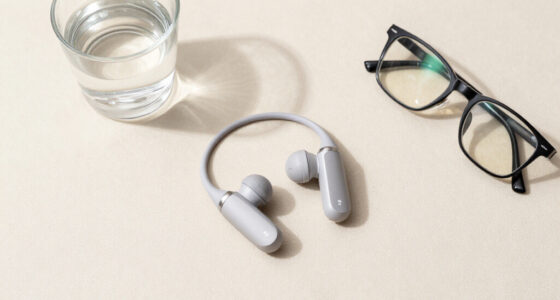

The 15 best hearing enhancement devices for clearer listening span basic sound amplifiers and more adjustable OTC hearing aids, and my best overall pick is the ELEHEAR Beyond Pro for shoppers seeking Bluetooth and rechargeable hearing-aid features. The Convo Hearing Amplifier stands out for a remote microphone, while the Reizen Loud Ear 120dB offers a simpler personal-amplifier approach. The key tradeoff is between straightforward amplification and more tailored listening controls, alongside differences in fit, battery routine, and microphone setup. A higher gain figure alone does not tell you how natural or comfortable speech will sound. Read on for the full comparison, buying advice, and picks matched to different listening needs.

Turn quiet afternoons into listening time
- Thousands of audiobooks, podcasts and originals
- Listen on your phone, tablet or Echo — also offline
- Cancel anytime
Complete the kit


Key Takeaways
- Product type matters more than headline gain: the lineup ranges from pocket-style personal amplifiers to OTC hearing aids with Bluetooth and adjustable sound features.
- ELEHEAR Beyond Pro leads for feature breadth: its rechargeable, Bluetooth-enabled OTC format makes it a stronger all-round choice than simpler amplifiers, though it may be more involved to set up.
- Remote microphones address a different problem: the Convo model and microphone-equipped options can help bring a speaker’s voice forward, while basic amplifiers mainly raise nearby sound.
- Bone conduction offers a distinct fit choice: Aurimi and the 35 g IP56 model avoid conventional in-ear placement, but buyers should weigh that design against comfort and sound preferences.
- Simple kits can suit occasional use: the four-pack and Reizen models focus on direct amplification, but they offer less of the personalization and connectivity associated with OTC hearing aids.






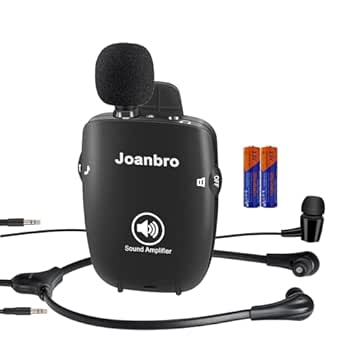
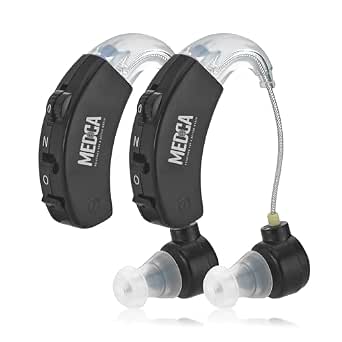
| hearing enhancement devices for clearer listening | Controls | Fit |
|---|---|---|
| Reizen Loud Ear 120dB Gain Per | — | In-ear, right-ear style |
| ELEHEAR Beyond Pro OTC Hearing | App control | Behind-the-ear |
| 4 Pack Personal Hearing Amplif | — | — |
| Rechargeable Hearing Amplifier | — | — |
| Personal Sound Amplifier | Adjustable volume and tone | — |
| Reizen Loud Ear 110 dB Gain Pe | — | In-ear; one headphone included |
| Aurimi Bone Conduction Persona | Buttons; volume control | Open-ear bone conduction |
| Rechargeable Hearing Amplifier | Manual, single-knob operation | — |
| Rechargeable Hearing Aids for | Push button; adjustable volume | In-ear |
| Convo Hearing Amplifier for Se | Remote control; adjustable volume and tone | In-ear |
| Hearing Aids for Seniors with | Touch controls | — |
| Bone Conduction Personal Sound | Button control | Open-ear |
| Audien Atom One OTC Hearing Ai | Dial control | In-ear |
| Personal Sound Amplifier for S | Button control | In-ear |
| Behind the Ear Sound Amplifier | Button control | — |
More Details on Our Top Picks
Reizen Loud Ear 120dB Gain Personal Amplifier
The Reizen Loud Ear is the strongest fit here for listeners who want a simple amplifier that can pick up distant sounds: its listed 120dB gain and reach of up to 100 feet suit birdwatching, lectures, or small-group conversations. It uses a built-in microphone and sends audio through a single in-ear earpiece, so the setup is more direct than the app-based ELEHEAR Beyond Pro. A belt clip and included AAA batteries make it ready to carry without a charging routine. The tradeoff is limited sound control: there is no noise reduction, which can make busy rooms harder to follow, and the one-ear fit may not suit everyone. I’d choose it for reach and simplicity, not for tailored speech processing.
Pros:- Listed 120dB gain and sound pickup range up to 100 feet
- Built-in microphone and compact belt-clip design
- Includes two AAA batteries and an extra headphone
Cons:- No noise-control feature for crowded or noisy settings
- Single in-ear listening may be uncomfortable or unsuitable for some users
- Requires disposable batteries rather than recharging
Best for: Listeners who want a portable, battery-powered amplifier for distant speech, outdoor listening, or small-group conversations.
Not ideal for: People who need background-noise reduction, two-ear listening, or the app-based sound adjustments offered by the ELEHEAR Beyond Pro.
- Audio sensitivity:120dB
- Microphone:Built-in
- Fit:In-ear, right-ear style
- Power:Battery powered; includes 2 AAA batteries
- Listed battery life:48 hours
- Pickup distance:Up to 100 feet
- Frequency range:20Hz–20KHz
- Weight:1.76 ounces
Our verdict“Choose the Reizen Loud Ear if distant sound pickup and a straightforward battery-powered setup matter more than noise reduction or app controls.”
ELEHEAR Beyond Pro OTC Hearing Aids, Bluetooth Rechargeable, Premium Sound
The ELEHEAR Beyond Pro is the most feature-led option in this group for people with mild to moderate hearing loss who want more than basic amplification. Its VocClear 2.0 AI speech enhancement, noise handling, and feedback cancellation are aimed at making conversation easier to separate from surrounding sound. Bluetooth 5.3 and app controls also give it a more adjustable listening experience than the single-control Reizen Loud Ear 120dB. Rechargeable operation, quick charging, and a stated 100 hours total battery capacity can reduce charging interruptions. That flexibility comes with added setup: buyers need a compatible smartphone or tablet to get the most from app adjustments, and the listing does not clarify software-update support. It is also intended for mild to moderate needs, not severe hearing loss.
Pros:- VocClear 2.0 AI and stated 30% speech-clarity improvement
- Noise reduction and feedback cancellation
- Bluetooth 5.3 with app controls and music mode
- Rechargeable design with quick-charge support and stated 100 hours total battery capacity
Cons:- App-based adjustments add setup and smartphone dependence
- Designed for mild to moderate hearing loss rather than severe cases
- Software-update support is unspecified
Best for: Adults with mild to moderate hearing loss who want speech-focused sound processing, Bluetooth, and app-based personalization.
Not ideal for: People who prefer a simple amplifier without a smartphone, need support for severe hearing loss, or want clearly documented software-update support.
- Fit:Behind-the-ear
- Enhancement:50dB
- Speech feature:VocClear 2.0 AI; stated 30% clearer speech
- Connectivity:Bluetooth 5.3
- Controls:App control
- Battery:Lithium-ion rechargeable
- Stated total battery capacity:100 hours
- Color:Champagne Gold
Our verdict“Pick the ELEHEAR Beyond Pro if you want app-adjustable, speech-focused hearing support and are comfortable with a more connected setup.”
4 Pack Personal Hearing Amplifiers with Noise Reduction and Adjustable Volume
This four-pack stands apart from the single-user devices in the roundup: it supplies four amplifiers, which can make sense for a household that wants separate units or a group that needs shared equipment. Each unit offers 50dB gain, eight volume levels, and listed noise reduction, giving users more adjustment than the simpler one-control Rechargeable Hearing Amplifier for Seniors. Its stated range of up to 100 feet also suits listening across a room or outdoors. The compromise is that this is a manual, battery-replacement setup rather than a rechargeable system, and the product information does not specify battery life or battery type. Noise reduction may help in varied settings, but the listing warns that sound quality can vary by environment. I’d prioritize quantity and adjustable volume over polished, individualized sound features.
Pros:- Four amplifiers included for multiple users or backup units
- Eight volume levels for manual adjustment
- 50dB sound gain with listed noise reduction
- Stated listening distance of up to 100 feet
Cons:- Requires manual setup and adjustment
- Battery type and battery life are not specified in the supplied details
- Sound quality may vary with the listening environment
Best for: Families, caregivers, or shared-use settings that need several basic amplifiers with separate volume adjustment.
Not ideal for: A buyer seeking a single discreet rechargeable device, detailed fit guidance, or clearly specified battery performance.
- Package quantity:4 amplifiers
- Sound gain:50dB
- Volume levels:8
- Distance range:Up to 100 feet
- Noise control:Noise reduction
- Material:Plastic
- Ear material:Silicone
- Item weight:1.2 pounds
Our verdict“Choose this set when several people need basic adjustable amplification, but skip it if rechargeable convenience or individualized sound tuning is your priority.”
Rechargeable Hearing Amplifier for Seniors, 45dB Sound Gain, Lightweight Behind-The-Ear Hearing Aid Device, 40 Hours Battery Life
This behind-the-ear amplifier is a straightforward choice for daily conversation and TV listening: it combines 45dB sound gain with a stated 40-hour battery life and one-touch volume control. Those basics make it less complicated than the app-driven ELEHEAR Beyond Pro, while the rechargeable battery avoids the replacement-battery routine of the Reizen Loud Ear. The simple control scheme may suit seniors who want to adjust volume without navigating an app. In return, there is little information here about noise processing, connectivity, or fine-grained sound adjustment, so it offers less tailoring than the ELEHEAR. The behind-the-ear form is lightweight according to the listing, but it may be more visible than an in-ear amplifier. This is a practical daily-use pick when ease matters more than advanced features.
Pros:- Rechargeable operation avoids routine battery replacement
- Stated battery life of 40 hours
- Behind-the-ear design with one-touch volume control
- 45dB sound gain for everyday listening support
Cons:- Requires regular charging
- Behind-the-ear style may be too visible for buyers seeking a discreet fit
- Supplied details do not describe noise reduction or advanced sound adjustments
Best for: Seniors who want a basic rechargeable amplifier for everyday conversations and television, with simple volume control.
Not ideal for: Listeners who need documented noise reduction, app-based tuning, Bluetooth features, or support for severe hearing loss.
- Sound gain:45dB
- Design:Behind-the-ear
- Battery:Rechargeable
- Battery life:40 hours
- Volume control:One-touch
- Intended use:Conversation and TV listening
Our verdict“Pick this model for uncomplicated rechargeable amplification, but choose the ELEHEAR Beyond Pro if app-based speech processing is more important.”
Personal Sound Amplifier – Voice Enhancer Device with 50dB Gain, Up to 100 Feet Range
This compact amplifier suits buyers who want to change both volume and tone while listening to conversation, TV, or outdoor sounds. Its built-in microphone and stated range of up to 100 feet give it a similar long-distance role to the Reizen Loud Ear 120dB, but this model lists 50dB gain and adds tone adjustment rather than emphasizing maximum gain. That can help a listener tailor sound character, though it is not the same as noise reduction or speech-processing technology. The small, lightweight format and included mini earphones make it easy to carry; the tradeoff is a single in-ear listening setup and one AAA battery that is not included. Compared with the rechargeable 45dB behind-the-ear model, this is more portable but needs battery replacement.
Pros:- 50dB sound gain and stated range up to 100 feet
- Separate volume and tone controls
- Built-in microphone and mini earphones included
- Lightweight format for portable use
Cons:- Requires one AAA battery, which is not included
- In-ear listening may not suit every wearer
- May be less effective in noisy environments
Best for: People who want a lightweight, portable amplifier with separate volume and tone controls for indoor or outdoor listening.
Not ideal for: Listeners who need noise reduction, a rechargeable battery, or a fit that does not rely on mini earphones.
- Sound gain:50dB
- Range:Up to 100 feet
- Power source:1 AAA battery
- Microphone:Built-in
- Earphones:Mini earphones included
- Controls:Adjustable volume and tone
- Weight:Lightweight
- Connectivity:Battery powered
Our verdict“Choose this amplifier for portable listening and tone adjustment, but favor a rechargeable or noise-reducing option for more demanding everyday use.”
Reizen Loud Ear 110 dB Gain Personal Amplifier
The Reizen Loud Ear 110 dB suits listeners who need to pick up speech or other sounds from across a room, with a stated range of up to 100 feet. Its clip-on body and simple volume control keep operation straightforward, while the single in-ear headphone focuses sound without requiring a headband. Compared with the Convo Hearing Amplifier, it has a longer stated pickup range but lacks a remote microphone, tone controls, and noise-reduction claims. That makes the Reizen a simpler choice for occasional listening at a distance, not a tailored conversation system. It runs on included AAA batteries for an estimated 48 hours, but only one earpiece is supplied, and the lack of active noise cancellation can make busy settings harder to manage.
Pros:- Stated sound pickup range reaches up to 100 feet.
- Clip-on design can attach to a belt or clothing.
- Estimated 48-hour battery life with two included AAA batteries.
- Straightforward adjustable volume control.
Cons:- Only one in-ear headphone is included.
- No active noise cancellation for crowded or noisy settings.
- Uses replaceable batteries rather than a built-in rechargeable cell.
Best for: People who want a clip-on amplifier for occasional listening to a speaker or sound source at a distance and prefer replaceable AAA batteries.
Not ideal for: Listeners who need both ears covered, noise management in busy places, or discreet all-day hearing support.
- Sensitivity:110 dB ±3 dB per mW
- Frequency range:20 Hz–20 kHz
- Estimated battery life:48 hours
- Power:Two AAA alkaline batteries
- Fit:In-ear; one headphone included
- Dimensions:2.5 × 1.75 × 0.75 in
- Weight:2.4 oz
- Warranty:90 days
Our verdict“Choose the Reizen Loud Ear when long-range pickup and simple clip-on use matter more than stereo listening or noise control.”
Aurimi Bone Conduction Personal Sound Amplifier for Seniors
The Aurimi takes a different route from in-ear picks such as the Rechargeable Hearing Aids for Adults: it sends sound through the cheekbones, leaving the ear canals open. That design may suit someone who wants amplified listening while still hearing surrounding sounds, rather than sealing an ear with a tip. It is also lightweight at 0.88 oz and uses buttons without Bluetooth pairing or setup, which keeps daily operation simple. Its stated 10-hour battery life is practical for a day out, though shorter than the Reizen Loud Ear’s estimated 48 hours. The tradeoff is a basic feature set: there are no listed tone adjustments or advanced sound controls, and the frame may not feel comfortable for every head or cheekbone shape.
Pros:- Open-ear bone conduction leaves ear canals unobstructed.
- Lightweight 0.88-ounce design.
- Button controls require no Bluetooth pairing or setup.
- Up to 10 hours of stated battery life.
Cons:- Basic controls may not offer enough sound customization.
- Fit and comfort may vary with head shape and personal preference.
- The listed battery life is shorter than the Reizen Loud Ear’s estimated 48 hours.
Best for: Seniors who want straightforward, open-ear amplification for television or everyday listening and prefer not to place an earpiece in the ear canal.
Not ideal for: Buyers seeking discreet in-ear styling, adjustable sound profiles, or a stated battery runtime longer than a typical day.
- Fit:Open-ear bone conduction
- Weight:0.88 oz
- Dimensions:6.5 × 4.33 in
- Battery life:Up to 10 hours
- Controls:Buttons; volume control
- Special features:Rechargeable
- Material:Plastic
- Compatible device:Television
Our verdict“Pick the Aurimi if open-ear awareness and uncomplicated controls matter more than discreet fit or detailed sound adjustment.”
Rechargeable Hearing Amplifier with Headphone and Directional Microphone for Seniors
The iRoger is aimed at people who want to point a microphone toward speech and adjust amplification with one knob. Its directional noise-canceling microphone is the main distinction from the Reizen Loud Ear, whose description emphasizes distant pickup but does not list directional noise control. The iRoger also pairs this focused approach with auto gain control, which can help keep changing sound levels easier to follow without frequent manual adjustment. The product information claims up to 120 hours of use, but also lists AA batteries, so buyers should check the supplied power arrangement rather than assume a built-in rechargeable battery. Compared with the feature-rich Convo Hearing Amplifier, it appears simpler and less configurable; its listed six-inch length may also make pocket carry less convenient.
Pros:- Single manual knob keeps volume adjustment simple.
- Directional noise-canceling microphone is designed to favor speech.
- Auto gain control is intended to manage changing sound levels.
- Product description claims up to 120 hours of use.
Cons:- Power details are unclear: the description says rechargeable while the specs list AA batteries.
- No smartphone app or software-update support is listed.
- Six-inch length may be awkward for pocket carry.
Best for: Listeners who want one-knob operation and a directional microphone for speech-focused use at home or while traveling.
Not ideal for: Buyers who want confirmed built-in charging, smartphone controls, or a particularly compact pocket-sized unit.
- Model:IR8
- Microphone:Directional, with noise-canceling feature described
- Sound processing:Auto gain control
- Controls:Manual, single-knob operation
- Power listed:AA batteries; description also claims rechargeable operation
- Stated use time:Up to 120 hours, per product description
- Dimensions:6 × 2.5 in
- Material:Plastic
Our verdict“Choose the iRoger for straightforward, speech-focused microphone use, but verify its battery setup before buying.”
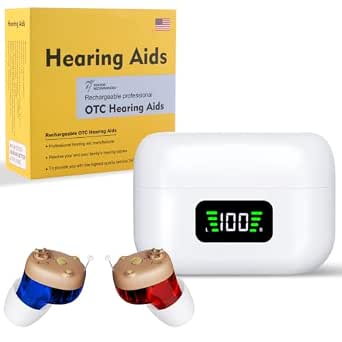
Rechargeable Hearing Aids for Adults, Discreet In-Ear Assistive Devices
These G-93 in-ear amplifiers prioritize a low-profile fit and a charging case, making them a more personal daily-wear option than the clip-on Reizen Loud Ear or the open-ear Aurimi. Adjustable volume, multiple ear-tip options, and automatic power on/off are intended to simplify routine use, while the case’s digital battery display helps users check charge status at a glance. The listed environmental noise cancellation may help with everyday sound, though the product details give little information about how it works or how much control the wearer has. This is not the pick for someone who wants an external microphone for TV or distant conversation, as the Convo offers. It also requires careful cleaning, is not waterproof, and provides limited detail on software or advanced adjustment features.
Pros:- Compact in-ear design is more discreet than clip-on amplifiers.
- Charging case includes a digital battery indicator.
- Adjustable volume and multiple ear-tip options support fit and listening adjustments.
- Automatic power on/off reduces routine button use.
Cons:- Not waterproof, so the devices need careful handling and cleaning.
- Details about noise cancellation and advanced controls are limited.
- In-ear fit may not suit users who dislike ear tips or need open-ear awareness.
Best for: Adults or seniors who prefer discreet in-ear amplification, rechargeable storage, and a visible battery-status display.
Not ideal for: People who need a remote microphone, open-ear awareness, water resistance, or detailed sound customization.
- Model:G-93
- Fit:In-ear
- Power:3.7 V lithium-polymer battery
- Controls:Push button; adjustable volume
- Noise control:Environmental noise cancellation listed
- Audio sensitivity:110 dB
- Dimensions:2.5 × 0.5 in
- Included components:Hearing amplifiers, charging case, and ear tips
- Warranty:One-year free replacement
Our verdict“Choose the G-93 for discreet rechargeable in-ear use, not for remote-microphone listening or robust sound customization.”
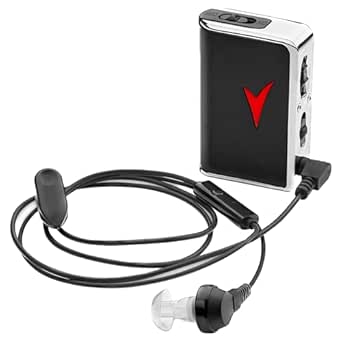
Convo Hearing Amplifier for Seniors with Remote Microphone and Noise Cancelling
The Convo is the strongest fit here for people who want to place a microphone near a television or conversation partner instead of relying only on sound picked up at the ear. Its remote microphone reaches up to 98 feet, close to the Reizen Loud Ear’s stated 100-foot pickup range, while the Convo adds noise reduction and adjustable tone controls for more tailored listening. Those extras make it more adaptable than the simpler Aurimi bone-conduction amplifier, particularly for indoor use with compatible devices. The tradeoff is a more involved setup: the package includes cables, earphones, wired headphones, and a remote microphone, which may be more equipment than someone seeking a discreet everyday device wants. Battery life is listed as 6–24 hours, so runtime varies rather than offering one fixed expectation.
Pros:- Remote microphone supports sound pickup up to 98 feet.
- Noise reduction is listed at up to 16 dB.
- Volume and tone controls allow more adjustment than basic amplifiers.
- Includes headphones, earphones, microphone, and TV and audio cables.
Cons:- Listed battery life varies from 6 to 24 hours.
- Multiple accessories and cables may add setup effort and reduce portability.
- The remote microphone and in-ear setup may be less discreet than compact in-ear aids.
Best for: Seniors who want to hear television or a conversation partner through a remote microphone and value volume and tone adjustment.
Not ideal for: Buyers seeking a very discreet, minimal device or a single predictable battery-life figure for long days away from charging.
- Remote microphone range:Up to 98 ft
- Noise reduction:Up to 16 dB
- Latency:16 ms
- Battery life:6–24 hours
- Recharge time:50 minutes for a full charge
- Controls:Remote control; adjustable volume and tone
- Fit:In-ear
- Compatible devices:Television, smartphone, and audio devices
- Included accessories:Microphone, wired headphones, earphones, TV and audio cables
Our verdict“Pick the Convo for TV and partner-focused listening when remote microphone placement and sound controls outweigh simplicity.”
Hearing Aids for Seniors with Bluetooth, Rechargeable, Smart Noise Cancelling
Wireless calls and music set this model apart from the more conversation-focused Audien Atom One OTC Hearing Aids. Its Bluetooth connection can make it a better fit for someone who wants listening support alongside audio from a phone, while touch controls and three volume levels keep everyday adjustments straightforward. The rechargeable design and portable case also avoid the routine of replacing disposable batteries. The tradeoff is limited detail about how its noise cancellation works, so I would not choose it over the Personal Sound Amplifier for Seniors with Voice Enhancement when adjustable tone and multiple microphone options are the priority. Battery-life figures and app-based customization are not specified either. This is a convenience-first pick, not the clearest choice for buyers who want finely tuned settings or documented performance details.
Pros:- Bluetooth supports calls and music streaming.
- Touch controls and three volume levels offer simple adjustments.
- Rechargeable design comes with a portable charging case.
- Multiple ear-tip sizes support fit adjustment.
Cons:- Battery runtime is not specified.
- Noise-cancellation levels and performance are not detailed.
- No app-based customization is described.
Best for: Seniors who want a rechargeable device for hearing assistance and Bluetooth calls or music, with simple on-device controls.
Not ideal for: Buyers who need detailed noise-control specifications, app-based sound tuning, or clearly stated battery runtime.
- Style:OTC hearing amplifier
- Color:Black
- Connectivity features:Bluetooth calls and music
- Volume control:3 levels
- Controls:Touch controls
- Battery:1 included lithium-ion battery
- Battery weight:22.68 g
Our verdict“Choose this model if Bluetooth streaming and straightforward rechargeable operation matter more to you than detailed sound customization.”
Bone Conduction Personal Sound Amplifier – 35g Ultra Lightweight, IP56 Waterproof, 15-Level Volume Control, Dual Mode Hearing Device for Seniors, Indoor & Outdoor Use
Open-ear listening is the defining advantage here: the design leaves the ear canal unobstructed, which may suit users who want to remain aware of nearby sounds while listening. At 35 g, it is lighter than a typical headphone-style setup, and the 15 volume levels offer more adjustment steps than the three-level Bluetooth Hearing Aids for Seniors in this lineup. Voice and Bluetooth modes switch automatically, with up to 15 hours of playback listed per charge. Those features make it more versatile for moving between amplified voices and personal audio, though it is a wearable sound amplifier rather than a discreet in-ear aid like the Audien Atom One. Buyers should also note that its open fit may not deliver the same sense of isolation, and the supplied information does not specify its noise-reduction performance.
Pros:- Open-ear fit leaves the ear canal unobstructed.
- Lightweight 35 g design is suited to extended wear.
- Dual voice and Bluetooth modes switch automatically.
- Lists up to 15 hours of playback and a 2-hour recharge.
Cons:- Open-ear construction may be less discreet than the Audien Atom One’s in-ear fit.
- Noise-reduction capabilities are not specified in the supplied product details.
Best for: People who want lightweight, open-ear listening for indoor and outdoor use while keeping their ear canals unobstructed.
Not ideal for: Shoppers seeking discreet in-ear amplification or detailed information about noise reduction and sound personalization.
- Fit:Open-ear
- Weight:35 g
- Volume levels:15
- Operating modes:Voice and Bluetooth, with automatic switching
- Playtime:Up to 15 hours
- Charging time:2 hours
- Battery:1 included lithium-polymer battery
- Controls:Button control
- Compatible devices:Laptop, smartphone, and television
Our verdict“Pick this for lightweight, situationally aware listening, but choose an in-ear model if discreet fit is your priority.”
Audien Atom One OTC Hearing Aids
The discreet in-ear fit and dial controls make the Audien Atom One a straightforward option for adults seeking support for mild to moderate hearing loss without an app. Compared with the Bluetooth Hearing Aids for Seniors, it gives up wireless calls and music streaming in favor of a simpler control setup; compared with the bone-conduction amplifier, it is less visible and does not sit outside the ear. Its rechargeable battery also avoids disposable replacements, though the product details call for daily charging and do not specify runtime. No noise control is listed, so busy rooms may be a tougher setting than quiet conversations or television listening. This model makes most sense for buyers who prefer basic, direct adjustments over Bluetooth features or extensive sound controls.
Pros:- Discreet in-ear design weighs 5 g.
- Dial control offers direct volume and frequency adjustments.
- Rechargeable lithium-ion batteries eliminate disposable battery changes.
- Expert-guided setup is included.
Cons:- No noise-control feature is listed.
- Daily charging is required, with no runtime figure provided.
- Specified for mild to moderate hearing loss.
Best for: Adults with mild to moderate hearing loss who want a discreet in-ear OTC device with simple dial adjustments and no app.
Not ideal for: People who need noise reduction for busy environments, Bluetooth streaming, or support beyond mild to moderate hearing loss.
- Fit:In-ear
- Weight:5 g
- Color:Beige
- Controls:Dial control
- Battery:2 lithium-ion batteries required
- Noise control:None listed
- Compatible devices:Smartphone, tablet, and television
- Materials:Plastic or silicone
Our verdict“Choose the Atom One for a discreet, app-free in-ear option, not for Bluetooth streaming or noisy listening environments.”
Personal Sound Amplifier for Seniors with Voice Enhancement, 50dB Gain, Headphones & Earbud, 3 Microphones, 3 Tone Settings, Volume Control
Multiple microphone options and three tone settings make this amplifier a stronger fit for buyers who want to adjust how voices sound than the simpler Audien Atom One, which lists no noise control. Its listed 50 dB sensitivity, noise-reduction features, volume adjustment, and included headphones, earbuds, and extension cables provide several ways to set up listening at home or on the go. That flexibility comes with more controls to learn, so it is less straightforward than the touch-operated Bluetooth Hearing Aids for Seniors. It also runs on two AAA batteries rather than a rechargeable pack, and the supplied information gives an approximate runtime of 40 hours with moderate use. I would favor it for adaptable speech listening, not for buyers who want a discreet, low-maintenance wearable.
Pros:- Three microphones and three tone settings allow listening adjustments.
- Noise reduction and noise cancellation features are listed.
- Includes headphones, earbuds, and extension cables.
- Up to 50 dB audio sensitivity is specified.
Cons:- Requires two AAA batteries, which are not included.
- Moderate-use battery life is listed at approximately 40 hours.
- Multiple controls may take time to learn.
Best for: Adults who want adjustable tone and microphone options for conversations, television, and varied listening setups.
Not ideal for: People who prefer a discreet rechargeable aid or want to avoid learning several controls and replacing AAA batteries.
- Audio sensitivity:50 dB
- Microphones:3
- Tone settings:3
- Noise control:Active noise cancellation and noise reduction
- Fit:In-ear
- Power:2 AAA alkaline batteries required
- Controls:Button control
- Included listening accessories:Headphones, earbuds, and extension cables
Our verdict“Choose this amplifier if adjustable voice listening and included accessory options outweigh battery changes and a more involved setup.”
Behind the Ear Sound Amplifier – Digital Hearing Aid for Seniors, Noise Reducing, Black
Simple on/off and volume controls give this behind-the-ear amplifier a more basic operating approach than the Personal Sound Amplifier for Seniors with Voice Enhancement, which offers multiple microphones and tone settings. Its listed noise reduction and feedback control may appeal to people who want amplification without programming, while the behind-the-ear format keeps the main unit compact. The tradeoff is limited detail: the product data does not specify its level of amplification, runtime, or fine-tuning options. It also uses nonstandard batteries, which may be less convenient to source than the AAA cells used by the Personal Sound Amplifier. Fit can depend on choosing suitable silicone dome sizes, so I would not assume the compact design will feel comfortable without attention to that detail.
Pros:- Compact behind-the-ear design.
- On/off and volume controls are described as straightforward.
- Noise reduction and feedback control are listed.
- Compatible with smartphones and televisions.
Cons:- Uses nonstandard batteries that may be harder to source.
- Specific amplification and battery-runtime figures are not provided.
- Comfort and sound quality depend on finding suitable silicone dome sizes.
Best for: Seniors who want a compact amplifier with basic on/off and volume controls rather than multiple sound settings.
Not ideal for: Buyers who need extensive sound customization, clearly stated battery runtime, or readily available standard batteries.
- Design:Behind-the-ear sound amplifier
- Color:Black
- Fit listed:In-ear
- Noise feature:Noise reduction
- Power:Battery powered
- Battery quantity:6
- Battery type:Nonstandard
- Controls:Button control
- Compatible devices:Smartphone and television
Our verdict“Choose this model for basic behind-the-ear operation, but look elsewhere if you need detailed tuning or standard batteries.”

How We Picked
I ranked these devices by how well their stated design and features match clearer everyday listening, not by gain figures alone. I gave more weight to usable sound controls, microphone direction or remote-microphone support, rechargeable convenience, fit options, and practical versatility across settings. I also separated personal sound amplifiers from OTC hearing aids, since they serve different expectations and should not be treated as interchangeable.
The ordering favors options with a stronger mix of listening features and everyday usability, then places more specialized or simpler designs according to the buyers they serve. Product information supplied for this roundup does not establish clinical performance, individual fit, or outcomes for a particular hearing profile, so I avoid treating maximum gain or noise-reduction claims as proof of better speech clarity. Tradeoffs such as setup demands, limited customization, and wearing style count against a product when they narrow its usefulness.
| hearing enhancement devices for clearer listening | Fit |
|---|---|
| Reizen Loud Ear 120dB Gain Per | In-ear, right-ear style |
| ELEHEAR Beyond Pro OTC Hearing | Behind-the-ear |
| 4 Pack Personal Hearing Amplif | — |
| Rechargeable Hearing Amplifier | — |
| Personal Sound Amplifier | — |
| Reizen Loud Ear 110 dB Gain Pe | In-ear; one headphone included |
| Aurimi Bone Conduction Persona | Open-ear bone conduction |
| Rechargeable Hearing Amplifier | — |
| Rechargeable Hearing Aids for | In-ear |
| Convo Hearing Amplifier for Se | In-ear |
| Hearing Aids for Seniors with | — |
| Bone Conduction Personal Sound | Open-ear |
| Audien Atom One OTC Hearing Ai | In-ear |
| Personal Sound Amplifier for S | In-ear |
| Behind the Ear Sound Amplifier | — |
Factors to Consider When Choosing 15 Best Hearing Enhancement Devices For Clearer Listening
Before choosing, decide what listening problem you want to address: hearing a nearby conversation, following someone across a room, or getting more adjustable help throughout the day. The distinctions below can prevent a common mismatch: buying a simple amplifier when you need targeted microphone support, or choosing a feature-rich hearing aid when a basic device would meet occasional needs.
Choose an amplifier or an OTC hearing aid
A personal sound amplifier raises sound, while an OTC hearing aid is designed as a hearing-aid product with more hearing-focused controls or processing. Those labels do not guarantee the same level of adjustment, so check the specific controls rather than relying on the product name. If you need occasional help hearing a television or nearby conversation, a simple amplifier may be easier to operate. If you want Bluetooth or multiple sound settings, an OTC model may fit better. A common mistake is expecting any amplifier to correct a hearing loss profile. If speech remains difficult or hearing changes suddenly, get guidance from a hearing professional rather than increasing volume indefinitely.
Match the microphone to the listening distance
Microphone placement can matter more than a large gain number when the speaker is not close to you. A directional or remote microphone can focus on a voice and reduce some competing room sound, while an on-device microphone mainly captures what is around the wearer. For one-to-one conversation in a quiet room, a basic setup may be enough. For meetings, group settings, or a speaker farther away, look closely at how the microphone connects and where it can be placed. Do not assume a product described as noise reducing will isolate speech in every noisy environment. Consider whether you can manage the microphone and its accessories without help.
Treat gain claims as only one part of clarity
Gain describes amplification, not how natural speech will sound or how well a device separates voices from background noise. A high maximum can be uncomfortable if the sound is harsh, feedback-prone, or difficult to adjust in small steps. Look for usable volume and tone controls, and consider whether the device lets you change settings without removing it. Start at a comfortable level and increase gradually rather than turning it up to compensate for poor microphone placement. If the device has several modes, check that the controls are simple enough for daily use. Fit, adjustment, and listening conditions all shape the result.
Compare wearing style with comfort and routine
Behind-the-ear, in-ear, headphone-style, and bone-conduction designs feel different and suit different preferences. In-ear models may be less visible, but ear-canal comfort and fit can be dealbreakers; bone-conduction models avoid a conventional earbud fit but may feel unfamiliar. Headphones can be simpler to put on, though they may be less discreet or less convenient for all-day wear. Think about glasses, hair, dexterity, and how often you will put the device on and take it off. A device that feels easy to wear is more useful than one with extra features left unused. Check what accessories and tip or fit options come with the specific model.
Plan for charging, batteries, and maintenance
Rechargeable devices reduce the need to keep replacement batteries on hand, while battery-powered designs can be useful when charging access is limited. Compare the stated runtime with your daily schedule and remember that Bluetooth or higher volume may affect how often a rechargeable unit needs power. Small devices also require routine cleaning, especially around openings that can collect wax or debris. Ask whether the package includes the charger, storage case, cleaning tools, or replacement parts you may need. A long battery-life claim is less useful if the charging process is awkward for the wearer. Build a simple care routine before deciding a device is low maintenance.
Set a realistic budget and support plan
Paying more can make sense when you will use Bluetooth, adjustable sound programs, or a remote microphone regularly, but extra features do not guarantee a better fit. For occasional amplification, a simpler model may be a more sensible starting point. Before buying, check the return window, warranty, customer support, and whether adjustments or professional guidance are available. These policies matter because comfort and speech clarity vary by person and setting. Avoid choosing solely by a low advertised cost or a long feature list. The best match is the device you can operate, maintain, and wear consistently.
Frequently Asked Questions
Should I choose an OTC hearing aid or a personal sound amplifier?
Choose based on the kind of help you expect, not just the product label. Personal amplifiers generally raise surrounding sound and can suit occasional listening needs, while OTC hearing aids are intended as hearing-aid devices and may offer more hearing-focused controls. The products in this lineup vary widely, from simple Reizen amplifiers to Bluetooth-enabled models such as ELEHEAR Beyond Pro. Check whether you need adjustable programs, phone connectivity, or a straightforward volume control. If you are unsure about the nature of your hearing difficulty, a hearing professional can help you decide whether an OTC option is appropriate.
Will a higher gain rating make speech clearer?
Not by itself. Gain indicates how much a device can amplify sound, but clarity also depends on microphone direction, fit, sound processing, and the background noise around you. A very high setting may make all sounds louder without making speech easier to understand. The Reizen models emphasize high-gain amplification, while microphone-focused options address how sound is collected. Start with a comfortable setting and check clarity in the environment where you expect to use the device. Persistent difficulty understanding speech calls for professional advice rather than simply turning the volume higher.
Is a remote microphone useful if I mostly listen to one person?
It can help when that person is across a room or surrounded by competing sound, since the microphone can be placed closer to the speaker. For a nearby conversation in a quiet setting, an on-device microphone may already meet your needs. The Convo model is the clearest fit in this roundup for buyers who want a remote-microphone setup, and another listed amplifier includes a directional microphone. Check how the accessory pairs, how it is powered, and whether the speaker will be comfortable using it. A remote microphone is less useful if you need to follow several people moving around a room.
Are bone-conduction hearing amplifiers a good alternative to in-ear devices?
They may suit people who dislike placing an earbud or hearing device in the ear canal. Aurimi and the lightweight IP56 model offer bone-conduction designs, giving them a distinct fit option compared with the discreet in-ear products in this lineup. The wearing feel and sound experience differ from conventional in-ear amplification, so a feature list cannot predict individual comfort. Check how the device sits on your head and whether its controls are easy to reach. If possible, confirm the return policy before buying, since fit preference is personal.
What should I check before buying a rechargeable device?
Look beyond the stated runtime and check whether the charger is included, how long charging takes, and whether the device can cover your typical day. Bluetooth use, volume settings, and the age or condition of the battery can affect how often charging is needed. Also consider whether you can handle the charging case and small components comfortably. Rechargeable models can simplify daily battery changes, but they depend on having a reliable charging routine. Compare the maker’s care, warranty, and replacement-part information before deciding that rechargeable is automatically the better choice.
Conclusion
For the broadest mix of connected and rechargeable hearing-aid features, I would start with the ELEHEAR Beyond Pro as best overall, while recognizing that buyers seeking basic amplification may prefer a simpler device. My best value direction is the four-pack personal amplifier for households or occasional use where straightforward volume control matters more than advanced adjustment. For best premium features, ELEHEAR Beyond Pro is the standout in this lineup; for beginners, a Reizen Loud Ear model offers a more direct personal-amplifier approach. Choose the Convo for remote-microphone support, or consider Aurimi and the lightweight bone-conduction model if conventional in-ear fit is a poor match. If you need individualized fitting or ongoing hearing support, consult a hearing professional before settling on any device.