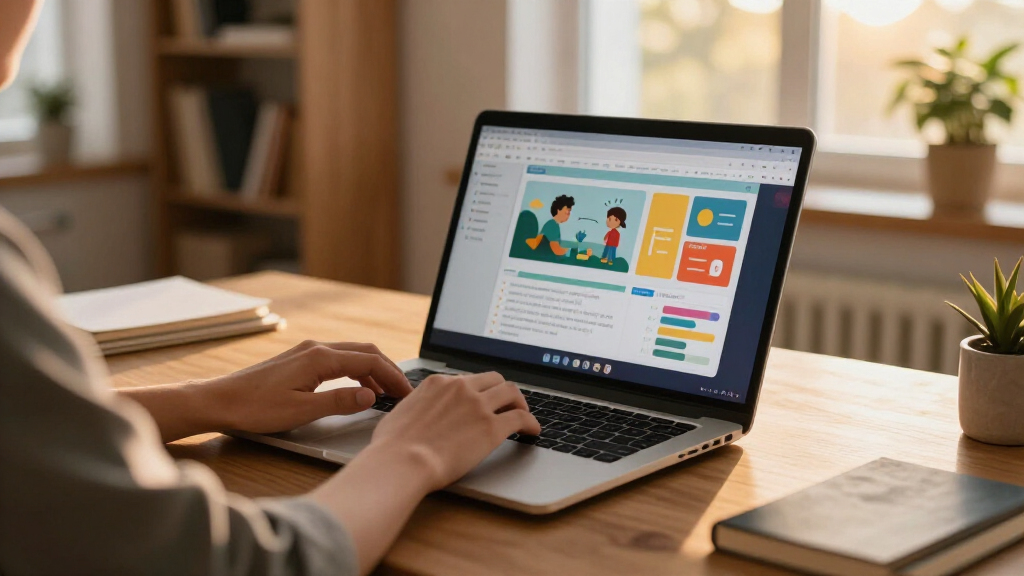

The best laptops for students with large screens pair a 17.3-inch display with enough memory and processing power for coursework without becoming needlessly expensive. I rank the HP 17 Inch FHD Laptop 2026 Edition as the best overall choice because its Ryzen 5 processor, 16GB of RAM, 512GB SSD, and Full HD screen form the most balanced package here. The 32GB RAM and 1TB SSD HP 17 is my premium pick for heavier workloads, while the Intel Core i5 student model offers better value if an HD+ screen is acceptable. The main tradeoffs are screen sharpness, memory, storage, portability, and whether bundled software justifies a higher price. Continue reading for the full breakdown and the buyer profiles that fit each model.

Turn quiet afternoons into listening time
- Thousands of audiobooks, podcasts and originals
- Listen on your phone, tablet or Echo — also offline
- Cancel anytime
Complete the kit


Key Takeaways
- The HP 17 Inch FHD 2026 Edition leads the roundup because it combines the preferred Full HD resolution with 16GB of RAM and a Ryzen 5 processor, avoiding the biggest compromises found lower in the ranking.
- Full HD separates the strongest study displays from the cheaper options. On a 17.3-inch panel, the extra resolution makes text, spreadsheets, and split-screen windows look cleaner than they do on the HD+ models.
- The 32GB RAM and 1TB SSD HP 17 is the premium multitasking choice, but most students will receive better value from 16GB of memory unless they run virtual machines, large creative projects, or demanding technical software.
- The Intel Core i5 student model offers the strongest value configuration through its 16GB of RAM, 512GB SSD, Wi-Fi 6, numeric keypad, and webcam shutter, though its HD+ display keeps it below the FHD leaders.
- The entry-level Ryzen 3 and Core i3 models suit lighter coursework, while the Windows 11 Pro model with advertised lifetime Office appeals to administration-focused buyers only after the software license and seller support are verified.
| HP 17 Inch FHD Laptop 2026 Edition |  | Best Overall | Processor: AMD Ryzen 5 7430U, 6 cores and 12 threads, up to 4.3GHz | Display: 17.3-inch Full HD IPS anti-glare | RAM: 16GB DDR4 | VIEW LATEST PRICE | See Our Full Breakdown |
| HP 17 Laptop with 32GB RAM and 1TB SSD |  | Best for Heavy Multitasking | Processor: AMD Ryzen 5, up to 4.6GHz | Display: 17.3-inch, 1600 x 900 | RAM: Up to 32GB | VIEW LATEST PRICE | See Our Full Breakdown |
| HP 17.3-inch Laptop with AMD Ryzen 5 7520U |  | Best Eco-Conscious Pick | Processor: AMD Ryzen 5 7520U | Display: 17.3-inch HD+ anti-glare | RAM: 16GB LPDDR5 | VIEW LATEST PRICE | See Our Full Breakdown |
| HP 17 Laptop with 11th Gen Intel Core i3 |  | Best for Basic Coursework | Processor: 11th Gen Intel Core i3-1125G4, 4 cores and 8 threads, 2.0GHz to 3.7GHz | Display: 17.3-inch HD+ anti-glare, 1600 x 900 | RAM: 8GB | VIEW LATEST PRICE | See Our Full Breakdown |
| HP 17.3-inch HD+ Laptop with Intel Core i5 120U |  | Best for Spreadsheet Work | Processor: Intel Core i5 120U, 10 cores, up to 5.0GHz | Display: 17.3-inch HD+ anti-glare, 1600 x 900 | RAM: 16GB | VIEW LATEST PRICE | See Our Full Breakdown |
| HP 17.3-inch FHD IPS Laptop with AMD Ryzen 5 |  | Best Balanced Everyday Pick | Display: 17.3-inch FHD IPS | Processor: AMD Ryzen 5 7520U, up to 4.3GHz | RAM: 8GB DDR5 | VIEW LATEST PRICE | See Our Full Breakdown |
| HP 17.3-inch FHD Business Laptop with AMD Ryzen 5 |  | Best for CPU-Heavy Coursework | Display: 17.3-inch FHD | Processor: AMD Ryzen 5 7430U, 6 cores and 12 threads, up to 4.3GHz | RAM: 8GB DDR5 | VIEW LATEST PRICE | See Our Full Breakdown |
| HP OmniBook 3 17.3-inch Laptop PC |  | Best Battery Life | Display: 17.3-inch FHD IPS | Processor: AMD Ryzen 3 30 | RAM: 8GB LPDDR5 | VIEW LATEST PRICE | See Our Full Breakdown |
| HP 17 Laptop with Windows 11 Pro and Lifetime MS Office |  | Best Software Bundle | Display: 17.3-inch FHD 1920 x 1080 anti-glare | Processor: AMD Ryzen 5 7520U, up to 4.3GHz | RAM: 8GB DDR5 | VIEW LATEST PRICE | See Our Full Breakdown |
| laptops for students with large screen | Processor | Display | RAM | Storage |
|---|---|---|---|---|
| HP 17 Inch FHD Laptop 2026 Edi | AMD Ryzen 5 7430U, 6 cores and 12 threads, up to 4.3GHz | 17.3-inch Full HD IPS anti-glare | 16GB DDR4 | 512GB PCIe NVMe SSD |
| HP 17 Laptop with 32GB RAM and | AMD Ryzen 5, up to 4.6GHz | 17.3-inch, 1600 x 900 | Up to 32GB | 1TB SSD |
| HP 17.3-inch Laptop with AMD R | AMD Ryzen 5 7520U | 17.3-inch HD+ anti-glare | 16GB LPDDR5 | 512GB PCIe NVMe M.2 SSD |
| HP 17 Laptop with 11th Gen Int | 11th Gen Intel Core i3-1125G4, 4 cores and 8 threads, 2.0GHz to 3.7GHz | 17.3-inch HD+ anti-glare, 1600 x 900 | 8GB | 256GB PCIe NVMe SSD |
| HP 17.3-inch HD+ Laptop with I | Intel Core i5 120U, 10 cores, up to 5.0GHz | 17.3-inch HD+ anti-glare, 1600 x 900 | 16GB | 512GB SSD |
| HP 17.3-inch FHD IPS Laptop wi | AMD Ryzen 5 7520U, up to 4.3GHz | 17.3-inch FHD IPS | 8GB DDR5 | 512GB SSD |
| HP 17.3-inch FHD Business Lapt | AMD Ryzen 5 7430U, 6 cores and 12 threads, up to 4.3GHz | 17.3-inch FHD | 8GB DDR5 | 256GB SSD plus 500GB external storage |
| HP OmniBook 3 17.3-inch Laptop | AMD Ryzen 3 30 | 17.3-inch FHD IPS | 8GB LPDDR5 | 512GB PCIe NVMe M.2 SSD |
| HP 17 Laptop with Windows 11 P | AMD Ryzen 5 7520U, up to 4.3GHz | 17.3-inch FHD 1920 x 1080 anti-glare | 8GB DDR5 | 512GB SSD |
More Details on Our Top Picks
HP 17 Inch FHD Laptop 2026 Edition
I rank the HP 17 Inch FHD Laptop 2026 Edition first because it pairs a genuinely sharp 17.3-inch FHD IPS panel with enough processing power for research, video calls, coding, and demanding browser workloads. Its Ryzen 5 7430U is a stronger all-around academic processor than the Ryzen 5 7520U in the HP 17.3-inch HD+ Laptop, while the higher-resolution screen gives text and diagrams cleaner edges. The 16GB RAM and 512GB SSD configuration also avoids paying for the 32GB capacity of the HP 17 Laptop B0DP15YMQ8 when standard coursework rarely needs it. Integrated graphics rule out serious gaming and GPU-heavy media production, and the large chassis will occupy plenty of backpack space. With no stated battery runtime, I see this as a balanced desk-first choice, not the safest option for full days away from an outlet.
Pros:- Six-core Ryzen 5 processor supports demanding multitasking
- Full HD IPS panel provides sharper text and wider viewing angles than HD+ alternatives
- 16GB RAM and a 512GB NVMe SSD form a balanced student configuration
- Wi-Fi 6, Bluetooth 5.3, Fast Charge, and a privacy shutter add practical convenience
Cons:- Large 17.3-inch chassis is cumbersome for frequent commuting
- Integrated Radeon graphics are unsuitable for demanding 3D or GPU-accelerated work
- Battery runtime is not specified
Best for: Students who want a sharp 17.3-inch screen and enough performance for mixed coursework without paying for unusually high memory capacity
Not ideal for: Daily commuters and graphics students who need a light machine, confirmed all-day battery life, or dedicated graphics
- Processor:AMD Ryzen 5 7430U, 6 cores and 12 threads, up to 4.3GHz
- Display:17.3-inch Full HD IPS anti-glare
- RAM:16GB DDR4
- Storage:512GB PCIe NVMe SSD
- Graphics:Integrated AMD Radeon Graphics
- Operating System:Windows 11
- Wireless:Wi-Fi 6 and Bluetooth 5.3
- Additional Features:Fast Charge, privacy-shutter webcam, stereo speakers, and AMD FreeSync
Our verdict“I recommend this as the strongest all-around pick for students who value screen quality, capable multitasking, and sensible storage.”
HP 17 Laptop with 32GB RAM and 1TB SSD
I place the HP 17 Laptop with 32GB RAM and 1TB SSD ahead of the lower-capacity models for students who keep large datasets, many browser tabs, and several applications open together. Its 32GB memory and 1TB storage double the listed capacities of the HP 17 Inch FHD Laptop 2026 Edition, while the included Office 2024 Professional Plus license may suit document-heavy courses. The catch is the display listing: despite the FHD wording, 1600 x 900 is HD+, so it offers more workspace than a smaller laptop but less detail than a 1920 x 1080 panel. At 4.6 pounds, it also favors a dorm desk over daily campus travel. I rank it below the overall pick because capacity takes priority over screen quality, and its USB-C port does not handle charging or external-display output.
Pros:- 32GB RAM provides generous headroom for intensive multitasking
- 1TB SSD accommodates large project libraries and offline files
- Microsoft Office 2024 Professional Plus lifetime license is included
- Wi-Fi 6 and Bluetooth 5.3 provide current wireless connectivity
Cons:- 1600 x 900 resolution does not meet the usual 1920 x 1080 Full HD standard
- USB-C is limited to data transfer rather than charging or monitor output
- The 4.6-pound body is inconvenient for frequent campus travel
Best for: Business, accounting, and research students who run many applications and need substantial local storage for documents or datasets
Not ideal for: Design students and frequent commuters who would benefit more from a sharper panel, lighter weight, and fully featured USB-C connectivity
- Processor:AMD Ryzen 5, up to 4.6GHz
- Display:17.3-inch, 1600 x 900
- RAM:Up to 32GB
- Storage:1TB SSD
- Graphics:Integrated AMD Radeon Graphics
- Operating System:Windows 11 Home
- Office License:Microsoft Office 2024 Professional Plus lifetime license
- Weight:4.6 lbs
- Ports:HDMI, two USB Type-A, USB Type-C, audio combo jack, and AC smart pin
Our verdict“I recommend this configuration when memory and storage matter more than display sharpness or portability.”
HP 17.3-inch Laptop with AMD Ryzen 5 7520U
The HP 17.3-inch Laptop with Ryzen 5 7520U earns its place through a practical combination of large-screen comfort and recycled-material construction. Ocean-bound and post-consumer plastics distinguish it from the other HP models here, while 16GB of LPDDR5 memory and a 512GB NVMe SSD are ample for writing, streaming, and routine multitasking. I would choose the HP 17 Inch FHD Laptop 2026 Edition instead for heavier workloads or sharper visuals: its Ryzen 5 7430U is better suited to sustained multitasking, and its FHD IPS display exceeds this model’s lower-resolution HD+ panel. This pick also remains bulky, despite its environmental angle, and Radeon integrated graphics limit demanding creative software. I rank it as a purpose-led alternative for buyers who value material choices without dropping to an entry-level memory configuration.
Pros:- Construction incorporates ocean-bound and post-consumer recycled plastics
- 16GB LPDDR5 memory supports smooth everyday multitasking
- 512GB NVMe SSD offers responsive storage with useful capacity
- Anti-glare screen and physical camera shutter suit study sessions and video calls
Cons:- HD+ display is less detailed than the Full HD IPS panel on the leading pick
- Ryzen 5 7520U is less suitable for demanding multitasking than the Ryzen 5 7430U option
- Large chassis is awkward to carry regularly
Best for: Environmentally minded students who mainly write, research, stream lectures, and want a large anti-glare screen with 16GB of memory
Not ideal for: Engineering, media, or design students who need stronger processing, Full HD detail, or dedicated graphics acceleration
- Processor:AMD Ryzen 5 7520U
- Display:17.3-inch HD+ anti-glare
- RAM:16GB LPDDR5
- Storage:512GB PCIe NVMe M.2 SSD
- Graphics:AMD Radeon integrated graphics
- Operating System:Windows 11 Home
- Camera:HP True Vision HD camera with physical shutter
- Materials:Ocean-bound plastic and post-consumer recycled plastic
Our verdict“I recommend this model to environmentally minded students whose workloads are moderate and whose screen-size preference outweighs resolution concerns.”
HP 17 Laptop with 11th Gen Intel Core i3
I reserve the HP 17 Laptop with 11th Gen Core i3 for students whose work stays inside word processors, learning portals, email, and streamed lectures. Its four-core processor, 8GB RAM, and 256GB SSD cover those basics, while the 17.3-inch anti-glare screen makes split documents easier to read than on a compact notebook. It sits below the HP 17.3-inch Laptop with Ryzen 5 7520U because that model offers twice the memory and storage, giving it more room for demanding semesters. Here, limited upgrade headroom is the defining compromise: large tab collections, coding tools, and creative applications can expose the modest RAM and older processor. The 1600 x 900 panel is also less crisp than the FHD IPS leader. I see this as a straightforward coursework machine, not a long-term choice for technical majors.
Pros:- Large anti-glare display supports side-by-side documents
- Four-core Core i3 processor is adequate for routine academic applications
- PCIe NVMe SSD provides faster startup and loading than hard-drive storage
- HDMI and multiple USB formats support common classroom accessories
Cons:- 8GB RAM can become restrictive during heavy browser and application multitasking
- 256GB SSD offers the least storage among these five models
- 1600 x 900 display lacks the sharpness of a 1920 x 1080 panel
Best for: Students focused on essays, web research, email, online classes, and other light coursework performed mainly at a desk
Not ideal for: Computer science, engineering, and creative-media students who need more memory, storage, processing power, or display detail
- Processor:11th Gen Intel Core i3-1125G4, 4 cores and 8 threads, 2.0GHz to 3.7GHz
- Display:17.3-inch HD+ anti-glare, 1600 x 900
- RAM:8GB
- Storage:256GB PCIe NVMe SSD
- Wireless:Wi-Fi and Bluetooth
- Video Output:HDMI
- USB Connectivity:USB Type-C and USB Type-A
- Audio Connection:Headphone and microphone combo jack
Our verdict“I would choose this only for light academic workloads where a large screen matters more than performance headroom.”
HP 17.3-inch HD+ Laptop with Intel Core i5 120U
I favor the HP 17.3-inch Laptop with Intel Core i5 120U for accounting, statistics, and business students who spend hours in spreadsheets. Its 10-core processor and numeric keypad make calculations and multitasking more comfortable than on the Core i3-based HP 17 Laptop, while 16GB RAM and a 512GB SSD provide sensible capacity for several years of coursework. The anti-glare panel helps under bright classroom lighting, and the privacy shutter gives video-call users a physical safeguard. Yet its 1600 x 900 resolution cannot display as much fine detail as the FHD IPS screen on the HP 17 Inch FHD Laptop 2026 Edition. At 4.6 pounds, it remains a desk-oriented machine, and integrated graphics constrain 3D design or advanced video work. I rank it as the productivity specialist, with CPU speed favored over pixel density.
Pros:- Ten-core Intel Core i5 120U offers strong multitasking performance
- Numeric keypad improves high-volume spreadsheet and data entry work
- 16GB RAM and 512GB SSD provide balanced capacity
- Anti-glare display, Wi-Fi 6, and webcam privacy shutter support everyday study
Cons:- 1600 x 900 panel is less sharp than the Full HD IPS alternative
- Integrated graphics limit demanding gaming, 3D work, and video production
- Upgraded components carry only a one-year warranty
Best for: Accounting, finance, statistics, and business students who want a numeric keypad and strong processor for spreadsheet-heavy coursework
Not ideal for: Visual-design students and frequent commuters who need Full HD clarity, dedicated graphics, or a lighter chassis
- Processor:Intel Core i5 120U, 10 cores, up to 5.0GHz
- Display:17.3-inch HD+ anti-glare, 1600 x 900
- RAM:16GB
- Storage:512GB SSD
- Operating System:Windows 11 Home
- Wireless:Wi-Fi 6 and Bluetooth
- Ports:USB Type-C, two USB Type-A, HDMI 1.4b, and AC smart pin
- Weight:4.60 lbs
- Thickness:0.81 inches
Our verdict“I recommend this to spreadsheet-heavy students who prioritize processor speed and a numeric keypad over Full HD sharpness.”
HP 17.3-inch FHD IPS Laptop with AMD Ryzen 5
I rank the HP 17.3-inch FHD IPS Laptop as the most balanced choice here for writing papers, researching with several tabs, and streaming after class. Its Ryzen 5 7520U and 512GB internal SSD provide a cleaner everyday setup than the HP 17.3-inch FHD Business Laptop, which splits its storage between a smaller SSD and an external drive. The IPS panel also gives study partners better viewing angles than an unspecified panel would. However, 8GB of non-upgraded RAM leaves less headroom than the 16GB and 32GB HP models elsewhere in the roundup, especially for programming tools or large creative projects. I also place it below the OmniBook 3 for students who work away from outlets because HP supplies fast-charge information but no full battery estimate. It is capable, straightforward, and better suited to desk-based study than frequent commuting.
Pros:- 17.3-inch FHD IPS panel provides a large workspace and wide viewing angles
- Ryzen 5 7520U handles routine coursework and multitasking
- 512GB internal SSD keeps files together and supports quick startup
- Wi-Fi 6, Bluetooth 5.3, and fast charging suit modern study setups
Cons:- 8GB RAM offers limited headroom for demanding multitasking
- Integrated graphics are poorly suited to 3D work and modern gaming
- No full battery-life or weight figure is provided
Best for: Students who want a roomy IPS workspace for papers, browser research, video classes, and everyday entertainment without managing external storage
Not ideal for: Computer science, engineering, or media students who expect to run virtual machines, demanding creative software, or GPU-heavy applications
- Display:17.3-inch FHD IPS
- Processor:AMD Ryzen 5 7520U, up to 4.3GHz
- RAM:8GB DDR5
- Storage:512GB SSD
- Operating System:Windows 11
- Wireless:Wi-Fi 6 and Bluetooth 5.3
- Webcam:HD webcam with privacy feature
- Charging:Approximately 50% charge in 45 minutes
Our verdict“This is my balanced pick for desk-based students who want a sharp 17.3-inch screen and uncomplicated internal storage.”
HP 17.3-inch FHD Business Laptop with AMD Ryzen 5
The HP 17.3-inch FHD Business Laptop earns its role through a Ryzen 5 7430U with six cores and 12 threads. I favor that processor over the four-core Ryzen 5 7520U in the HP 17.3-inch FHD IPS Laptop when coursework involves code compilation, large spreadsheets, or sustained multitasking. Windows 11 Pro and USB-C also make this model a better fit for students who mix academic work with internships. Its storage arrangement is less appealing: only 256GB sits inside the laptop, while the advertised total depends on a separate 500GB external drive that must be carried and connected. The 8GB RAM can also become the bottleneck before the processor does. Compared with the 16GB Ryzen 5 7430U model elsewhere in the roundup, this configuration sacrifices multitasking capacity for bundled storage and Pro software.
Pros:- Six-core, 12-thread Ryzen 5 7430U is well suited to processor-heavy coursework
- 17.3-inch FHD display provides room for documents and side-by-side windows
- Windows 11 Pro adds business-oriented management and security features
- USB-C, Wi-Fi 6, Bluetooth 5.3, and a privacy shutter support hybrid study
Cons:- Only 256GB of the advertised storage is internal
- External storage adds another item to carry, connect, and protect
- 8GB RAM may restrict virtual machines and intensive multitasking
Best for: Programming, accounting, and business students who prioritize multi-core processor performance and Windows 11 Pro features
Not ideal for: Students who want all files stored internally or need ample memory for virtual machines and large technical datasets
- Display:17.3-inch FHD
- Processor:AMD Ryzen 5 7430U, 6 cores and 12 threads, up to 4.3GHz
- RAM:8GB DDR5
- Storage:256GB SSD plus 500GB external storage
- Graphics:Integrated AMD Radeon Graphics
- Operating System:Windows 11 Pro
- Wireless:Wi-Fi 6 and Bluetooth 5.3
- Ports:USB-C
- Additional Features:HD privacy webcam, stereo speakers, AMD FreeSync, and HP Fast Charge
Our verdict“I recommend this configuration to students who value stronger multi-core processing and Windows 11 Pro more than abundant internal storage.”
HP OmniBook 3 17.3-inch Laptop PC
I would choose the HP OmniBook 3 17.3-inch for a student who wants a large display without staying beside a power socket all day. Its advertised battery life of up to 14 hours and 15 minutes gives it a clearer mobility case than the HP 17.3-inch FHD IPS Laptop, whose listing mentions fast charging but provides no runtime. The FHD IPS panel also supports wide viewing angles for shared notes or presentations. That endurance comes with a performance compromise: the Ryzen 3 processor and Radeon 610M graphics are aimed at documents, web research, streaming, and light applications rather than demanding editing or engineering software. Its 8GB LPDDR5 memory is another reason I rank the 16GB and 32GB HP configurations higher for heavy multitasking. This is the battery-focused choice, not the lineup’s performance leader.
Pros:- Advertised battery life exceeds 14 hours
- 17.3-inch FHD IPS display offers a broad workspace and wide viewing angles
- 512GB NVMe SSD provides useful internal capacity and responsive file access
- Wi-Fi 6 and Bluetooth 5.4 provide current wireless connectivity
Cons:- Ryzen 3 processor is less capable than the Ryzen 5 options in the roundup
- Radeon 610M integrated graphics are limited to light visual workloads
- 8GB LPDDR5 memory leaves modest room for demanding multitasking
Best for: Students with long class days who mainly use web research, office applications, video calls, and streaming
Not ideal for: Engineering, game-development, or creative-media students who need stronger processing, dedicated graphics, or more than 8GB of memory
- Display:17.3-inch FHD IPS
- Processor:AMD Ryzen 3 30
- RAM:8GB LPDDR5
- Storage:512GB PCIe NVMe M.2 SSD
- Graphics:AMD Radeon 610M
- Operating System:Windows 11 Home
- Battery Life:Up to 14 hours and 15 minutes
- Wireless:Wi-Fi 6 and Bluetooth 5.4
- Color:Mica Silver
Our verdict“This is my pick for students who place long unplugged runtime and a spacious screen ahead of processing power.”
HP 17 Laptop with Windows 11 Pro and Lifetime MS Office
The HP 17 Laptop with Windows 11 Pro and Lifetime MS Office makes the most sense when a student wants productivity software bundled from day one. Compared with the HP 17.3-inch FHD IPS Laptop, it pairs the same Ryzen 5 7520U, 8GB DDR5 memory, and 512GB SSD class with Windows 11 Pro and an Office license, reducing the need for a separate software purchase. Its 17.3-inch anti-glare FHD panel is also well matched to long reading and writing sessions under bright room lighting. I would still choose the HP 17.3-inch FHD Business Laptop for processor-heavy assignments because its six-core Ryzen 5 7430U has more multi-core capacity. Here, 8GB RAM and integrated graphics restrict ambitious editing work, while unspecified battery life makes portability hard to judge. Buyers should also confirm the Office license’s activation and transfer conditions before purchase.
Pros:- Windows 11 Pro and the advertised lifetime MS Office license add immediate productivity value
- 17.3-inch FHD anti-glare display helps reduce reflections during long study sessions
- Ryzen 5 7520U and 512GB SSD suit everyday academic workloads
- USB-C and HDMI support common classroom and dorm accessories
Cons:- 8GB RAM is restrictive for demanding applications and large multitasking loads
- No dedicated graphics card is listed for advanced visual work
- Battery runtime is unspecified, and Office license conditions may require verification
Best for: Business, humanities, and education students who want a large anti-glare screen with Windows 11 Pro and Office included
Not ideal for: Students who already receive Office through school or need extra memory and graphics power for advanced creative or technical work
- Display:17.3-inch FHD 1920 x 1080 anti-glare
- Processor:AMD Ryzen 5 7520U, up to 4.3GHz
- RAM:8GB DDR5
- Storage:512GB SSD
- Operating System:Windows 11 Pro
- Included Software:Advertised lifetime MS Office
- Wireless:Wi-Fi 6 and Bluetooth
- Ports:USB Type-C and HDMI
- Color:Silver
Our verdict“I would buy this configuration for its ready-to-work software package, provided 8GB RAM is enough for the planned coursework.”
How We Picked
I ranked these nine laptops around the needs created by a large 17.3-inch screen, rather than treating screen size as the only requirement. My highest weight went to display resolution and readability, since Full HD produces a more useful workspace for research, writing, coding, and side-by-side documents than HD+ at this size. I then compared processor class, memory, storage, wireless connectivity, keyboard features, privacy controls, and the usefulness of Windows editions or software bundles. A Ryzen 5 or Core i5 paired with 16GB of RAM became my baseline for a strong all-purpose student system, while 8GB configurations scored better for lighter workloads than for long-term flexibility.
The order also reflects how evenly each model balances its parts. The HP 17 Inch FHD 2026 Edition earns first place because none of its main specifications creates an obvious weak point for mainstream study. The 32GB and 1TB model ranks as the premium alternative because it raises multitasking headroom and storage, but that extra capacity may cost more than many students need. Models with HD+ panels fall behind comparable FHD choices even when their memory is generous, while entry-level processors rank lower because their appeal depends heavily on price. I also treat unclear configuration details and third-party software claims as drawbacks, since similarly named HP 17 listings can differ in display quality, memory layout, warranty coverage, and upgrade history.
| laptops for students with large screen | Graphics | Operating System | Wireless |
|---|---|---|---|
| HP 17 Inch FHD Laptop 2026 Edi | Integrated AMD Radeon Graphics | Windows 11 | Wi-Fi 6 and Bluetooth 5.3 |
| HP 17 Laptop with 32GB RAM and | Integrated AMD Radeon Graphics | Windows 11 Home | — |
| HP 17.3-inch Laptop with AMD R | AMD Radeon integrated graphics | Windows 11 Home | — |
| HP 17 Laptop with 11th Gen Int | — | — | Wi-Fi and Bluetooth |
| HP 17.3-inch HD+ Laptop with I | — | Windows 11 Home | Wi-Fi 6 and Bluetooth |
| HP 17.3-inch FHD IPS Laptop wi | — | Windows 11 | Wi-Fi 6 and Bluetooth 5.3 |
| HP 17.3-inch FHD Business Lapt | Integrated AMD Radeon Graphics | Windows 11 Pro | Wi-Fi 6 and Bluetooth 5.3 |
| HP OmniBook 3 17.3-inch Laptop | AMD Radeon 610M | Windows 11 Home | Wi-Fi 6 and Bluetooth 5.4 |
| HP 17 Laptop with Windows 11 P | — | Windows 11 Pro | Wi-Fi 6 and Bluetooth |
Factors to Consider When Choosing Laptops For Students With Large Screens
A 17.3-inch laptop can replace a small desktop setup in a dorm room, but the larger panel introduces choices that are easy to miss on a product page. I would prioritize screen quality, realistic memory needs, and carrying weight before paying for oversized storage or software bundles. The right configuration depends on whether the laptop will stay at a desk, travel across campus every day, or run specialist course software. These factors help separate a genuinely useful large-screen study machine from a low-priced laptop that merely has a big panel.
Choose Full HD for Text-Heavy and Split-Screen Work
Resolution matters more as screen size increases because the same number of pixels is spread across a larger area. I favor 1920 by 1080 Full HD for reading small text, viewing detailed diagrams, and placing notes beside a browser window. An HD+ panel can still work for essays, email, and streamed lectures, but text may appear softer and the usable workspace is more limited. Buyers sometimes focus on 17.3 inches and assume every screen at that size provides the same working area. In practice, resolution and panel type shape the viewing experience as much as the diagonal measurement. An IPS panel also offers wider viewing angles, which helps when sharing the screen during group work. I would accept HD+ only when the price reduction is meaningful or when larger interface elements are preferred over maximum sharpness.
Match Memory to the Actual Course Load
For a new student laptop, I view 16GB of RAM as the balanced target for keeping many browser tabs, documents, video calls, and research tools open together. Eight gigabytes remains workable for web-based classes and basic writing, but background apps can consume much of that capacity before coursework begins. Thirty-two gigabytes makes sense for virtual machines, large datasets, engineering tools, or demanding media projects rather than ordinary lecture notes. A common buying mistake is paying for 32GB while accepting a poorer screen or weaker processor. I would put the money toward Full HD and a capable midrange processor before moving beyond 16GB. Upgrade access also matters: soldered or difficult-to-reach memory makes an 8GB model less flexible than a laptop with an accessible slot.
Balance Processor Power Against Battery and Price
A Ryzen 5 or Core i5 processor gives this category enough headroom for office applications, coding tools, video meetings, and moderate creative work. I would choose that class for a laptop expected to cover several academic years. Ryzen 3 and Core i3 systems fit lighter browser-based study, but they leave less room for heavier software or rising workload demands. Processor names alone can mislead because generation, power limits, cooling, and memory configuration affect real performance. The Ryzen 5 and Core i5 models in this roundup offer a safer middle ground than the entry-level choices without moving into costly gaming hardware. Students who need 3D rendering, advanced video editing, or GPU-accelerated scientific work may need a dedicated graphics processor, which these general-purpose configurations do not advertise. For everyone else, balanced midrange power is usually more useful than paying for a processor tier that shortens battery life.
Treat Portability as the Price of a Bigger Screen
A 17.3-inch laptop provides room for side-by-side windows and often includes a numeric keypad, but it demands more bag space than a 14- or 15.6-inch machine. I would check the full weight of the laptop and charger, not just the notebook itself, before choosing one for a walking or public-transport commute. Large laptops can also be awkward on compact lecture-hall desks and may require a new backpack. Battery claims deserve caution because screen brightness, video calls, and many browser tabs can reduce runtime. If the laptop will stay mainly in a dorm or home office, the desktop-like workspace can outweigh those mobility drawbacks. Frequent campus travelers may get better daily usability from a smaller laptop paired with an external monitor at home. A large-screen model makes the most sense when screen space is used often enough to justify carrying it.
Check the Exact Listing, Warranty, and Software License
Several products in this roundup share nearly identical HP 17 names even though their displays, memory, storage, and Windows editions differ. I would verify the manufacturer model number and native resolution before ordering, especially when a marketplace seller has upgraded the memory or SSD. Seller-installed upgrades can offer attractive capacity, but warranty responsibility may shift away from HP for the replaced parts. Windows 11 Pro adds business features such as BitLocker management and Remote Desktop hosting, yet many students will not use them. An advertised lifetime Microsoft Office bundle has value only when the license is legitimate, transferable as expected, and tied to an account the buyer controls. Return-window length, charger type, webcam privacy features, and port selection can matter more than a small storage increase. I would save a copy of the listing specifications so any mismatch is easier to document after delivery.
Frequently Asked Questions
Is Full HD Worth Paying More for on a 17.3-Inch Student Laptop?
Yes, I would usually pay a reasonable premium for Full HD on a 17.3-inch screen. It displays finer text and gives documents, spreadsheets, and browser windows more room than HD+. The difference becomes especially useful when reading research papers or working with two applications side by side. HD+ remains acceptable for basic assignments when it produces a large price saving. If the laptop will be used for several years, screen quality is harder to outgrow or upgrade than storage, which makes Full HD the better long-term purchase.
Do Most Students Need 16GB or 32GB of RAM?
I recommend 16GB of RAM for most students because it handles common multitasking without charging for capacity that may sit unused. Thirty-two gigabytes is better suited to virtual machines, engineering applications, large datasets, music production, or high-resolution creative projects. Eight gigabytes can manage writing and browser-based classes, though it offers less breathing room for busy study sessions. Memory needs also rise when integrated graphics reserve part of the system RAM. Unless a course has demanding software requirements, I would choose 16GB with a better display over 32GB paired with an inferior screen.
Is a 17.3-Inch Laptop Too Large to Carry Around Campus?
A 17.3-inch laptop is manageable, but I would not treat it as the default choice for a long daily commute. The larger chassis and charger occupy more bag space, and the machine may not fit comfortably on small classroom desks. It works best for students who study mainly in a dorm, library, studio, or home office and want a screen that can replace an external monitor. Buyers who walk between many buildings should compare total carrying weight and backpack dimensions before ordering. For frequent travel, a smaller laptop plus a home monitor may be the more comfortable arrangement.
Are Ryzen 3 or Core i3 Models Powerful Enough for College Work?
A modern Ryzen 3 or Core i3 can handle documents, email, streaming, and browser-based coursework without requiring a midrange processor. I would place these models with students whose workload stays light and whose budget matters more than extra performance headroom. They are less appealing for large spreadsheets, software development environments, creative applications, or heavy multitasking. Eight gigabytes of RAM can compound that limitation when many programs remain open. A Ryzen 5 or Core i5 model is the safer choice when the laptop needs to cover several years or uncertain course requirements.
Should Windows 11 Pro or Bundled Microsoft Office Affect My Choice?
I would treat Windows 11 Pro as a specialist benefit rather than a reason for every student to pay more. Its business management, encryption, and remote-access features are useful in some technical or workplace settings, while Windows 11 Home covers routine academic use. Microsoft Office can add value, but school-provided Microsoft 365 access may make a separate bundle unnecessary. Marketplace claims of lifetime Office should be checked for license type, account ownership, and seller support. I would choose the stronger screen, memory, and processor combination before paying extra for software that a university may already supply.
Conclusion
For the widest range of students, my best overall recommendation is the HP 17 Inch FHD Laptop 2026 Edition. Its Ryzen 5 processor, 16GB of RAM, 512GB SSD, and Full HD display create the most even configuration in the group. My best value pick is the HP 17.3-inch Core i5 student and remote-office model, especially for buyers who prioritize memory, practical extras, and price over FHD sharpness. The 32GB RAM and 1TB SSD HP 17 is my best premium choice for virtual machines, large projects, and unusually heavy multitasking.
For beginners with light coursework, I would select the HP OmniBook 3 17.3-inch Ryzen 3 model because its 512GB SSD offers useful storage without pushing into a higher performance tier. Students focused on screen quality should favor the HP 17.3-inch FHD IPS Ryzen 5 model, while administration or business-course users may prefer the Windows 11 Pro model with advertised Office after verifying its license. The 16GB Ryzen 5 HD+ configuration works for buyers who value multitasking more than pixel density, and the Core i3 model belongs on the shortlist only when it is clearly the cheapest option. I would make the final choice by deciding which limitation is easiest to live with: a softer HD+ screen, 8GB of memory, extra carrying weight, or a higher purchase price.
Fall Picks
fall essentials
As an affiliate, we earn on qualifying purchases.