TL;DR
Open a free Amazon Business account
Business pricing, bulk buying and tax-exempt orders.
Create a free accountAs an affiliate, we earn on qualifying purchases.
Traveling with a pill dispenser keeps your medication schedule intact, but choose the right device, plan for safety, and understand destination rules. Small steps can prevent big medication mishaps.
Imagine arriving at a bustling airport, luggage in hand, and realizing you’ve forgotten your medication schedule. That sinking feeling? It’s avoided when you master the art of traveling with a pill dispenser. Staying on routine isn’t just about convenience — it’s about safety and peace of mind, especially when crossing time zones or navigating unfamiliar environments.
In this guide, you’ll find straightforward advice on choosing the right dispenser, packing smart, and managing your meds abroad. Because when your health depends on it, a little prep goes a long way.
Choose a pill dispenser with clear labels, secure lids, and moisture resistance to keep meds safe and accessible.
Always pack essential medications in carry-on luggage, along with labels, photos, and backup documentation.
Check destination rules about medications and carry necessary paperwork, especially for controlled substances.
Adjust your dosing schedule carefully when crossing time zones, and use alarms or apps to stay on track.
Use insulated, cooled containers for temperature-sensitive meds and test before your trip to prevent spoilage.
Traveling With a Pill Dispenser
Keep medication routines on track away from home with the right organizer, a carry-on packing plan, destination-ready documentation, and a dosing schedule built for disruption.
A dedicated, secure pill dispenser was associated with fewer medication errors in the cited 2022 study.
Small preparation steps can prevent big medication mishaps.
Five rules that keep the routine intact
Travel introduces unfamiliar schedules, time-zone changes, lost luggage, temperature swings, and limited access to refills. Build a system that remains usable when the day does not go to plan.
Choose securely
Prioritize clear labels, firm lids, suitable compartment sizes, and moisture resistance.
Pack accessibly
Keep essential medication, labels, records, and a delay buffer in your carry-on.
Check the rules
Verify destination restrictions and paperwork requirements before departure.
Plan the clock
Ask a pharmacist or prescriber how to handle time-zone changes safely.
Protect potency
Use an appropriate, tested cooling system for temperature-sensitive medicine.
What makes a dispenser travel-ready?
The best device is not necessarily the most complex. It is the one you can identify, open, close, pack, and use correctly in an unfamiliar room—even when tired or rushed.
Clear markings
Look for large, high-contrast day and dosing labels. Tactile markings can support travelers with low vision.
Firm closures
Spill-resistant lids and separate compartments reduce accidental mixing inside a crowded personal item.
Proper fit
Confirm that compartments can hold every required tablet or capsule without crushing or forcing the lid.
Detachable days
Removable daily sections reduce bulk during short outings while the main supply stays secured.
Usable controls
Easy-open lids, tactile buttons, or appropriate child-resistant closures should match the traveler’s needs.
Manual backup
Electronic models need reliable battery life, charging compatibility, and a way to access doses if power fails.
Match the format to the trip
Compare portability, accessibility, protection, and failure points—not just the number of compartments.
| Feature | Basic organizer | Travel-ready organizer | Smart dispenser |
|---|---|---|---|
| Compact carry-on fit | ✓Usually | ✓Designed for it | ~Model-dependent |
| Spill-resistant closure | ~Varies | ✓Priority feature | ✓Often locked |
| Large-print labels | ~Sometimes | ✓Common | ~Screen-based |
| Scheduled reminders | ✗External alarm | ~Some models | ✓Core feature |
| Works without power | ✓Yes | ✓Yes | ~Needs backup access |
| Caregiver alerts | ✗No | ✗Rare | ✓Connected models |
A safer packing chain
Each step supports the next. Complete the chain before leaving home so disruptions do not force medication decisions under pressure.
Verify
Confirm medicine, dose, timing, trip supply, and refill constraints.
Document
Photograph labels and prepare a written medication and allergy list.
Organize
Fill suitable compartments and retain identifying packaging or copies.
Protect
Place medication in a secure carry-on location with correct cooling.
Remind
Set alarms in advance and keep a manual fallback for device failure.
Shift only with guidance
The correct adjustment depends on the medicine, dosing interval, destination, and trip length. Avoid substantially moving doses—or taking them unusually close together—without advice from a pharmacist or prescriber.
Layer your reminders
Illustrative reliability index: combine digital convenience with a low-tech backup instead of relying on one alert channel.
Make medicines identifiable and stable
A discreet case can protect privacy, but emergency responders, security staff, pharmacists, and clinicians may still need to identify what you carry.
Carry-on documentation kit
- ✓Original labeled containers or clear copies of pharmacy labels.
- ✓Generic and brand names, strength, dose, purpose, and dosing times.
- ✓Allergy information and prescriber or pharmacy contact details.
- ✓Doctor’s letter, translated documents, or authorization when required.
- ✓Medication and label photographs stored on the phone.
- ✓A printed backup in case the phone is lost, damaged, or out of power.
Check destination rules
Controlled substances, stimulants, sedatives, strong pain medicines, injectables, and otherwise familiar ingredients may be restricted. Requirements can include original packaging, a physician’s letter, translations, quantity limits, or advance approval.
Cooling without freezing
Heat, cold, and humidity can reduce potency or make some medicines unsafe. The storage method must match the specific product—not a general idea of “keeping it cold.”
Confirm the range
Check the manufacturer guidance and ask a pharmacist what temperature limits apply during transit and storage.
Use approved cooling
Choose an insulated system appropriate for the medicine. Avoid direct contact with ice unless explicitly permitted.
Inspect the room
Avoid hot cars, direct sunlight, freezing compartments, and humid bathrooms. Confirm hotel storage conditions.
Frequently asked questions
Requirements vary by destination and medication. Use these answers as a preparation framework, then confirm the rules that apply to your itinerary.
Can a pill dispenser go through airport security?
Usually, yes. Keep medication in hand luggage and carry identifying labels or supporting documents. Security staff may ask to inspect medicines or prescriptions.
Should medicine stay in its original container?
Destination rules differ. Original pharmacy packaging may be required for controlled drugs, injectables, or other restricted medicines. A labeled organizer does not replace required documentation.
How much extra medication should I pack?
Bring enough for the trip plus a reasonable delay buffer. Ask the insurer and pharmacy about early-refill limits, especially for controlled or specialty medicines.
Are smart dispensers worth taking?
They can support adherence with alarms, locked windows, records, and caregiver alerts. Test battery life, charging, connectivity, and manual access before relying on one.
Secure the dispenser, keep medicine accessible, preserve identification, check legal requirements, protect storage conditions, and create both digital and manual reminder systems. Personalized timing and storage decisions should always be confirmed with a pharmacist or prescriber.
Choose the Perfect Pill Dispenser for Travel — What Features Matter Most
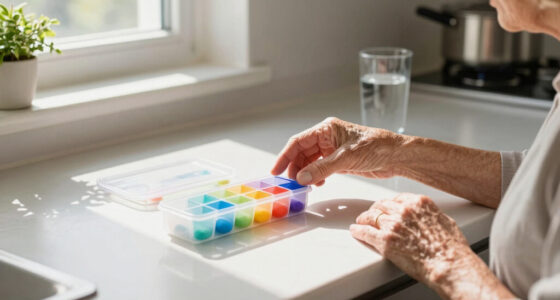
The right pill dispenser is your travel buddy, making daily doses clear and secure. Look for features like large, high-contrast labels, spill-resistant lids, and compartments big enough for your pills. Compact design and secure closures keep your meds safe and easy to carry.
For example, a traveler with arthritis found that a dispenser with large, tactile buttons and easy-open lids made dosing in a hotel room much simpler. Always verify that your dispenser can handle the type of medication you take, especially if you need moisture resistance or backup power for electronic models.

Weekly Pill Organizer 1 time a Day – Pill Box 7 Day with Enhanced Waterproof Seal, Large compartments Hold Big Vitamins & Supplements, Upgraded Locking lids, for Home & Travel use, Durable Hard case
- Secure Locking System: Reinforced latches prevent spills
- Enhanced Waterproof Seal: Thicker silicone gasket for moisture protection
- Large Compartments: Holds big vitamins and supplements
As an affiliate, we earn on qualifying purchases.
As an affiliate, we earn on qualifying purchases.
Packing Your Pills: How to Keep Meds Safe and Accessible
When traveling, always pack your essential medications in carry-on luggage. Checked bags risk delays, temperature swings, or getting lost. Use a sturdy, labeled container to keep your pills organized. Include enough supply for your entire trip, plus a buffer for delays or emergencies.
Photograph each medication and label, then store these images on your phone. This helps confirm your meds during security checks and in case of loss. Remember: temperature-sensitive medicines, like insulin, need special care. Always carry them in insulated cases and avoid exposing them to heat or freezing conditions.

CB CuraBox 28 Day Automatic Pill Dispenser for Elderly with Alarm, Key Lock, Light Alerts, Clear LCD, Smart Medication Dispenser Easy Setup for Seniors, Moisture-Proof for Vitamins & Prescriptions
- 28-Day Moisture-Proof Dispenser: Organizes and preserves medications for 28 days
- Multiple Alarms and Dosing Rings: 8 alarms and dose rings for scheduling
- Secure Locking System: Key lock prevents accidental access
As an affiliate, we earn on qualifying purchases.
As an affiliate, we earn on qualifying purchases.
Navigating International Rules: What You Need to Know Before You Pack
Every country has its own rules about what medicines you can bring. Controlled substances, sedatives, or injectables often require special documentation. Check official government websites or consult your doctor about restrictions and necessary paperwork.
For instance, a traveler heading to Europe discovered that their prescription for a common painkiller wasn’t accepted without a doctor’s note. Planning ahead prevents delays and legal issues. Always carry original packaging or a doctor’s letter, and consider translating documents if needed.

AUVON Lightweight Insulin Cooler Travel Case, 3-Layer Thickened Insulation
- Enhanced Cooling Effect: Includes two 90g upgraded ice packs
- Long-lasting Temperature Control: Maintains cool for 4-8 hours after 12-hour freeze
- Compact and Portable Size: Measures 7.68 x 3.15 x 1.38 inches
As an affiliate, we earn on qualifying purchases.
As an affiliate, we earn on qualifying purchases.
Managing Time Zones and Dosing Schedules on the Go
Crossing time zones can throw your medication routine into disarray, potentially compromising your treatment if doses are missed or taken at incorrect times. The importance of managing this isn’t just about convenience—it’s about maintaining the effectiveness of your medication and avoiding health risks. For example, missing a dose of certain medications like antibiotics or anti-seizure drugs can reduce their efficacy or lead to adverse effects. Conversely, taking doses too close together may increase the risk of side effects. The key? Adjust your schedule gradually and plan ahead. Ask your pharmacist if you can shift doses slightly before travel or if you need to keep to your usual timing regardless of local time.
For example, someone traveling eastward from New York to Paris found that setting alarms an hour earlier each day helped sync their meds with local time. Use your phone alarms, watch alerts, or smart dispensers to stay on track. When in doubt, consult your healthcare provider for personalized advice.

Med-Q Electronic Pill Dispenser with Alarm for Dementia and Elderly
- Loud Alarm with Growing Volume: Alarm increases in loudness over 5 minutes
- Visual Reminder with Red Light: Flashing red light indicates the next dose
- Easy-to-Open Compartments: Large letters, braille, and fingertip tabs
As an affiliate, we earn on qualifying purchases.
As an affiliate, we earn on qualifying purchases.
Keeping Temperature-Sensitive Medications Safe During Travel
Heat, cold, and humidity can ruin temperature-sensitive medications like insulin, reducing their potency or making them unsafe. Proper handling is crucial because exposure to improper temperatures can compromise medication integrity, leading to ineffective treatment or even harmful side effects. Always pack these in insulated, cooled containers, and avoid leaving them in hot cars or bathroom humidities. Some products, like insulin, require specific cooling devices—never rely on just a fridge or ice packs alone. For instance, a diabetic traveler used a portable cooling case with a built-in thermometer to ensure their insulin stayed within the safe range. Always test your cooling setup before departure, and check hotel room temperatures during your stay. Proper storage safeguards your health and prevents the need for costly replacements or medical interventions caused by spoiled medication.
How to Prevent Mix-Ups and Errors With Your Meds
Mixing pills can lead to dangerous errors, such as taking the wrong medication or incorrect doses, which can have serious health implications. The implications of such mistakes include adverse drug interactions, missed treatments, or overdose. Take photos of each medication, label them clearly, and keep a written list with details like generic and brand names, doses, and allergies. Never rely solely on pill color or shape, as these can vary by country and manufacturer, increasing the risk of confusion. For example, a traveler once mistook a generic capsule for their own, leading to a missed dose. The solution? Always double-check labels and consult a pharmacist if you’re uncertain. Having a backup plan, like a printed medication list, can save the day and ensure you adhere correctly to your treatment plan, minimizing risks associated with medication errors.
Smart Dispensers and Digital Aids: Do They Help or Hinder?
Modern tech offers smart dispensers with alarms, app reminders, and adherence tracking. These can be lifesavers when sightseeing or jet-lagged, helping you stay on schedule and avoid missed doses. However, their effectiveness depends on factors like battery life, charging needs, and whether you’ll have internet access abroad. For example, a frequent traveler found that their Bluetooth-enabled dispenser helped them stay consistent, but they also kept a manual log in case their device failed. The tradeoff involves reliance on technology that might malfunction or lose power at critical moments. Testing your devices at home before relying on them during your trip ensures you understand their limitations and can develop backup plans, such as manual reminders or paper logs, to prevent medication lapses caused by technology failures.
Frequently Asked Questions
Can I take my pill dispenser through airport security?
Yes, usually. It’s best to carry your medication in your hand luggage, with original labels or supporting documents. Security may ask to see your prescriptions, so having copies on your phone or printed can help smooth the process.
Should I keep my meds in their original containers?
It depends on your destination. Many countries require original pharmacy packaging for controlled drugs or injectables. For convenience, some travelers use labeled organizers, but always carry supporting documentation to avoid issues at customs.
How much extra medication should I bring?
Bring enough for your trip plus a buffer—roughly 20-30%. Consider delays, lost luggage, or unforeseen changes. Never double doses unless directed by your healthcare provider.
What’s the safest way to handle crossing multiple time zones?
Adjust your schedule gradually before departure if possible, or follow your prescriber’s advice. Use alarms or smart devices to remind you when to take doses, and consult your pharmacist for personalized tips.
What if my medication gets mixed up or I forget if I’ve taken it?
Check your medication list, photos, or dispenser logs. If unsure, don’t take a second dose—consult a pharmacist or healthcare provider. Keeping a simple, accessible record is key to avoiding errors.
Conclusion
Traveling doesn’t have to mean losing your medication routine. With a smart approach—picking the right dispenser, planning for safety, and understanding local rules—you can stay on schedule and worry less. Your health, after all, is the most important trip companion.
So, pack smart, plan ahead, and travel with confidence. Your routine may change, but your health doesn’t have to.
Evergreen bestsellers Picks
bestsellers
As an affiliate, we earn on qualifying purchases.