TL;DR
Listen free for 30 days with Audible
Thousands of audiobooks and originals — cancel anytime.
Start your free trialAs an affiliate, we earn on qualifying purchases.
Phone calls can be tough for those with hearing loss, but options like speakerphone, real-time captions, and Bluetooth streaming make a big difference. Combining these tools improves clarity, privacy, and ease of communication.
Imagine trying to follow a phone call, but the words sound muffled, distorted, or lost in background noise. For people with hearing loss, that scenario is all too common. Yet, technology offers straightforward ways to make calls clearer and more manageable.
In this guide, you’ll learn how speakerphone, captioning, and Bluetooth streaming can transform your calling experience. These tools aren’t just gadgets—they’re bridges to better conversations, less frustration, and more independence.
Using both ears via bilateral streaming or speakerphone can improve understanding by up to 50%.
Real-time captions are helpful but should be regarded as an aid, not a complete substitute for hearing clarity.
Bluetooth streaming delivers personalized, clearer sound directly into your hearing devices, but requires proper setup and compatibility checks.
Public broadcast systems like Auracast will expand access in venues, making group and public calls more accessible.
A thorough setup check, including device compatibility and environment testing, can significantly enhance your phone call experience.
Phone Calls With Hearing Loss
Speakerphone, real-time captions, and Bluetooth streaming can turn muffled or incomplete calls into clearer, less tiring conversations. The strongest setup is usually a combination chosen for the environment, the device, and the importance of the call.
Speakerphone, captions, and direct streaming.
Individual results vary with hearing profile and conditions.
Noise, accents, overlap, and connection quality matter.
Confirm names, addresses, medication, and financial details.
Three routes to a clearer call
Each option solves a different part of the problem. Speakerphone supports two-ear listening, captions add visual confirmation, and Bluetooth delivers personalized sound directly to compatible hearing devices.
Speakerphone
Useful in quiet, private spaces where both ears can hear the caller and the phone can sit at a comfortable distance.
- Choose a quiet, carpeted room
- Place the phone centrally to limit echo
- Ask for clear speech at a natural pace
- Watch for feedback near hearing aids
Real-time captions
Speech recognition converts the caller’s words into text, helping recover details that are distorted, masked, or missed.
- Test captions with familiar voices
- Check whether processing is on-device
- Verify critical information verbally
- Expect errors during overlapping speech
Bluetooth streaming
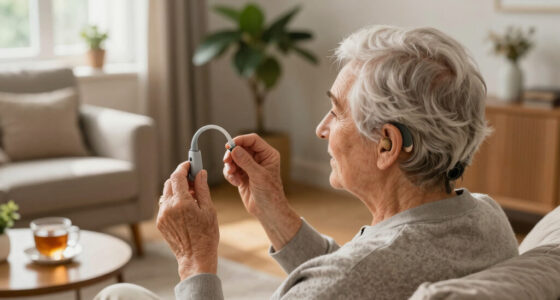
Compatible hearing aids, cochlear implants, or earbuds receive the caller’s voice directly and may apply personal hearing settings.
- Confirm phone and hearing-device support
- Check whether calls reach both ears
- Identify which device supplies the microphone
- Monitor battery use and connection stability
Match the tool to the moment
No single option wins in every environment. Use this matrix as a starting point, then test with your own hearing devices, phone, voices, and typical call locations.
| Capability | Speakerphone | Captions | Bluetooth streaming | Telecoil / loop | Captioned landline |
|---|---|---|---|---|---|
| Uses both ears | ✓Often | ~Visual aid | ✓If bilateral | ~Device dependent | ~Model dependent |
| Privacy | ✗Low | ~Check processing | ✓High | ✓High | ~Service dependent |
| Noisy-room performance | ✗Limited | ~Accuracy may fall | ✓Usually strong | ✓Reduces ambient sound | ~Home use |
| Setup effort | ✓Minimal | ~Feature or app | ~Pairing required | ~Mode or accessory | ~Dedicated phone |
| Visual confirmation | ✗No | ✓Yes | ✗No | ✗No | ✓Yes |
| Main drawback | Echo and exposure | Recognition errors | Compatibility and battery | Limited device support | Less portable |
Build a reliable calling system
Compatibility is only the beginning. A complete test should include pairing, microphone behavior, bilateral audio, caption performance, network quality, and the environments where calls actually happen.
Map the challenge
Identify noise, muffled speech, fatigue, privacy, or missing details.
Check compatibility
Review the phone, operating system, hearing device, and protocol.
Pair and configure
Confirm both-ear audio, microphone source, volume, and captions.
Test real calls
Try familiar voices in quiet, noisy, private, and mobile settings.
Verify and refine
Repeat critical details and save the combinations that work.
Where each option tends to shine
These bars show relative practical suitability, not clinical performance. Bluetooth usually leads for private direct audio, speakerphone is strongest in controlled rooms, and captions are valuable for confirming exact details.
When the words matter most
Background noise can affect both hearing and speech-recognition accuracy.
Use captions as reinforcement, not as a complete replacement for audio.
Repeat medication, addresses, names, financial data, and emergency instructions.
Check whether audio is processed on the device or transmitted to remote servers.
Create a flexible call toolkit
The right combination changes with the setting. Practice switching tools before an important conversation so the technology supports the call instead of interrupting it.
Speakerphone + captions
Use both ears while keeping visual text available. Soft furnishings can reduce echo, but privacy remains limited.
Bluetooth + captions
Direct streaming protects privacy and reduces competing sound. Captions provide backup for difficult phrases.
Telecoil + neckloop
A telecoil can connect to compatible phones or loop accessories while reducing surrounding noise.
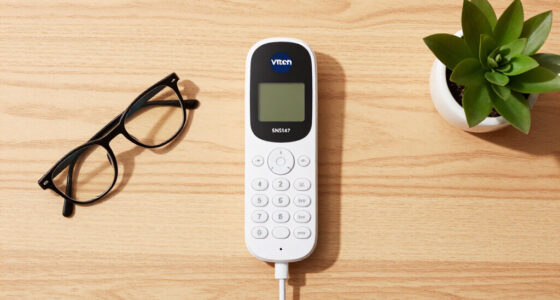
Amplified captioned phone
Large controls, adjustable tone, visual alerts, and built-in captions can simplify regular landline calls.
Five checks before an important call
Charge the phone and hearing devices; streaming may increase battery use.
Confirm Bluetooth pairing, Wi-Fi Calling, or mobile signal quality.
Verify where the caller’s voice plays and which microphone is active.
Move away from echo, wind, television sound, and overlapping conversation.
Enable captions or keep text messaging available for essential details.
Auracast and public broadcast audio will expand shared listening access in venues.
Common questions, clear answers
Device behavior varies by manufacturer, operating-system version, hearing-device model, and Bluetooth profile. Test before relying on any feature for a critical call.
Is speakerphone better than holding the phone to a hearing aid?
It can be because both ears receive sound and listening strain may fall. Bluetooth often offers greater privacy and more personalized audio when compatible.
Can a smartphone caption regular voice calls?
Some phones offer built-in call captions. Captioned telephone services, relay services, and compatible apps may provide additional options.
Are call captions completely accurate?
No. Noise, accents, connection quality, unusual vocabulary, and overlapping speakers can cause mistakes. Confirm important details aloud.
Will any Bluetooth hearing aid work with any phone?
No. Compatibility may depend on Made for iPhone, Android ASHA, Bluetooth Classic, LE Audio, phone software, and the hearing-device model.
Why can music stream when calls cannot?
Music and calls may use different Bluetooth profiles. Call audio can require another setting, profile, microphone arrangement, or accessory.
When should an audiologist help?
Seek support when pairing remains unreliable, one-ear streaming limits understanding, feedback occurs, or hearing settings need adjustment.
Combine clearer sound, two-ear access, and visual confirmation.
Start simple: test speakerphone in a quiet room, enable captions, and check whether your hearing devices support bilateral call streaming. The best system is the one you can operate confidently in real situations.
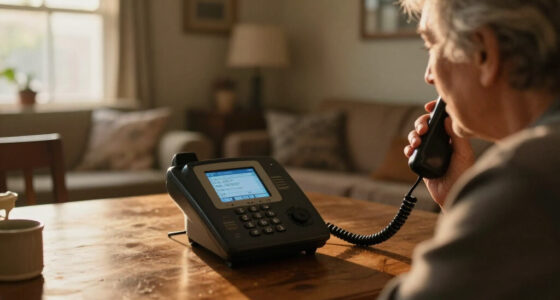
Why Using Speakerphone Can Make Calls Easier
Speakerphone isn’t just about hands-free convenience. For many with hearing loss, it’s a game-changer. It allows sound to reach both ears simultaneously, which is crucial because our brains process stereo sound to localize and differentiate voices from background noise. When you use speakerphone, you’re effectively turning your phone into a small stereo system, improving spatial awareness and reducing the cognitive load of focusing on a single earpiece.
This means less fatigue and better comprehension, especially in environments where background noise or reverberation can distort speech. However, it’s important to recognize the tradeoffs: speakerphone often reduces privacy and can pick up ambient sounds, which might interfere with clarity. In noisy or public settings, the benefits might diminish, so understanding when and how to use it optimally is key.
Practical tips include choosing quiet environments, positioning the phone centrally to avoid echo, and adjusting volume levels. Using speakerphone in a controlled space maximizes its benefits and minimizes frustrations.
As an affiliate, we earn on qualifying purchases.
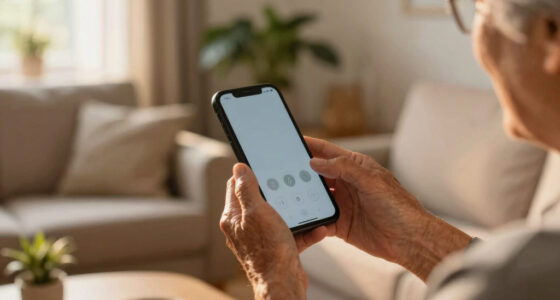
How Real-Time Call Captions Turn Speech Into Text Instantly
Real-time captions serve as a crucial supplement by converting spoken words into text during a call. They act as a visual aid, providing immediate context and reducing misunderstandings caused by muffled speech or background noise. This is especially important for critical information like addresses, instructions, or names, where missing a detail could lead to confusion or errors.
Understanding how captions work involves recognizing their dependence on speech recognition algorithms, which analyze audio signals and generate text. While they’re powerful, their accuracy hinges on factors like speaker clarity, background noise, and accent complexity. For example, in a noisy environment or with strong regional accents, captions might misinterpret words, leading to potential misunderstandings. This underscores the importance of viewing captions as a support tool—one that enhances, but doesn’t replace, your natural hearing or hearing aids.
Privacy considerations are also vital. Some caption services process audio remotely, which could expose sensitive information. Choosing services that perform on-device processing helps maintain confidentiality, especially during personal or sensitive calls.
Effective use involves testing caption accuracy with familiar voices, verifying important details, and being aware of their limitations. When used thoughtfully, captions can significantly reduce frustration and improve communication flow, especially in challenging environments.
phone speakerphone for hearing loss
As an affiliate, we earn on qualifying purchases.
As an affiliate, we earn on qualifying purchases.
Defining the Right Technology for Your Needs
Choosing the appropriate tech tools depends on understanding your specific hearing challenges and daily routines. Not everyone needs the same solution; some may benefit more from captioning, while others find Bluetooth streaming or speakerphone more effective.
Start by evaluating your environment—do you often make calls in noisy places? Do you wear hearing aids that support Bluetooth? Are you comfortable with using apps or devices that require setup? Answering these questions helps you identify the best combination of tools.
For instance, if background noise is a major issue, investing in a hearing aid or device that supports Bluetooth streaming can deliver clearer sound directly into your ears. If visual cues help you understand speech better, real-time captioning apps can be invaluable. Combining these solutions maximizes your ability to communicate effectively.
Always test new technology in real-world scenarios to ensure compatibility and ease of use. Consulting with an audiologist or tech specialist can also help tailor solutions to your needs, ensuring you get the most benefit from your investment.
real-time captioning device for calls
As an affiliate, we earn on qualifying purchases.
As an affiliate, we earn on qualifying purchases.
Applying and Combining Solutions for Optimal Communication
Integrating multiple tools can significantly enhance your phone call experience. For example, using speakerphone in quiet settings combined with real-time captions during noisy calls can provide a comprehensive support system. Bluetooth streaming can deliver high-quality audio directly into your hearing aids, reducing the need to focus intensely on the device itself.
Start by setting up your devices and testing their compatibility. Practice switching between speakerphone, captions, and streaming to see which combination works best in different situations. Keep a simple checklist or quick-reference guide handy for when you’re on the go.
Remember, the goal is to tailor your approach based on the environment and the nature of the call. Regularly review and adjust your setup to ensure clarity and comfort. As you become more familiar with your tools, you’ll find that communication feels more natural and less stressful.
hearing aid compatible Bluetooth headset
As an affiliate, we earn on qualifying purchases.
As an affiliate, we earn on qualifying purchases.
Conclusion
Clear, confident phone conversations are possible even with hearing loss. Combining simple tools like speakerphone, captions, and Bluetooth streaming transforms how you connect with the world.
Remember: technology is a bridge, but understanding your options and testing them in real situations makes all the difference. Your next call could be easier, clearer, and more comfortable—so start experimenting today.
Frequently Asked Questions
Is speakerphone better than holding the phone to a hearing aid?
It can be. Speakerphone allows both ears to hear, reducing strain and improving clarity. Bluetooth streaming often provides even better sound quality and privacy, but depends on device compatibility.
Can my phone caption regular voice calls?
Some phones support built-in live captions, but support varies. You can also use relay services or third-party apps. Always test before relying on captions for critical info.
Are call captions 100% accurate?
No. Background noise, accents, and overlapping speech can cause errors. Use captions as a helpful tool, but verify details verbally when needed.
Will any Bluetooth hearing aid work with any smartphone?
No. Compatibility depends on the device’s Bluetooth protocol. Check your hearing aid’s specifications and your phone’s supported profiles before buying or streaming.
Why can I stream music but not calls?
Music and calls often use different Bluetooth profiles. Some hearing aids support only one, or require specific settings or accessories for calls. Confirm your devices support call streaming.
Conclusion
Clear, confident phone conversations are possible even with hearing loss. Combining simple tools like speakerphone, captions, and Bluetooth streaming transforms how you connect with the world.
Remember: technology is a bridge, but understanding your options and testing them in real situations makes all the difference. Your next call could be easier, clearer, and more comfortable—so start experimenting today.
Back to school Picks
back to school
As an affiliate, we earn on qualifying purchases.