
TL;DR
Open a free Amazon Business account
Business pricing, bulk buying and tax-exempt orders.
Create a free accountAs an affiliate, we earn on qualifying purchases.
No single non-slip treatment works for all floors. The safest approach combines cleaning, moisture control, and tailored solutions like mats, coatings, or textured surfaces. Regular inspection is key to long-term safety.
Imagine stepping into your bathroom or kitchen and feeling that quick jolt of worry—will I slip? Floors can look fine but hide slick surprises. The goal isn’t just to add a grip; it’s to understand what really makes your floors safer.
This guide walks through the best non-slip options for tile, hardwood, laminate, and bathtubs. You’ll learn how to pick the right solution, when to use it, and what pitfalls to avoid. Safety isn’t about a magic fix; it’s about smart, layered choices that last.
Start with thorough cleaning and moisture control before applying any non-slip treatment.
Choose solutions tailored to your floor material—what works on tile may damage hardwood or laminate.
Layer safety: combine traction enhancements with grab bars, good lighting, and unobstructed paths.
Regularly inspect and maintain mats, coatings, and strips to keep safety effective over time.
Avoid one-size-fits-all shortcuts; understanding your surface and environment is key to true safety.
Non-Slip Solutions for Every Floor Type: Tile, Hardwood, Laminate and Bathtubs
No single non-slip treatment works for all floors. The safest approach combines cleaning, moisture control, and tailored solutions like mats, coatings, or textured surfaces — with regular inspection for long-term safety. This guide walks through the best options for each surface, when to use them, and what pitfalls to avoid.
Many products claim to be “slip-proof” — no treatment guarantees safety. Traction varies with water, dirt, footwear, and wear.
ANSI A326.3 commonly uses a wet DCOF of ≥ 0.42 for hard interior floors — one classification factor, never a guarantee against falls.
Safety isn’t a magic fix — it’s smart, layered choices that last: traction + grab bars + lighting + clear paths.
Key Takeaways at a Glance
“Slip resistant” does not mean “slip proof.” Friction ratings are only useful when the test method and conditions are stated — static COF claims are not interchangeable with dynamic results. Layered safety beats any single product.
Clean First
Start with thorough cleaning and moisture control before applying any non-slip treatment. No product compensates for standing water, soap residue, or grease.
Tailor the Solution
Choose solutions matched to your floor material — what works on tile may damage hardwood or laminate. Always test treatments in a hidden area first.
Stack the Measures
Combine traction enhancements with grab bars, good lighting, appropriate footwear, and unobstructed walking routes — especially for elevated fall risk.
Inspect Regularly
Worn tape, loose mats, dirty coatings, and lifted adhesive edges can become hazards themselves. Maintain mats, coatings, and strips over time.
Test Before Treating
Any treatment may alter gloss, color, texture, cleanability, or warranty coverage. One-size-fits-all shortcuts are the fastest route to damage.
No Magic Number
Building-code compliance, accessibility, and real-world safety cannot be reduced to one friction figure — 0.42 DCOF doesn’t guarantee ramp or tub safety.
Tile & Hardwood: Two Very Different Battles
Why Tile Gets Slick
The shiny glaze that looks attractive reduces friction when water or cleaning residue settles on it — a serious hazard in bathrooms and kitchens. Soap film, grease, wax, and grout-cleaner residue make it worse; uneven grout or broken tiles add separate trip hazards.
Why Wood Gets Slick
Spills, wax buildup, furniture polish, and silicone-containing products create a glossy, slippery layer. Worse: excess moisture can penetrate the finish, staining, swelling, cupping, or warping the wood — increasing both slip and structural risk.
| Solution | Tile | Hardwood | Removable? | Key Risk |
|---|---|---|---|---|
| Degreasing / approved cleaner | ✓ Yes | ✓ Yes | ~ n/a | Residue buildup if routine slips |
| Non-slip mats & strips | ✓ Yes | ~ Padded rugs only | ✓ Yes | Curling edges trap dirt; wrong pads discolor wood |
| Professional anti-slip coating | ✓ Yes | ~ Recoat only | ✗ No | Peels if surface is poorly prepared |
| Micro-etching / chemical treatment | ~ Compatible minerals | ✗ No | ✗ No | Reduces gloss; harder to clean; acid-sensitive stone |
| Textured / matte replacement tile | ✓ Yes | ✗ No | ✗ No | Cost and installation effort |
| Traction strips on stairs | ✓ Yes | ✓ Yes | ✓ Yes | Appearance; adhesive choice matters |
Avoid rubber, latex, and PVC rug pads — they can discolor or bond with finishes. Never use bathtub-style adhesives or abrasives on finished wood unless expressly approved. Don’t saturate hardwood during cleaning; adding grit to an unsuitable finish can trap dirt and complicate refinishing.
Laminate: Grip Without Irreversible Damage
Laminate is affordable and easy to install, but its layered structure is vulnerable: moisture seeps into joints, causing swelling, delamination, or warping — creating uneven surfaces that increase slip risk. Because the wear layer can’t be sanded or refinished, every solution must be chosen carefully.
Dry, Minimal-Moisture Clean
Use only laminate-approved products with minimal water — excess moisture weakens joints and causes swelling.
Skip Waxes & Polishes
Waxes, polishes, and oils leave slippery residues that diminish traction and can’t be stripped like on wood.
Add Laminate-Safe Grip
Non-slip rug pads matched to the smooth surface, plus stair treads with adhesive or mechanical fasteners designed for laminate.
Replace Damaged Planks
If planks are worn or compromised, replacing individual planks is often the safest fix. Check manufacturer rules first — improper treatments can void warranties.
Bathtubs & Showers: The Trickiest Zone
Water, soap, shampoo, and body oils create a constantly slick environment. Each surface — porcelain, acrylic, fiberglass, or refinished — reacts differently to traction solutions, and porous or textured materials can trap soap scum and mold that reduce grip over time.
Relative Grip Challenge by Surface ConditionWhat Actually Works
Manufacturer-approved adhesive strips or decals formulated for wet areas; properly fitted non-slip mats with drainage holes so water flows away and mold doesn’t build; professional textured coatings or factory-textured replacements for durable, long-term traction.
Beyond the Surface
For elevated fall risk, stack measures: improved traction + grab bars and handrails + better lighting + prompt spill control + appropriate footwear + unobstructed routes. Hygiene matters too — trapped soap scum silently erodes grip.
How to Make Tile Floors Safer Without Changing Their Look
Tile floors, especially glazed or polished ones, can be slick when wet. The shiny surface, while attractive, often reduces friction when water or cleaning residues settle on it, turning your floor into a potential slip hazard. This is particularly dangerous in areas prone to moisture, like bathrooms and kitchens. Understanding why glazed tiles become slippery helps you prioritize safety measures that address the root cause rather than just masking the problem.
To improve traction, start with thorough cleaning—use a degreaser approved for your tile and grout to remove soap film, grease, and dirt that can create a slick layer. Regular cleaning prevents the buildup of residues that diminish traction over time. Consider upgrading to textured, matte, or slip-resistant tiles, especially in wet zones—these surfaces inherently provide better grip. For a more permanent solution, professional anti-slip coatings or micro-etching treatments can modify the surface to increase friction without changing the tile’s appearance significantly. These options often involve a surface chemical or abrasive process that roughens the glaze, making it less slick when wet, but they require careful application and maintenance.
For localized hazards like shower stalls or entryways, non-slip mats or strips with low-profile edges are effective. They can be easily removed for cleaning or replacement. However, chemical etching changes the surface itself, which can reduce gloss and make cleaning more challenging—so weigh these factors based on your aesthetic and maintenance preferences. When selecting mats, choose ones with low-profile, non-skid backing that stay secure without curling or trapping dirt. Regular inspection and cleaning of these mats help maintain their effectiveness, ensuring your safety measures are always reliable.
As an affiliate, we earn on qualifying purchases.
Making Hardwood Floors Less Slippery Without Sanding or Refinishing
Hardwood floors often feel slick after spills, wax buildup, or the application of certain polishes, which can create a glossy, slippery surface. Water or excess moisture can penetrate the finish if not properly sealed, leading to swelling, warping, or even structural damage—further increasing slip and fall risks. The challenge lies in enhancing traction without compromising the wood’s finish or durability. Recognizing the implications of different safety measures helps you choose options that balance grip and preservation.
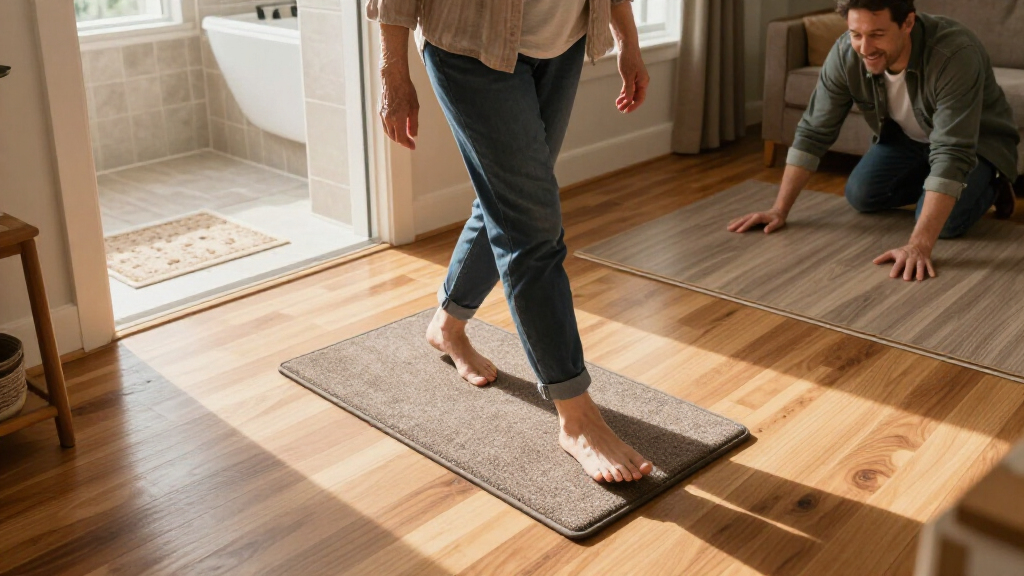
The first step? Remove dust, dirt, and residues with a cleaner approved by your flooring manufacturer—this prevents slippery buildup that can develop over time. For added grip, place breathable, low-profile rugs with pads specifically designed for finished wood floors. These pads reduce slipping without damaging the finish, but be sure they are compatible with your floor type to avoid discoloration. Installing removable traction strips on stairs can provide additional safety in high-traffic areas. These strips can be applied without sanding or refinishing, offering a non-permanent, cost-effective solution that enhances grip.
If your finish is worn or smooth, a professional recoat with a low-sheen or traction-enhancing finish can restore slip resistance while maintaining the aesthetic. Always avoid rubber, latex, or PVC rug pads that might discolor or bond with the wood, and steer clear of saturating the wood during cleaning, which can cause damage. Regular inspection of rugs and pads for wear, curling, or residue buildup ensures long-term safety. Maintaining your hardwood with proper cleaning and protective measures helps prevent slip hazards while preserving the beauty and integrity of your flooring.
As an affiliate, we earn on qualifying purchases.
How to Improve Grip on Laminate Floors Without Damaging the Surface
Laminate floors are popular for their affordability and ease of installation, but their layered structure makes them susceptible to water damage and slippery conditions. Moisture can seep into the joints, causing swelling, delamination, or warping, which not only compromises the appearance but also creates uneven surfaces that increase the risk of slips. Since the wear layer on laminate isn’t easily sanded or refinished, solutions must be chosen carefully to avoid irreversible damage. Recognizing the importance of proper maintenance and tailored safety measures can significantly reduce slip hazards without harming the floor.
Cleaning is critical: use only laminate-approved products with minimal moisture—excess water can weaken joints and lead to swelling. Waxes, polishes, or oils should be avoided, as they often leave slippery residues that diminish traction. For improved grip, add non-slip rug pads that are compatible with laminate’s smooth surface—these increase friction without damaging the finish. Stair treads with secure adhesive or mechanical fasteners can provide additional safety in high-traffic or stair areas, but ensure they are designed specifically for laminate to prevent damage or lifting.
If laminate gets damaged, worn, or severely compromised, replacing individual planks is often the safest fix—this prevents further deterioration and maintains safety. Always consult your manufacturer’s recommendations before applying any surface treatments or adhesives, as improper use can void warranties or cause further harm. Regular cleaning, prompt repair of damaged areas, and cautious use of non-slip accessories are key to maintaining a safe, long-lasting laminate floor without risking irreversible damage.
As an affiliate, we earn on qualifying purchases.
Why Bathtub and Shower Floors Are The Most Tricky To Keep Non-Slip
Water, soap, shampoo, and oils create a constantly slick environment in tubs and showers. The surfaces—porcelain, acrylic, fiberglass, or refinished—each react differently to traction solutions, making universal safety measures challenging. The porous or textured nature of some materials can trap soap scum and mold, reducing grip over time. Recognizing these unique challenges is essential to implementing layered safety strategies that address both slip prevention and hygiene.
Use manufacturer-approved adhesive strips or decals designed specifically for wet areas; these are formulated to adhere securely without damaging surfaces. Properly fitted non-slip mats with drainage holes help prevent mold buildup and ensure water flows away, reducing slippery residues. For a more durable, long-term solution, professional textured coatings or factory-textured replacements can provide reliable traction. However, these options often involve surface preparation and may alter the appearance slightly, so consider aesthetic implications.
Always secure grab bars properly—these provide physical support but do not directly increase floor traction. Regularly check mats and decals for lifting edges, soap residue buildup, or mold, and clean textured surfaces thoroughly to maintain grip. Avoid suction-cup mats that don’t grip textured surfaces or trap moisture underneath, as they can cause more hazards. The key is layered safety: combining good traction, sturdy support, and cleanliness to create a safe bathing environment that reduces slip risks effectively.
As an affiliate, we earn on qualifying purchases.
Picking the Right Non-Slip Solution for Your Floor—A Quick Guide
| Solution | Best For | Advantages | Limitations |
|---|---|---|---|
| Cleaning & Residue Removal | Every floor type | Inexpensive; preserves look | Needs frequent repetition; can’t fix inherent slipperiness |
| Mats & Rugs | Localized wet spots | Immediate; easy to remove or replace | Can slide, curl, trap dirt, or cause trips |
| Adhesive Strips | Bathtubs, stairs, small zones | Targeted; inexpensive | Wear out; residue; compatibility issues |
| Anti-slip Coatings | Tile, some wood, and certain floors | Broad coverage; looks natural | Surface prep needed; may peel or wear |
| Chemical Treatments | Tile or mineral surfaces | Persistent; no film | Irreversible; incompatible with many surfaces |
Emerging Trends in Non-Slip Safety You Should Know
Recent advances focus on testing real-world conditions. Wet dynamic friction testing is replacing static ratings, giving a clearer safety picture. Water-based, eco-friendly coatings are gaining popularity, offering lower odor and VOC levels.
Factory-textured flooring in bathrooms and wet zones is on the rise, providing durability without extra treatments. Low-profile, transparent mats, and strips make safety less obtrusive. Digital documentation of inspections and maintenance is becoming standard in commercial spaces, ensuring ongoing safety.
All these innovations aim to create safer, more reliable solutions that blend seamlessly into your home’s design while minimizing maintenance and maximizing safety.
Common Mistakes That Make Slips Worse (And How to Avoid Them)
Applying wax or polish to fix slipperiness is a mistake—it actually makes floors more slippery. Using the same chemical treatment across different materials without verifying compatibility can cause damage. Skipping regular cleaning or inspection allows dirt, soap film, and residue to build up, undoing any safety gains.
Covering damaged flooring with mats or rugs instead of fixing the problem often traps moisture or dirt, creating new hazards. Relying solely on high friction numbers without considering real-world conditions can be dangerous. Always check your solutions regularly, and remember: layered safety beats a single fix every time.
Your Top Questions About Non-Slip Safety, Answered
- What is the best non-slip solution for my specific floor? It depends on the surface, how it gets wet, and your maintenance preferences. Tile might need coatings or textured treatments; hardwood benefits from rugs and recoat finishes.
- Can I fix a slippery floor without replacing it? Yes. Regular cleaning, applying appropriate coatings, adding mats, or installing textured surfaces can significantly improve traction.
- Do clear anti-slip coatings change the floor’s look? Often, yes. They can add a slight matte finish or reduce gloss, but many modern options aim to be low-visibility and preserve appearance.
- How long do non-slip treatments last? It varies—coatings can last several years if well maintained, but mats and strips may need replacement every 6-12 months.
- Are non-slip coatings difficult to clean? Not necessarily. Use gentle cleaners compatible with the coating, and avoid abrasive scrubbing that can damage the treatment.
Conclusion
Safer floors aren’t about quick fixes—they’re about smart choices. Clean, control moisture, and pick solutions that suit your surface. Layer in physical support and inspect regularly—this is what keeps your home truly safe.
Think of it like building a safety net: each layer enhances the next. When everyone in your home understands this, slips become less likely—and confidence, more assured.
Flea & tick season Picks
flea and tick prevention
As an affiliate, we earn on qualifying purchases.