TL;DR
Listen free for 30 days with Audible
Thousands of audiobooks and originals — cancel anytime.
Start your free trialAs an affiliate, we earn on qualifying purchases.
Bed rails might seem like simple safety tools, but with dementia, they can pose serious hazards. Proper assessment, installation, and monitoring are essential to prevent entrapment, falls, and distress. Always consider less restrictive options first.
Imagine a loved one with dementia trying to get out of bed. It’s a familiar scene—confusion, agitation, maybe even fear. Bed rails are often seen as a quick fix, offering a sense of security. But in reality, they can hide dangerous risks. Families need to know that a bed rail isn’t an automatic safety solution, especially for someone with cognitive impairment.
This guide will walk you through what you should consider before installing a bed rail. You’ll learn why they can be both helpful and hazardous, how to evaluate individual needs, and what safer alternatives exist. Protecting your loved one means understanding the full picture—beyond just the product.
Always assess why a bed rail is needed before installation—its purpose isn’t automatically safety.
Entrapment is a leading cause of death related to bed rails; careful installation and monitoring are essential.
Dementia complicates safety—behavioral changes and cognitive decline can turn a safe setup into a hazard without ongoing oversight.
Compliance with safety standards reduces risk but does not eliminate hazards—regular checks are necessary.
Less restrictive, individualized strategies often provide safer, more effective protection than bed rails alone.
Bed Rail Considerations With Dementia
Bed rails can look reassuring, but they are not automatic safety devices. For a person living with dementia, a rail may create entrapment, climbing, injury, or distress risks. Assess the person, the behavior, and the entire bed system before installing one.
A rail can exchange one danger for another.
It may reduce accidental rolling yet increase the consequences of climbing, squeezing through a gap, or becoming trapped.
Identify the real problem.
Is the person rolling, transferring, wandering, in pain, looking for the toilet, or reacting to medication? The safest response depends on the cause.
Mandatory U.S. requirements took effect for adult portable bed rails.
Common gap locations can trap the head, neck, chest, or limbs.
Different designs serve different purposes and carry different risks.
Cognition, mobility, weight, medication, and behavior can all change.
What looks protective may create a new route to harm.
Rails mainly help with a limited task: creating a boundary or providing transfer support. They do not treat confusion, pain, urgency, insomnia, or the reasons someone repeatedly tries to leave bed.
Climbing raises the fall height.
A person who does not understand the barrier may climb over it. The rail can turn a low-level bed exit into a fall from a higher point.
Small gaps can become lethal.
The body may become caught beside, beneath, or within a rail. Possible outcomes include suffocation, strangulation, and chest compression.
Feeling confined can escalate distress.
Fear, agitation, pulling, resistance, and escape attempts may increase when the person experiences the rail as a barrier or restraint.
“Bed rail” describes several very different devices.
Appearance alone does not establish purpose, compatibility, or safety. Confirm what the device is designed to do—and what it cannot do.
| Product type | Primary purpose | Main dementia concern | Fall prevention? | Family check |
|---|---|---|---|---|
| Full-length hospital-style rail | Boundary and clinical positioning | ✗ High caution Entrapment, climbing, blocked exit, and restraint concerns |
Not reliable for intentional bed exits | Use only within an assessed clinical plan |
| Half or quarter rail | Repositioning or partial support | ~ Context dependent Gaps, pulling, crawling around the rail |
May reduce rolling in limited situations | Assess gaps and the person’s behavior |
| Portable adult bed rail | Bedside support or boundary | ✗ High caution Mattress compatibility, movement, and entrapment |
Does not address why the person gets up | Verify model, instructions, standard, and recalls |
| Bed-assist handle | Transfer and repositioning aid | ~ Context dependent Poor anchoring or mistaken use as a full barrier |
Limited role in fall prevention | Confirm grip ability and secure installation |
| Foam or fabric barrier | Soft boundary cue | ~ Context dependent Compression, suffocation, or hidden gaps |
May cue bed position but is not a guarantee | Review materials, fit, and breathing risks |
Safety depends on more than the rail.
The bed frame, mattress, rail, bedding, accessories, body size, and movement pattern operate as one system. A change to any part can open a dangerous gap.
Six common entrapment zones
Look for spaces that can narrow, widen, or compress while the person moves.
Compatibility checklist
Never install a rail simply because it appears to fit.
Start with the need—not the product.
A professional assessment can connect nighttime behavior to pain, medication effects, mobility, toileting, sleep disruption, or environmental cues.
Define the event
Rolling, falling, wandering, transferring, reaching, or calling for help?
Find the cause
Check pain, toilet needs, confusion, medication, sleep, and room conditions.
Try less restriction
Use environmental, clinical, and supervision strategies matched to the cause.
Assess the system
If a rail remains under consideration, verify person, product, bed, and mattress fit.
Monitor and reassess
Inspect after every change and whenever cognition, mobility, weight, or behavior shifts.
Low bed and clear floor area
A professionally recommended low-bed setup may reduce fall height. Keep walking routes uncluttered.
Lighting and visual cues
Use gentle night lighting, a visible clock, familiar objects, and a clear route to the bathroom.
Pain and toileting plan
Review discomfort, urinary urgency, constipation, hunger, temperature, and nighttime routines.
Occupational therapy review
An occupational therapist can assess transfer technique, grip, bed height, and safer equipment.
Monitoring and response plan
Consider appropriate alert systems or scheduled checks without creating a physical barrier.
Medication and mobility check
Ask a clinician about sedation, dizziness, weakness, balance, and changes in nighttime behavior.
A U.S. federal standard now applies to adult portable bed rails.
It addresses entrapment openings, strength, retention systems, labeling, and warnings. Compliance can reduce risk, but it cannot guarantee that a rail is appropriate for a particular person with dementia. Check model numbers, recalls, instructions, and product registration details.
Ask these questions out loud.
If the rail would stop the person from voluntarily leaving bed, it may function as a restraint. That can increase fear, agitation, pressure injury, immobility, incontinence, and injury during escape attempts.
Do not use the rail if it is loose, shifts the mattress, creates a visible gap, blocks a necessary exit, causes distress, or prompts climbing and squeezing behavior. If a person becomes trapped, has breathing difficulty, or is injured, call emergency services.
Why Bed Rails Don’t Always Prevent Falls — And Can Make Things Worse
Many assume that bed rails stop falls. But evidence shows they often don’t. In fact, they can sometimes increase the risk. For example, a person with dementia might try to climb over a rail, falling from a greater height, or become frightened and try to squeeze through gaps, leading to injury.
Rails mainly prevent rolling out of bed accidentally, but they don’t address why someone is trying to get up. If your loved one is wandering because of pain, confusion, or discomfort, a rail won’t solve that core issue. Instead, it might exchange one danger for another.
According to recent studies, rails exchange the risk of falls for the risk of entrapment and injury. So, always ask: is this the safest way to protect your loved one?
adult bed rails for dementia safety
As an affiliate, we earn on qualifying purchases.
As an affiliate, we earn on qualifying purchases.
The Hidden Danger: Entrapment and Its Deadly Consequences
Entrapment is a silent threat lurking behind many bed rails. It occurs when a person’s body gets caught between the rail and mattress, in gaps, or within the rail itself. Picture a frail, confused person trying to turn in bed and squeezing into a tiny opening—this can cause suffocation or strangulation.
For example, an elderly individual with dementia, who’s underweight and restless, might slip into a gap and struggle to free themselves. The risk is especially high if the rail isn’t installed properly or if the mattress is soft and compressible.
According to safety data, entrapment can lead to serious injury or death, especially in vulnerable populations. It’s a risk families need to take seriously before choosing a rail.
bed safety rails for elderly with cognitive impairment
As an affiliate, we earn on qualifying purchases.
As an affiliate, we earn on qualifying purchases.
Types of Bed Rails — Know What You’re Buying Before You Install
Not all bed rails are created equal. Some look like hospital fixtures, others are portable, and some are just foam or fabric barriers. Knowing the differences helps prevent dangerous misunderstandings.
Here’s a quick comparison:
| Product Type | Purpose | Risks |
|---|---|---|
| Full-length hospital-style rails | Prevent falls, assist transfers | Entrapment, difficulty exiting in emergencies |
| Half or quarter rails | Support for repositioning | Gaps, misuse as restraints |
| Portable bed rails | Support and safety for adults | Potential gaps, compatibility issues |
| Bed-assist handles | Transfer aid | Limited safety for fall prevention |
| Foam or fabric barriers | Soft boundary | Entrapment, suffocation risks |
Choosing the right type means understanding what each product can and can’t do. Never assume compatibility or safety based solely on appearance.
non-restrictive bed safety solutions for dementia
As an affiliate, we earn on qualifying purchases.
As an affiliate, we earn on qualifying purchases.
Dementia Adds Extra Layers of Danger — What You Need to Know
When dementia enters the picture, the risks multiply. Your loved one might forget why the rail is there, try to climb over it, or become distressed by feeling trapped. Their judgment is impaired, so a rail that looks safe today could become a hazard tomorrow.
Imagine a person with early-stage dementia who pulls on a rail, thinking it’s a support, or one who tries to squeeze through a gap because they’re confused. As their cognition declines, these behaviors often increase.
Plus, medication side effects, changes in mobility, or nighttime agitation can turn a seemingly safe setup into a dangerous trap. Vigilance and ongoing assessment are key to safety in dementia care.
bed rail alternatives for dementia patients
As an affiliate, we earn on qualifying purchases.
As an affiliate, we earn on qualifying purchases.
Bed Rails as Restraints? Why That Matters
In many settings, a bed rail that prevents someone from leaving bed can be considered a restraint. That’s a serious issue. Restraints are linked to increased agitation, pressure injuries, and loss of independence.
For example, if a family installs a rail to keep a loved one from wandering, but it actually prevents voluntary movement, it’s essentially a restraint—even if unintentional. This can cause more harm than good.
In regulated environments, restraint use is tightly controlled, requiring consent and clear medical justification. Families must be aware that their intent to protect might still result in a restraint designation, with all its legal and ethical implications.
Matching the Right Bed and Rail System — What to Check Before Installing
A rail’s safety depends on compatibility. An incompatible bed frame, mattress, or bedding can create gaps or cause instability. For example, a soft mattress might compress under the rail, forming a dangerous space.
To avoid hazards:
- Check that the rail is approved for your specific bed model
- Verify mattress firmness and size align with manufacturer specs
- Inspect for gaps between mattress and headboard or footboard
- Follow all setup instructions precisely
- Use manufacturer-recommended accessories and straps
Improvising with padding, ropes, or tape can make things worse. Every element of the system matters for safety and stability.
Regulations and Recalls — What Families Need to Know
Since 2023, the U.S. has had a federal safety standard for adult portable bed rails. It sets minimum requirements for gaps, strength, and labels. But compliance doesn’t mean every product is safe for every person.
Older models or secondhand rails may not meet current standards. Always verify model numbers, check for recalls, and keep manufacturer instructions handy. Register your product if possible to get updates.
Remember: a compliant rail can still become unsafe if installed incorrectly or if the mattress changes. Regular inspections are essential, especially after moving or adjusting the bed.
Who Should Do the Safety Check? Expert Advice Matters
Before installing a bed rail, consult professionals familiar with your loved one’s needs. This can include a primary-care doctor, occupational therapist, or dementia specialist. They will evaluate fall history, mobility, nighttime behaviors, and medication effects.
For example, an occupational therapist can recommend specific transfer handles or environmental modifications that reduce risks without the hazards of a rail. A healthcare professional’s assessment helps tailor safety measures to your loved one’s unique situation.
Regular follow-ups and reassessments are equally important. As dementia progresses, what was once safe may become dangerous.
Smart Questions to Ask Before Installing a Bed Rail
- What specific issue am I trying to address? Falling, wandering, or something else?
- Does the person understand what the rail is for?
- Are there behaviors like climbing or squeezing through barriers?
- Is the rail compatible with our bed and mattress?
- Has this model been recalled or shown safety issues?
- Would a less restrictive solution work better?
- Who will install and regularly check the setup?
- What signs mean I should remove the rail?
These questions help focus on safety, individual needs, and ongoing monitoring—crucial for responsible use.
Safer and Less Restrictive Alternatives You Should Consider
When a loved one with dementia gets out of bed, the goal is safety without confinement. Here are options that can help:
- Low or adjustable-height beds
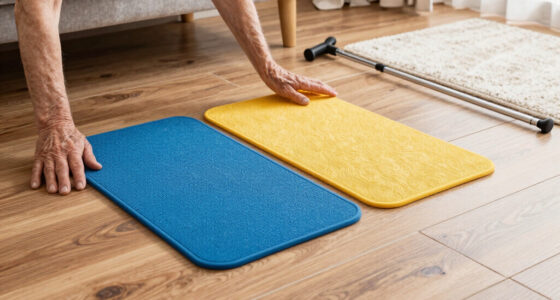
- Floor mats designed to cushion falls
- Clear pathways to the bathroom, well-lit and clutter-free
- Alarm systems that alert caregivers without restricting movement
- Scheduled toileting and hydration routines
- Physical or occupational therapy for mobility and balance
- Bedside grab bars or transfer poles (used correctly)
- Bedside commodes for quick bathroom access
- Removing clutter and sharp furniture edges
- Proper footwear to prevent slips
Each alternative demands a personalized assessment. Remember, alarms don’t prevent falls—just alert you. The key is combining multiple strategies tailored to your loved one’s needs.
If You Still Use a Bed Rail, Follow These Safety Tips
If you decide a bed rail is necessary, safety depends on correct use. Always choose a product approved for adults, compatible with your bed, and installed following all manufacturer instructions. Regularly inspect it—especially after mattress changes or bed adjustments.
Ensure all straps and brackets are secure, and avoid using pillows or homemade padding to close gaps. Keep bedding away from the rail to prevent entanglement. Monitor your loved one’s reactions, especially during the first nights. If they try to climb over, become distressed, or if gaps develop, remove the rail immediately.
Frequent re-evaluation is vital. A rail that was safe last month might become hazardous as their condition changes.
Warning Signs That Mean It’s Time to Remove the Rail
Watch for signs that a bed rail is no longer safe. If your loved one tries to climb over, gets trapped, or shows increased agitation or fear, it’s time to reconsider. Bruising, skin injuries, or pulling the rail loose are red flags. Significant weight loss or worsening mobility are signs the setup may be unsafe.
If someone becomes trapped and can’t breathe, or if their condition deteriorates suddenly, call emergency services immediately. Never attempt to dismantle or fix a dangerous setup while they’re trapped.
The goal: always prioritize their safety and dignity, reassessing regularly for both physical and cognitive changes.
Your Essential Checklist Before Installing a Bed Rail
Before installing, ask yourself these questions:
- Is the product approved and compliant with current safety standards?
- Will it fit the specific bed and mattress?
- Have I read all instructions and registered the product?
- Are there gaps that could entrap?
- Has a professional assessed my loved one’s needs?
- Is there a less restrictive alternative?
- Will I check the setup regularly?
- What signs indicate I should remove the rail?
Answering these ensures the rail’s safety and appropriateness for your loved one’s changing needs.
Conclusion
Choosing to install a bed rail for a loved one with dementia isn’t a decision to take lightly. The most important step is understanding the risks and exploring safer, personalized alternatives. A thorough assessment, proper installation, and ongoing vigilance are your best tools to keep them safe.
Remember, safety isn’t just about the product—it’s about how it fits into a broader plan that respects their dignity and changing needs. Your watchful eye and willingness to adapt can turn a risky setup into a safer environment, day by day.
Flea & tick season Picks
flea and tick prevention
As an affiliate, we earn on qualifying purchases.