TL;DR
Listen free for 30 days with Audible
Thousands of audiobooks and originals — cancel anytime.
Start your free trialAs an affiliate, we earn on qualifying purchases.
Toilet safety frames and raised seats are essential tools for reducing falls and increasing independence. Knowing how to choose, install, and care for them helps ensure safety and comfort at home.
Imagine the bathroom as a zone of potential hazards, especially if mobility isn’t your strongest suit. A simple step—like using a toilet safety frame or a raised seat—can make a world of difference. These devices aren’t just accessories; they’re safety anchors that support your independence and confidence.
If you or a loved one face challenges sitting down or standing up from the toilet, understanding the options available can help you make smarter choices. This guide breaks down what you need to know—without the jargon—so you can decide what’s best for your home and your needs.
Choose a device that fits your toilet shape and size, and supports your weight comfortably.
Installation is usually simple—most devices are tool-free and easy to attach or remove.
Regular cleaning with mild disinfectants keeps devices hygienic and safe.
Look for safety certifications like ADA compliance for added peace of mind.
Adjustability and ergonomic features improve comfort and safety, especially for long-term use.
Toilet Safety Frames & Raised Seats
Small changes can make sitting, standing, and balancing safer. Learn how to choose the right support, confirm a secure fit, and maintain it for dependable everyday use.
Simple tools, meaningful support
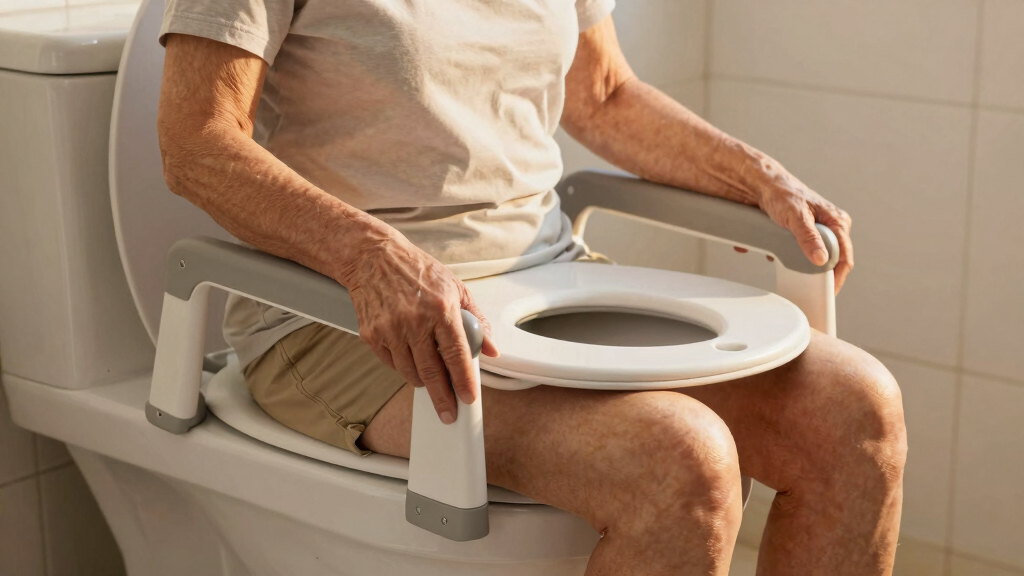
A safety frame provides stable handholds. A raised seat reduces how far the hips and knees must bend. Combined units provide both benefits when the toilet and manufacturer specifications allow them to work together.
Safety frame
A sturdy metal or plastic structure with armrests. Best for people who need leverage and balance while lowering or rising.
Raised seat
An elevated surface fitted over the toilet. Extra height can reduce strain for stiff knees, sore hips, arthritis, or post-surgery recovery.
Combined unit
Integrates elevated seating and arm support. It can simplify setup, but fit, capacity, and clearance must all be checked carefully.
Which device does what?
Begin with the movement that feels hardest: balancing, bending, pushing upward, or a combination. Then compare compatibility and adjustability.
| Feature | Safety frame | Raised seat | Combined unit |
|---|---|---|---|
| Primary support | ✓ Balance and leverage | ✓ Reduced bending | ✓ Both functions |
| Armrests | ✓ Standard feature | ~ Model dependent | ✓ Usually included |
| Height adjustment | ~ Frame height varies | ~ Fixed or adjustable | ~ Model dependent |
| Installation | Attach at bowl or seat bolts | Place, clamp, or bolt on | Attach as one fitted unit |
| Best suited to | Users needing stability | Users needing extra height | Users needing both |
✓ Strong match ~ Varies by product — confirm the manufacturer’s instructions.
A five-check decision path
Fit comes before features. Measure the toilet and assess the user’s movement, strength, and body size before comparing comfort upgrades.
Secure today, dependable tomorrow
Most products are designed for straightforward home installation. Follow the product-specific instructions, tighten every connection, and never use a frame or seat that shifts under gentle testing.
Measure the bowl, seat, and surrounding clearance before buying.
Follow installation instructions precisely and use every required fastener.
Test the support gently before transferring full body weight.
Clean regularly with mild soap or a suitable mild disinfectant.
Replace worn, cracked, corroded, loose, or unstable components.
Look for
- Compatibility with the exact toilet shape and mounting style.
- A clearly stated weight capacity above the user’s weight.
- Ergonomic grips, padded armrests, and useful adjustability.
- Corrosion-resistant, nonporous, easy-clean materials.
- Relevant accessibility or safety certifications and clear instructions.
Watch for
- Movement, rocking, loose bolts, clamps, or locking mechanisms.
- Cracks, sharp edges, worn padding, rust, or damaged grips.
- Abrasive cleaners that can damage surfaces or create scratches.
- Armrests or seat height that interfere with safe body positioning.
- Mixing products unless the manufacturers confirm compatibility.
Better design is improving everyday use
Modern products increasingly combine adjustable geometry, padded or textured grips, antimicrobial materials, and easier-clean surfaces. Sensors and alarms are emerging in premium models but remain uncommon.
Are these devices suitable for everyone?
They suit many adults with mobility limitations, arthritis, or recovery needs, but selection should reflect individual strength, height, transfer ability, and toilet compatibility.
Can a frame and raised seat be used together?
Often, yes. Use only combinations confirmed as compatible by the manufacturers and make sure neither component compromises the other’s attachment.
Which standards should I check?
Review relevant safety certifications, accessibility guidance, product testing, warranty details, and manufacturer instructions. “ADA compliant” claims should be verified for the specific model and use case.
When should a clinician be involved?
Ask an occupational therapist, physical therapist, or healthcare provider when transfers are difficult, recent surgery is involved, or the safest seat height and support level are uncertain.
What Are Toilet Safety Frames and Raised Seats? Simple tools, big safety gains
Toilet safety frames are sturdy support structures that attach around your toilet, giving you armrests to hold onto while sitting or standing. Raised seats are cushions that lift the seat height, making it easier to sit down or get up—especially helpful if your knees or hips are stiff or sore.
Imagine a senior with arthritis. A raised seat offers a few extra inches of height, reducing strain. Meanwhile, a safety frame acts like a steady hand, preventing slips and falls. Together, they create a safer, more supportive bathroom experience.
As an affiliate, we earn on qualifying purchases.
How to pick the right safety device for your bathroom
- Measure your toilet’s shape and size: round or elongated? Most safety frames and seats are compatible with both, but check specifications.
- Assess your mobility: Do you need just stability, or do you also need a higher seat? Measure your height and consider your strength.
- Check weight limits: Most safety devices support up to 300 lbs, but verify to ensure safety.
- Match features to needs: Do you want adjustable armrests? Easy-to-clean surfaces? Look for these details.
As an affiliate, we earn on qualifying purchases.
Compare the Key Features of Different Devices
| Feature | Toilet Safety Frame | Raised Seat |
|---|---|---|
| Support Type | Sturdy metal or plastic frame with armrests | Elevated cushion that fits on existing seat |
| Adjustability | Height and armrest position often adjustable | Usually fixed height, some adjustable options |
| Installation | Attach to toilet bowl, tool-free in most cases | Place on existing seat or lid |
| Ideal For | Users needing balance support | Users needing height assistance |
As an affiliate, we earn on qualifying purchases.
What to Know About Installation and Maintenance
Most toilet safety frames and raised seats are designed for easy, tool-free setup. Just follow the manufacturer’s instructions—usually involving attaching or placing the device securely on your toilet.
Maintenance is straightforward. Regularly clean with mild soap or disinfectant, focusing on armrests and surfaces where bacteria can build up. Check stability periodically—wobbling or loose parts mean it’s time for adjustment or replacement.
As an affiliate, we earn on qualifying purchases.
Safety Standards and How They Protect You
Look for products meeting standards like the ADA (Americans with Disabilities Act) or those certified by safety organizations. These certifications ensure the device has been tested for strength, stability, and safety.
Choosing certified products reduces risk—imagine a safety frame that unexpectedly wobbles. Certified devices give peace of mind that it will support your weight and withstand daily use.
Recent Trends Making Devices Better and Safer
Designs now prioritize ergonomic comfort, with padded armrests and textured grips. Materials have improved too, with antimicrobial plastics that resist bacteria buildup.
Adjustability has become more refined, allowing tailored support for different users. Some high-end models even include sensors or alarms—though these are still rare, they hint at future safety innovations.
Tips for Choosing and Using Your Devices Safely
- Measure carefully before buying. A device that doesn’t fit can cause instability.
- Test the support in-store if possible. Wiggle it to check for wobble.
- Follow installation instructions precisely to avoid accidents.
- Clean regularly to prevent bacterial growth.
- Inspect for wear and tear—replace if parts are damaged or unstable.
Are They Right for Everyone? Who Should Consider Them?
Toilet safety frames and raised seats are suitable for most adults facing mobility issues, arthritis, or recovering from surgery. But they aren’t a one-size-fits-all. For example, a taller person might need a higher seat, while someone with limited hand strength benefits most from sturdy armrests.
If you’re unsure, consulting a healthcare provider will help tailor the best option for your needs.
Frequently Asked Questions
Are toilet safety frames and raised seats suitable for all users?
They work well for most adults with mobility challenges, but it’s best to consider individual needs and toilet compatibility. Consulting a healthcare professional can help determine the right fit.How do I know which device is right for me?
Assess your height, weight, and mobility needs. Measure your toilet’s shape and size, and look for adjustable features and support levels that match your daily routine.Are these devices easy to install and remove?
Most are designed for tool-free setup—simply follow the instructions. They can be removed just as easily for cleaning or if needs change.Can I use a safety frame and raised seat together?
Yes, many are compatible, but check manufacturer instructions. Combining them can offer extra stability and height support.How do I keep these devices clean and safe?
Clean with mild soap or disinfectant regularly, focusing on armrests and surfaces. Inspect for damage and replace worn parts promptly.Conclusion
Adding a toilet safety frame or a raised seat can be a game-changer for independence and safety at home. These tools aren’t complicated, but they make a big difference. Think of them as the sturdy support beams that keep your bathroom routine steady and secure.
Remember: measure carefully, choose wisely, and maintain regularly. A safe bathroom is a confident one—so take these simple steps today and turn your bathroom into a safer space you can trust.
Labor Day sales Picks
labor day deals
As an affiliate, we earn on qualifying purchases.