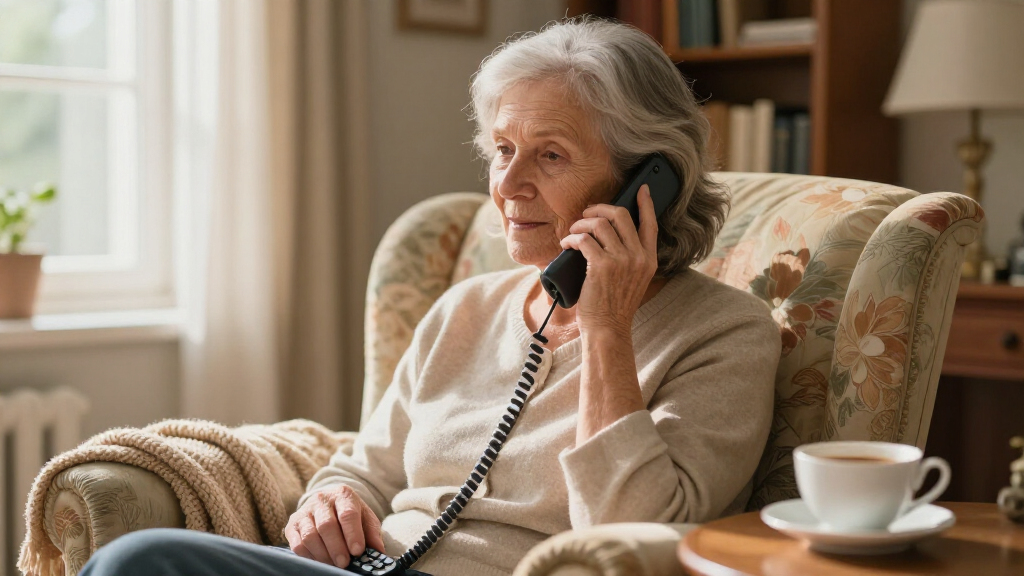
Big button phones for seniors trade smartphone features for something far more practical: buttons you can see and press without fumbling, loud volume, and simple one-touch dialing. After comparing 15 models, the AT&T CL2940 stands out as the best overall pick because it combines large buttons, a speakerphone, caller ID, and Audio Assist in one polished package. The Swissvoice Premium 3355 is the pick if a cordless handset matters, while the artfone A400 is the only true mobile option for seniors who need calling away from a landline. The main tradeoffs in this category are between corded reliability and cordless convenience, and between basic dialers and amplified models for hearing loss. Read on for the full breakdown.

Turn quiet afternoons into listening time
- Thousands of audiobooks, podcasts and originals
- Listen on your phone, tablet or Echo — also offline
- Cancel anytime
Complete the kit


Key Takeaways
- The AT&T CL2940 earned the top spot because it is the only corded model pairing a tilt display, speakerphone, and Audio Assist boost — most competitors offer only one or two of these.
- Photo speed dial (found on the Amplified Corded model, the 9-Photo-Button phone, and the SIWMER) is the single most useful feature for seniors with memory difficulties, outweighing raw button size.
- Only one product in the lineup — the artfone A400 — works without a landline, so buyers replacing a mobile phone rather than a landline have exactly one option here.
- Corded models under roughly the mid-range price point (VTech SN1117, Excelltel EX-LD-858HF) skip answering machines and caller ID; paying slightly more buys those back.
- Amplified models like the HePesTer P-02 suit severe hearing loss but can be overkill — and uncomfortably loud — for seniors with mild loss.
| Swissvoice Premium 3355 Big Button Phone with Answering Machine and Cordless Handset |  | Best Overall for Flexible Home Calling | Handsets: 1 corded and 1 cordless | Photo memory buttons: 4, including SOS button | Maximum ringer volume: 90 dB | VIEW LATEST PRICE | See Our Full Breakdown |
| Excelltel EX-LD-858HF Big Button Corded Landline Phone for Seniors |  | Best for Photo-Based Quick Calling | Model: EX-LD-858HF | Type: Corded landline phone | One-touch speed dialing: 9 numbers | VIEW LATEST PRICE | See Our Full Breakdown |
| Big Button Corded Landline Phone with Speaker and Memory |  | Best for Straightforward Hands-Free Calls | Phone type: Corded landline | Mounting: Wall or desk | Buttons: Extra-large | VIEW LATEST PRICE | See Our Full Breakdown |
| HePesTer P-02 Amplified Corded Phone for Seniors |  | Best for Adjustable Sound | Model: P-02 | Phone type: Corded landline | Buttons: Large buttons | VIEW LATEST PRICE | See Our Full Breakdown |
| VTech SN1117 Corded Senior Phone |  | Best for Visual and Spoken Dialing Cues | Power: Landline powered; no AC power needed for basic calls | Speed dial: 8 photo speed-dial keys | Buttons: Large, high-contrast buttons with spoken number announcements | VIEW LATEST PRICE | See Our Full Breakdown |
| Large-Button Corded Landline Phone for Seniors |  | Best Budget Simplicity | Phone type: Corded landline | Keypad: Oversized buttons | Ringer volume: Adjustable, high and low | VIEW LATEST PRICE | See Our Full Breakdown |
| Uvital Big Button Corded Landline Phone for Seniors with Speakerphone and SOS Button |  | Best for Photo Speed Dial | Phone type: Corded PSTN landline | Speed-dial buttons: 8 photo buttons | Emergency button: 1 SOS button | VIEW LATEST PRICE | See Our Full Breakdown |
| Amplified Corded Landline Phone for Seniors with Photo Speed Dial, Volume Control, and Flash Alert |  | Best for Hearing Loss | Phone type: Corded single-line landline | Handset volume gain: Up to 80 dB | Ringer volume: Up to 100 dB | VIEW LATEST PRICE | See Our Full Breakdown |
| AT&T Trimline Corded Phone with Large Buttons, Lighted Keypad, and Speed Dial |  | Best for Power Outages | Power: Line powered; no AC adapter or batteries required | Keypad: Oversized buttons with lighted keypad | Visual ringer: Flashes for incoming calls | VIEW LATEST PRICE | See Our Full Breakdown |
| AT&T CL2940 Corded Phone with Speakerphone, Large Buttons, Tilt Display, Caller ID and Audio Assist |  | Best Feature-Rich Pick | Model: CL2940 | Type: Corded phone | Display: Tiltable | VIEW LATEST PRICE | See Our Full Breakdown |
| Corded Landline Phone for Seniors with 9 Photo Buttons |  | Best for Memory Support | Speed dial: 8 photo buttons + 1 SOS button | Ringer: Amplified, adjustable with flashing visual indicator | Calling features: Hands-free calling and redial | VIEW LATEST PRICE | See Our Full Breakdown |
| Large-Key Corded Telephone with Adjustable Ringer and Earpiece Volume |  | Best Reliable Basic Pick | Button dimensions: 1.0 x 0.7 inches | Power source: Corded electric (telephone line) | Dialer type: Single keypad | VIEW LATEST PRICE | See Our Full Breakdown |
| SIWMER Large-Button Corded Phone for Seniors with Photo Speed Dial |  | Best Compact Desk Option | Speed dial: 3 customizable photo buttons | Power source: Telephone line powered | Speakerphone: Yes | VIEW LATEST PRICE | See Our Full Breakdown |
| artfone A400 4G LTE Cell Phone for Seniors with Big Buttons, SOS, and Charging Dock |  | Best Mobile Pick | Network: 2G/3G/4G LTE; T-Mobile network carriers only | Display: 2.4-inch LCD | Camera: 2MP | VIEW LATEST PRICE | See Our Full Breakdown |
| Large Button Corded Landline Phone for Seniors |  | Best for Hearing and Vision Amplification | Button dimensions: 1.06 x 1.18 inches | Ringer volume: Over 110 dB | Handset volume: Adjustable up to 80 dB | VIEW LATEST PRICE | See Our Full Breakdown |
More Details on Our Top Picks
Swissvoice Premium 3355 Big Button Phone with Answering Machine and Cordless Handset
The Swissvoice Premium 3355 is the most adaptable choice here for someone who wants oversized dialing keys without being tied to one spot. Its corded base and cordless handset offer options for answering at a table or moving around the home, while four photo memory buttons include an SOS button for quick calls. The ringer reaches 90 dB, and hearing aid compatibility adds useful support for some callers. Compared with the simpler Excelltel EX-LD-858HF, Swissvoice adds an answering machine and cordless handset, but its larger listed dimensions and more involved setup may not suit a small space or someone seeking only basic landline calling. It also depends on a powered corded base, so check the intended placement and power needs.
Pros:- Corded base and cordless handset provide more flexibility around the home
- Four photo memory buttons include a dedicated SOS button
- Ringer volume is adjustable up to 90 dB
- Digital answering system records up to 30 minutes
Cons:- Listed dimensions may make the base difficult to place in a small room
- The corded base requires an electrical power source
- Only four photo memory buttons are specified
Best for: Older adults who want photo dialing, a loud ringer, voicemail recording, and the option to answer calls away from the base
Not ideal for: People with little space for a large base or those who want a simple, battery-free corded phone
- Handsets:1 corded and 1 cordless
- Photo memory buttons:4, including SOS button
- Maximum ringer volume:90 dB
- Answering system:Digital
- Recording capacity:30 minutes
- Conference calling:3-way
- Additional handset capacity:Up to 3
- Power source:Corded electric
- Dimensions:21.46 x 13.78 x 9.45 inches
Our verdict“Choose the Swissvoice if you want loud alerts and both fixed and cordless calling in one senior-friendly home phone.”
Excelltel EX-LD-858HF Big Button Corded Landline Phone for Seniors
The Excelltel EX-LD-858HF makes quick dialing its main advantage: it supports one-touch photo dialing for nine numbers and has a separate SOS function. Adjustable handset and ringtone volume, hands-free calling, and a flashing incoming-call indicator give callers several ways to notice and manage calls. It needs no batteries, which keeps the setup straightforward once connected to a phone line. Compared with the Swissvoice Premium 3355, Excelltel is a simpler corded option without a cordless handset or answering machine, but its nine one-touch numbers offer more direct photo dialing than Swissvoice’s four photo memory buttons. Buyers should confirm they have a compatible landline connection; those who need recorded messages or mobility around the house should look elsewhere.
Pros:- One-touch photo dialing supports nine numbers
- Separate SOS function provides an emergency calling option
- Flashing LED helps signal incoming calls
- Operates without batteries when connected to a phone line
Cons:- Requires a compatible phone line
- Corded design does not let callers carry the handset around the home
- No answering system is specified
Best for: Landline users who want one-touch photo dialing for several family or care contacts and a visible incoming-call alert
Not ideal for: People without a phone line or those who need a cordless handset or answering machine
- Model:EX-LD-858HF
- Type:Corded landline phone
- One-touch speed dialing:9 numbers
- Two-button memory:10 groups
- Call notification:Flashing LED
- Power:No batteries required; connects to a phone line
- Material:ABS
Our verdict“Pick the Excelltel if photo-based one-touch dialing matters more than cordless use or voicemail recording.”
Big Button Corded Landline Phone with Speaker and Memory
This corded phone suits callers who want large, easy-to-press buttons and a speakerphone without adding a cordless handset or answering system. Its hands-free speaker has volume control, and the switchable Hi-Lo ringer and incoming-call light offer both sound and visual cues. Ten two-touch memory slots can shorten familiar calls, though they require more steps than the Excelltel EX-LD-858HF’s one-touch photo dialing. The phone can sit on a desk or mount on a wall, and its landline power means no separate power supply is needed; stored numbers remain during power outages. That simplicity comes with limits: it requires a compatible landline, and the memory keys are less direct for anyone who relies on photos or needs a one-button emergency call.
Pros:- Extra-large buttons are designed to be easier to see and press
- Hands-free speakerphone includes volume control
- Ten two-touch memory options store frequently called numbers
- Landline powered, with stored numbers retained during power outages
Cons:- Requires a compatible landline connection
- Two-touch dialing takes more steps than the Excelltel’s one-touch photo keys
- Only ten memory options are specified
Best for: A landline user with limited dexterity who wants a simple speakerphone and can manage two-touch memory dialing
Not ideal for: Callers who need photo labels, one-touch emergency dialing, or a portable handset
- Phone type:Corded landline
- Mounting:Wall or desk
- Buttons:Extra-large
- Speakerphone:Hands-free with volume control
- Ringer:Switchable Hi-Lo setting
- Incoming call indicator:LED light
- Memory:10 two-touch memory options
- Power:Powered by landline; no separate power supply required
Our verdict“Choose this model for large keys and a practical speakerphone when photo dialing and cordless reach are not priorities.”
HePesTer P-02 Amplified Corded Phone for Seniors
The HePesTer P-02 puts sound adjustment at the center of its case for callers who need more control over the handset, speaker, and ringtone. Those separate volume controls can make the phone easier to adapt to changing hearing needs, while its large buttons also serve callers with low vision. Ten two-touch quick-call memories provide room for regular contacts, and the phone is described as usable during power outages. Compared with the Big Button Corded Landline Phone with Speaker and Memory, HePesTer emphasizes reinforced sound and adjustable handset volume, while both rely on a corded landline and two-touch memory. It lacks the photo keys and cordless convenience of the Swissvoice Premium 3355, so it is best for a fixed calling spot rather than moving around the home.
Pros:- Large buttons support easier visual targeting
- Handset, ringtone, and speaker volumes are adjustable
- Ten two-touch memories support quick calls to regular contacts
- Can be used during power outages
Cons:- Corded design limits where the caller can use the handset
- Two-touch memories are less direct than one-touch photo dialing
- One-year warranty is specified
Best for: A senior with low vision or hearing difficulty who wants separate volume adjustments and a fixed landline phone
Not ideal for: People who need a cordless handset, photo speed-dial keys, or a phone that works without a landline
- Model:P-02
- Phone type:Corded landline
- Buttons:Large buttons
- Quick-call memories:10 two-touch memories
- Volume controls:Adjustable handset, ringtone, and speaker volume
- Power outage use:Emergency use during power outages
- Warranty:1 year
Our verdict“The P-02 fits callers who need adjustable sound and large keys at a dedicated landline location.”
VTech SN1117 Corded Senior Phone
The VTech SN1117 pairs large, high-contrast keys with spoken number announcements, giving callers both visual and audio feedback as they dial. Eight photo speed-dial keys make familiar contacts easier to identify, and a flashing ringer helps people who may not hear an incoming call. Its full-duplex speakerphone supports hands-free conversations, and basic calls can continue on landline power during an outage. Compared with the Excelltel EX-LD-858HF, VTech offers spoken keypad feedback and a full-duplex speakerphone, while Excelltel provides nine one-touch numbers and an SOS function. VTech’s outage calling is limited to basic calls without AC power, so buyers should not assume every feature remains available. Like the other corded picks, it depends on having a landline.
Pros:- Spoken number announcements provide feedback while dialing
- Eight photo speed-dial keys simplify calling familiar contacts
- Flashing visual ringer can alert callers who miss an audible ring
- Adjustable-volume full-duplex speakerphone supports hands-free calls
Cons:- Requires a landline for basic calling
- Without AC power, only basic calls are specified
- Eight photo speed-dial keys are fewer than the Excelltel’s nine one-touch numbers
Best for: Landline users who benefit from spoken feedback while dialing, high-contrast keys, and a visible incoming-call alert
Not ideal for: People without a landline or anyone who needs cordless mobility or a specified SOS button
- Power:Landline powered; no AC power needed for basic calls
- Speed dial:8 photo speed-dial keys
- Buttons:Large, high-contrast buttons with spoken number announcements
- Ringer:Flashing visual alert
- Speakerphone:Full-duplex
- Volume:Adjustable earpiece and speakerphone volume
Our verdict“Choose the VTech if spoken dialing feedback and a flashing call alert matter more than an SOS button or cordless use.”
Large-Button Corded Landline Phone for Seniors
Of all the phones in this lineup, this one strips calling down to its simplest form, and that is exactly its appeal. There is no setup complexity beyond plugging it into a phone jack — no batteries, no programming menus, no screen to decipher. Compared with the Uvital model with its eight photo buttons, this phone’s two memory slots feel limited, but the tradeoff works both ways: fewer buttons means fewer things to confuse a user who mostly receives calls rather than places them. The flashing incoming-call light and adjustable ringer cover the basics of hearing and seeing a call arrive. The catch is that storing numbers is genuinely fiddly, since the keys do not play a confirmation tone while programming, so a caregiver should handle the initial setup.
Pros:- Extremely simple plug-in setup with no batteries or menus
- Oversized keys are easy to see and press
- Flashing light gives a visual call alert alongside the adjustable ringer
- Three-level handset volume covers mild hearing difficulty
Cons:- Only two speed-dial memory slots for quick calls
- No keypad tone feedback when programming numbers, making setup error-prone
Best for: Seniors or caregivers wanting the cheapest possible plug-and-play phone for a bedroom or kitchen line
Not ideal for: Anyone who wants to store more than two frequently dialed numbers without dialing manually each time
- Phone type:Corded landline
- Keypad:Oversized buttons
- Ringer volume:Adjustable, high and low
- Handset volume:Adjustable, 3 levels
- Incoming-call alert:Red flashing light
- Quick dialing:Two memory buttons (M1 and M2)
- Power:No batteries required
Our verdict“A no-frills backup phone that earns its place through simplicity rather than features.”
Uvital Big Button Corded Landline Phone for Seniors with Speakerphone and SOS Button
Where the basic Large-Button Corded model offers just two memory slots, the Uvital goes much further with eight photo speed-dial buttons — the buyer slides a printed photo of a grandchild or caregiver under each key, turning dialing into a recognition task rather than a memory task. That single feature makes it the strongest pick in this batch for users with dementia or memory decline. The dedicated SOS button adds an emergency dial option the budget model lacks, and a 120 dB maximum ringtone rivals dedicated amplified phones like the HePesTer P-02 territory. The tradeoff is stark, though: no caller ID, no display, no answering machine, and PSTN landline service only. Buyers on VoIP or internet-based home phone service need to verify compatibility before purchasing.
Pros:- Eight photo speed-dial buttons remove the need to remember numbers
- Dedicated SOS emergency button
- Very loud 120 dB ringtone and 90 dB earpiece volume
- Speakerphone enables hands-free conversations
Cons:- No caller ID, display, voicemail, or answering machine at all
- PSTN landline service only — incompatible with internet calling
- Not suitable for wall mounting
Best for: Families supporting a relative with memory loss who benefits from picture-based dialing and one-touch emergency calling
Not ideal for: Households without a traditional PSTN phone line, since VoIP and internet calling are unsupported
- Phone type:Corded PSTN landline
- Speed-dial buttons:8 photo buttons
- Emergency button:1 SOS button
- Maximum ringtone volume:120 dB
- Maximum earpiece volume:90 dB
- Call alert:Flashing red LED
- Power:No batteries or external power required
- Connection:RJ11 telephone line
Our verdict“The clearest choice in this batch for memory-impaired seniors, provided the home still has a traditional phone line.”
Amplified Corded Landline Phone for Seniors with Photo Speed Dial, Volume Control, and Flash Alert
This model earns its slot by targeting a specific problem most entries here only partially address: mild to moderate hearing loss. Its 80 dB handset gain and hearing aid compatibility put it ahead of the Uvital for anyone who wears hearing aids, even though the Uvital’s raw ringtone is louder. Memory is a middle ground too — three one-touch photo buttons plus ten two-touch memories, which beats the two-slot budget phone but falls short of the Uvital’s eight photos. The flashing call indicator covers the visual side, and the hands-free speaker rounds things out. Two honest caveats: it explicitly is not intended for profound hearing loss, and programming the photo memories can take repeating the steps a few times, so patience during setup is part of the purchase.
Pros:- Hearing aid compatibility paired with up to 80 dB handset gain
- 100 dB ringer volume plus flashing call indicator
- Three one-touch photo buttons plus ten two-touch memories
- Hands-free speakerphone for longer calls
Cons:- Not suitable for profound hearing loss
- Photo memory programming can require repeating the steps
- Fewer photo buttons than the Uvital’s eight
Best for: Hearing-aid users with mild to moderate loss who need amplified calls plus picture dialing for a few key contacts
Not ideal for: Anyone with profound hearing loss — the amplification ceiling is not designed for that level of need
- Phone type:Corded single-line landline
- Handset volume gain:Up to 80 dB
- Ringer volume:Up to 100 dB
- Speed dial:3 one-touch photo memories
- Number memories:10 two-touch memories
- Hearing aid compatibility:Yes
- Dimensions:7 x 3.4 x 7.9 inches
- Warranty:1-year support service
Our verdict“The most balanced amplified option here for hearing-aid wearers who still want simple picture dialing.”
The Trimline’s claim to a slot rests on one underrated quality: it is entirely line powered, so it keeps working during power outages with no batteries, adapter, or outlet — something the AT&T CL2940 can only partially match, since that model needs four AA batteries for caller ID. The lighted keypad is another differentiator none of the photo-dial models offer, which matters for seniors who reach for the phone at night. It stores ten speed-dial numbers, matching the amplified model’s capacity without the two-touch hassle, and the flashing visual ringer lets a user silence the audio ringer entirely and still see calls. The tradeoff: no speakerphone, no photos, no amplification beyond basic volume control. This is a reliable utility phone, not a feature phone.
Pros:- Fully line powered, so calls continue during power outages
- Lighted keypad makes nighttime dialing easier
- Ten-number speed dial matches the best storage in this batch
- Flashing visual ringer works even with sound muted
Cons:- Requires a traditional corded phone line
- No wireless, Wi-Fi, or speakerphone features
- Basic volume control rather than true amplification
Best for: Seniors in areas with frequent outages who need a phone that always works and is easy to use in the dark
Not ideal for: Buyers who want speakerphone, photo dialing, or serious amplification — none of those are here
- Power:Line powered; no AC adapter or batteries required
- Keypad:Oversized buttons with lighted keypad
- Visual ringer:Flashes for incoming calls
- Speed dial:Stores up to 10 numbers
- Controls:Receiver and ringer volume control; mute button
- Mounting:Wall mountable
Our verdict“The most dependable emergency-ready pick here for anyone who values never losing dial tone.”
This is the most complete phone in the batch, and the only one with a tiltable display and caller ID history storing 50 names and numbers. For a senior who can still read a screen and wants to see who is calling before answering, nothing else here competes — the Uvital and the basic large-button model both skip caller ID entirely. The Audio Assist volume boost sits between standard volume control and the amplified model’s 80 dB gain, so it suits mild hearing difficulty rather than real loss. Basic calls work without AC power, a nice fallback shared with the Trimline, though the AA batteries needed for caller ID are not included and represent a small ongoing cost. Desk or wall mounting plus a speakerphone gives it placement flexibility the non-wall-mountable Uvital lacks.
Pros:- Tiltable display with 50-entry caller ID history
- Audio Assist boost plus extra-loud adjustable ringer
- Speakerphone for hands-free conversations
- Wall-mountable and works without AC power for basic calls
Cons:- Caller ID requires four AA batteries that are not included
- Amplification is moderate compared with dedicated amplified phones
- More buttons and settings than the simplest senior phones here
Best for: Seniors who want caller ID, a readable tiltable display, and hands-free calling in one desk or wall phone
Not ideal for: Buyers wanting zero maintenance or extra purchases — caller ID does not work without supplying four AA batteries
- Model:CL2940
- Type:Corded phone
- Display:Tiltable
- Caller ID history:50 names/numbers
- Battery requirement:4 AA batteries for Caller ID; not included
- Mounting:Desktop or wall-mountable
- Features:Speakerphone, Audio Assist volume boost, Call Waiting, adjustable extra-loud ringer
Our verdict“The best-equipped corded phone in this batch for seniors who can still use a display and want to screen their calls.”
Corded Landline Phone for Seniors with 9 Photo Buttons
Where most big button phones in this roundup offer one or two speed-dial shortcuts, this model goes further with eight customizable photo buttons plus a dedicated SOS key, making it the strongest choice here for someone whose memory is as much a barrier as vision. A loved one’s face does what a printed name cannot: it turns dialing into recognition rather than reading. Compared with the SIWMER large-button phone, which offers only three photo buttons, this doubles down on who a caller can reach without help. The flashing visual indicator and amplified ringer pair well for hearing difficulties, and line-powered operation means no batteries to forget. The tradeoff is honest but real: the SOS button must be programmed and dials family, not emergency services, so it is a family-alert tool rather than a lifeline to 911.
Pros:- Eight photo speed-dial buttons make calling intuitive for memory or vision impairment
- Amplified ringer with flashing visual indicator covers hearing difficulties
- Runs on a standard RJ11 line with no batteries or AC power needed
- Hands-free calling and redial add convenience
Cons:- SOS button must be pre-programmed and does not contact emergency services automatically
- Requires an active corded landline connection
- Only three fewer photo buttons would make it comparable to cheaper rivals — you pay for the full eight
Best for: Seniors with memory loss or cognitive decline whose family wants one-press photo dialing to the people who matter most
Not ideal for: Anyone hoping for true emergency response — the SOS button only calls numbers you program in yourself
- Speed dial:8 photo buttons + 1 SOS button
- Ringer:Amplified, adjustable with flashing visual indicator
- Calling features:Hands-free calling and redial
- Power source:Standard RJ11 phone line
- Answering system:Digital
- Dimensions:8 x 6 x 2.6 inches
- Weight:1.6 pounds
Our verdict“Choose this if photo-based dialing for a loved one with memory challenges is the priority; skip it if you need a true 911 emergency button.”
Large-Key Corded Telephone with Adjustable Ringer and Earpiece Volume
This model earns its place by doing the fundamentals without clutter. The oversized keys measure roughly 1.0 x 0.7 inches, and combined with adjustable ringer and earpiece volume, it handles the two most common senior frustrations — seeing the keypad and hearing the caller — without asking the buyer to learn extra features. Compared with the AT&T CL2940, it strips away the tilt display and caller ID extras, which for some households is a feature, not a limitation. Its quiet advantage is telephone-line power: during an outage, it keeps working when cordless handsets and cell phones go dark, a genuine safety consideration. The large warning light helps signal incoming calls for hearing-impaired users. The honest tradeoff is single-line operation and no photo dialing, so anyone wanting picture-based calling should look at the photo-button model above instead.
Pros:- Oversized keys are easier to see and press than standard phones
- Adjustable ringer and earpiece volume suit mild hearing loss
- Line-powered operation keeps it working during power outages
- Large warning light visually signals incoming calls
Cons:- Single-line operation only
- No photo speed dial or SOS emergency button
- Basic feature set compared with photo-dial and speakerphone rivals in this guide
Best for: Buyers who want a dependable, no-frills corded phone that works in power outages and is easy to see and hear
Not ideal for: Anyone wanting photo speed dial, an SOS button, or speakerphone — none of those are here
- Button dimensions:1.0 x 0.7 inches
- Power source:Corded electric (telephone line)
- Dialer type:Single keypad
- Answering system:Digital
- Operation:Single-line
- Dimensions:7.87 x 6.5 x 3.34 inches
- Weight:1.1 pounds
Our verdict“A sensible, dependable choice for straightforward calling needs — just don’t expect emergency features or hands-free convenience.”
SIWMER Large-Button Corded Phone for Seniors with Photo Speed Dial
The SIWMER takes a lighter approach than the nine-photo-button model earlier in this guide: three photo shortcuts instead of eight, but with a built-in speakerphone that the more memory-focused option matches only partially through hands-free calling. For many seniors, three frequently-dialed contacts — a spouse, a child, a neighbor — is genuinely enough, and the simpler layout means less initial setup and fewer confusing buttons on the desk. The black ABS housing also hides wear better than the white plastic most competitors use. Volume is adjustable, and telephone-line power means no batteries or charging routine to manage. The tradeoffs are predictable: single-line operation, a hard requirement for a phone line, and no answering machine — buyers who want voicemail should compare the Swissvoice Premium 3355, which bundles one with a cordless handset. For a tidy nightstand or small desk, this is the low-commitment pick.
Pros:- Three photo speed-dial buttons cover the most frequent contacts without clutter
- Built-in speakerphone allows hands-free conversation
- Telephone-line powered — no batteries to replace
- Black ABS finish resists visible wear and staining
Cons:- Only three photo buttons versus eight on competing models
- No answering machine or voicemail
- Single-line operation only
Best for: Seniors who only call a handful of people and prefer a simple, compact desk phone with speakerphone convenience
Not ideal for: Anyone needing many speed-dial contacts or voicemail — the feature set is deliberately minimal
- Speed dial:3 customizable photo buttons
- Power source:Telephone line powered
- Speakerphone:Yes
- Operation:Single-line
- Material:ABS plastic
- Dimensions:8.2 x 6.3 x 3.5 inches
- Weight:1.2 pounds
- Warranty:One year
Our verdict“A tidy, low-friction desk phone for seniors whose calling circle is small and who value simplicity over features.”
artfone A400 4G LTE Cell Phone for Seniors with Big Buttons, SOS, and Charging Dock
Every other phone in this roundup is tethered to a landline — the artfone A400 is the option for seniors who leave the house or whose homes no longer have a phone jack. The raised backlit keypad and large fonts deliver the same visual accessibility as the corded models, but the standout is the SOS button that calls and texts up to five preset contacts, a more robust emergency setup than the single-programmed-number SOS on the corded photo-dial phone. A charging dock removes the fiddly micro-USB ritual that plagues most cell phones — the user just sets it down — and the 1800mAh battery stretches to nearly a week of standby. Compared with the large-key corded telephone, you trade power-outage-proof landline reliability for portability and true mobile SOS coverage. The limitations are real: no internet browsing, and carrier compatibility is restricted to T-Mobile-network carriers, which rules out Verizon, AT&T, and Boost outright.
Pros:- SOS button calls and texts up to five preset contacts automatically
- Charging dock makes recharging foolproof — just set the phone down
- Loud speakers and hearing enhancement mode support hearing loss
- 8–10 hours of talk time and nearly a week of standby
Cons:- No internet browsing or apps
- Limited carrier compatibility — T-Mobile network carriers only
- Requires a monthly cellular plan, unlike the line-powered corded options
Best for: Active seniors who need an emergency-capable phone outside the home, with family reachable through a genuine SOS button
Not ideal for: Households on Verizon, AT&T, Boost, or PagePlus networks — the phone simply will not work on those carriers
- Network:2G/3G/4G LTE; T-Mobile network carriers only
- Display:2.4-inch LCD
- Camera:2MP
- Battery:1800mAh; 8–10 hours talk time
- Emergency feature:SOS button calls up to 5 numbers and sends distress SMS
- Charging:Charging dock included
- Extras:Bluetooth, FM radio, speed dial, voice time announcement
Our verdict“The pick for seniors who need safety and connectivity on the go, provided their carrier is T-Mobile-compatible.”
This is the loudest phone in the batch, and that is its entire case for a spot here. With a ringer above 110 dB and handset volume adjustable up to 80 dB, it out-amplifies the standard adjustable-volume models like the large-key corded telephone, making it the right call for moderate hearing loss where ordinary volume boosts fall short. The buttons are among the biggest in this guide at roughly 1.06 x 1.18 inches with high-contrast labeling, and the flashing incoming-call light adds a visual channel for callers who cannot hear the ringer at all. M1/M2 memory keys and a programmable SOS button enable one-touch dialing. The tradeoff is stark: no speakerphone, no answering machine, no voicemail — features the SIWMER and the AT&T CL2940 both provide. Buyers prioritizing raw volume over convenience will accept that; anyone wanting hands-free calling will not.
Pros:- Ringer above 110 dB is the loudest amplification in this lineup
- Handset volume up to 80 dB for hearing-impaired callers
- Extra-large high-contrast buttons are among the biggest here
- M1/M2 memory keys and SOS button enable one-touch dialing
Cons:- No speakerphone, answering machine, or voicemail
- Requires a standard RJ11 landline connection
- Feature set lags behind similarly priced rivals with hands-free calling
Best for: Seniors with moderate hearing loss who need maximum ringer and handset volume more than convenience features
Not ideal for: Anyone who wants speakerphone or voicemail — this phone deliberately omits both
- Button dimensions:1.06 x 1.18 inches
- Ringer volume:Over 110 dB
- Handset volume:Adjustable up to 80 dB
- Cord length:9 feet coiled
- Power source:RJ11 phone line
- Features:M1/M2 memory keys, SOS button, redial, flashing call light
- Weight:0.55 kg
Our verdict“The clear choice when maximum loudness is non-negotiable — just accept that convenience features were cut to get there.”

How We Picked
Every phone here was judged through one lens: can a senior with reduced vision, hearing, and dexterity use it confidently without help? I weighed button size and spacing first, since that is the entire reason this category exists. Then I looked at audio performance — earpiece volume range, amplification, and whether a speakerphone was included — followed by ease of setup and daily use, where fewer menus and physical switches beat touchscreens every time.
Extras like photo speed dial, SOS buttons, answering machines, and visual ringers separated the mid-tier from the budget models. Build quality and speaker clarity also factored in, because a flimsy handset or distorted speaker undoes everything else. Finally, I ranked by value relative to feature set: models that delivered meaningful accessibility at their price point placed higher than those charging a premium for cosmetic differences.
Factors to Consider When Choosing Big Button Phones For Seniors
Choosing a big button phone comes down to matching the phone’s strengths to the specific limitations it needs to compensate for. Before buying, work through these factors.Corded or Cordless — Match It to Memory and Mobility
A corded phone always works during a power cut and never gets misplaced, which is why most models in this roundup are corded. However, a senior who moves between rooms — or one prone to rushing to answer — may benefit from a cordless handset like the Swissvoice Premium 3355’s add-on. The mistake I see most often is buying cordless for a senior with memory issues, only for the handset to vanish under cushions or in another room. If wander-risk is a concern, corded wins. If mobility is the concern, cordless or a phone with multiple handsets wins.
Amplification: Buy Only as Much Volume as Needed
Amplified phones like the HePesTer P-02 are built for moderate-to-severe hearing loss, and their loudest settings are genuinely loud — uncomfortably so for someone with mild loss. Overshooting here wastes money and can make calls distorted. A better approach is to check whether the senior already struggles on a normal phone at maximum volume; if yes, amplification is justified. If not, a standard model with a wide volume range and speakerphone, like the AT&T CL2940, is the smarter spend. Also check for Hearing Aid Compatibility (HAC) ratings if hearing aids are worn.
Photo Speed Dial for Memory Support
Photo buttons let a senior call family by pressing a familiar face rather than remembering a number — an enormous help for anyone with dementia or early memory decline. Three phones in this lineup offer them, typically 8–9 slots. The common mistake is treating photo dial as a gimmick; in practice it is often the difference between independent calling and needing help. If memory is the primary concern, prioritize this feature over amplification or caller ID.
Ringer Audibility and Visual Alerts
A phone that cannot be heard ringing is useless no matter how good the buttons are. Look for adjustable ringer volume, and ideally a flashing visual alert like the Amplified Corded model’s flash feature. Seniors with significant hearing loss in specific frequency ranges may not hear standard ringers at all, which is where visual alerts become essential rather than optional. Test the ringer in the actual home — a small flat amplifies sound very differently from a large house, and a ringer that is fine in one is either missed or jarring in the other.
Emergency Features: SOS Buttons and One-Touch Help
Some models, like the Uvital with its SOS button and the artfone A400’s emergency key, can dial a pre-set emergency contact at a single press. For seniors living alone, this can matter more than any other feature — but only if it’s set up correctly and the contact knows they’re first on the list. The tradeoff: dedicated SOS phones sometimes cut back on other features to hit a price point, so verify the basics are still solid. Also confirm whether the SOS button requires a long press or short press; accidental emergency calls frustrate everyone.
Landline Relevance and Future-Proofing
Traditional copper landlines are being phased out in many regions in favour of digital voice services, which still work with corded phones but behave differently during power cuts. Before investing in a landline-only model, confirm what service is in the home. If the household is likely to move to mobile-only, the artfone A400 — the one 4G option here — avoids that problem entirely. Buying a premium landline phone for a line that may disappear in two years is a waste; match the phone’s lifespan to the service’s.
Frequently Asked Questions
Are big button phones only for seniors with poor eyesight?
No — and assuming so leads to buying the wrong phone. Reduced dexterity is just as common a reason: large, well-spaced buttons are easier for arthritic or trembling fingers than cramped keypads. Hearing loss, memory decline, and simple preference for uncomplicated technology all play a role too. A senior with good vision but severe hearing loss needs the HePesTer P-02’s amplification far more than bigger buttons. The best approach is to identify which specific limitation matters most, then choose the phone that addresses it directly rather than assuming one size fits all.
Will a corded big button phone still work if I switch to VoIP or digital phone service?
Generally yes — most digital voice services from cable and fibre providers include an analogue phone port that accepts standard corded phones, including every landline model in this roundup. The real difference is power dependence: old copper lines carried their own power, so corded phones worked during outages, while digital adapters usually need mains power. Seniors who rely on their phone in emergencies should keep a charged mobile as backup, or consider the artfone A400, which runs on the 4G network independent of any home wiring. Check with the service provider about battery backup in the router before assuming outage protection.
Is an answering machine worth having on a senior’s phone?
It usually is, especially for seniors who cannot always reach the phone quickly. A built-in machine like the one on the Swissvoice Premium 3355 means missed calls leave messages the senior can replay at a comfortable volume, rather than relying on a separate device with small buttons. The tradeoff is simplicity: a blinking message light can confuse seniors with memory difficulties, and some may replay or delete messages accidentally. If the senior has family who visit or call regularly and check in, an answering machine adds less value. For those living alone with infrequent visitors, it adds real peace of mind.
How do photo speed dial buttons work, and how hard are they to set up?
Photo buttons are programmable memory keys — you insert a printed photo under a small plastic flap on each button, then program the corresponding number once using the keypad. Setup takes ten to twenty minutes for a full set and is best done by a family member, since programming requires navigating a short menu. Once set, the senior simply presses the face to place the call — no numbers, no menus, no memory required. This is why models like the SIWMER and the 9-Photo-Button phone are strong picks for dementia or memory support. The only maintenance is re-programming if a contact changes their number.
The gap is mostly in audio quality, build, and thoughtful extras rather than button size — buttons are large on all of them. Budget models like the VTech SN1117 and Excelltel EX-LD-858HF cover the basics well but skip caller ID, answering machines, and speakerphones, and their handsets tend to feel lighter and less durable. Premium models add the things that reduce daily friction: the AT&T CL2940’s tilt display and Audio Assist, or the Swissvoice’s cordless expansion. My advice is to pay more when the extra features address a real limitation — hearing loss, mobility, memory — and save when the senior just needs big buttons and reliable calls.
Conclusion
The right pick here depends entirely on what limitation the phone needs to work around. For the best overall package, the AT&T CL2940 is hard to beat — large buttons, speakerphone, caller ID, and Audio Assist in a single well-built unit. The best value picks are the VTech SN1117 and Excelltel EX-LD-858HF, which deliver the core big-button experience at a budget price for seniors who just need simple, reliable calling. At the premium end, the Swissvoice Premium 3355 justifies its cost with the cordless handset and answering machine for larger homes.
For beginners — seniors new to any phone or easily confused by features — the photo speed dial models (the 9-Photo-Button phone or SIWMER) remove nearly all complexity. For specific needs: the HePesTer P-02 for severe hearing loss, the Uvital for its SOS button, and the artfone A400 as the only mobile option for seniors without a landline. Whatever you choose, buy for the limitation that matters most — that is what separates a phone that gets used daily from one that sits in a drawer.